Street plant sightings
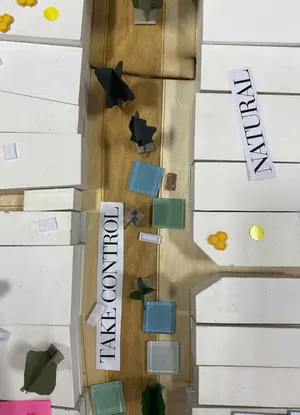
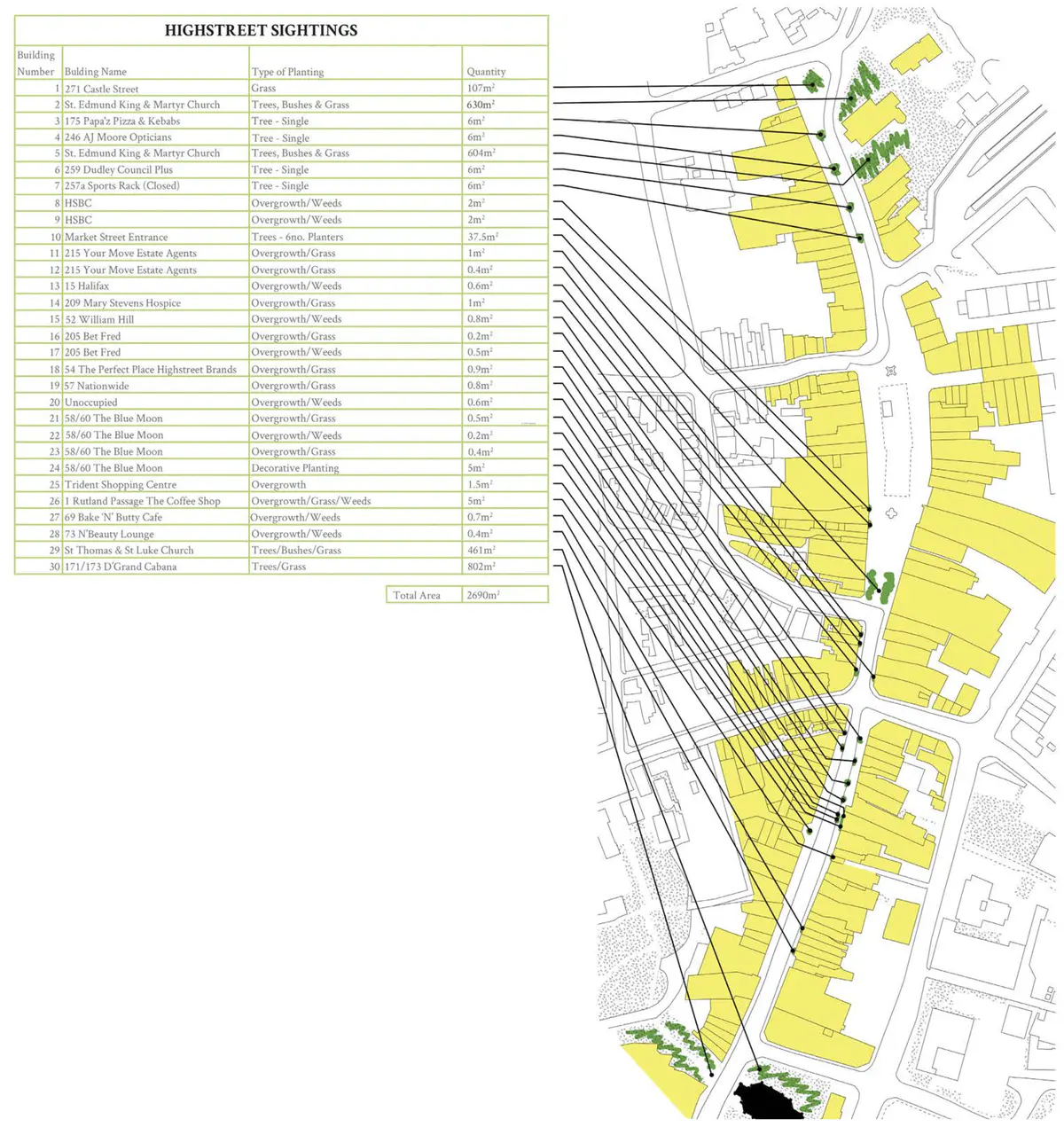
The charted planting is a selection of the current extent of the high street. As discovered, the area has little to no variance, with the exception of the more developed properties at either end of the high street. These properties generally have more trees and mature planting around them, making them more appreciative of the biodiversity.
Facing the high street, there is approximately 2690m2 of greenery, the majority of which is situated at either end, on the property of the two churches. Ignoring these numbers, the area of greenery drops significantly due to the limited overgrowth around lampposts, bins and along the store fronts.
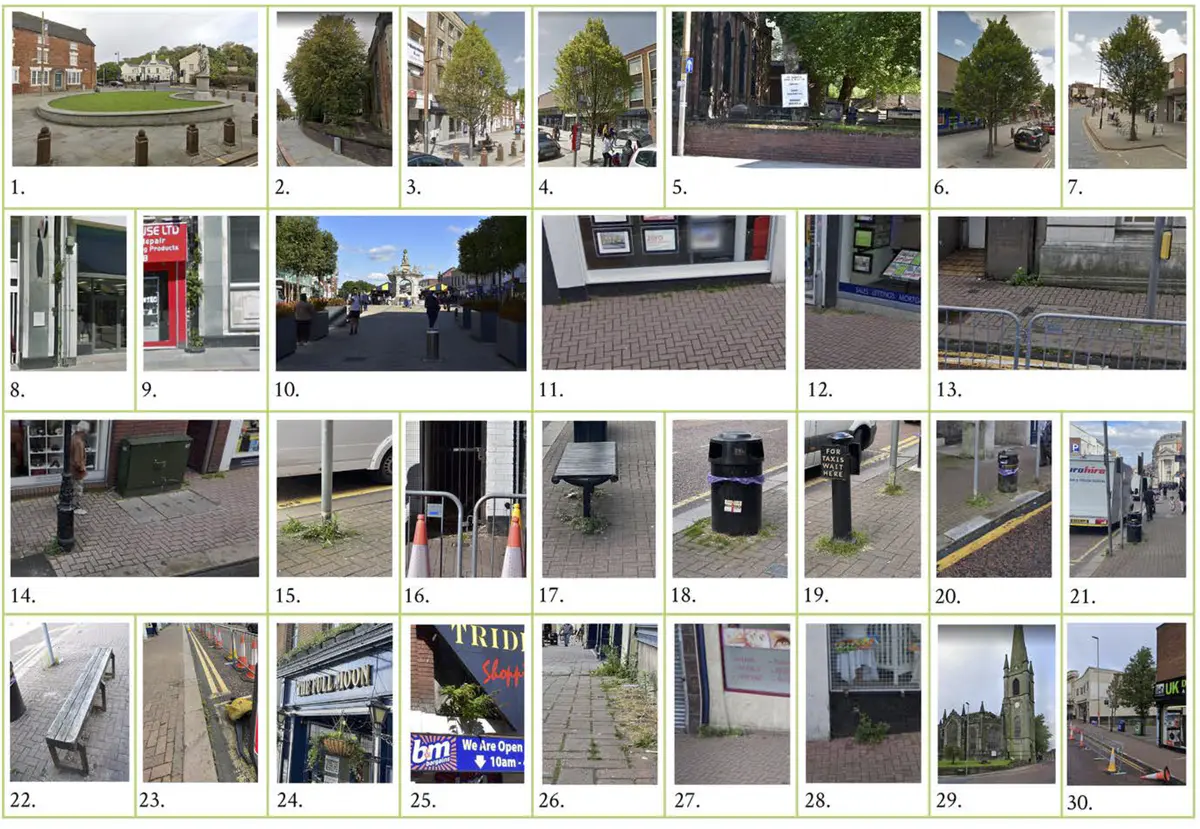
For the wider biodiversity of the high street the select amount greenery provides very little benefit for nesting wildlife. Within the developed properties more thought and appreciation can be given to accommodate a more diverse spread of wildlife and planting. Along the high street there is little consideration for interactions with the wider biodiversity, a few trees (provided by the council) and strip of high level planting along a store front.
As for the rest of the ‘greenery’ along the high street, this could be seen more as neglect from the cleaning and maintenance of the street. The remaining biodiversity identified comes from areas that have retained water from lack of drainage and moisture retention. Seen around the street furniture, grass, weeds and moss can be seen growing along the gaps between paviers and along gutters. Despite being ‘greenery’ these areas provide no benefit to the biodiversity and are more of a sign that the council have no intention to improve the state of the area.
Within the developed quarters, the majority of the biodiversity is grassland, which too only has a limited positive environmental impact. The two churches provide an excellent coverage of their respective sights and can provide a good quality of air and absorption of CO2 due to the large number of trees and bushes . Whilst the grasslands are a welcoming sight, they play a very little roll in absorbing CO2 and to provide other positive environmental impacts that the larger greenery does.