Dudley young people of black ethnicity worked together to put on a Fashion Talent and History show to celebrate Black heritage and fashion for Jamaican Independence day 2021. This show took place at the African Caribbean Centre in Dudley.
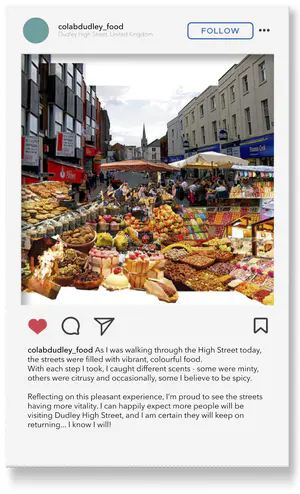
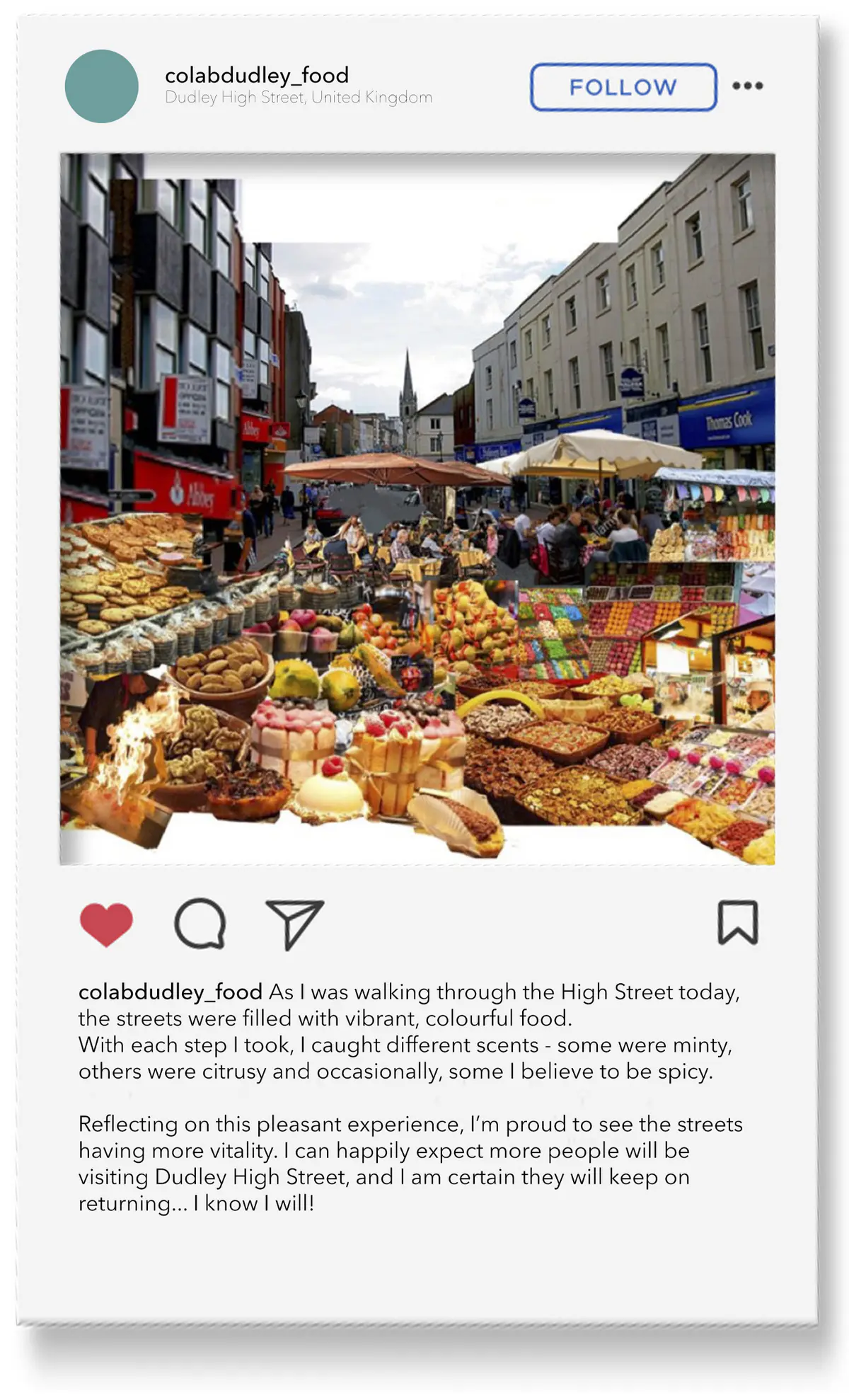
In this post, we captured the street’s atmosphere filled with colour, activity, and pedestrianised streets.
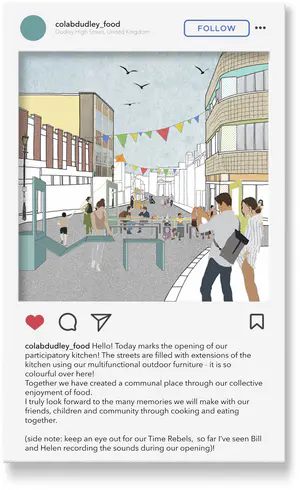
(We decided to present our narrative through social media and instagram posts as we wanted to showcase what individual experiences might be like when experiencing the future High Street. Each of our posts captures a different element of experience on the High Street to form a collective scenario.)
"Four Debenhams staff with 100-years service between them were bidding a fond farewell as the store in Dudley High Street closed for the last time in January 1981. Manager Douglas Spalding, who was with the company for 26 years, was photographed with Nancy Robinson, Kathleen Jackson and Marion Sutton."
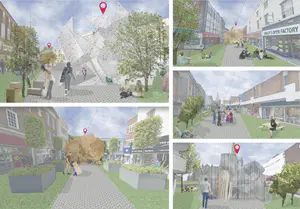
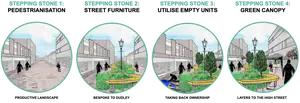
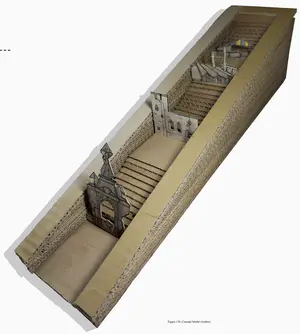
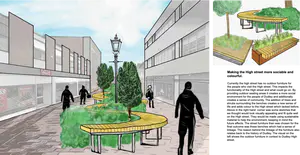
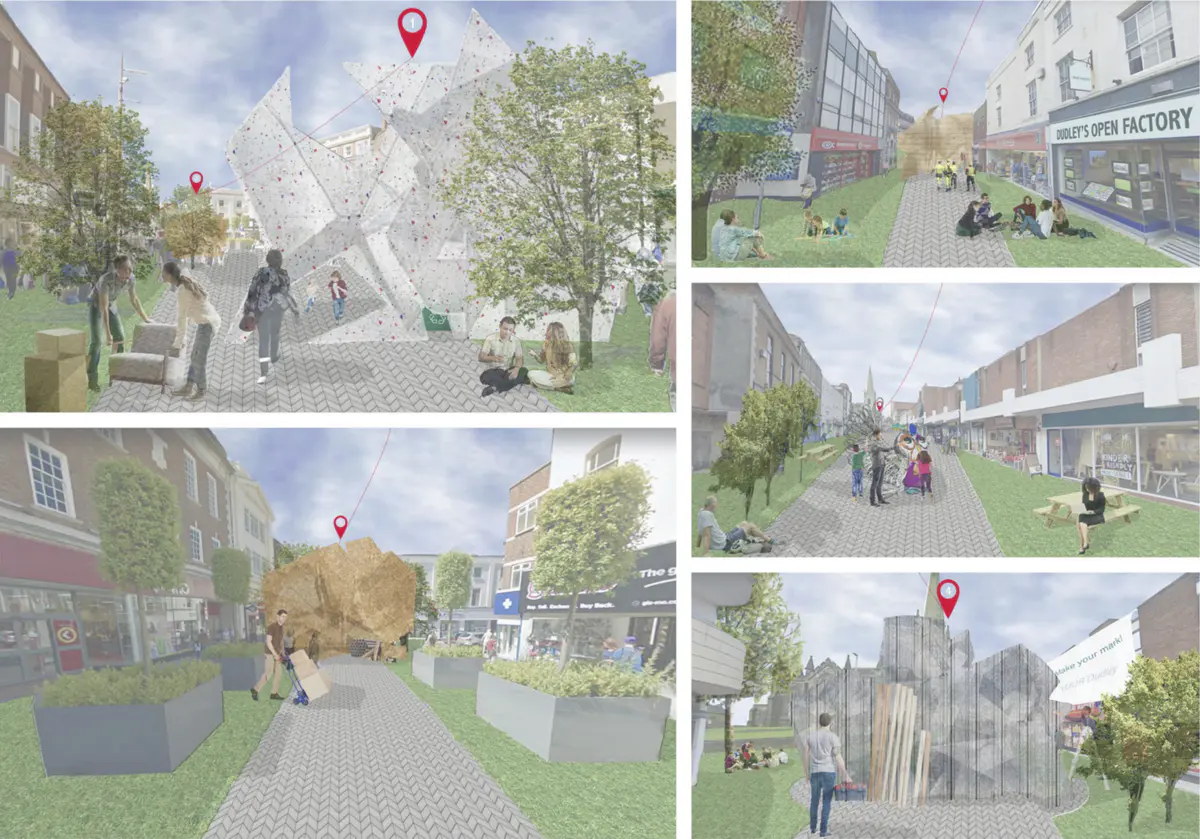
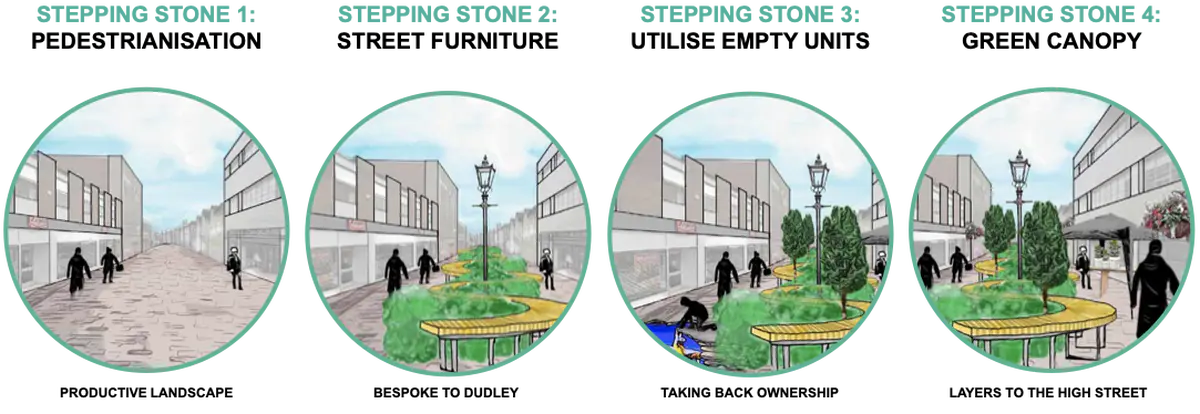
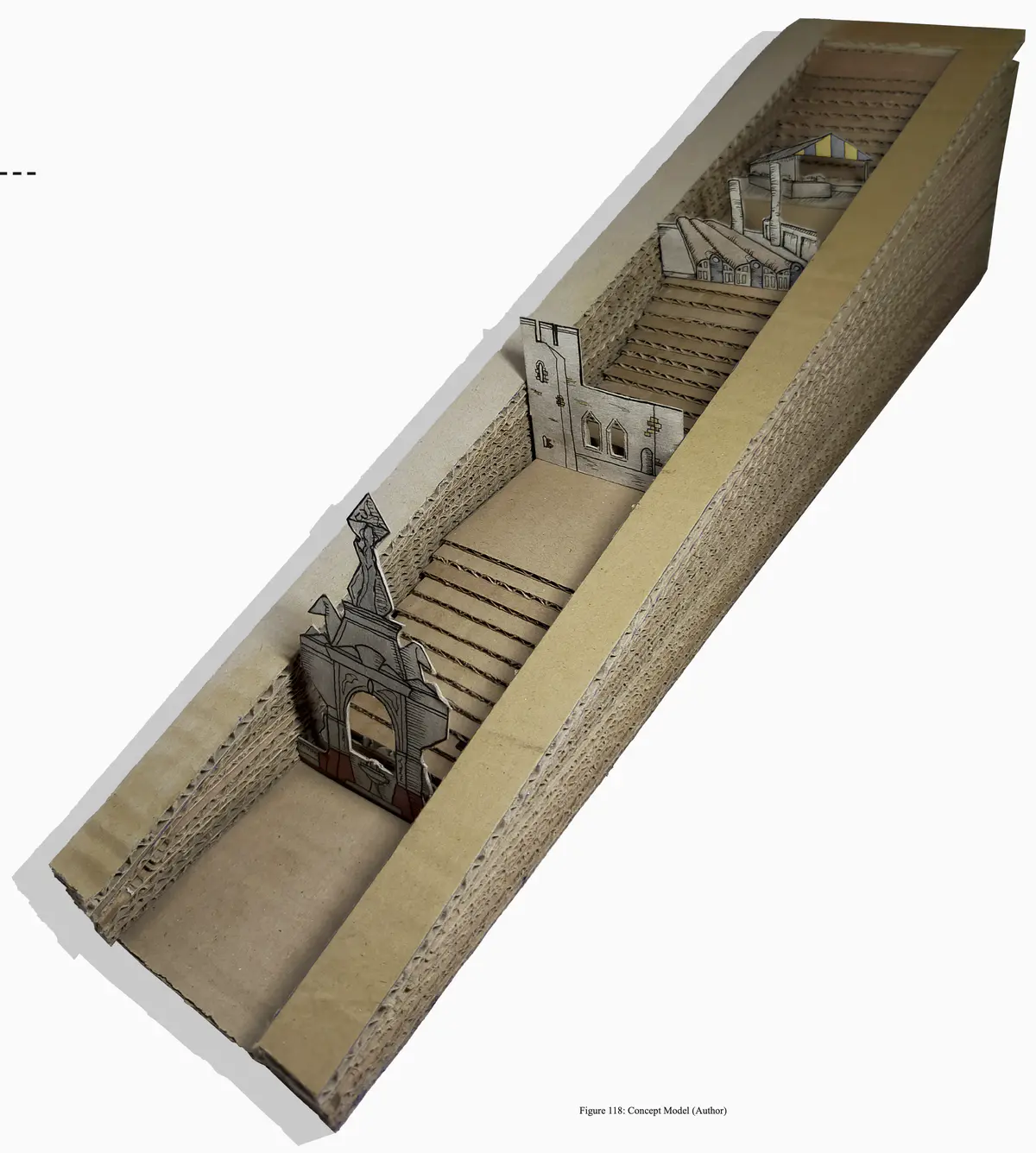
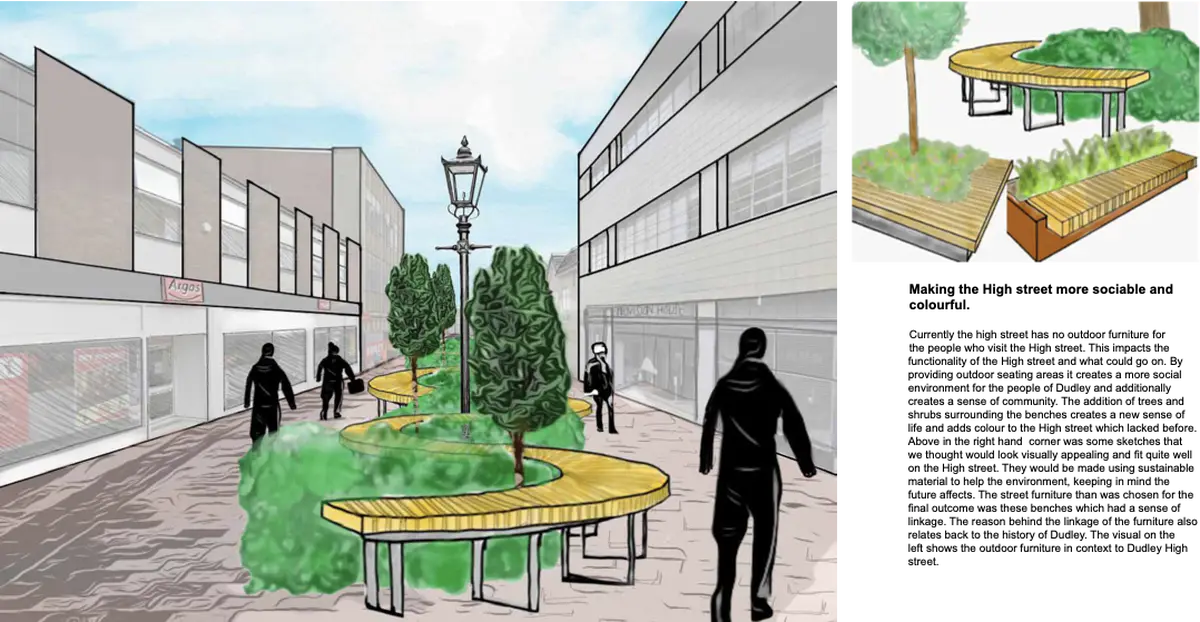
LAYERS TO THE HIGH STREET - To introduce covered, sheltered areas on the high street. Making the high street welcoming for the entire family and adding topographical value to the high street that is visually interesting. Adding another layer to the high street that will encourage exploring spaces for children as well as adults.
In this picture from 1914 in Dudley, you can just make out my grandfather. He's the small boy with the cap running across Wolverhampton Street in the days when the trams were still running. Years later we worked out that this day was probably a defining moment in his life, the day he chose never to have a second thought or to be bullied by others. You can see him running. This is because he had stolen the ham you can see him carrying under his arm. This one action started a chain of events for my grandfather that would go on to dominate his formative years. Petty larceny, theft, criminal activity that would shape him, turn him into one of the most notorious villains in the Black Country.
When he died in 1972, this photograph turned up amongst his possessions, in a locked drawer of his bureau. We agreed amongst us that no one in the family had ever seen this photo before, curious as to its importance to him. On the back of the photo he had written the date and time, together with a brief note - "Me stealing ham from W.Smiths, butcher". He would have been 10 years old and this was perhaps his first, or at least one of his first criminal acts.
We have no idea who took the photograph or how he had come to have the original print in his possession, but it appears that it held some significance for him as he kept it all of his life locked away in his bureau drawer.
Atifa lives nearby. During her free time, Atifa takes part in social work and welcomes the visitors of the High Street. Her main responsibility involves managing the food produced on street garden. A group of out of town visitors seemed lost on the street as they were wondering about what to do after shopping. Atifa suggested to participate in a workshop in the community kitchen. They plucked some berries and veggies from street and made a quick salad with a locally developed recipe that they had never tried. They thanked Atifa for the new recipe.
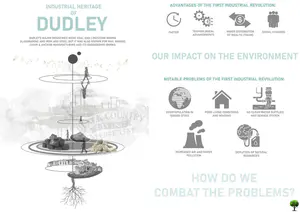
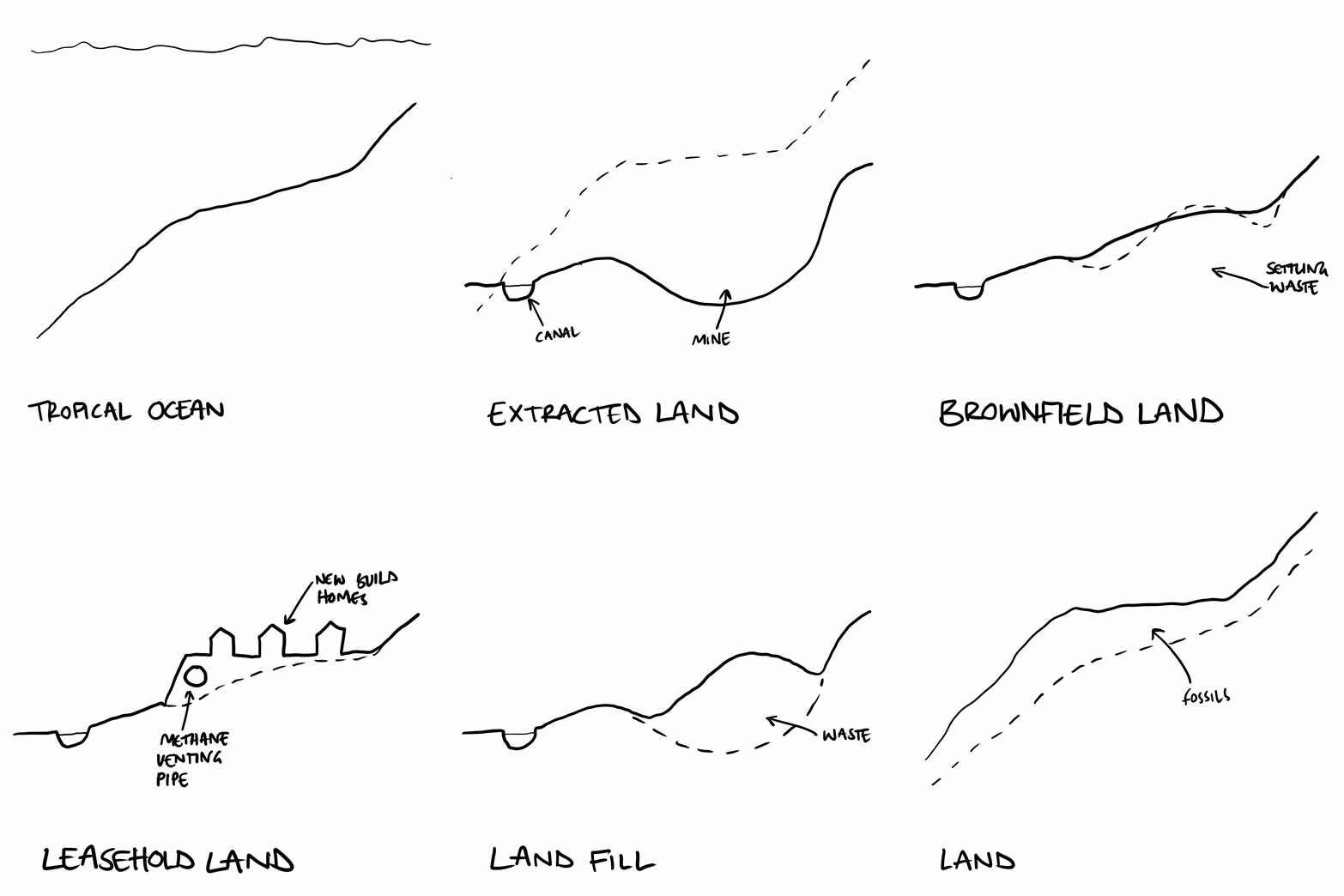
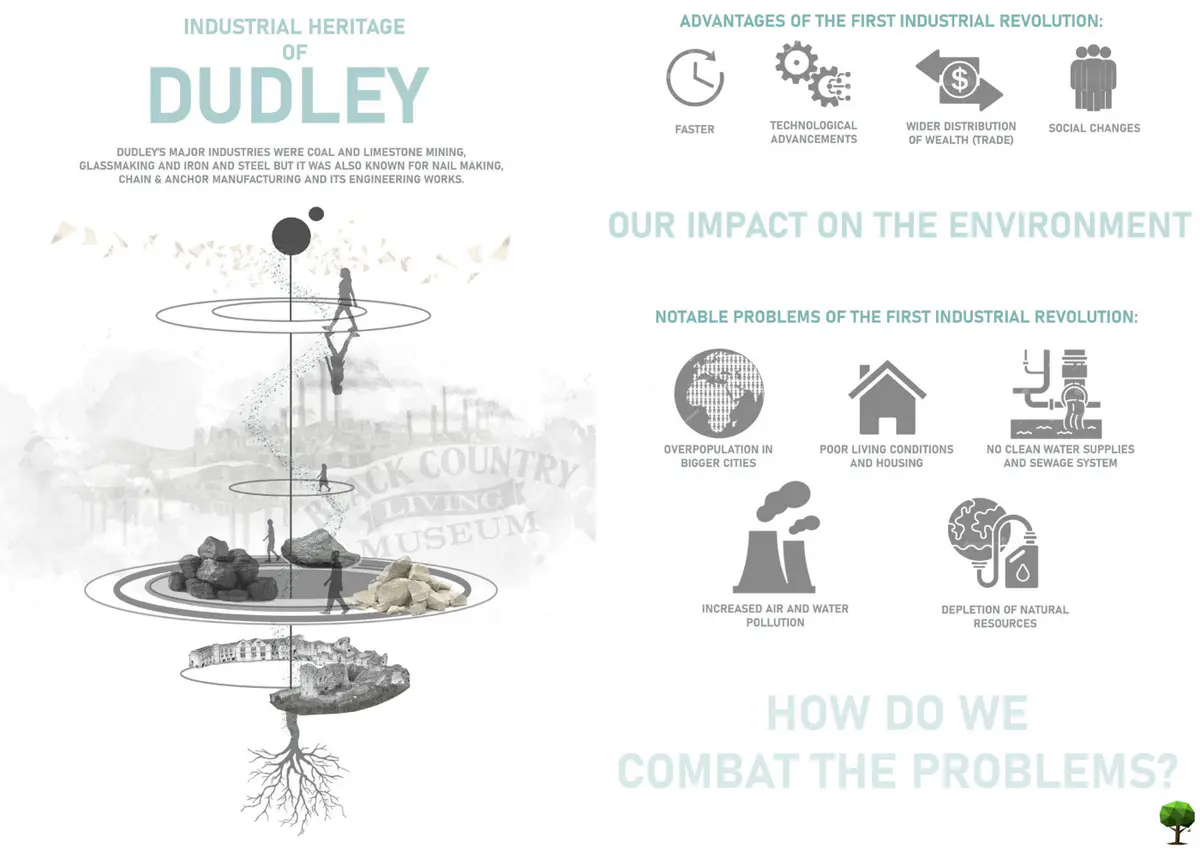
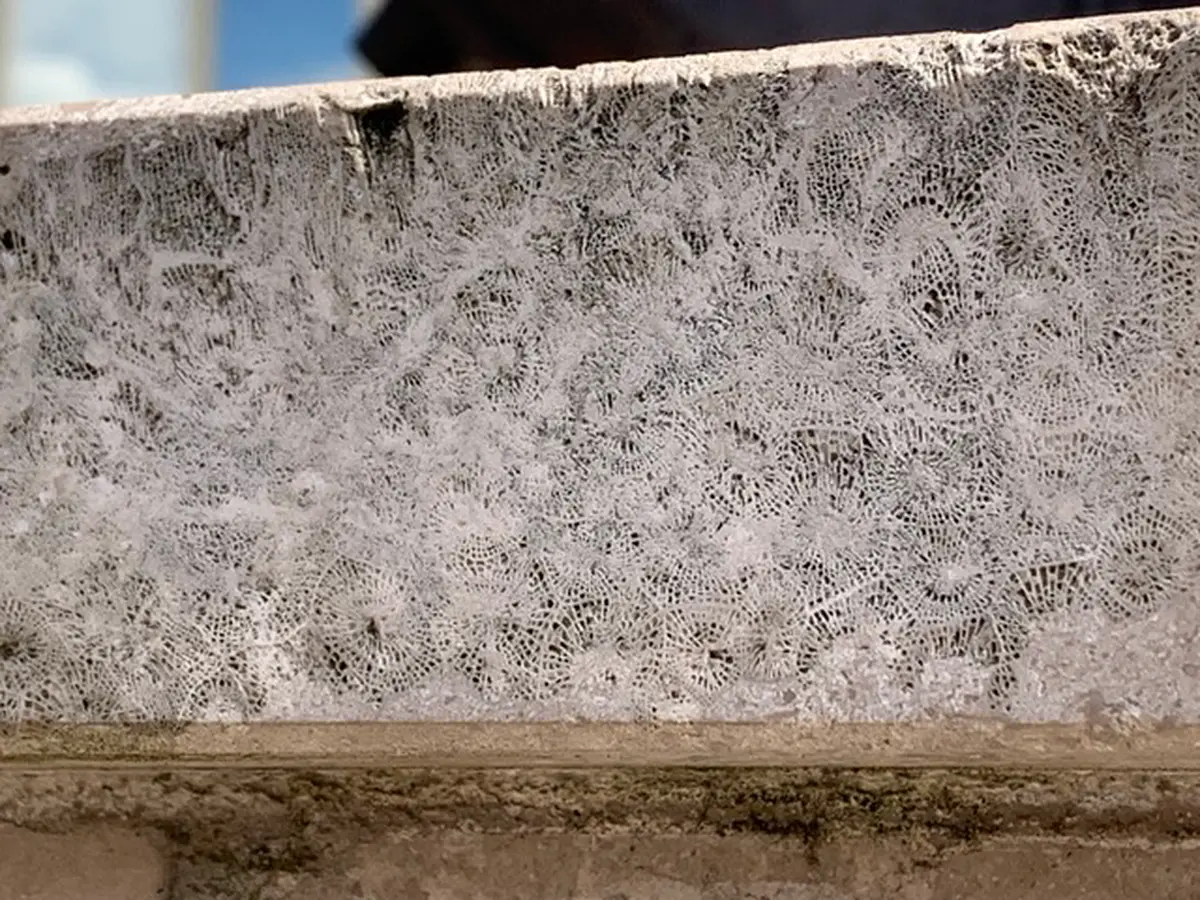
Timeline of Dudley’s History with information on historic buildings and geological features of the High Street.
Dudley has a rich history by being know as a busy market town and being a capital for manufacturing.
The timeline emphasises the rapid change of the traditional industries in Dudley and how it has effected the High Street.
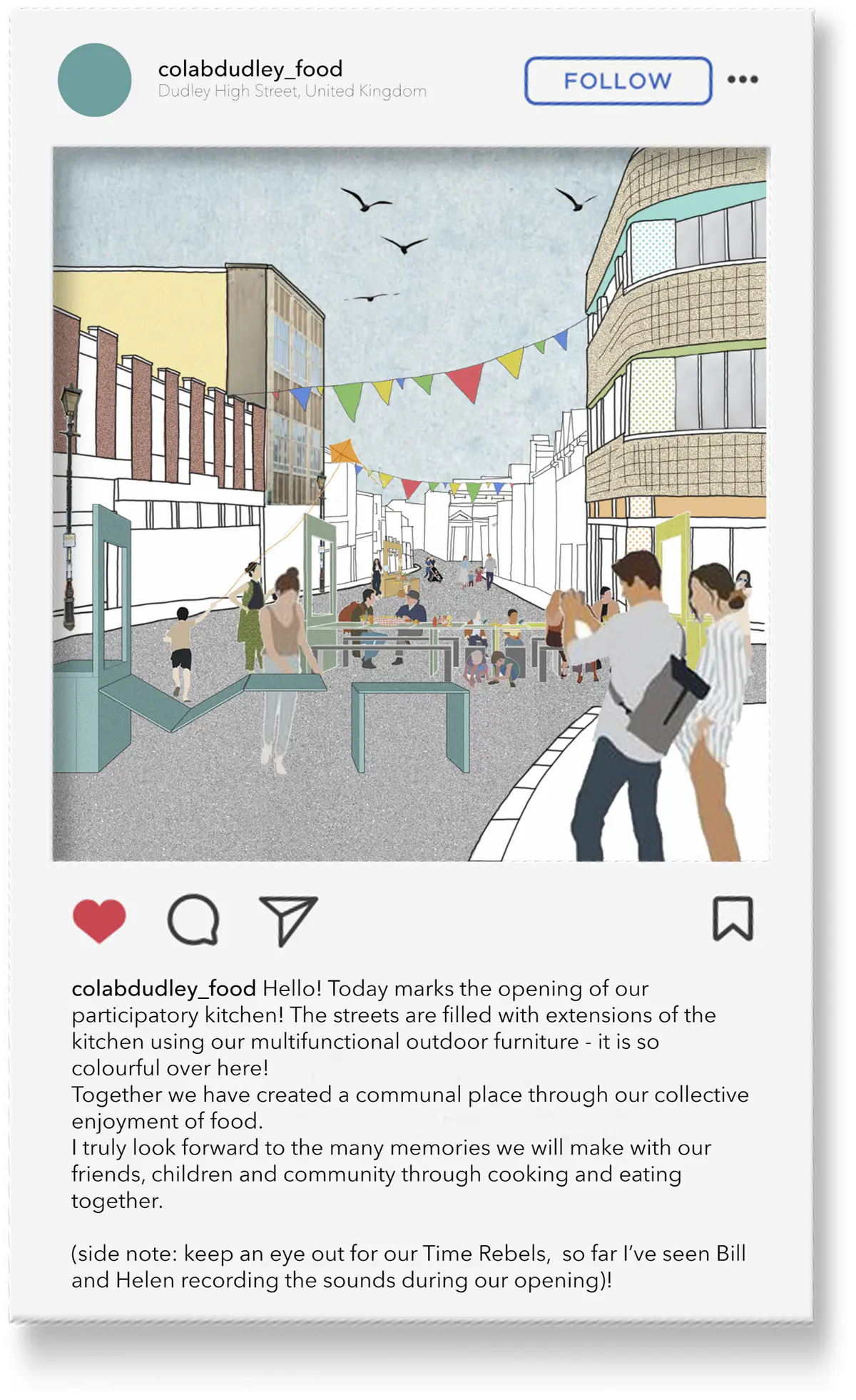
This post promotes the opening of a community kitchen, supported by the Participatory City model.
(We decided to present our narrative through social media and instagram posts as we wanted to showcase what individual experiences might be like when experiencing the future High Street. Each of our posts captures a different element of experience on the High Street to form a collective scenario.)
These are stepping stones that we wanted to achieve, with a scale of intervention, starting with small changes that could still have a big impact e.g. street furniture. At the other end of the scale is topography, where larger adaptations can be made for what we want to achieve.
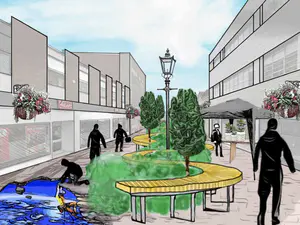
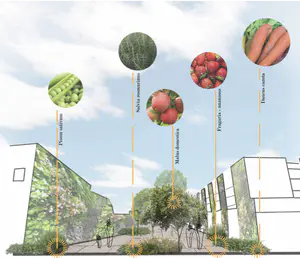
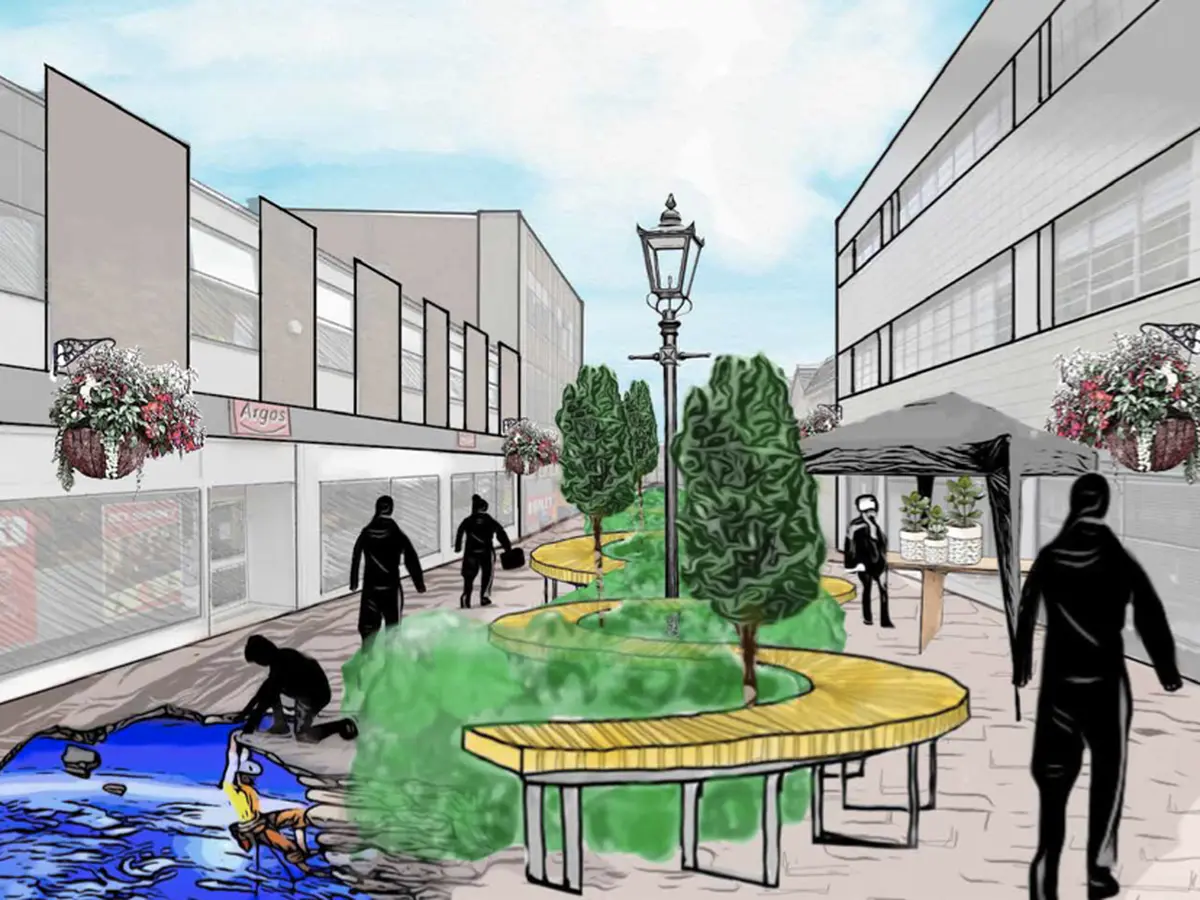
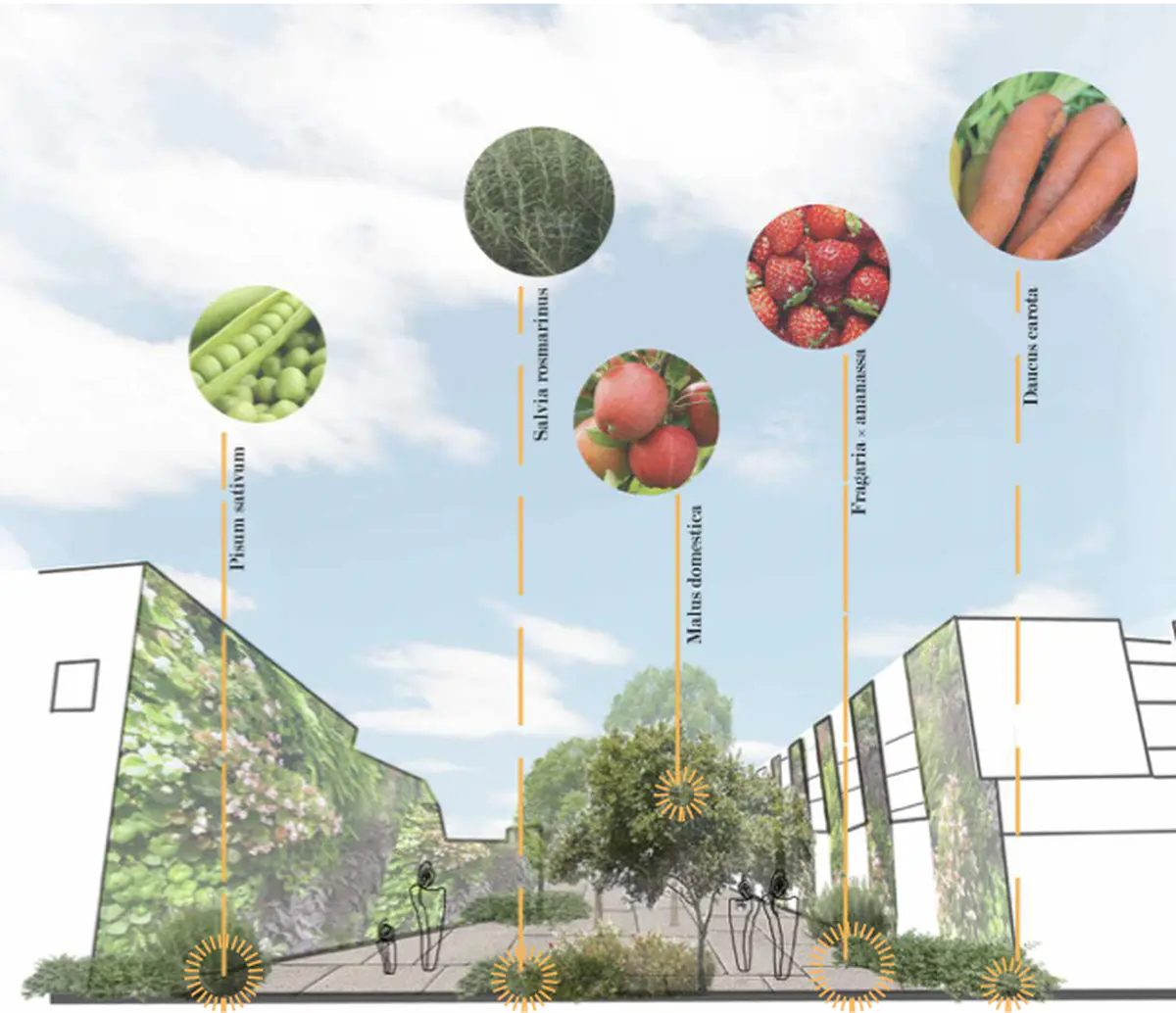
The image shows what this space could look like as a productive landscape. Where all the space is used. Vertical growing space can be utilised for pollinators for heights out of human range and for fruit and herbs in the lower regions that lie within our grasp. Trees can provide shelter, pollen and fruit, as can shrubs.
This graffiti image is on the wall at ACCN- Dudley African Caribbean Network, I would like to know how and when this was created. One Love is a reference to a Bob Marley song and is written in the image.
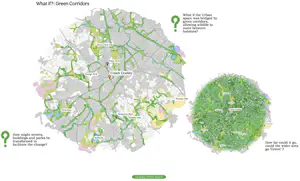
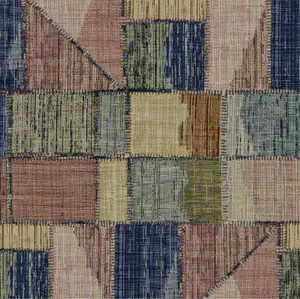
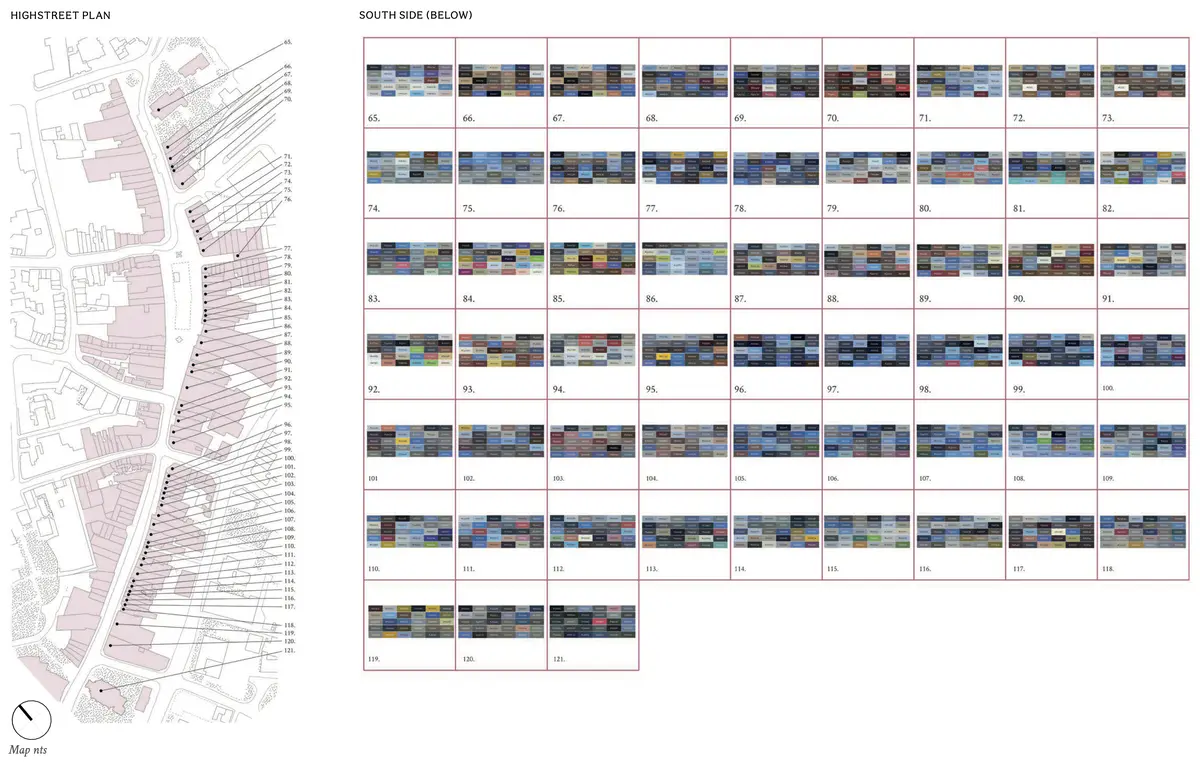
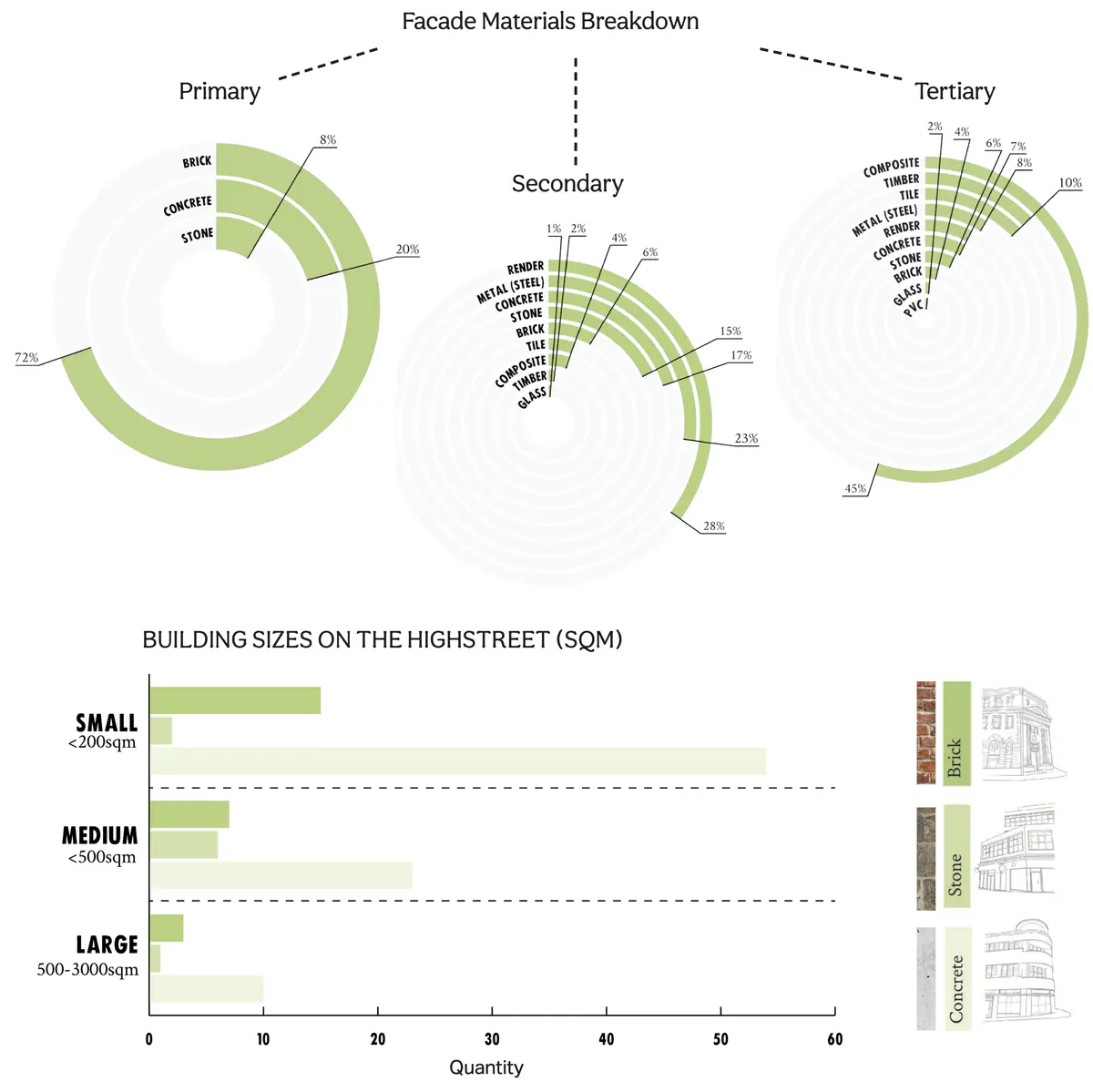
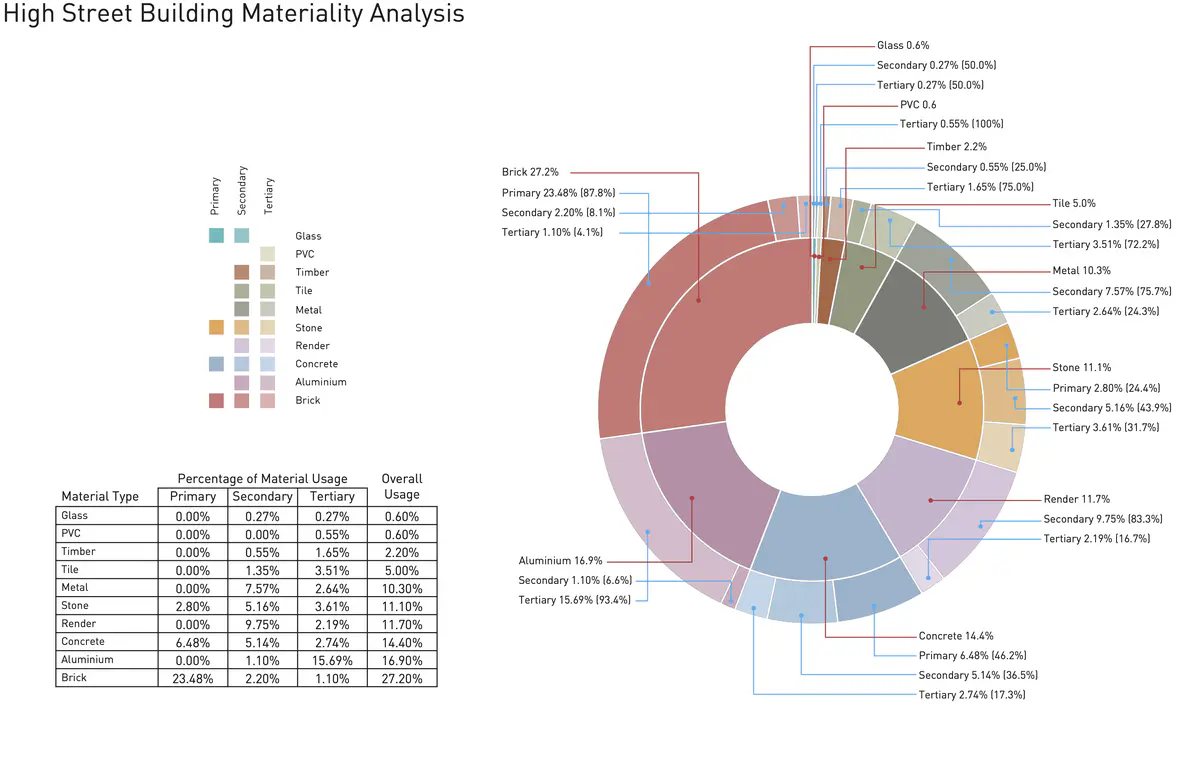
The inner circle represents the average colours of the Dudley High Street - the outer circle is the inverted version. Boasting more greens and purples (with a hint of orange), this new colour pallete sits a lot more comfortably with the surrounding nature reserves. If Dudley decided to just paint over their existing facades, Dudley could be nestled gently within the great nature spaces around it, instead of just being a town that exists ontop of green spaces.
By utilising the passageway to display exhibition work from local institutions it would not only encourage them to create their crafts, it will celebrate their work and the range of crafts that Dudley has.
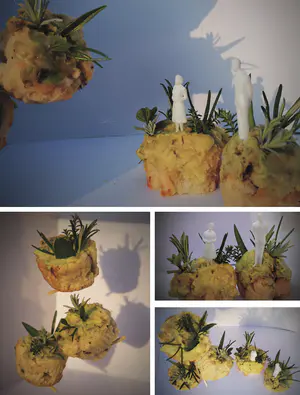
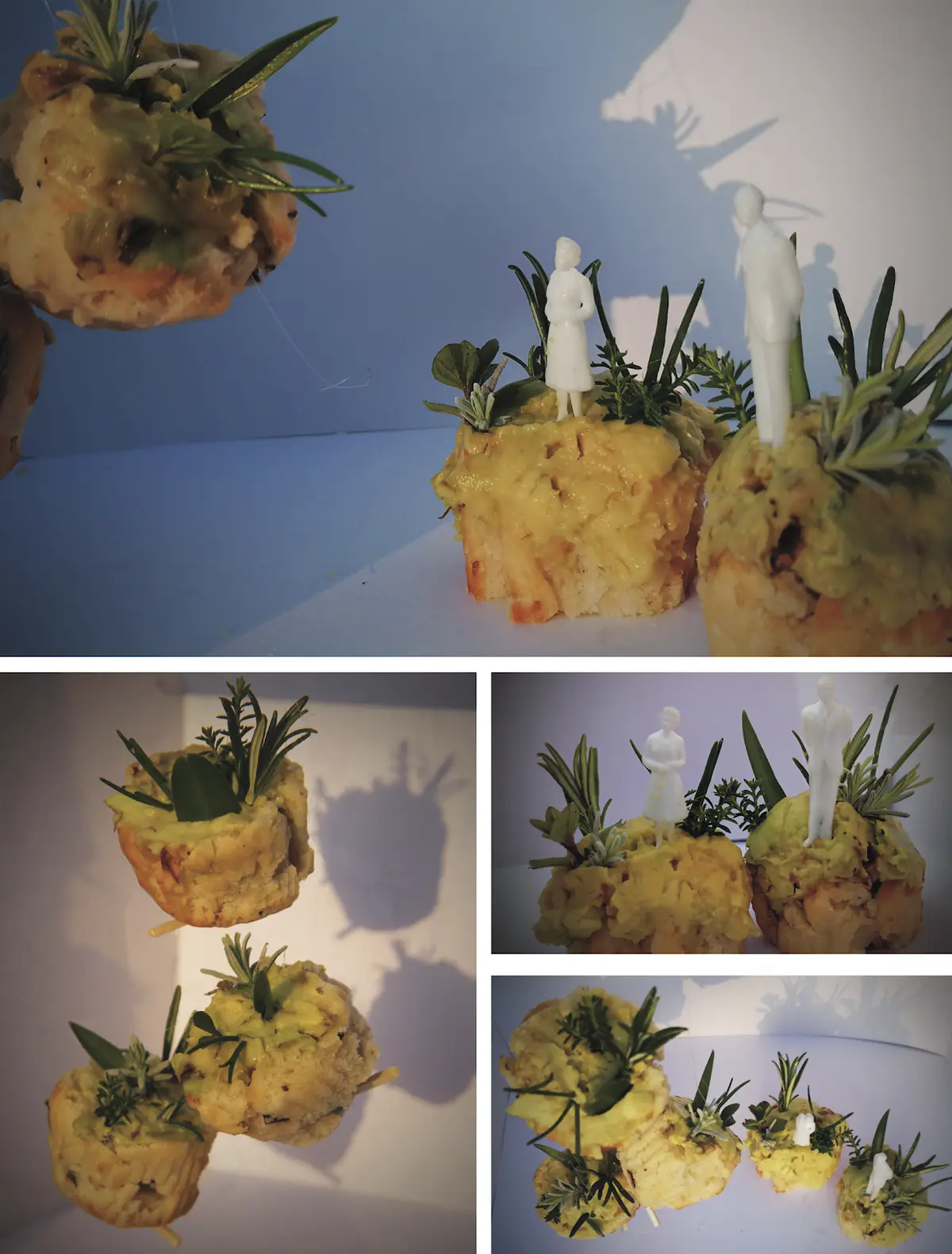
For Colab Dudley, I baked a model that ties into the final proposal. Food is a huge part of history and culture and part of Dudley’s history and culture is using what food there is available. Bread is cheap and easy to make, so is found in many traditional black country dishes. I foraged for edible plants in my garden and neighbourhood and built hanging baskets and islands to show in an abstract way how public space could be more productive and beautiful. They were a tasty treat and a sustainable model!
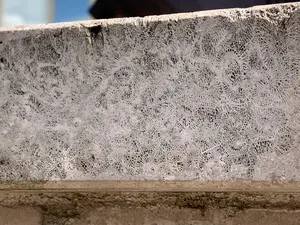
This gift was created to highlight different points in the social spaces on the high street. Aspects that we can improve on and celebrate. One point found was to incorporate more green spaces to improve health and wellbeing. The other to celebrate the textures and embossings in Dudley’s early ironworking. These ornaments were created by melting sweets and printing patterns onto them.
We created a visual representation of the main factors and sectors we came across in our research and explored individually: environment, economy, technology and education. It also summarises our goal of creating a connected High Street, and the steps we took to achieve this goal.