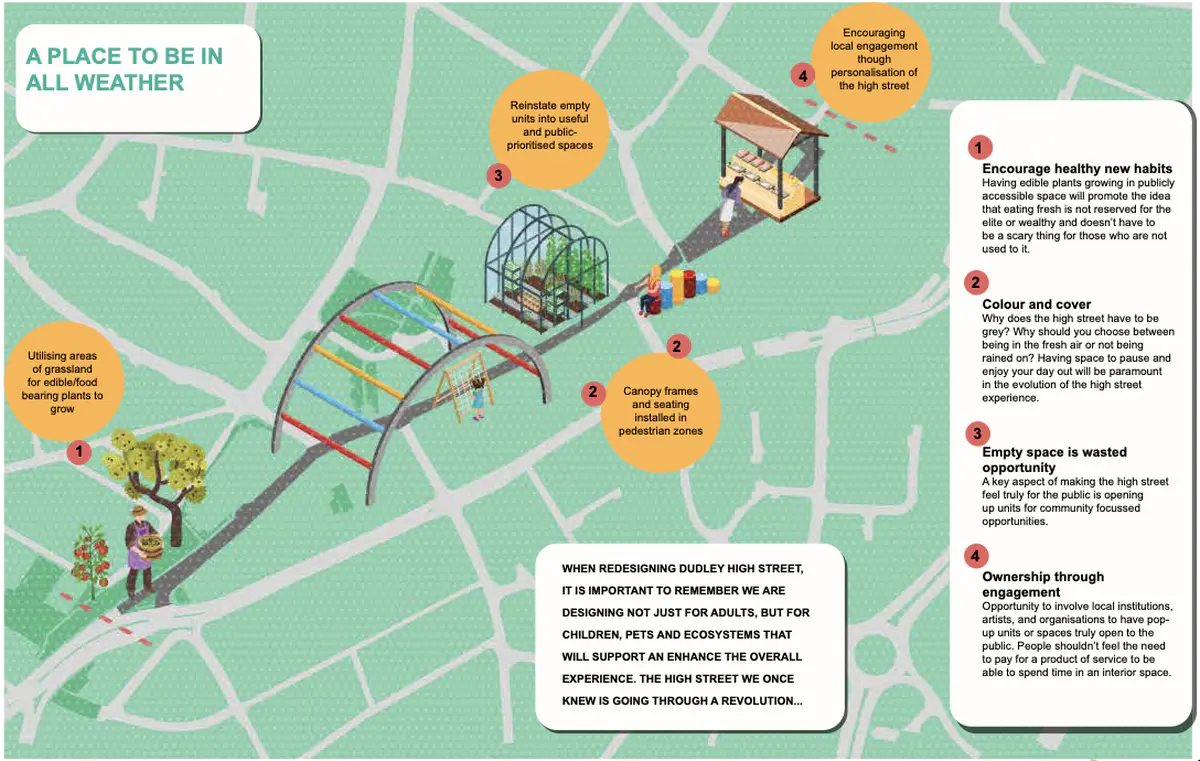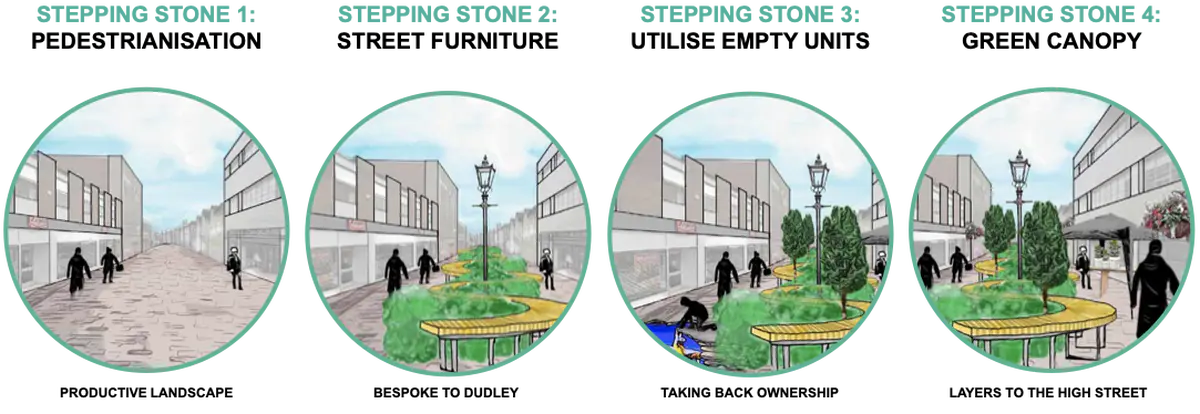
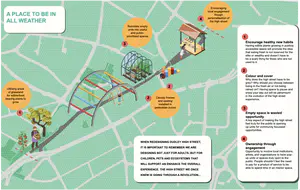
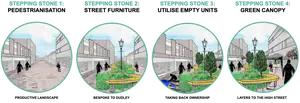
Stepping Stone 4 adds layers to the High Street. Like the other visions, we wanted to use CoLab Dudley’s principles ‘use nature as a guidebook’ and ‘create conditions for curiosity and experimentation’. The main way we proposed to do this was adding a green canopy to provide shelter, create a hybrid indoor outdoor space welcoming to families and a more communal open space, and support ecosystems.
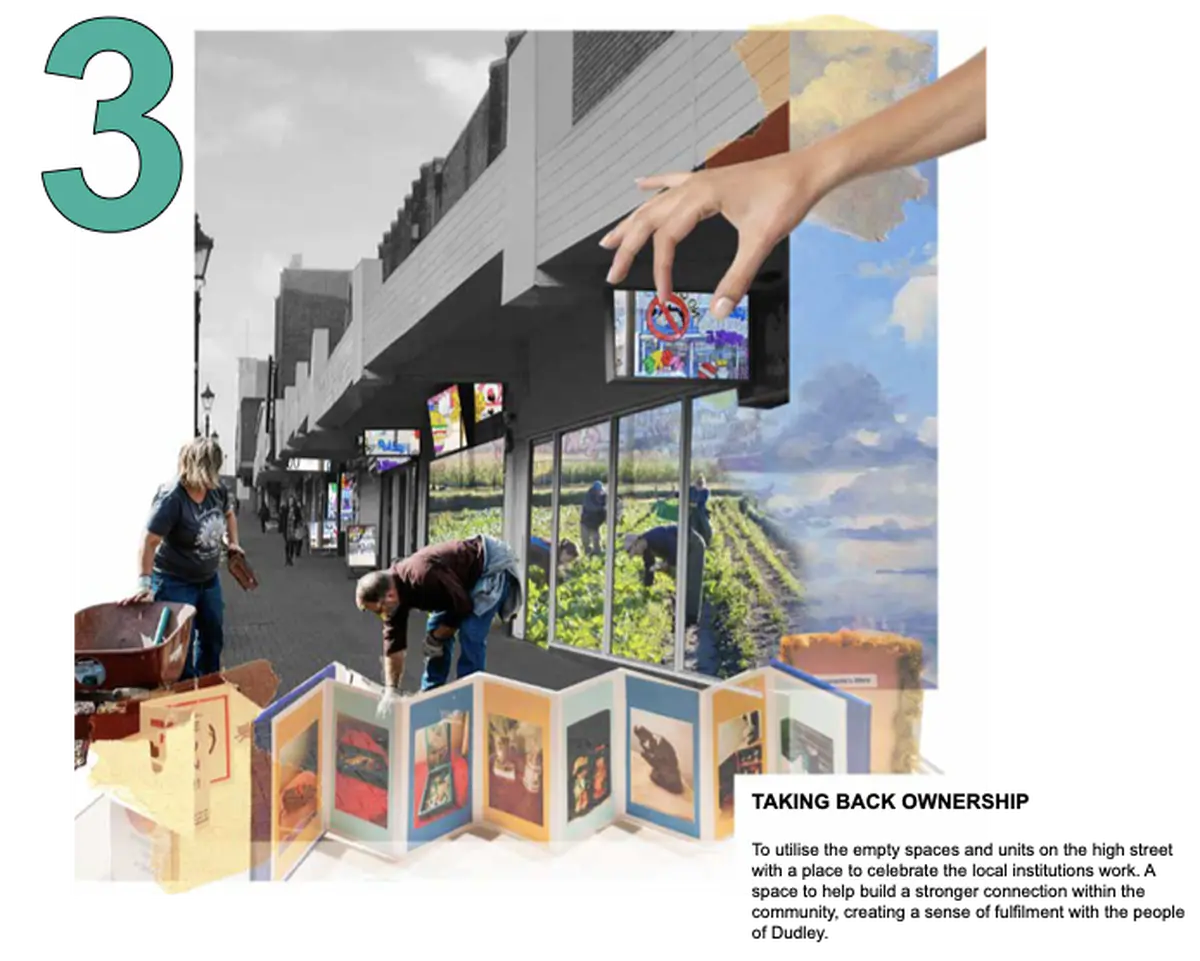
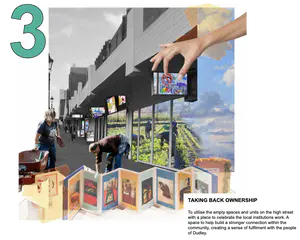
TAKING BACK OWNERSHIP - To utilise the empty spaces and units on the high street with a place to celebrate the local institutions work. A space to help build a stronger connection within the community, creating a sense of fulfilment with the people of Dudley.
These are stepping stones that we wanted to achieve, with a scale of intervention, starting with small changes that could still have a big impact e.g. street furniture. At the other end of the scale is topography, where larger adaptations can be made for what we want to achieve.
Our collective vision for Dudley is to support a creative community that is connected through our internet of things; creating spaces that allow for the collection and redistribution of materials that locals can use to construct products with. Community engagement is central to this design network with local businesses encouraged to get involved in manufacturing.
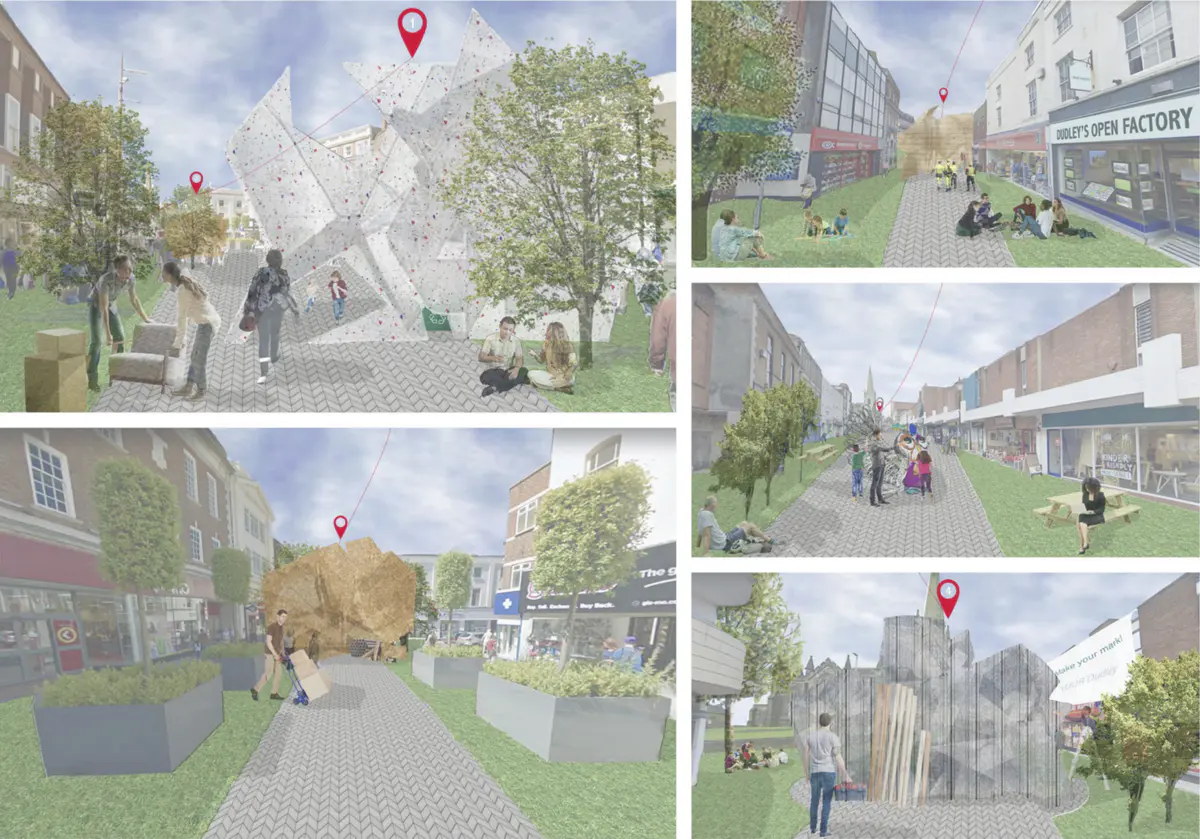
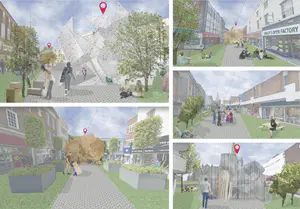
We decided to bring alive this vision through a series of pavilions positioned through the High Street, following a process through recycling, storing constructing and manufacturing. To take this idea further, we allocated several empty units along the High Street to become spaces involved in the open factory, from workshops, educational centres and co-working hubs. Since we wanted to show the journey people would be able to take, we decided to create a storyboard for our final visual.
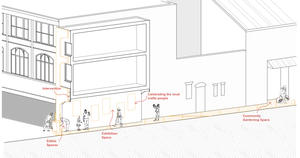
These visuals show how the pavilions could sit in the High Street, starting at the market place, past CoLab Dudley’s base, and ending up at Top Church. We wanted to show how people would be able to interact with these different spaces and navigate between them.
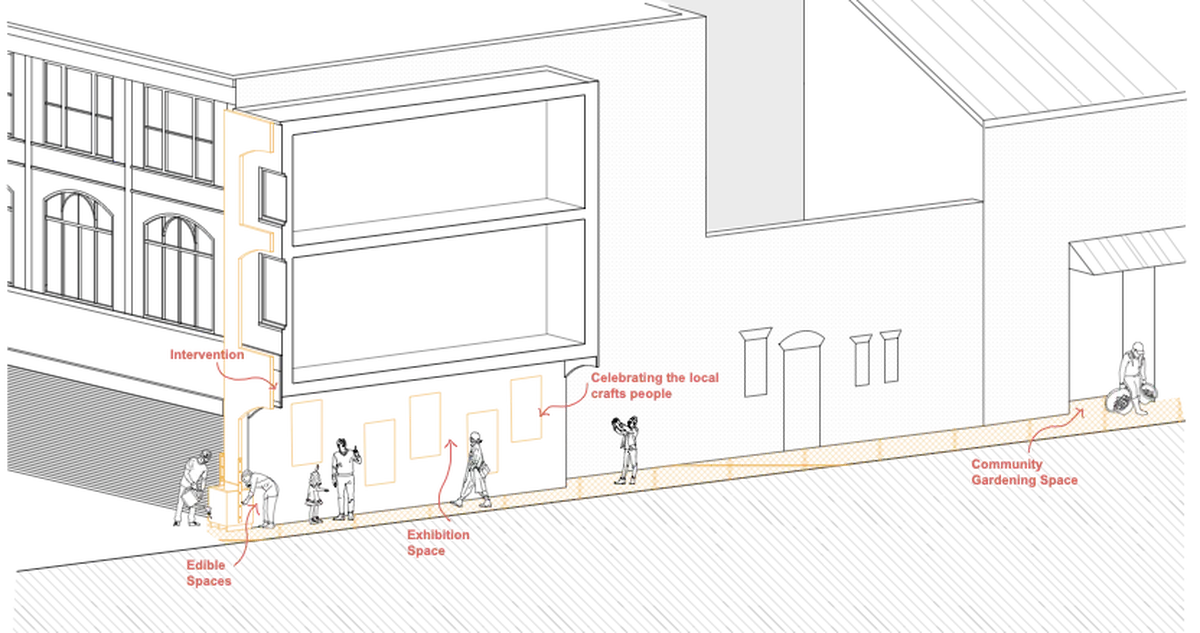
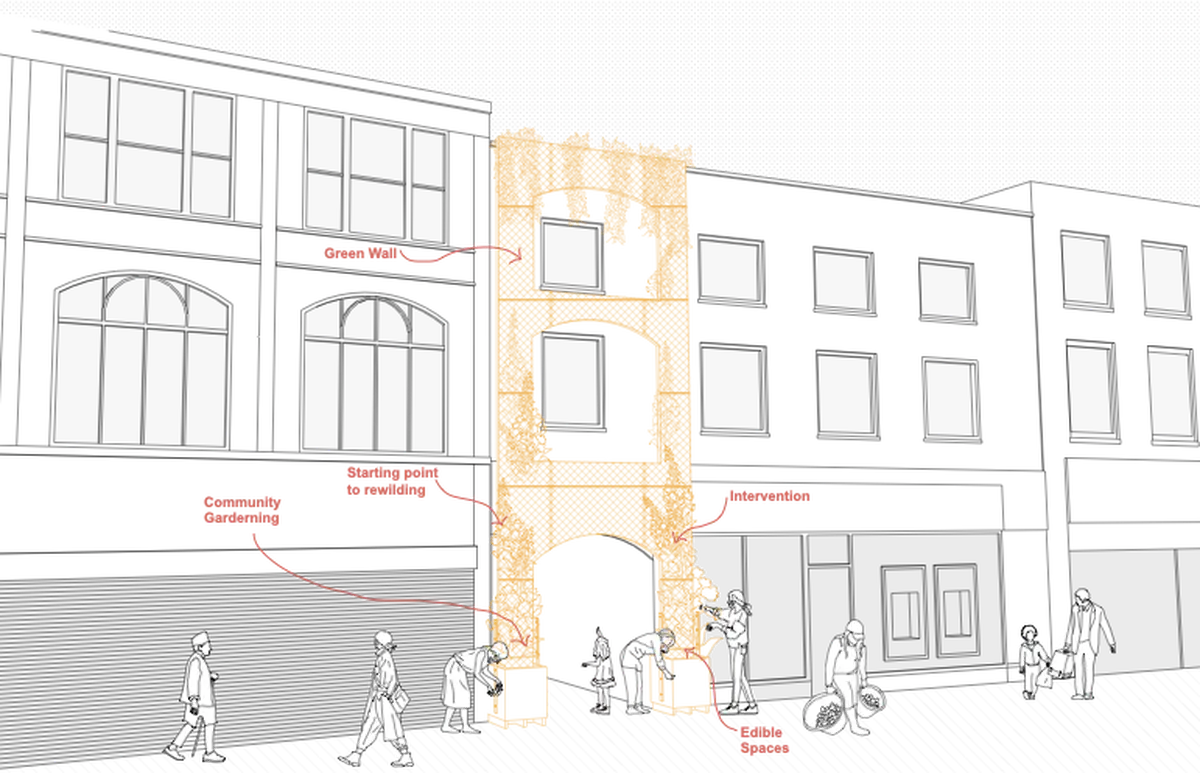
Atifa lives nearby. During her free time, Atifa takes part in social work and welcomes the visitors of the High Street. Her main responsibility involves managing the food produced on street garden. A group of out of town visitors seemed lost on the street as they were wondering about what to do after shopping. Atifa suggested to participate in a workshop in the community kitchen. They plucked some berries and veggies from street and made a quick salad with a locally developed recipe that they had never tried. They thanked Atifa for the new recipe.
By utilising the passageway to display exhibition work from local institutions it would not only encourage them to create their crafts, it will celebrate their work and the range of crafts that Dudley has.
A collage response to a Co.LAB gift for the High St - “It was nice to be able to use the image for something else. It made me think about placing the cut-out roadmap onto a slightly brighter future version, with colour, vibrancy and plantlife, so that it reminds me what we are heading towards, but still with a hark back to the people and the industry that made Dudley the town it is...”
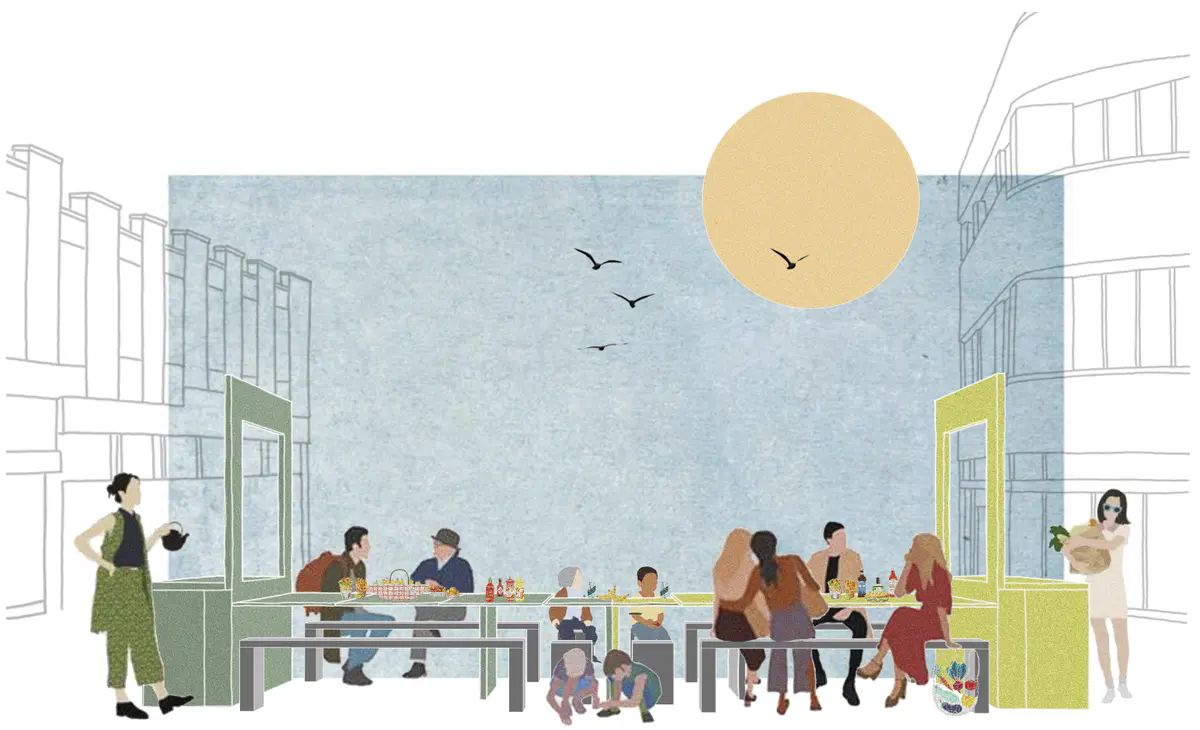
The first Stepping Stone project looks into designing multifunctional furniture for Dudley High Street to provide opportunities for a regenerative community, focusing on how the high street can be occupied with resilience. Initially, the stalls act as market stalls to provide opportunities for enterprises and small businesses to begin thriving and encouraging the High Street to become a place of inclusivity.
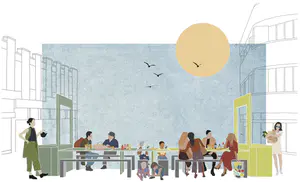
However, the stalls can extend out into outdoor seating arrangements, which can become an extension of the community kitchen and during events can become a part of the whole atmosphere.
By extending the furniture, they can connect together and become a large spread where people can sit together and enjoy company. It creates a lowered centre space so children can sit together, or paint on the surfaces. We decided to focus on furniture because we felt the importance of it can go unrecognised. We felt through the design of this market stall, many memories can be created and attached to these items, and become valuable assets within the community.