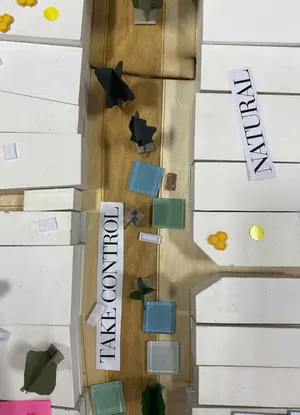
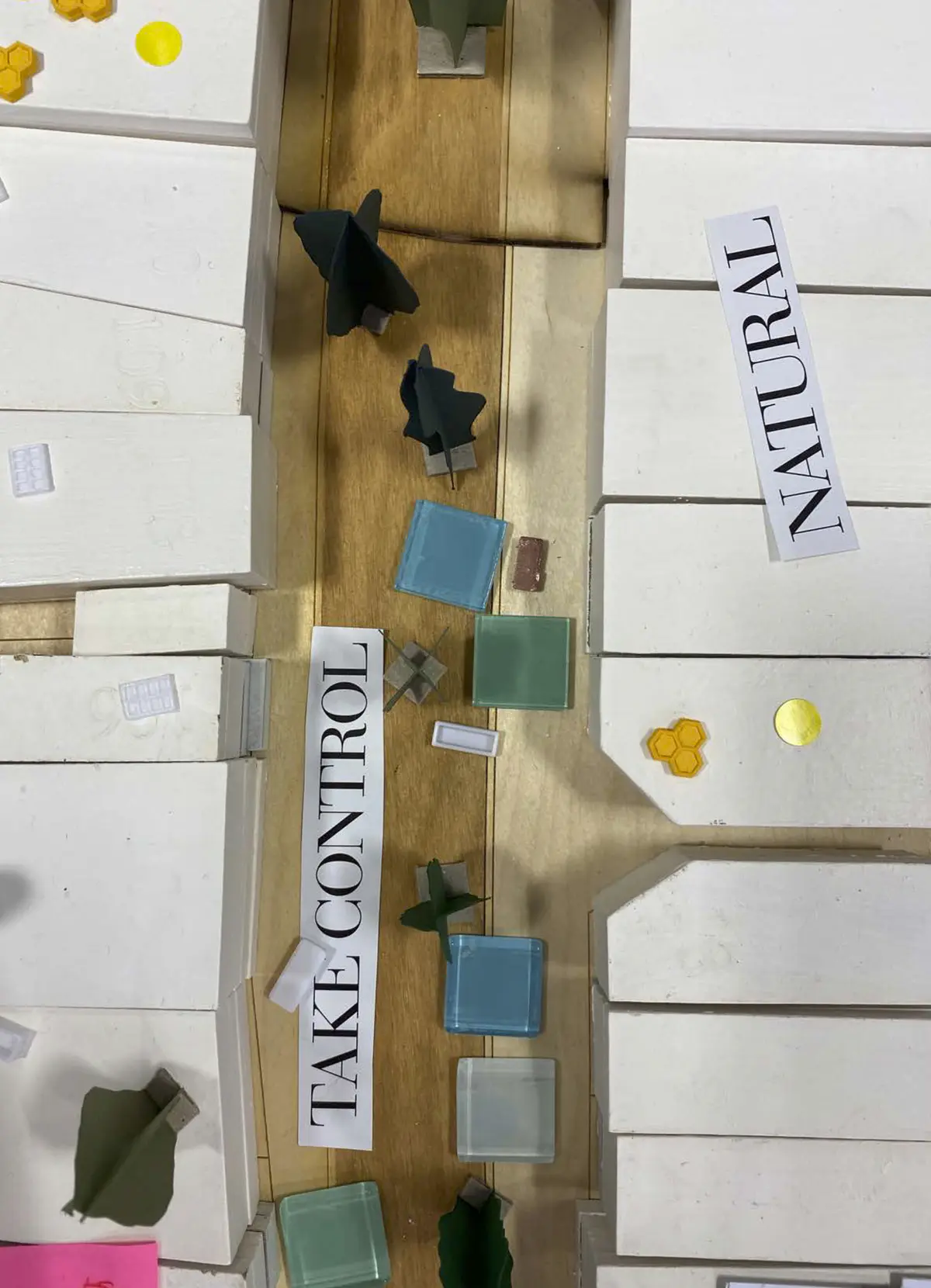
Looking to be the centrepiece of our exhibition, we proposed to create a site model of Dudley Highstreet at 1:200 scale with buildings modelled in a simple form. Local residents and visitors to the exhibition are then invited to decorate a chosen building to how they would envision it sat within the context of a greener Highstreet. We want to tie in our themes of biodiversity and materials by proposing that buildings can, and do, have the potential to be a lot healthier, sustainable, and interactive on the street. This site model also helps gain vital public opinions on the Highstreet and prompts discussion of areas most in need of attention.
To ensure that the model is utilising the MDF to the most efficient standard possible. First, the centres of the massing blocks have been hollowed out. This allows a reduction in materials used as other buildings can be cut in the centres of the model. Then the top is finished with a solid piece.
The waste material is placed into the recycling rack where other students can reuse it; otherwise, if the material left cannot be used for another project, it is recycled correctly by the university.
The model spanned just over 3.4m long and over 50cm wide. With the majority being cut from scrap woods that would fit the jigsaw of the shape, we were able to drastically cut down on waste. We also got some small benches and bee hives printed from recycled plastics, and used dried flowers as trees to represent the green spaces. Ultimately, the model seemed like a huge success, and really helped portray our ideas about Dudley High Street to those who came by. Everyone from Dudley who saw the model knew that it was the High Street, and interacted well with it. The size did make it difficult to move, especially to carry to the site, but it sat nicely in the centre of the the room and really drew people in to interact with it.
The model brought people in from outside to play with, write on, interact with. It became a spectacle for the public to come in and see what was happening and offer their ideas about what could be done.
The event was a success. Many people from the public (those who heard about the event, and those who just happened across it on the day) came in to interact with the model, which sat as the centre piece in the room. Kids liked to play with the pieces while the adults talked about things that could come from actions to help the High Street, not just leave it as is.
SOME OF THE KEY IDEAS WERE:
- The Shops need to be inviting for everyone. It’s no good having these places to go if people would rather take a bus to the next town.
- Just putting up boards across the windows is awful. Paint, Posters, Graffiti: Anything that actually makes the High Street look still alive is better than just wooden boards.
- More Green is needed. While it is obvious that there is a lack of Trees, many people wanted to push for these small bushes or planting spaces that could easily be implemented across the street.
- Spaces for public events or for people to at least gather at. While there is the Market and Fountain, it is not enough for the people of Dudley.
- Something needs to be done about the cars on the High Street. Some were Pro-Removal of all Cars, while some just wanted to limit when they could access the High Street.
Following the exhibition we created a series of drawings with our own interpretation of Sarah Wigglesworth ‘The Dining Table’ drawing. The drawings are a perfect representation of the our interactive model at the ERA Environmental Exhibition and Event. Showing the interaction the public had with the model, as well as the conversations that were held around the model.
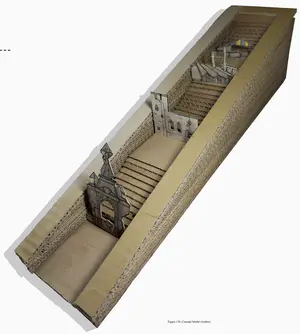
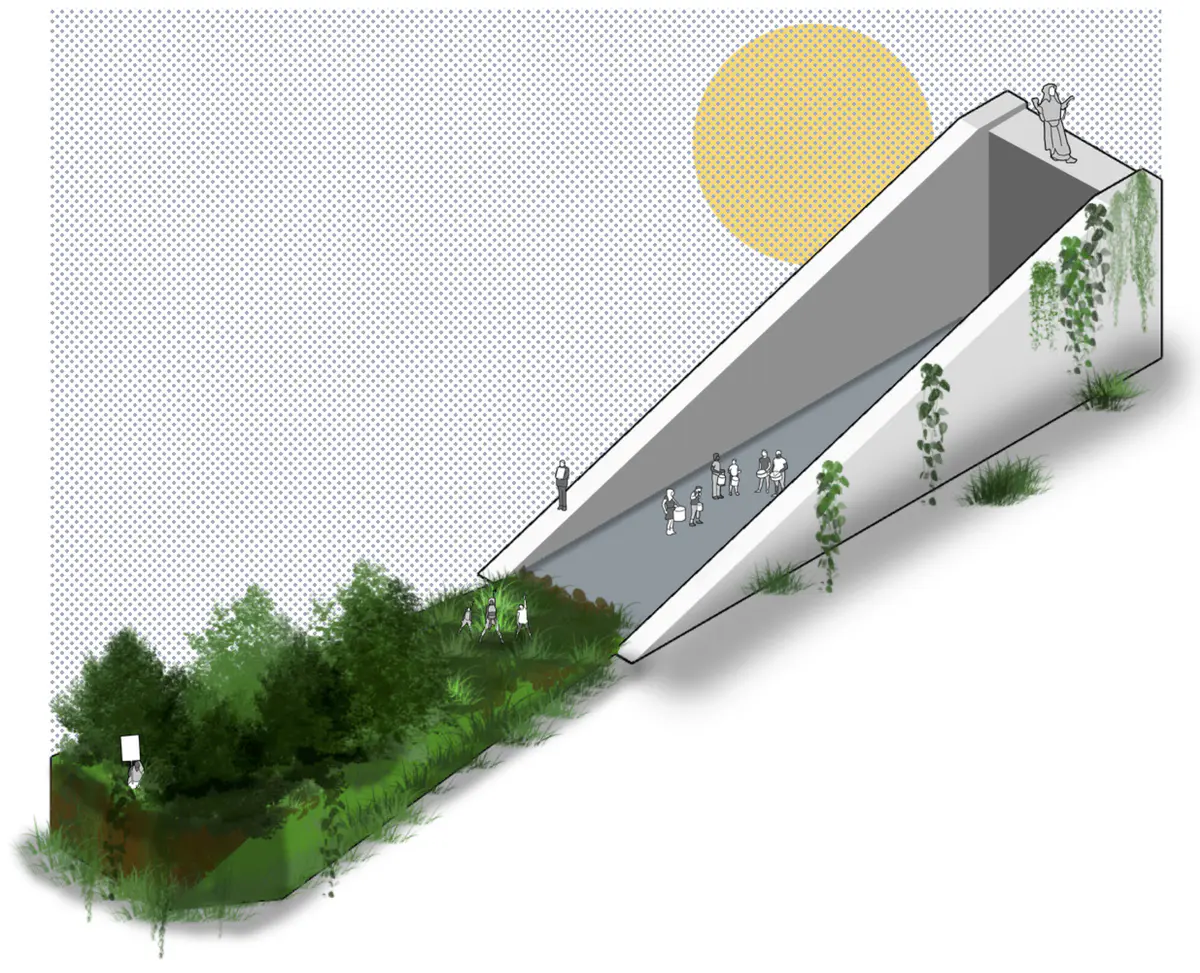
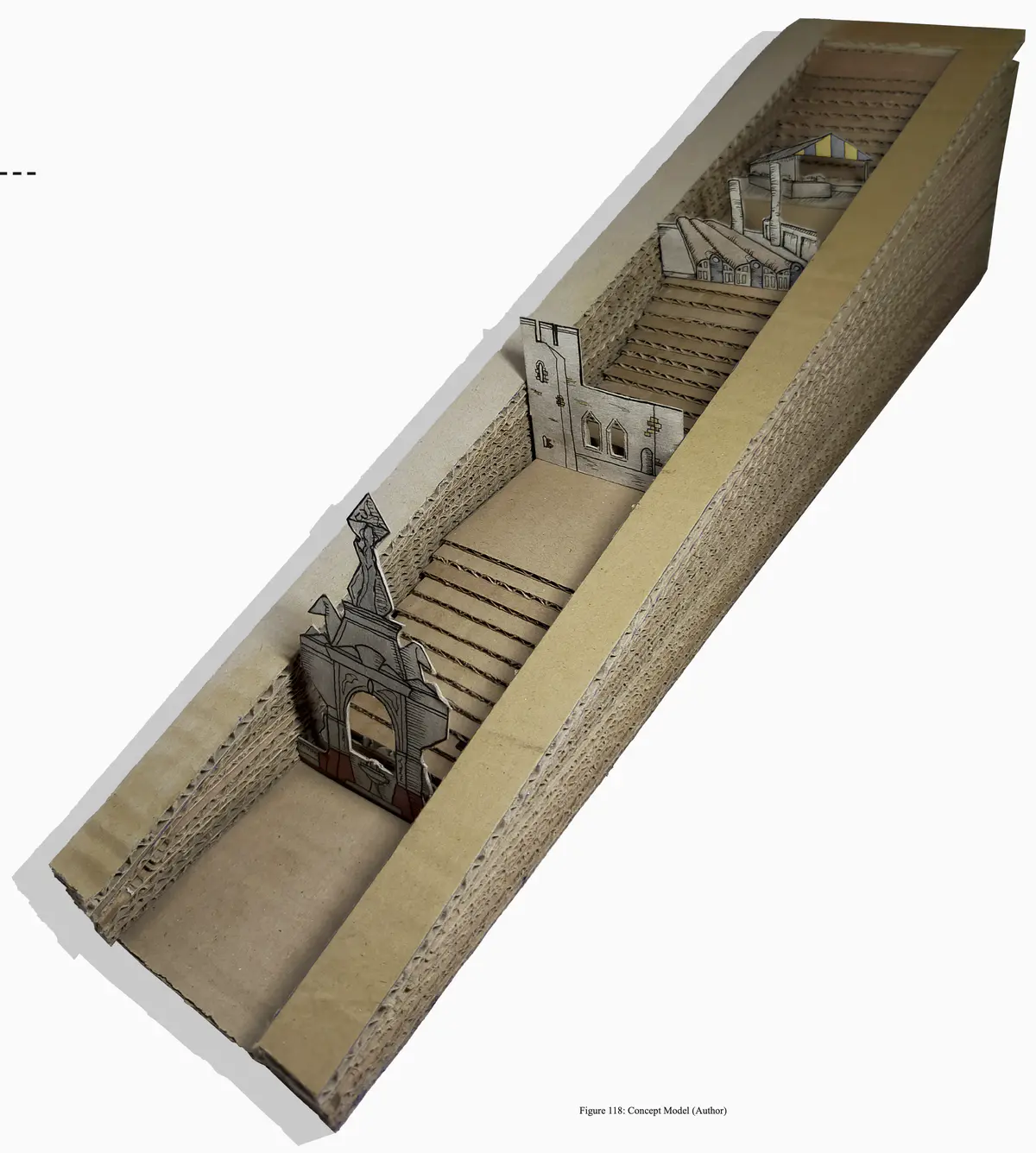
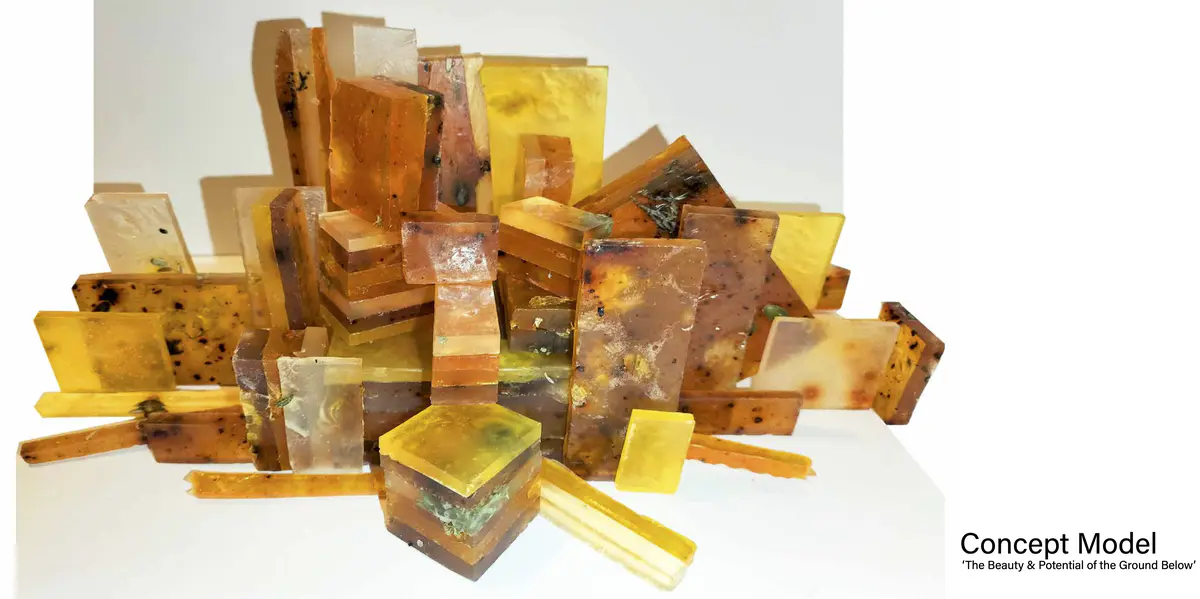
Concept Model - The model represents the idea of digging into the High Street itself. The idea was to drastically alter the form of the High Street to a point that it altered the ways that people in Dudley would live their day-to- day, changing the theatre of their lives, so that they could learn about their own history, their legacy, and about the endless possibilities of Dudley’s future. The idea was inspired by the word “Cut”, which in Black Country Dialect means “Canals”, as they were long cuts through the land.
Dudley’s fountain represents the Middle Ages, showing the growth of Dudley over time. While it was the Capital of the Black Country (and still is), the Middle Ages is when Dudley saw itself come into it’s own place, being recognised as a big market town, and slowly expanding it’s territories and influence.
The Castle represents the Dudley Castle, built in the 11th Century. Ruling over the land, the Castle is a key component of the Legacy of Dudley, sitting on the highest point for miles around, rich with history, from Being demolished twice, to the civil war, to now watching over the Zoo.
The factories represent the Industrial Revolution era of Dudley, a time when Dudley was the king of England, and basically ran the entire process. It was an important aspect of Dudley’s Legacy, and sits as probably its crowning glory - even if today we can recognise the disastrous affects it had on the world in the short period of time the era passed.
The Market represents the modern day. Dudley has seen better years, but it is with this project that I propose that even better ones are just around the corner. While people don’t look fondly at Dudley, those from there have a fierce dedication to the legacy of Dudley, which hopefully will burn to a brighter future.
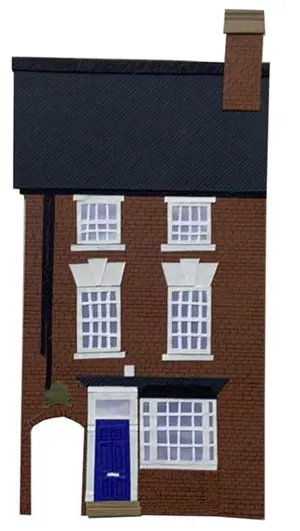
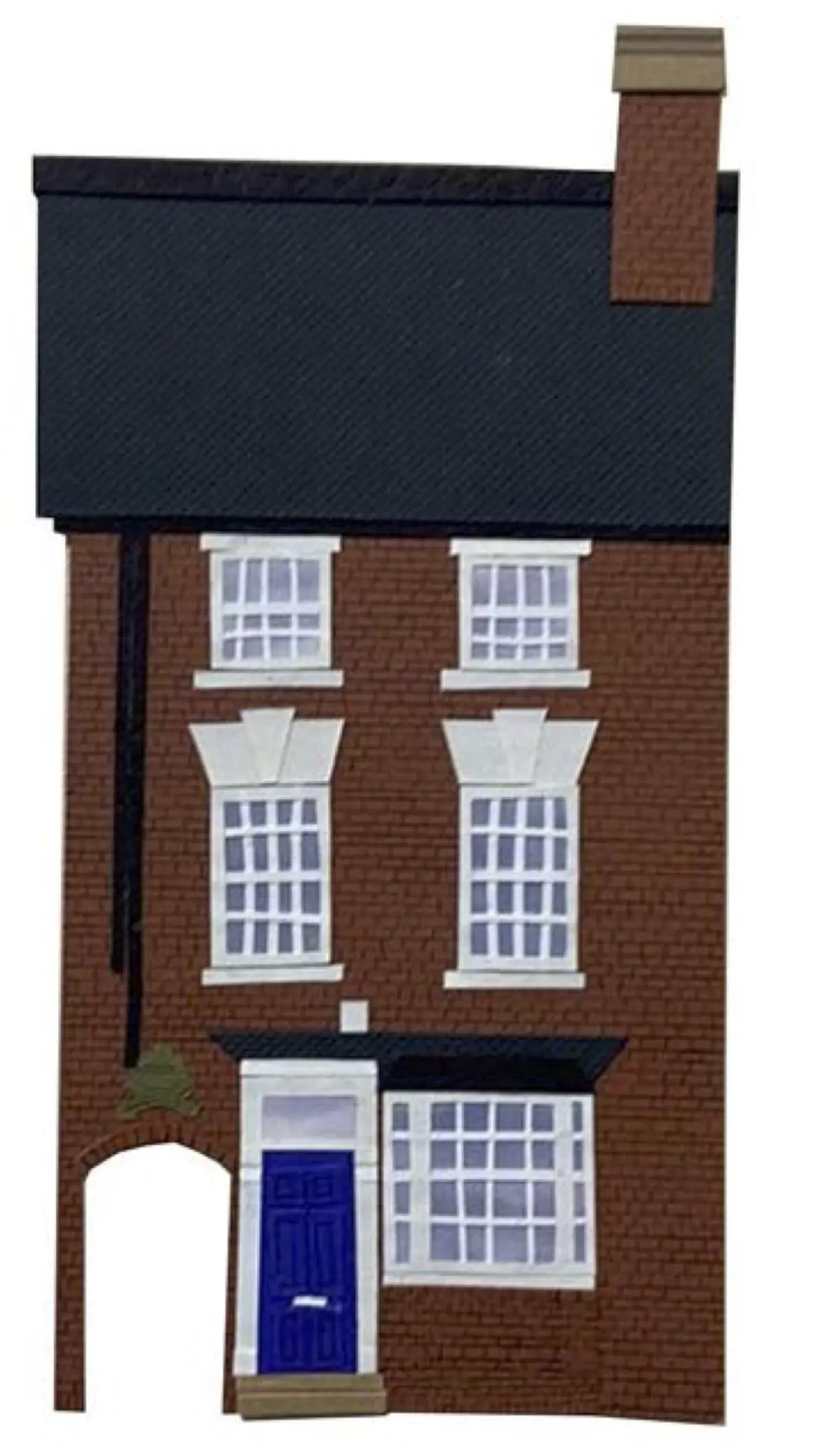
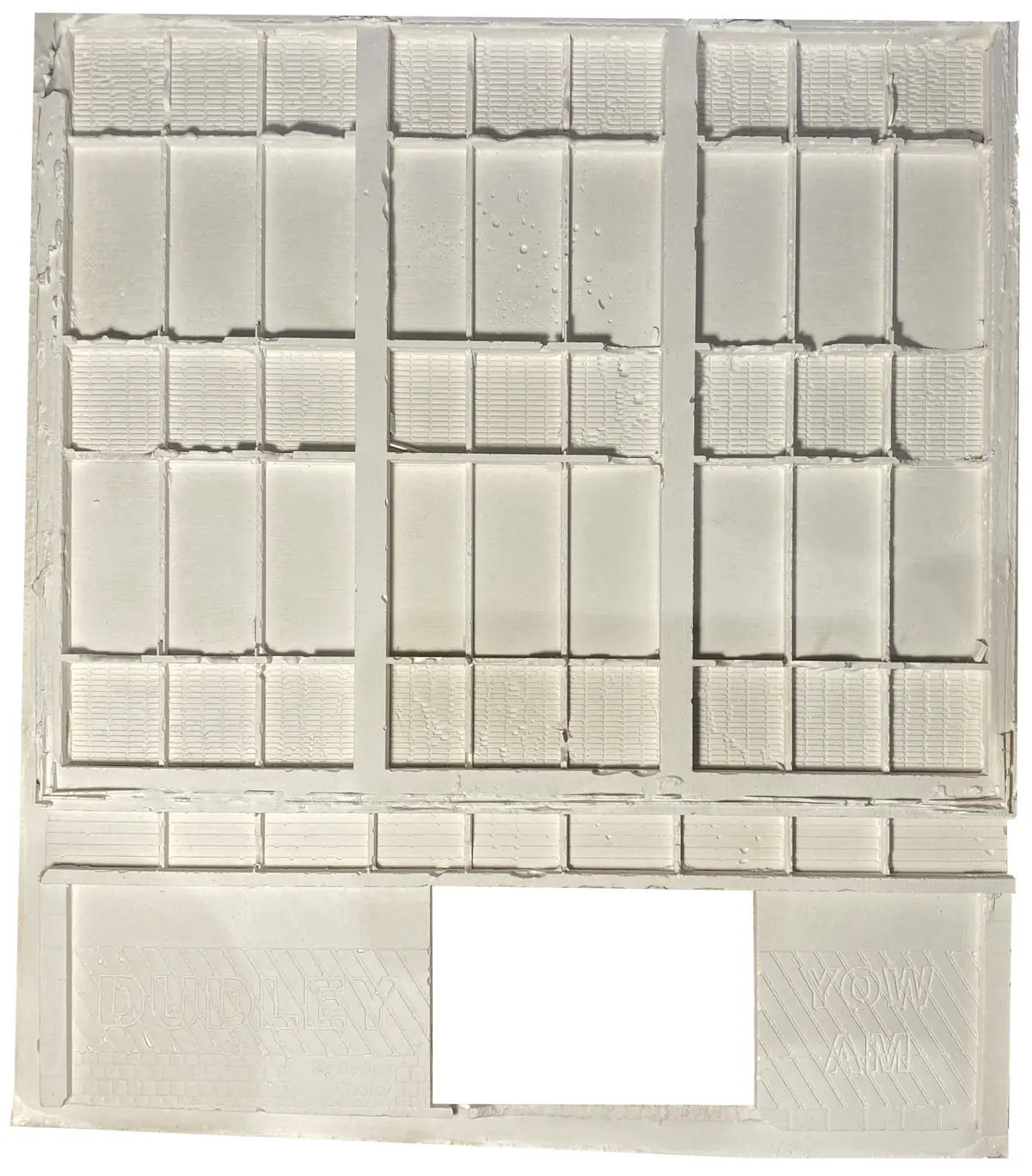
This building has been picked because it is significant as it represents the language slang used in the local area. Not only that, the facade clearly looks worn and requires repair throughout. This is the best place to start as the locals would easily refer to it via slang. So when spreading the news of repair, people would instantly know which building it is.
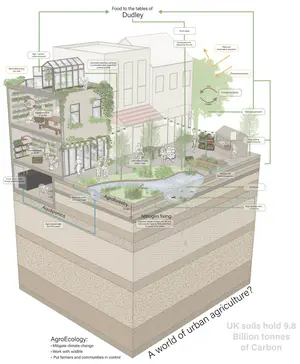
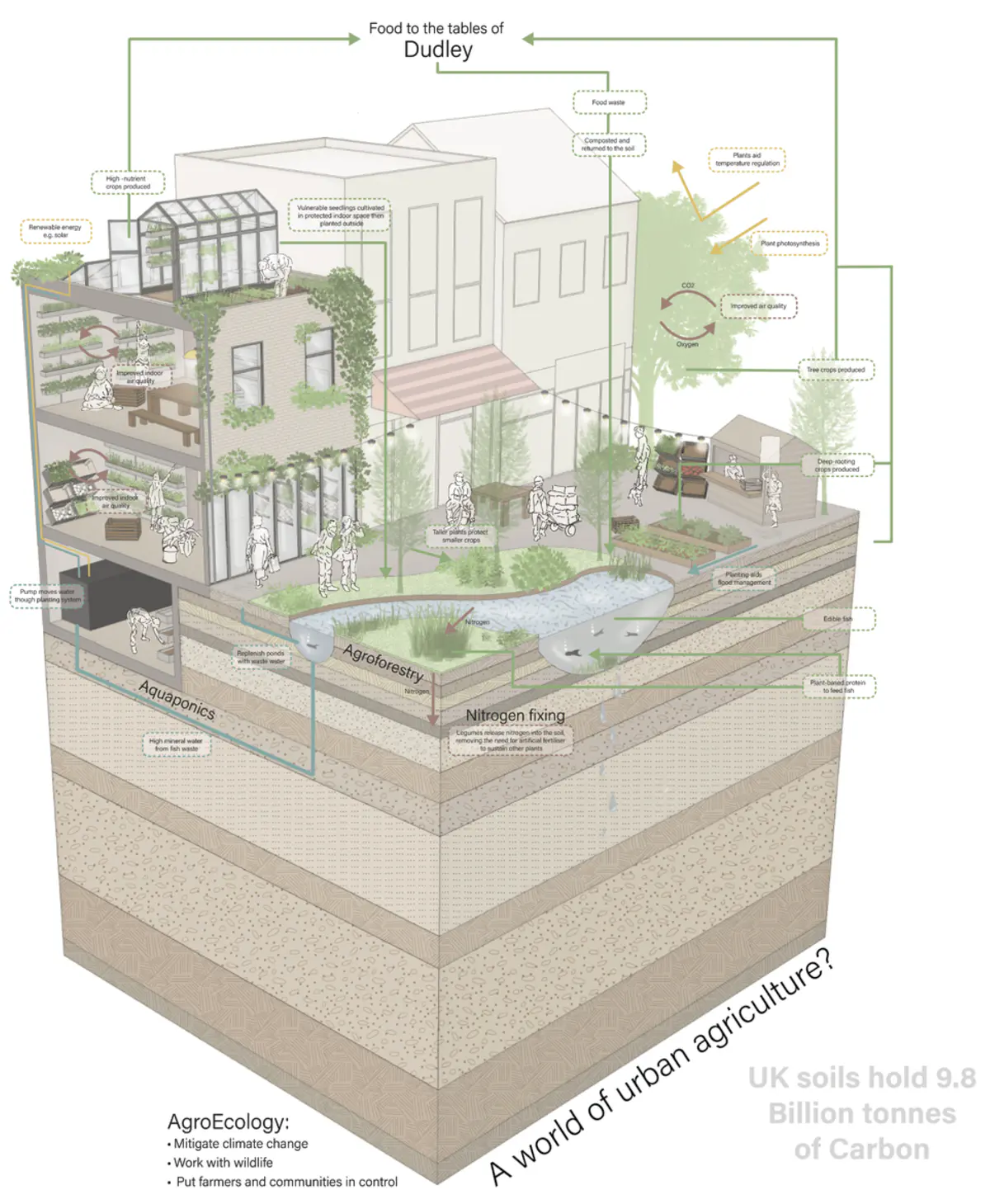
Nurturing AgroEcology in Urban Life
A strategy for living alongside food production
A critical part of the climate crisis is the degradation of soil, leading to scientists predicting the UK has approximately 100 harvests left of stable crop production. As an attempt to address the problem this project will explore the possibility of integrating sustainable agriculture into an urban setting, reducing the strain on agricultural land, reducing food miles and widening city biodiversity. Taking guidance from the farming movement, ‘Agroecology,’ a climate conscious, wildlife supporting and community engaged closed loop system will be developed, combining traditional growing with technology driven techniques that will support each other to produce a diverse plate.
Dudley High Street will be the focal point, reinvented as a destination not just for the purchase and consumption of food but also its creation, driven by the needs and engagement of local people. Connecting the community to the food they eat.
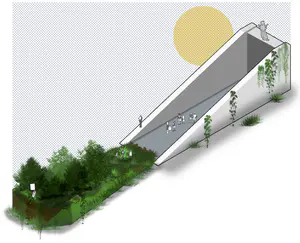
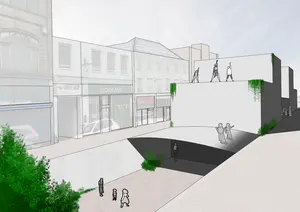
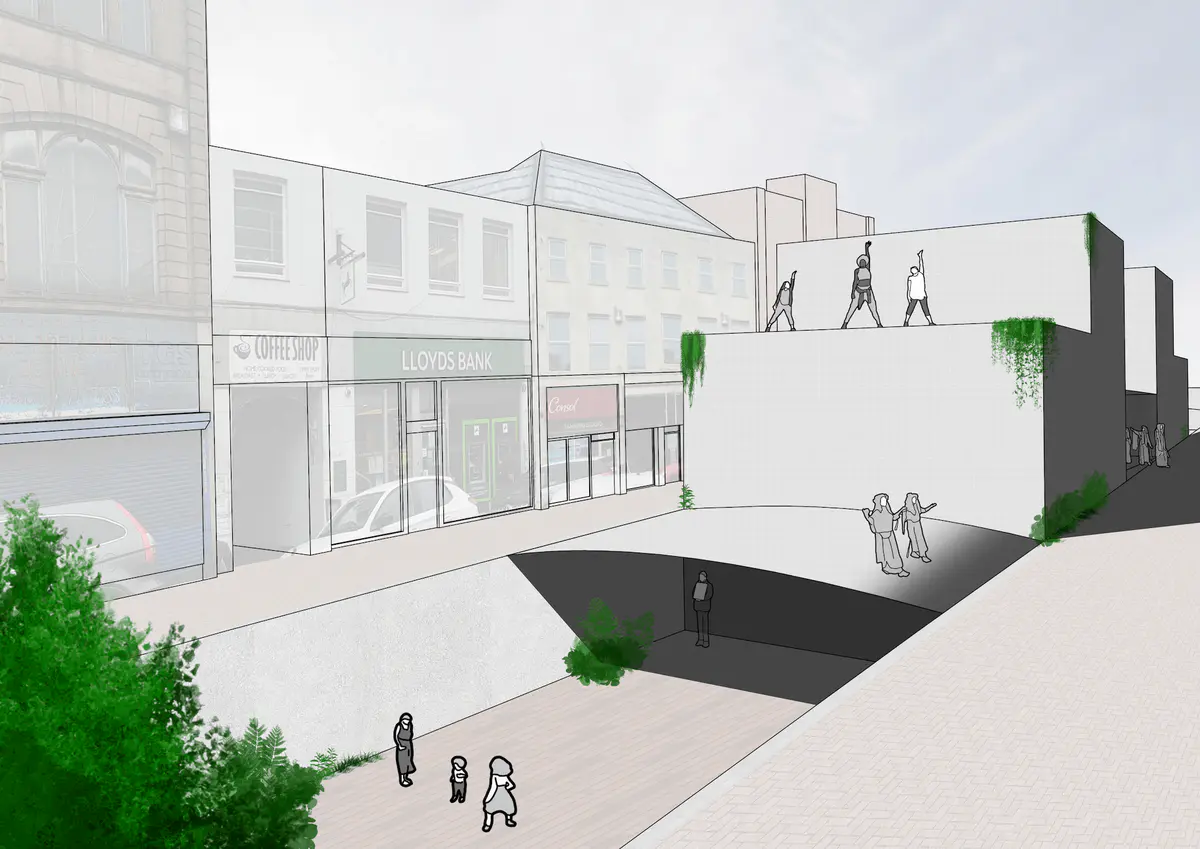
The whole High Street would be dug out to make way for this new kind of “street”. The idea, as stated, is to alter the way that people use this street, so that they can learn about the legacy of Dudley. This would mean that there would be a canopy that sits on top of the cut, that would also act as a means to shelter everything underneath, but would also be made in Dudley to promote local craftsmans. This canopy can then hold something like Theatre Curtains with the history of Dudley presented on them. As you walk through the cut, you go through all the different parts of Dudley’s Legacy - Saxon, Middle Ages, Industrial Revolution, Modern, and you would end the walk on the “Future”. You would start at one end, up by the top church, and as you walk through towards the market place, you would walk through the eras in chronological order. Then, once you exit the tunnel, you would leave the Modern era, and come out into the reclaimed green space, which would represent the future of Dudley’s Legacy. This would be a Miyawaki Forest that would be expanded out through the streets, taking over the spots where cars used to drive, to now benefit Dudley, it’s people, and the world as a whole.
Dudley’s High Street is about 240 metres long, about 9 metres wide, and rises about 8 metres. This would provided a very prominent feature for the High Street if it was dug out and recommissioned.
An added aspect to the dug out street would be that of the canopy that would reside above it. While thinking of the design, two ideas stood out - one that would stand raised, at about the same level as the end of the street, which would create this arcade styled archway that would reside high above the street. The second was having the canopy be flush with the pavement all the way up, except at the end that would then provide a small increase around the steps.
Both ideas serve the same purpose, but provide drastically different means of doing so.
Nurturing AgroEcology in Urban Life
A strategy for living alongside food production
A critical part of the climate crisis is the degradation of soil, leading to scientists predicting the UK has approximately 100 harvests left of stable crop production. As an attempt to address the problem this project will explore the possibility of integrating sustainable agriculture into an urban setting, reducing the strain on agricultural land, reducing food miles and widening city biodiversity. Taking guidance from the farming movement, ‘Agroecology,’ a climate conscious, wildlife supporting and community engaged closed loop system will be developed, combining traditional growing with technology driven techniques that will support each other to produce a diverse plate.
Dudley High Street will be the focal point, reinvented as a destination not just for the purchase and consumption of food but also its creation, driven by the needs and engagement of local people. Connecting the community to the food they eat.
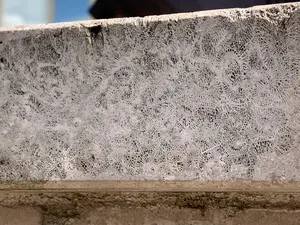
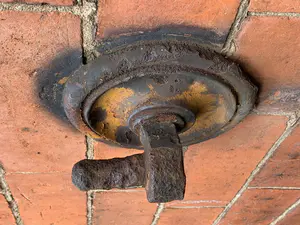
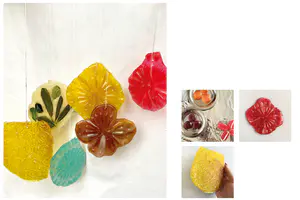
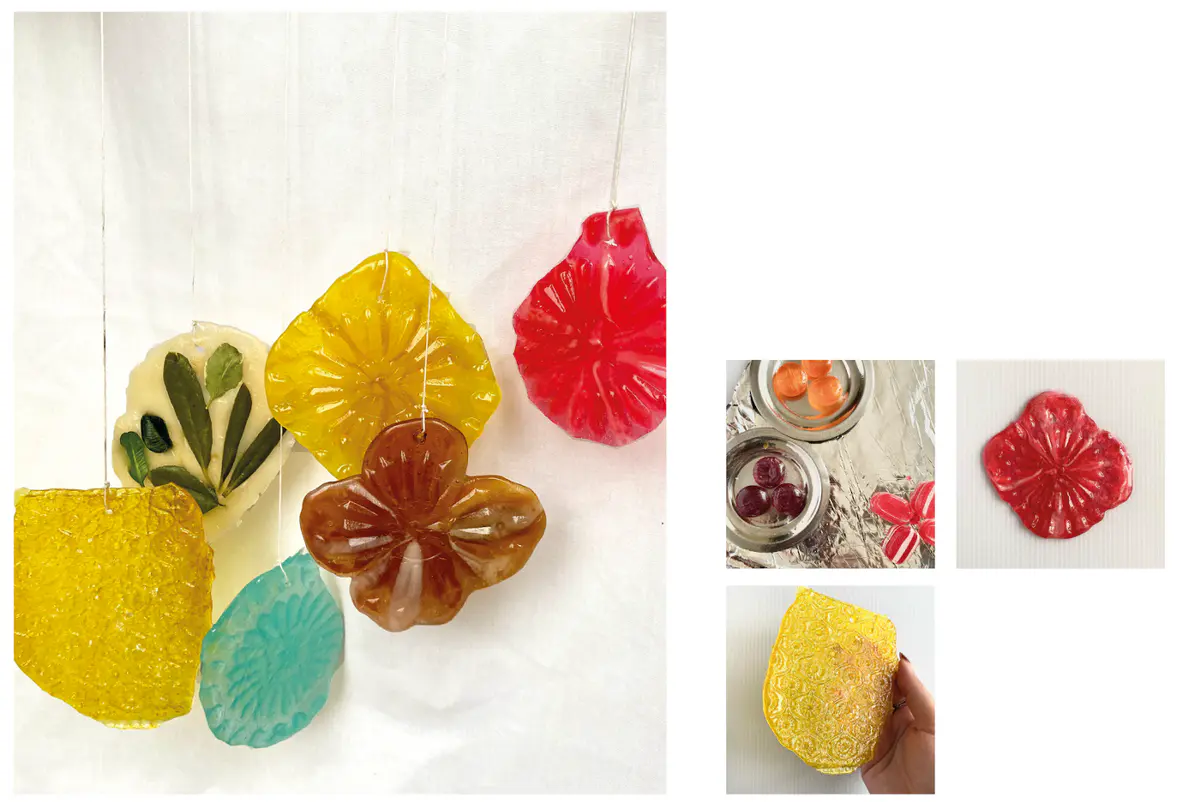
This gift was created to highlight different points in the social spaces on the high street. Aspects that we can improve on and celebrate. One point found was to incorporate more green spaces to improve health and wellbeing. The other to celebrate the textures and embossings in Dudley’s early ironworking. These ornaments were created by melting sweets and printing patterns onto them.
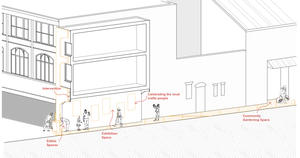
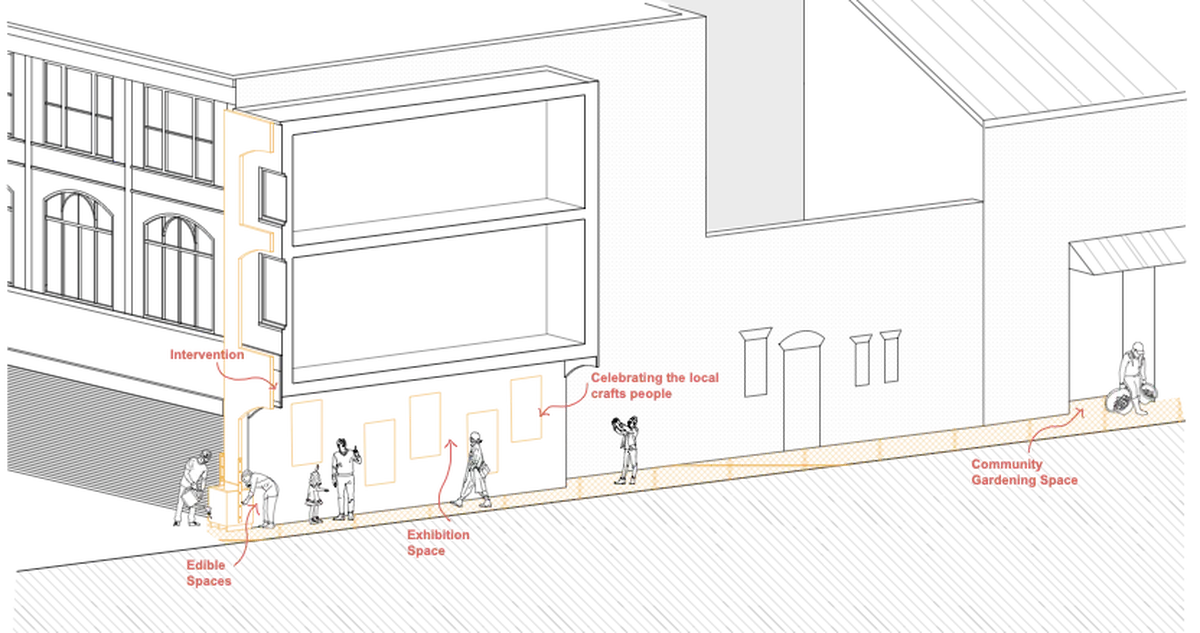
By utilising the passageway to display exhibition work from local institutions it would not only encourage them to create their crafts, it will celebrate their work and the range of crafts that Dudley has.
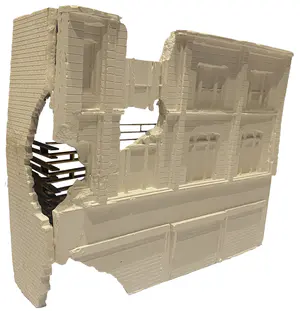
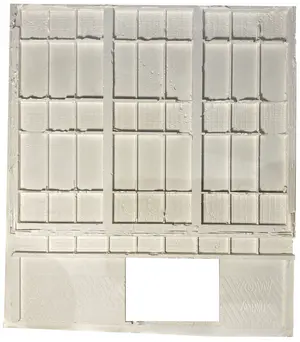
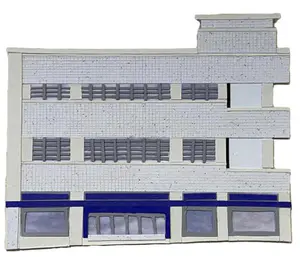
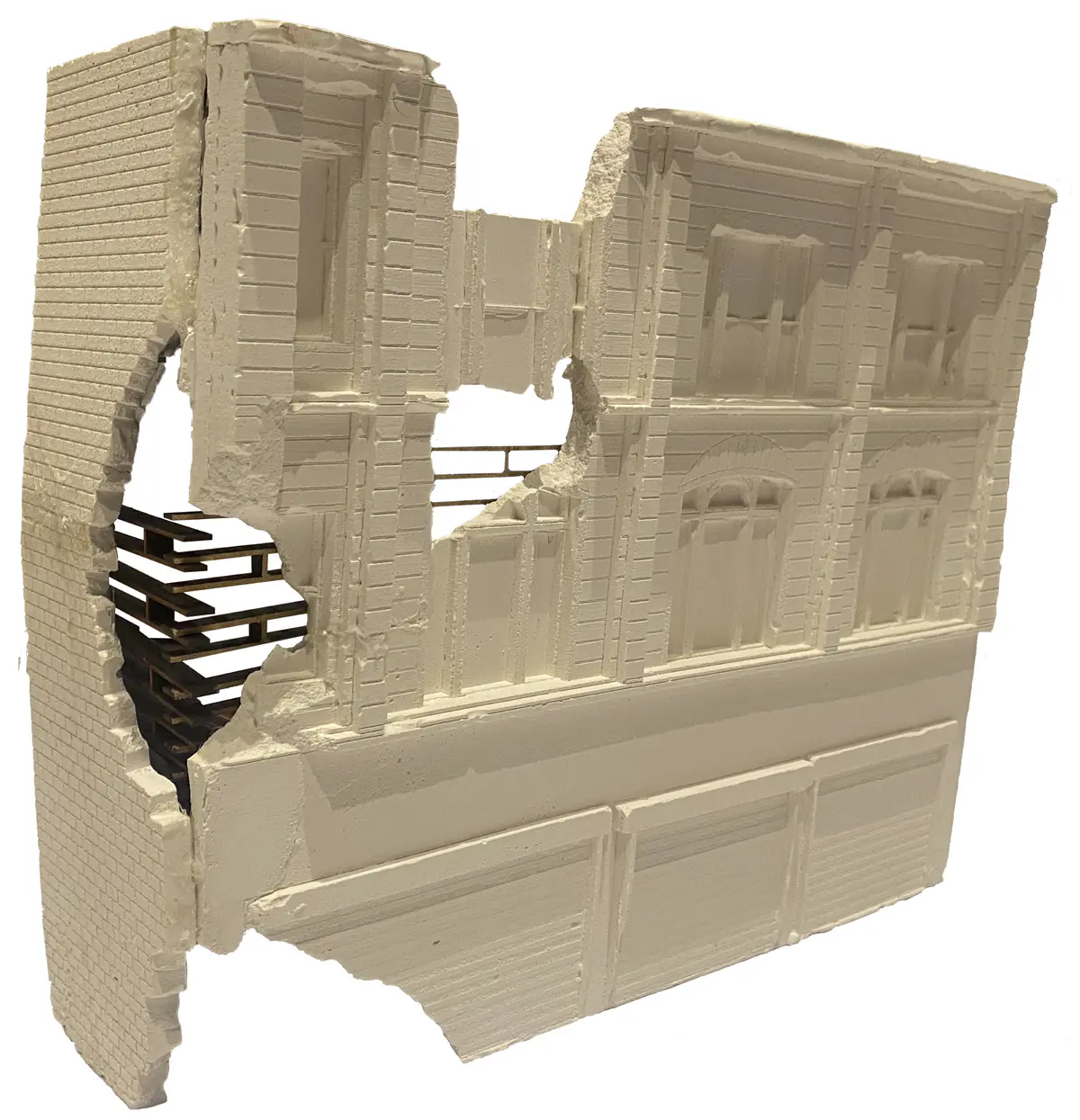
This building has been chosen due to the clear retrofit it has already undergone. The building has two halves, a modern function on street level with roller shutter doors. These doors seem very out of place as they are not shy in hiding their presence. Then the top half is traditional stone and mortar with some elements of detailing around the windows. I wonder what the addition would look like with the zero- carbon material repair pallet.
The main structure would have various spaces such as the Museum space, possibly a place that people can pin up local activities, and maybe rooms for either changing or for performance practice. As the street is 11m wide on average, there is plenty of space to have the building
fill the space. As the sunlight comes from mainly the south, the south side buildings often shadow the street entirely, which would mean that something being built (especially as it will be dug down a bit) would not shadow out the other buildings. The biggest hurdle to tackle is
that the space shouldn’t not feel overwhelming to the other shops or those who walk down the pavement. Because of this, most of the building’s structure would be in the underneath area, and only parts of it would pop out over the pavement. As the design would be flush
with the pavement, there are also opportunities to have crossing bridges that are both useful by the public, but also incorporated with the design of the new street.
The back of the street would create a unique space for social activities. The space is wide enough and long enough for a performance theatre space to be erected there, but it also has the possibility of having some kind of altered shape to the area, like a raised platform that could house
seating and other social activities. However, the space can also perfectly fit a fully regulated tennis court, badminton court, and volley ball court. People have mentioned that there is also a lack of sport engagement in the area, so this could be used to provide that kind of space.
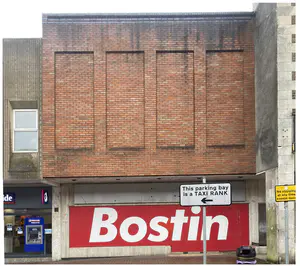
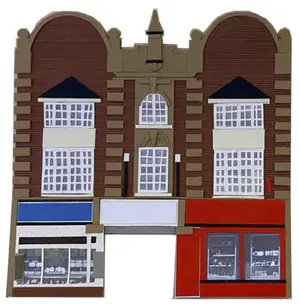
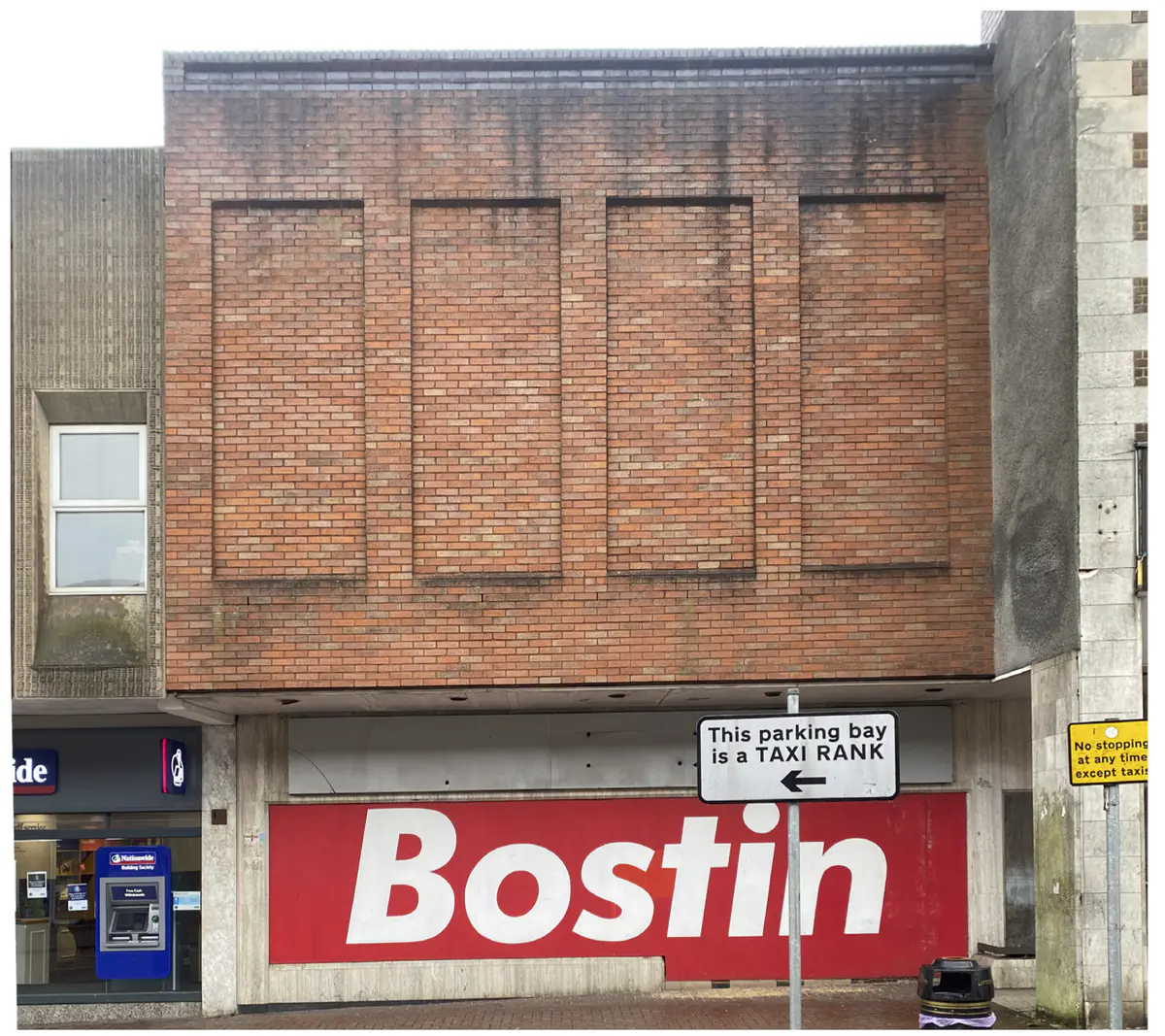
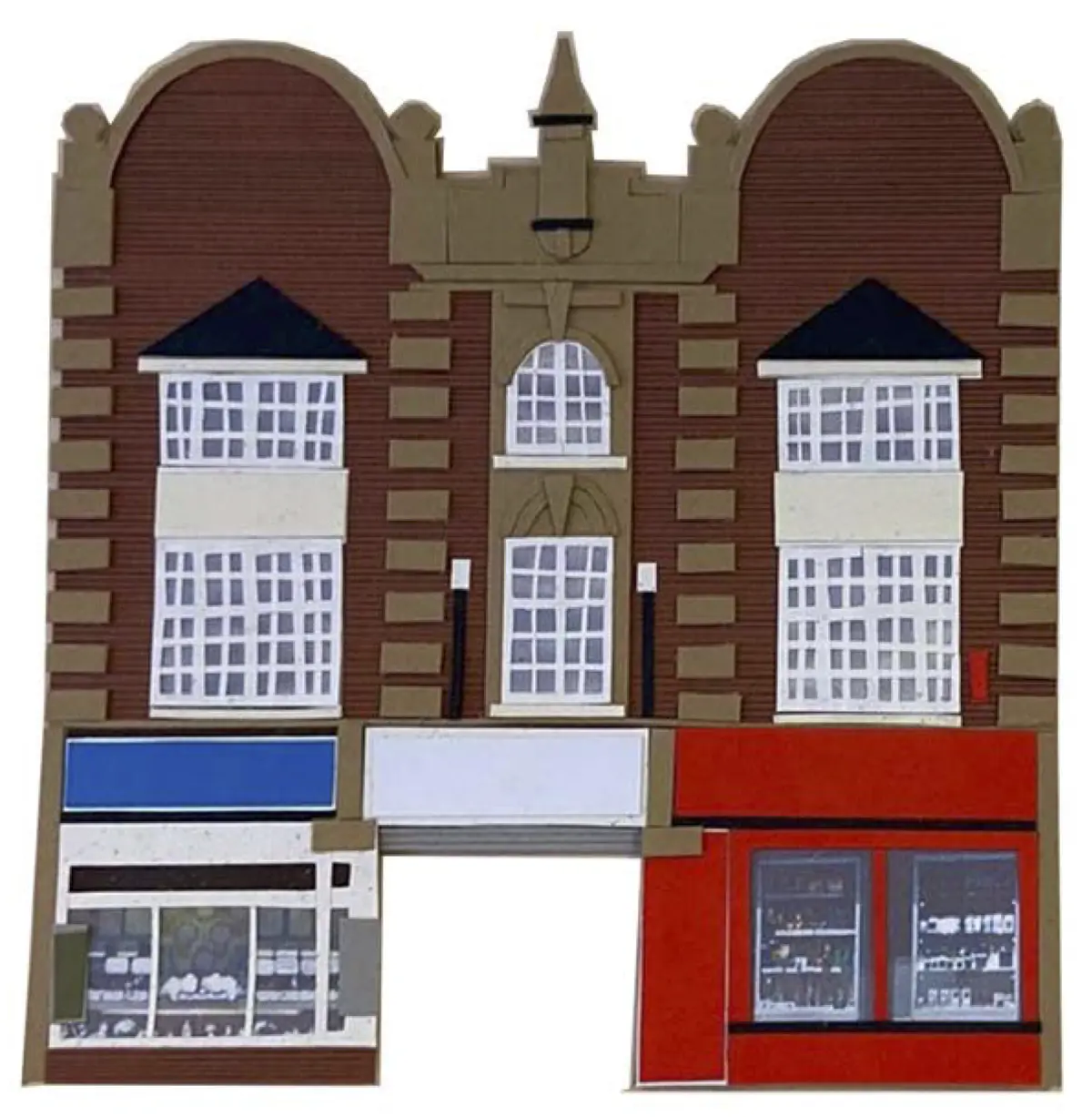
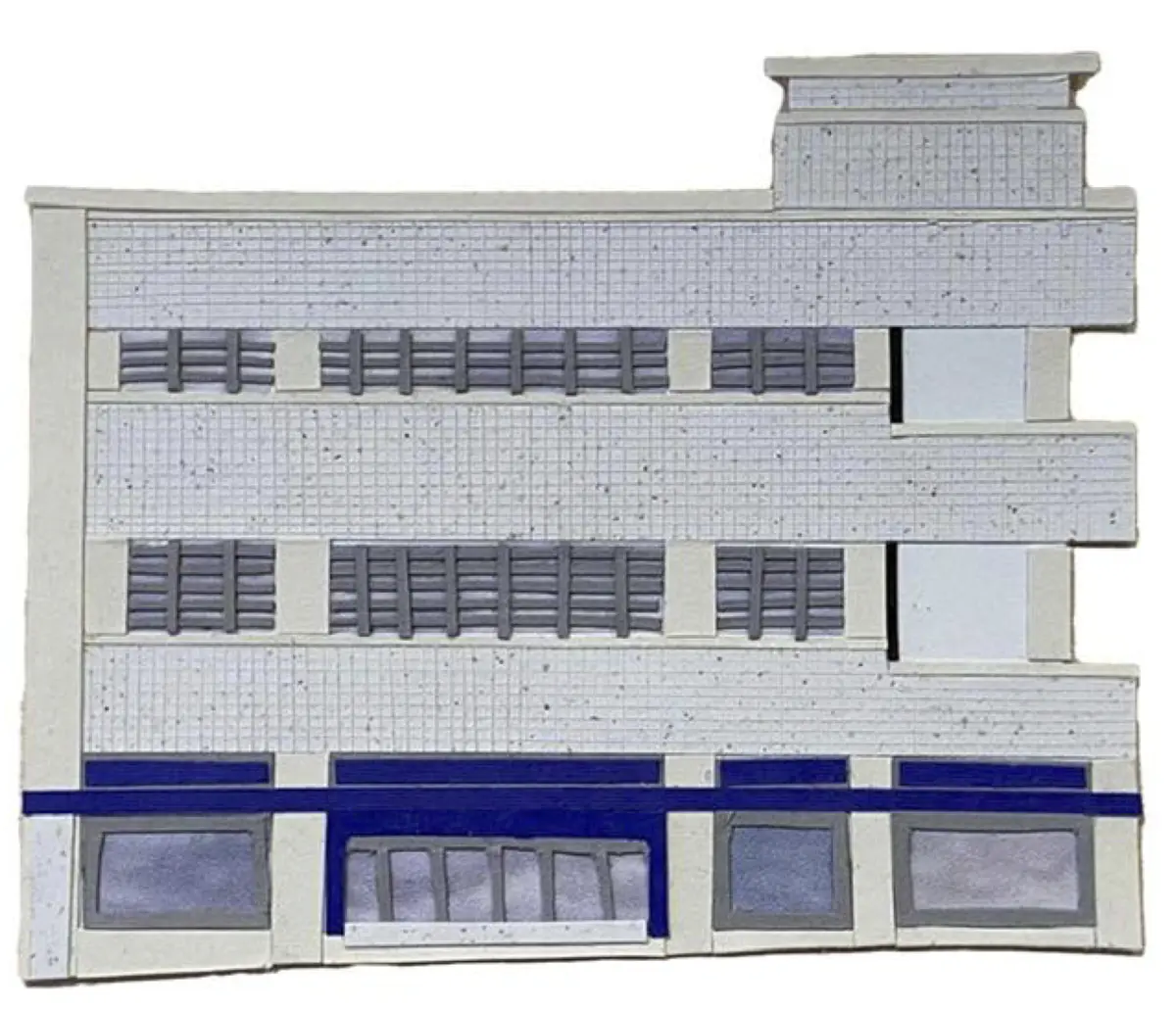
There is a clear presence representing Dudley with the bold red ‘Bostin’ sign at ground level. Chosen for its cantilever first and the second floor, this building could be adapted to have an external space. Also, there is a slight ‘hotel Fouquet barrière’ about the facade as its bricked-up windows represent change over time.
Golden Touch
It’s my wedding anniversary
Ari is cutting my hair
“To make you look younger”
He says
We guess each other’s age
A trick he’s pretty good at
We talk about daughters
Sons
Families
How he goes back every year
When he can
To northern Iran
But really his family’s here now
Round the houses in Brum
From a young age
Now his home is Dudley
Four years in the shop
Cutting
Blending
Trimming
The heat from the hair dryer
Beats the sweepings to the floor and
I escape for twenty minutes
In the stories
In the swift hands
The mirrors
Posters from a bygone age
Product on the shelves
The smell of wax and leather
Scissors sweep over the comb and
I learn that the skills are hard taught
From the first time with the razor
To the years later
Efficient
Precise
Art in my eyes
Soon his brother will join him
From Manchester
Where he’s currently learning
To catch up
The future is all about the family and
I hope the shop is still here
For when his son
Picks up the scissors
For the first time
Thanks for the haircut Ari
It took years off me
Lichen as bioindicators
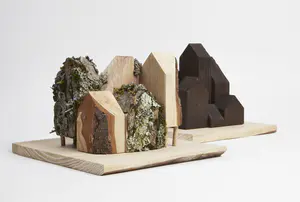
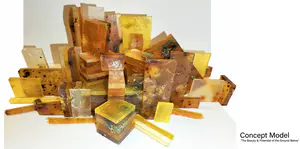
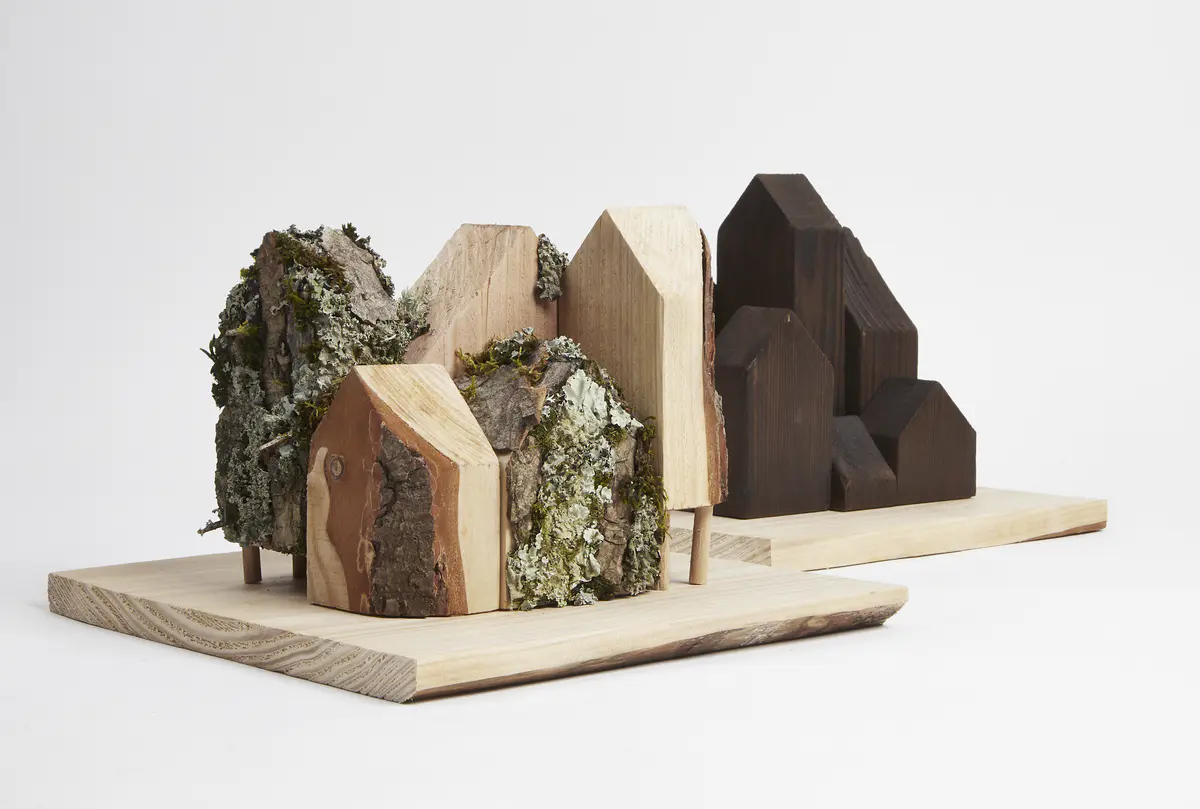
Lichen Vs Carbon. These concept models look to document both the current state of Dudley Highstreet and the vision looking towards the future within this thesis project.
The lichen covered model looks towards a future in Dudley that is rich in texture, colour, nature and oxygen. Natural materials promote natural growth, and textures such as rough sawn timber and stone are the prefect hosts for lichen. All new buildings in Dudley would benefit massively from following a fabric first approach and adopt the use of sustainable and recycled building materials along with systems that use minimal energy.
The lichen model represents a vision for this thesis, buildings that are covered in natural materials and lichens that help sequester carbon and promote a healthier Highstreet. Suggestions of raised buildings also proposes less disruption to the ground and natural landscape, giving plants and animals the opportunity to thrive in an otherwise hostile concrete environment. Raised buildings also look towards a future planet with rising sea levels, future factors that will drastically affect the way we carry out daily lives and futureproofing all buildings for generations to come.
This second model uses the Shou Sugi Ban method of charring timber to waterproof it. In this case however it represents the embodied carbon and pollution within the highstreet as it exists now. The simplicity and repetition is also used to symbolise the plain nature of the highstreet with only a few materials exhibited, mainly brick & concrete. Once burnt the timber forms were brushed with wire wool to reveal the natural grain of the wood, a visual representation of degradation of layers of buildings that are built poorly or not constructed to last longer than a generation.
A collage response to a Co.LAB gift for the High St - “It was nice to be able to use the image for something else. It made me think about placing the cut-out roadmap onto a slightly brighter future version, with colour, vibrancy and plantlife, so that it reminds me what we are heading towards, but still with a hark back to the people and the industry that made Dudley the town it is...”