Dudley Time Portal

Items tagged: Industry
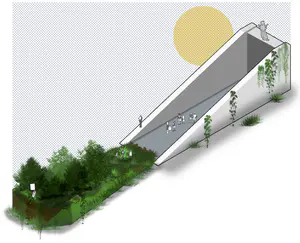
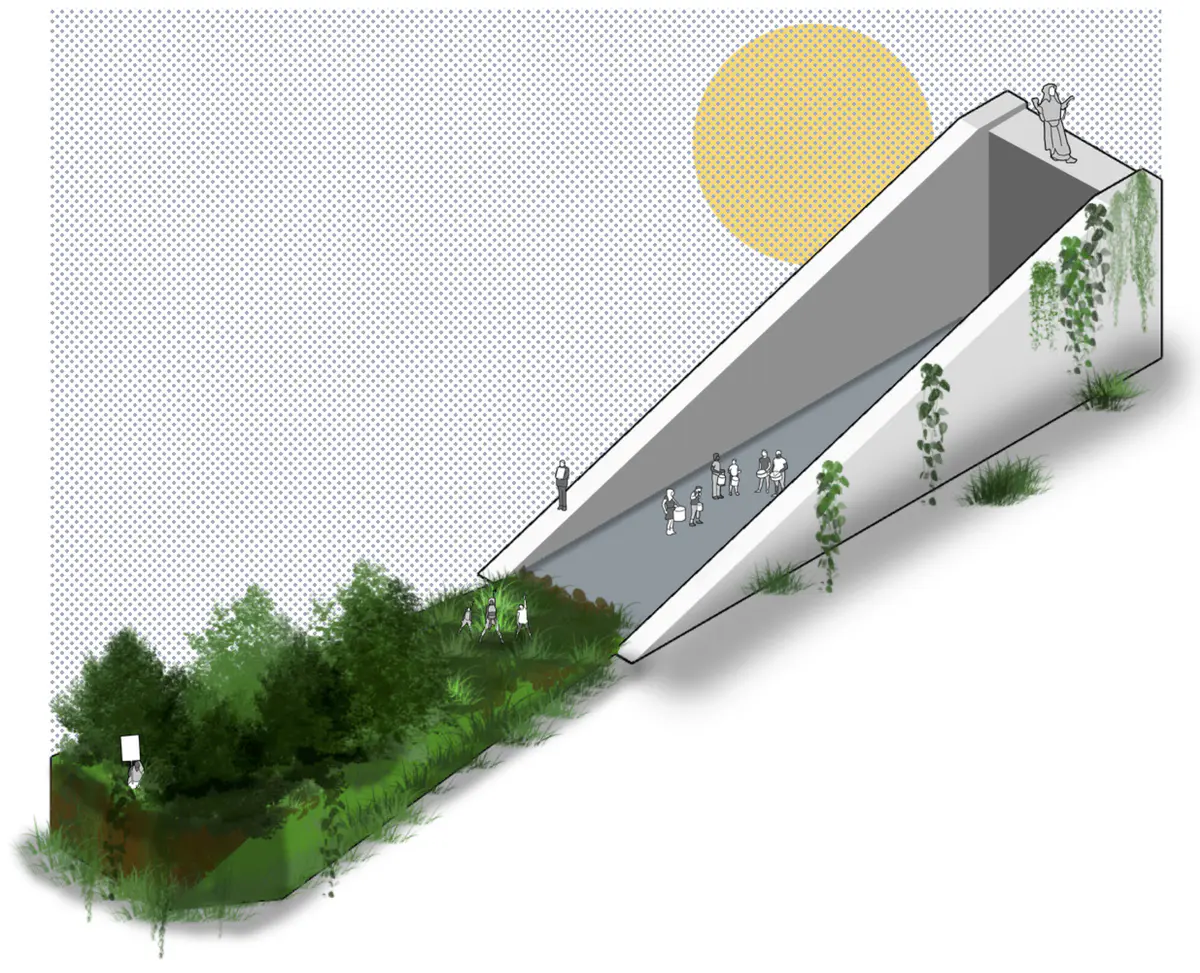
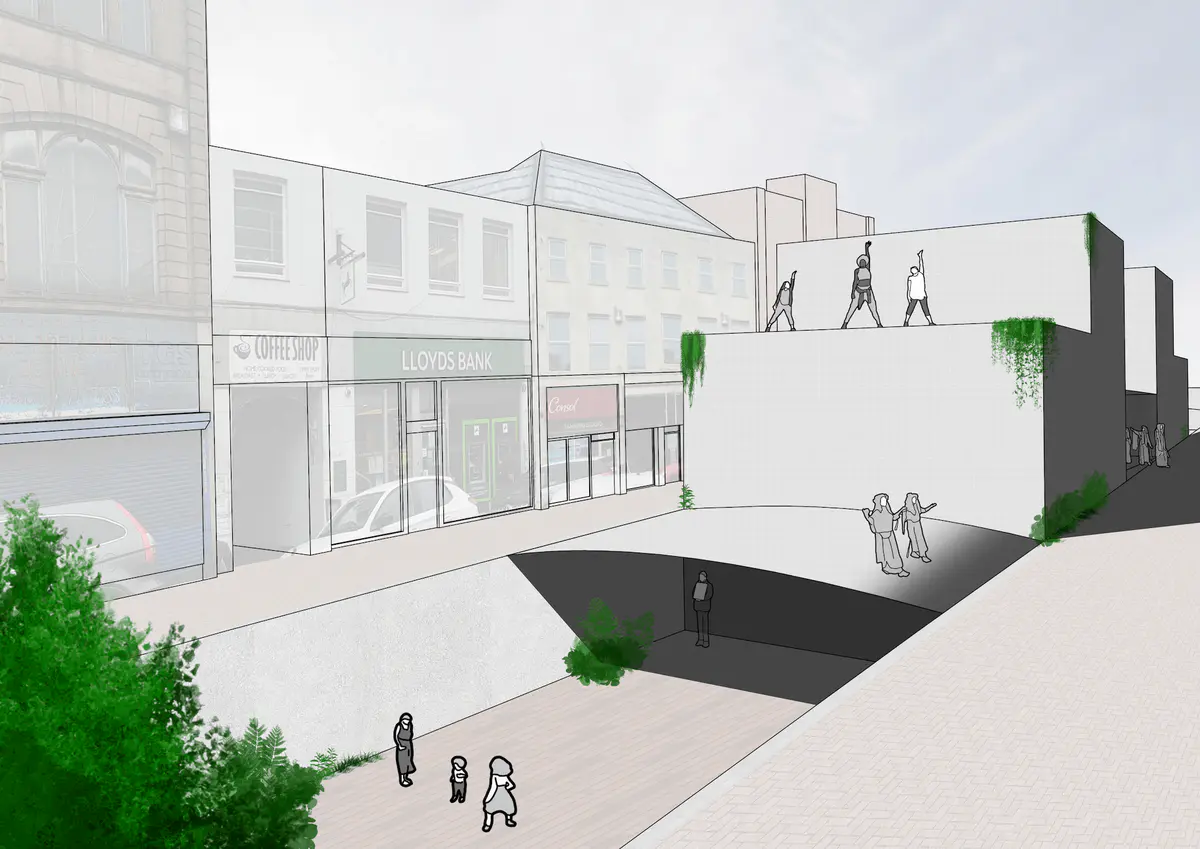
The main structure would have various spaces such as the Museum space, possibly a place that people can pin up local activities, and maybe rooms for either changing or for performance practice. As the street is 11m wide on average, there is plenty of space to have the building
fill the space. As the sunlight comes from mainly the south, the south side buildings often shadow the street entirely, which would mean that something being built (especially as it will be dug down a bit) would not shadow out the other buildings. The biggest hurdle to tackle is
that the space shouldn’t not feel overwhelming to the other shops or those who walk down the pavement. Because of this, most of the building’s structure would be in the underneath area, and only parts of it would pop out over the pavement. As the design would be flush
with the pavement, there are also opportunities to have crossing bridges that are both useful by the public, but also incorporated with the design of the new street.

The back of the street would create a unique space for social activities. The space is wide enough and long enough for a performance theatre space to be erected there, but it also has the possibility of having some kind of altered shape to the area, like a raised platform that could house
seating and other social activities. However, the space can also perfectly fit a fully regulated tennis court, badminton court, and volley ball court. People have mentioned that there is also a lack of sport engagement in the area, so this could be used to provide that kind of space. - Oscar Law Proposed design.png
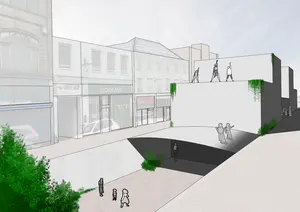
The main structure would have various spaces such as the Museum space, possibly a place that people can pin up local activities, and maybe rooms for either changing or for performance practice. As the street is 11m wide on average, there is plenty of space to have the building fill the space. As the sunlight comes from mainly the south, the south side buildings often shadow the street entirely, which would mean that something being built (especially as it will be dug down a bit) would not shadow out the other buildings. The biggest hurdle to tackle is that the space shouldn’t not feel overwhelming to the other shops or those who walk down the pavement. Because of this, most of the building’s structure would be in the underneath area, and only parts of it would pop out over the pavement. As the design would be flush with the pavement, there are also opportunities to have crossing bridges that are both useful by the public, but also incorporated with the design of the new street. The back of the street would create a unique space for social activities. The space is wide enough and long enough for a performance theatre space to be erected there, but it also has the possibility of having some kind of altered shape to the area, like a raised platform that could house seating and other social activities. However, the space can also perfectly fit a fully regulated tennis court, badminton court, and volley ball court. People have mentioned that there is also a lack of sport engagement in the area, so this could be used to provide that kind of space.
Imagining Map Drawing Collage Change Craft Past Future Potential Imagination Identity Industry Memory Learning Shelter Nature Plantlife Growing Architecture
A collage response to a Co.LAB gift for the High St - “It was nice to be able to use the image for something else. It made me think about placing the cut-out roadmap onto a slightly brighter future version, with colour, vibrancy and plantlife, so that it reminds me what we are heading towards, but still with a hark back to the people and the industry that made Dudley the town it is...” - 2656268F-99B4-47D8-8FF5-953A7068378B (1).jpg
A collage response to a Co.LAB gift for the High St - “It was nice to be able to use the image for something else. It made me think about placing the cut-out roadmap onto a slightly brighter future version, with colour, vibrancy and plantlife, so that it reminds me what we are heading towards, but still with a hark back to the people and the industry that made Dudley the town it is...”
Collage Imagining Abundance Aesthetic Beauty Agency Change Colour Connection Contrast Craft Creativity Expression Familiar Future Gift Identity Imagination Industry Interacting Emotion Joy Life Making Material Memory Nature Opportunity Past Plantlife Potential Moving Stories
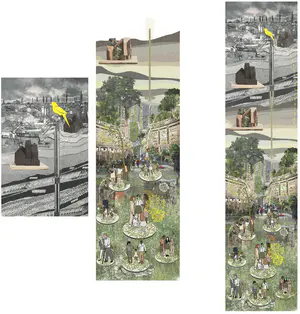
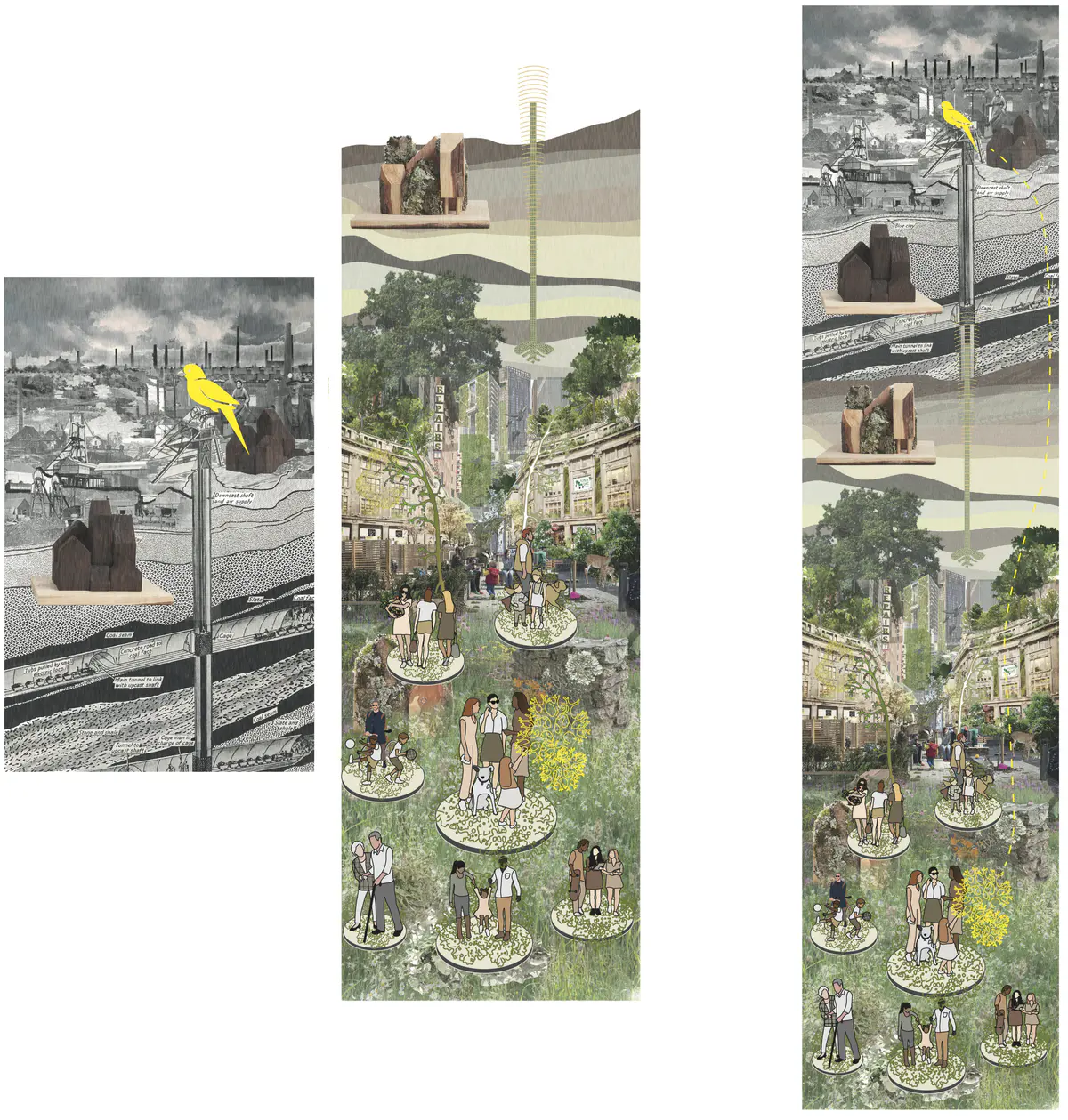
The yellow canary of the mines, a symbol of protection for miners spending time in highly polluted areas. The yellow lichen becomes the new symbol for Dudley, protecting inhabitants through carbon sequestration & clean air. - Michelle Gartside Concept Collage.png
The yellow canary of the mines, a symbol of protection for miners spending time in highly polluted areas. The yellow lichen becomes the new symbol for Dudley, protecting inhabitants through carbon sequestration & clean air.
Collage Drawing Imagining Model Architecture Nature Plantlife Growing Imagination Life Air Light Water Potential Opportunity Creatures Community Safety Industry Pollution
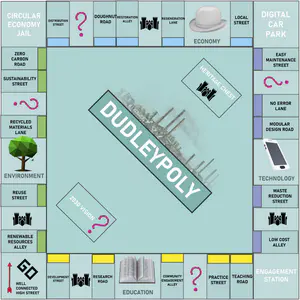
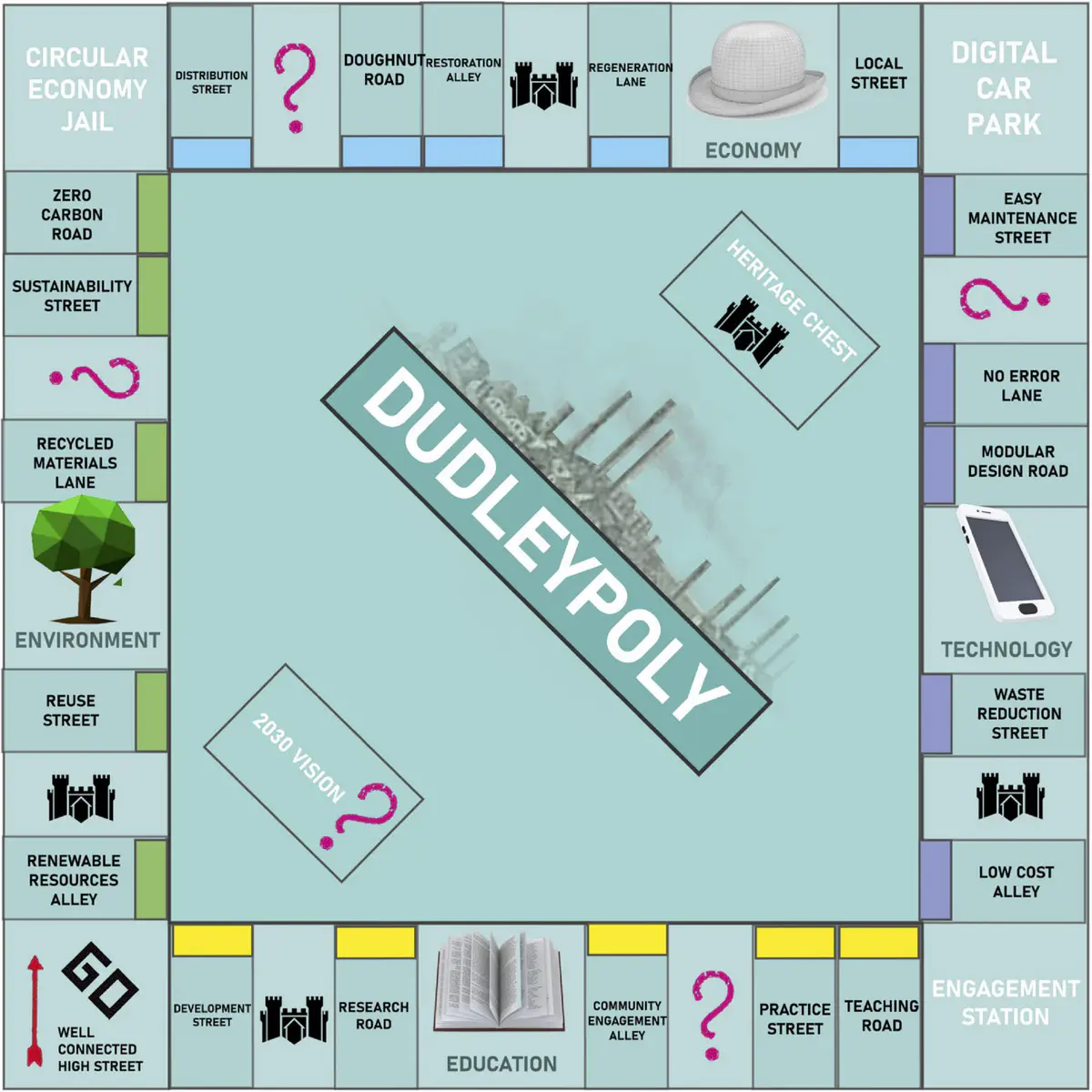
We created a visual representation of the main factors and sectors we came across in our research and explored individually: environment, economy, technology and education. It also summarises our goal of creating a connected High Street, and the steps we took to achieve this goal. - 1_7s93a2RG5Ut3waM0oEJExw.png
We created a visual representation of the main factors and sectors we came across in our research and explored individually: environment, economy, technology and education. It also summarises our goal of creating a connected High Street, and the steps we took to achieve this goal.
Other visual delight Imagining Economics Play Regenerative Technology Waste Learning Fairness Community Connection Material Sustainable Future Past Doughnut Industry
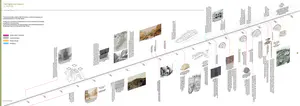
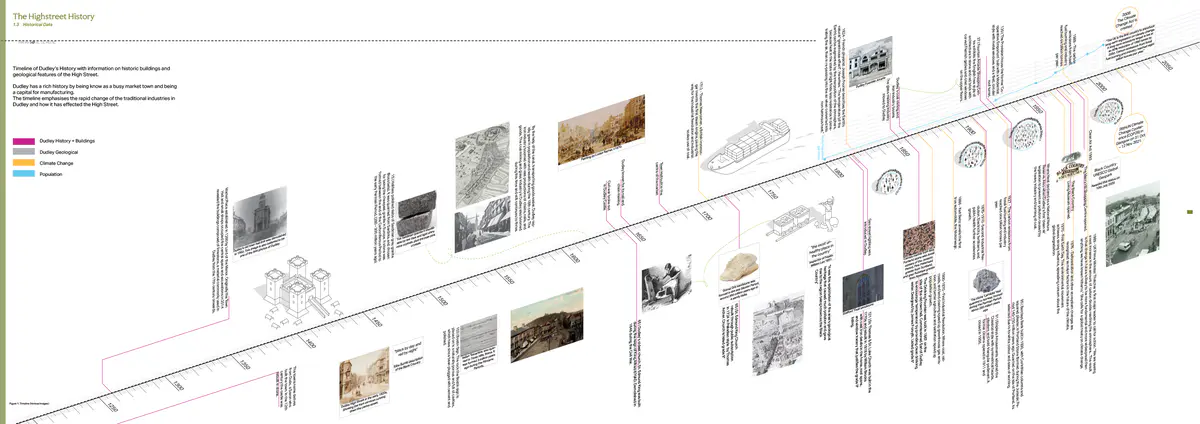
Timeline of Dudley’s History with information on historic buildings and geological features of the High Street.

Dudley has a rich history by being know as a busy market town and being a capital for manufacturing.

The timeline emphasises the rapid change of the traditional industries in Dudley and how it has effected the High Street. - Sita Patel Group Timeline.png
Timeline of Dudley’s History with information on historic buildings and geological features of the High Street. Dudley has a rich history by being know as a busy market town and being a capital for manufacturing. The timeline emphasises the rapid change of the traditional industries in Dudley and how it has effected the High Street.
Drawing Text Diagram Past Hiding Material Commerce Economics Architecture Words Water Transport Making Industry Vehicle Colour Pollution Fairness Light Growing Nature
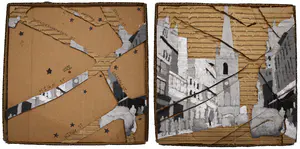
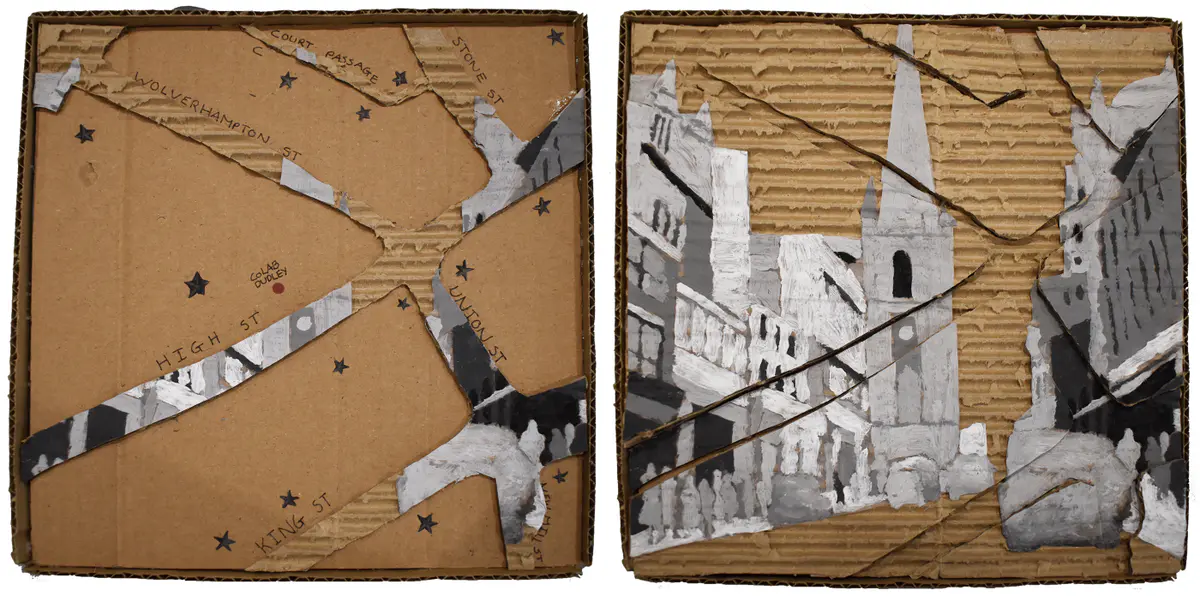
This gift aims to address the disconnect between Dudley and its industrial history. Once the ‘Capital of the Black Country’ its high street now looks like any other. With the intention of public engagement, this gift could be handed out at CoLab Dudley’s base. Starting from there, people would be able to follow the map and visit the places marked by stars — all of which hold some historical significance whether it be the location of an old factory or school — where one missing puzzle piece may be located. Only after visiting these locations would they be able to complete the puzzle and see the final image of Dudley’s high street. - 1_JRGmmld9CMD9KdDVyeyUPw.png
This gift aims to address the disconnect between Dudley and its industrial history. Once the ‘Capital of the Black Country’ its high street now looks like any other. With the intention of public engagement, this gift could be handed out at CoLab Dudley’s base. Starting from there, people would be able to follow the map and visit the places marked by stars — all of which hold some historical significance whether it be the location of an old factory or school — where one missing puzzle piece may be located. Only after visiting these locations would they be able to complete the puzzle and see the final image of Dudley’s high street.
Collage Other visual delight Model Connection Gift Industry Interacting Invitations Past Missing Play Making
Localising Material Accessibility
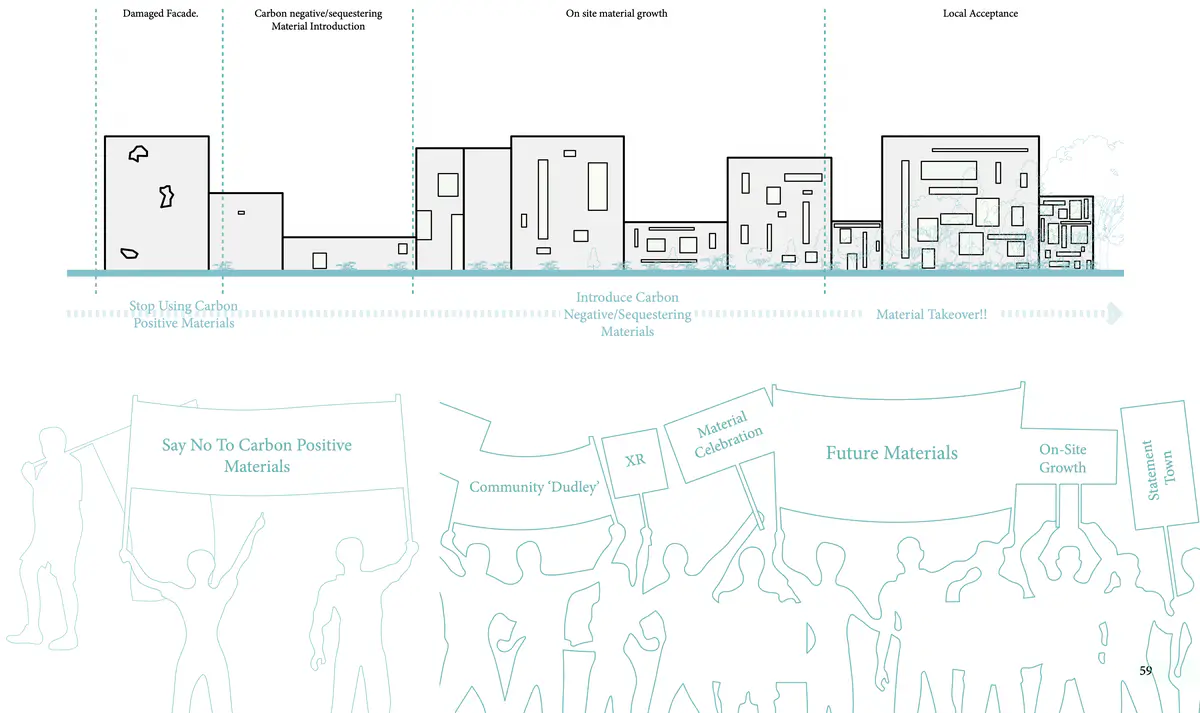
During my initial walk through the High Street of Dudley, I noticed an inevitable decline in the area. There were vacant shops, but those open had apparent facade damage. For the area to thrive, there needs to be an aesthetical uplift. Here I began to question how to make the repairs. On the one hand, one could complete a like for like repair with a deep clean to provide a new lease of life to achieve an aesthetical value. Alternatively, the repairs could be a status of where the street aims to be in the future. To achieve a statement, the implementation of repair work needs to stand out. It needs to be futuristic, a bold contrast to the existing.

At this point, I decided that after being informed of the damage the built environment has on the climate crisis, only carbon zero/ carbon sequestering materials would be present during repairs. This does not aim to destroy existing buildings but instead carefully implement repairs creating a patchwork effect across the street. This would then grow over time as more repair work is required.

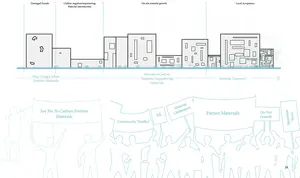
Over time, the high street would transform into a zero-carbon environment. The manufacturing and growth of these materials need to be local, so consideration is vital. This provides an opportunity for the site to be a material producer itself. - Ryan Cooksey Ban Materials.png
Localising Material Accessibility During my initial walk through the High Street of Dudley, I noticed an inevitable decline in the area. There were vacant shops, but those open had apparent facade damage. For the area to thrive, there needs to be an aesthetical uplift. Here I began to question how to make the repairs. On the one hand, one could complete a like for like repair with a deep clean to provide a new lease of life to achieve an aesthetical value. Alternatively, the repairs could be a status of where the street aims to be in the future. To achieve a statement, the implementation of repair work needs to stand out. It needs to be futuristic, a bold contrast to the existing. At this point, I decided that after being informed of the damage the built environment has on the climate crisis, only carbon zero/ carbon sequestering materials would be present during repairs. This does not aim to destroy existing buildings but instead carefully implement repairs creating a patchwork effect across the street. This would then grow over time as more repair work is required. Over time, the high street would transform into a zero-carbon environment. The manufacturing and growth of these materials need to be local, so consideration is vital. This provides an opportunity for the site to be a material producer itself.
Map Diagram Material Transport Climate Change Potential Opportunity System Decay Aesthetic Future Imagination Regenerative Growing Community Identity Pollution Industry Sustainable Connection Nature Biodiversity Creatures Doughnut Architecture
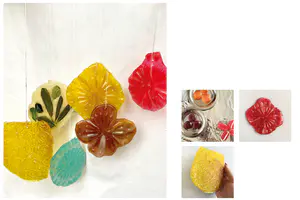
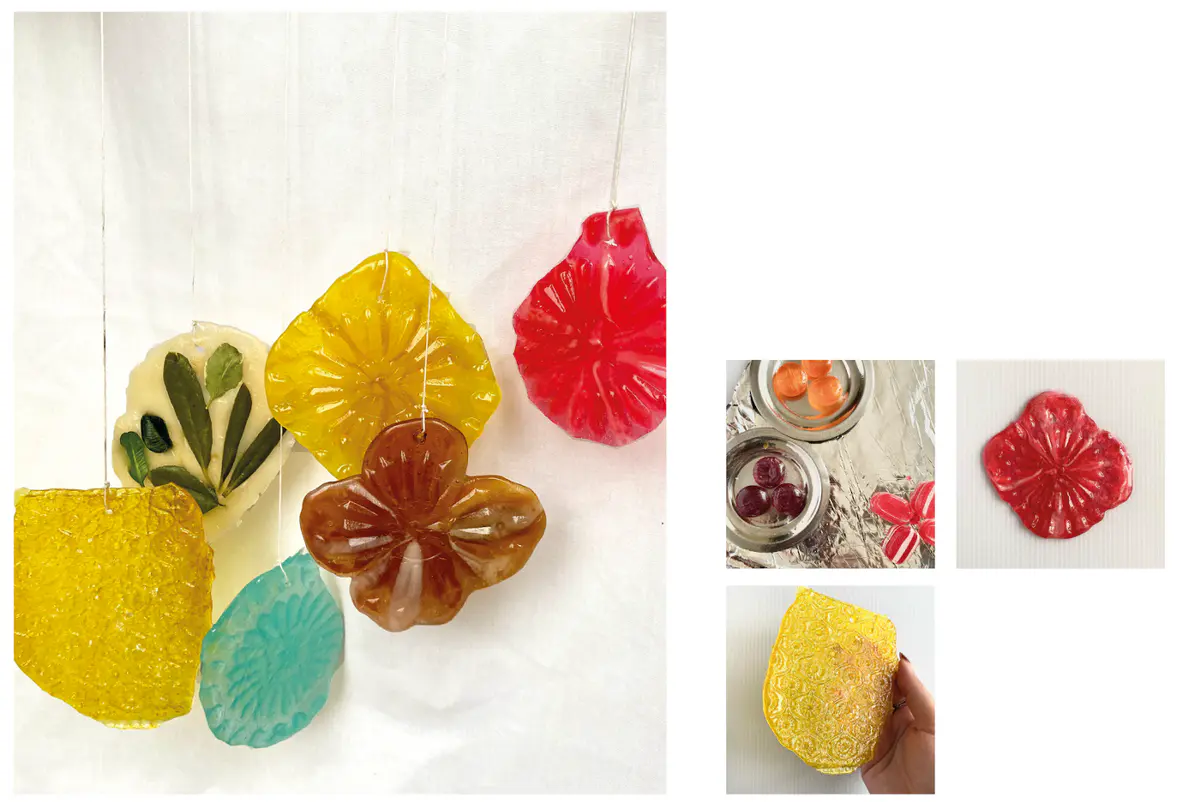
This gift was created to highlight different points in the social spaces on the high street. Aspects that we can improve on and celebrate. One point found was to incorporate more green spaces to improve health and wellbeing. The other to celebrate the textures and embossings in Dudley’s early ironworking. These ornaments were created by melting sweets and printing patterns onto them. - 0_bLySD-pGcd7BOWUv.png
This gift was created to highlight different points in the social spaces on the high street. Aspects that we can improve on and celebrate. One point found was to incorporate more green spaces to improve health and wellbeing. The other to celebrate the textures and embossings in Dudley’s early ironworking. These ornaments were created by melting sweets and printing patterns onto them.
Model Other visual delight Text Thought Creativity Craft Making Material Gift Difference Opportunity Potential Colour Nature Plantlife Pattern Past Industry Beauty Aesthetic Identity Food
The whole High Street would be dug out to make way for this new kind of “street”. The idea, as stated, is to alter the way that people use this street, so that they can learn about the legacy of Dudley. This would mean that there would be a canopy that sits on top of the cut, that would also act as a means to shelter everything underneath, but would also be made in Dudley to promote local craftsmans. This canopy can then hold something like Theatre Curtains with the history of Dudley presented on them. As you walk through the cut, you go through all the different parts of Dudley’s Legacy - Saxon, Middle Ages, Industrial Revolution, Modern, and you would end the walk on the “Future”. You would start at one end, up by the top church, and as you walk through towards the market place, you would walk through the eras in chronological order. Then, once you exit the tunnel, you would leave the Modern era, and come out into the reclaimed green space, which would represent the future of Dudley’s Legacy. This would be a Miyawaki Forest that would be expanded out through the streets, taking over the spots where cars used to drive, to now benefit Dudley, it’s people, and the world as a whole.

Dudley’s High Street is about 240 metres long, about 9 metres wide, and rises about 8 metres. This would provided a very prominent feature for the High Street if it was dug out and recommissioned.

An added aspect to the dug out street would be that of the canopy that would reside above it. While thinking of the design, two ideas stood out - one that would stand raised, at about the same level as the end of the street, which would create this arcade styled archway that would reside high above the street. The second was having the canopy be flush with the pavement all the way up, except at the end that would then provide a small increase around the steps.

Both ideas serve the same purpose, but provide drastically different means of doing so. - Oscar Law Parti Diagram.png
The whole High Street would be dug out to make way for this new kind of “street”. The idea, as stated, is to alter the way that people use this street, so that they can learn about the legacy of Dudley. This would mean that there would be a canopy that sits on top of the cut, that would also act as a means to shelter everything underneath, but would also be made in Dudley to promote local craftsmans. This canopy can then hold something like Theatre Curtains with the history of Dudley presented on them. As you walk through the cut, you go through all the different parts of Dudley’s Legacy - Saxon, Middle Ages, Industrial Revolution, Modern, and you would end the walk on the “Future”. You would start at one end, up by the top church, and as you walk through towards the market place, you would walk through the eras in chronological order. Then, once you exit the tunnel, you would leave the Modern era, and come out into the reclaimed green space, which would represent the future of Dudley’s Legacy. This would be a Miyawaki Forest that would be expanded out through the streets, taking over the spots where cars used to drive, to now benefit Dudley, it’s people, and the world as a whole. Dudley’s High Street is about 240 metres long, about 9 metres wide, and rises about 8 metres. This would provided a very prominent feature for the High Street if it was dug out and recommissioned. An added aspect to the dug out street would be that of the canopy that would reside above it. While thinking of the design, two ideas stood out - one that would stand raised, at about the same level as the end of the street, which would create this arcade styled archway that would reside high above the street. The second was having the canopy be flush with the pavement all the way up, except at the end that would then provide a small increase around the steps. Both ideas serve the same purpose, but provide drastically different means of doing so.
Imagining Map Drawing Collage Change Craft Past Future Potential Imagination Identity Industry Memory Learning Shelter Nature Plantlife Growing Architecture
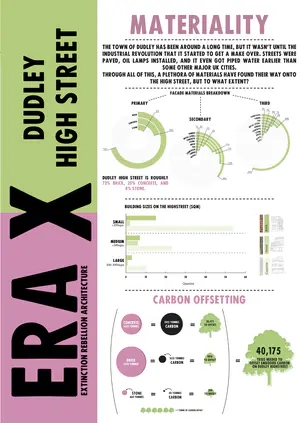
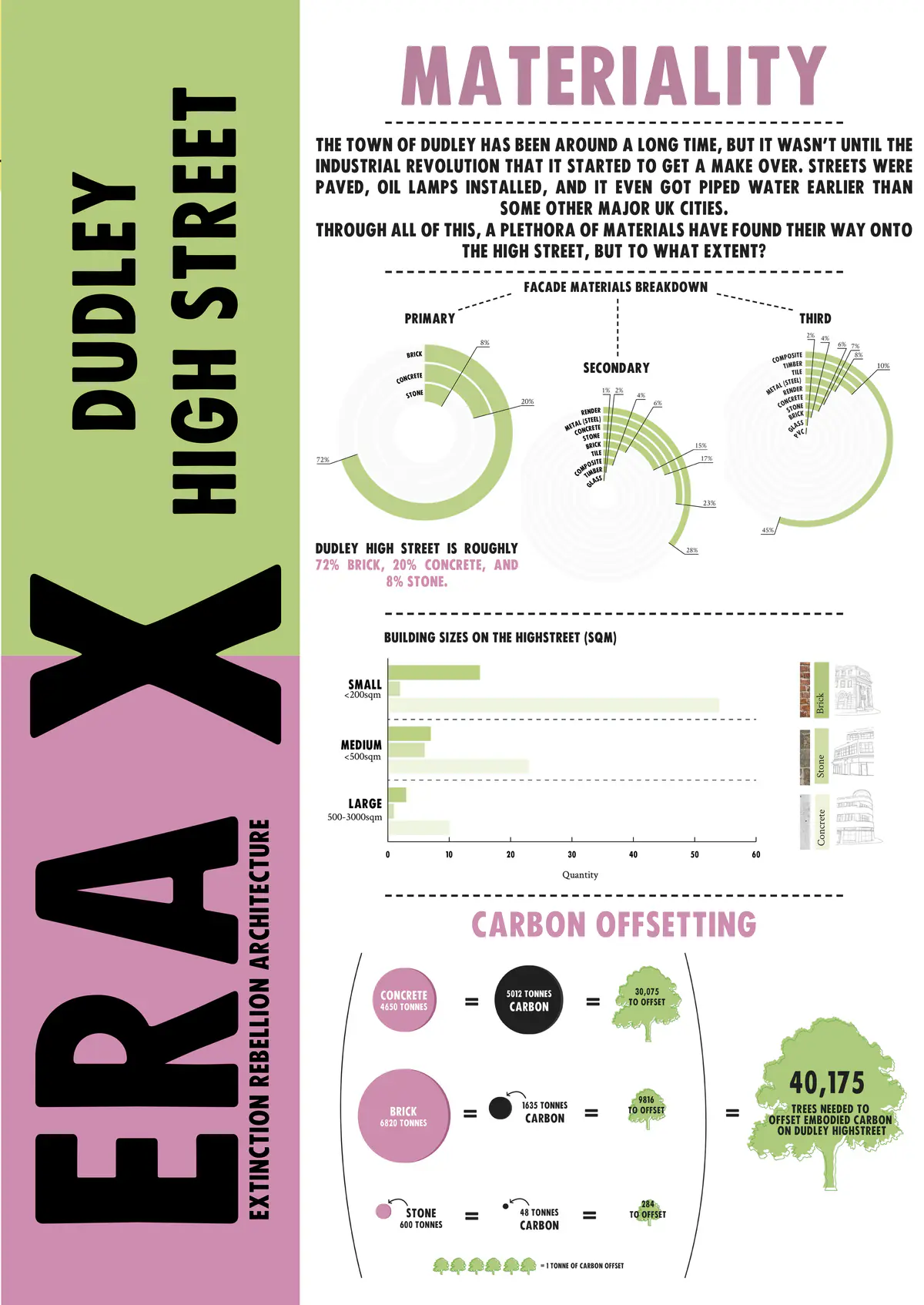
ERA X Posters - Poster 1.png
ERA X Posters
Diagram Other visual delight Biodiversity Climate Nature Plantlife Creatures People Change Water Learning Material Past Industry
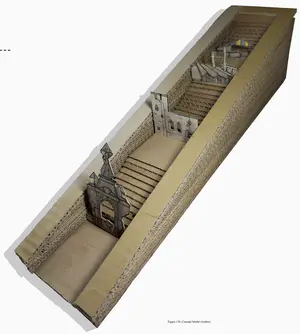
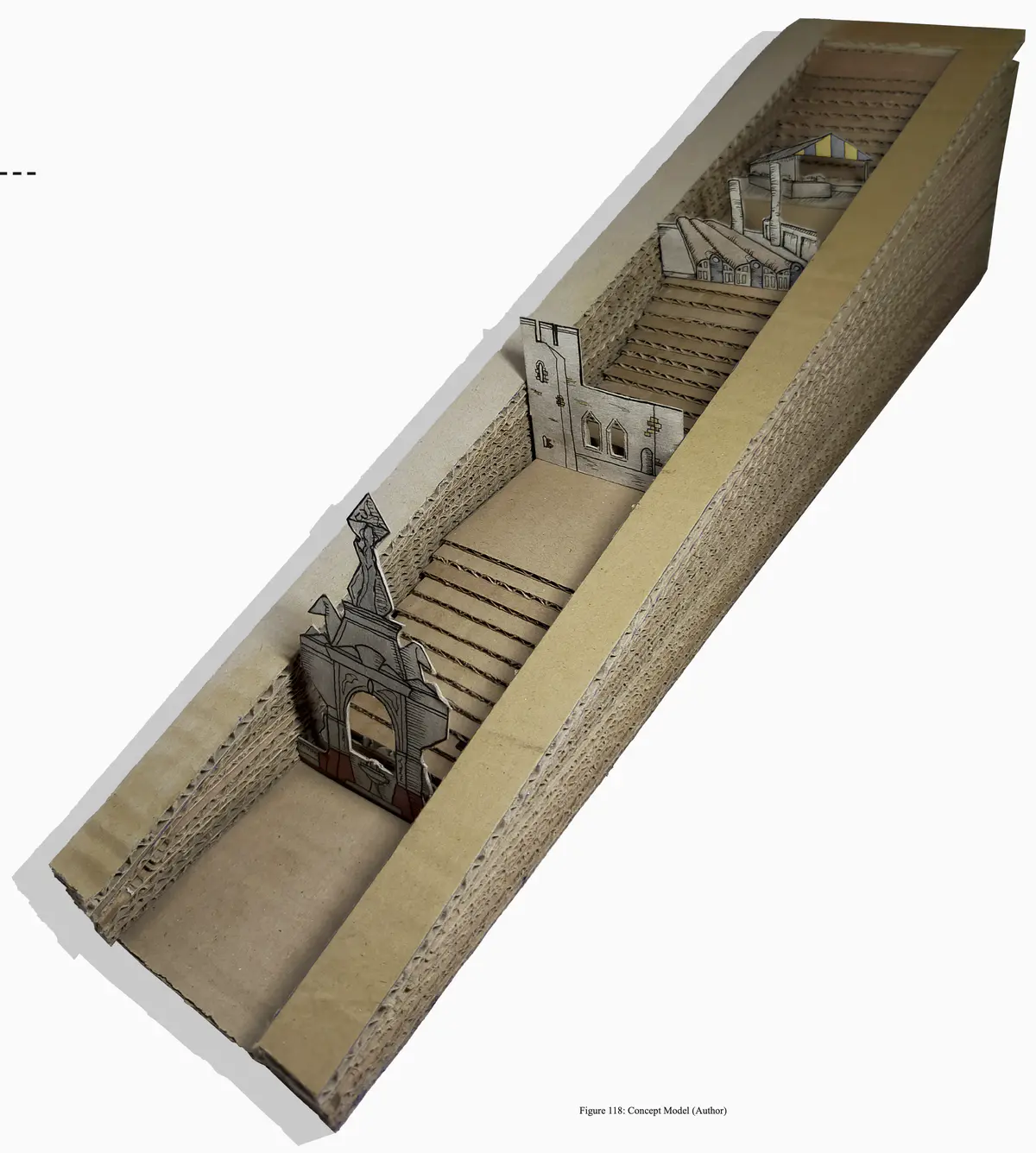
Concept Model - The model represents the idea of digging into the High Street itself. The idea was to drastically alter the form of the High Street to a point that it altered the ways that people in Dudley would live their day-to- day, changing the theatre of their lives, so that they could learn about their own history, their legacy, and about the endless possibilities of Dudley’s future. The idea was inspired by the word “Cut”, which in Black Country Dialect means “Canals”, as they were long cuts through the land. 

Dudley’s fountain represents the Middle Ages, showing the growth of Dudley over time. While it was the Capital of the Black Country (and still is), the Middle Ages is when Dudley saw itself come into it’s own place, being recognised as a big market town, and slowly expanding it’s territories and influence.

The Castle represents the Dudley Castle, built in the 11th Century. Ruling over the land, the Castle is a key component of the Legacy of Dudley, sitting on the highest point for miles around, rich with history, from Being demolished twice, to the civil war, to now watching over the Zoo.

The factories represent the Industrial Revolution era of Dudley, a time when Dudley was the king of England, and basically ran the entire process. It was an important aspect of Dudley’s Legacy, and sits as probably its crowning glory - even if today we can recognise the disastrous affects it had on the world in the short period of time the era passed.

The Market represents the modern day. Dudley has seen better years, but it is with this project that I propose that even better ones are just around the corner. While people don’t look fondly at Dudley, those from there have a fierce dedication to the legacy of Dudley, which hopefully will burn to a brighter future. - Oscar Law Concept Model 1.png
Concept Model - The model represents the idea of digging into the High Street itself. The idea was to drastically alter the form of the High Street to a point that it altered the ways that people in Dudley would live their day-to- day, changing the theatre of their lives, so that they could learn about their own history, their legacy, and about the endless possibilities of Dudley’s future. The idea was inspired by the word “Cut”, which in Black Country Dialect means “Canals”, as they were long cuts through the land. Dudley’s fountain represents the Middle Ages, showing the growth of Dudley over time. While it was the Capital of the Black Country (and still is), the Middle Ages is when Dudley saw itself come into it’s own place, being recognised as a big market town, and slowly expanding it’s territories and influence. The Castle represents the Dudley Castle, built in the 11th Century. Ruling over the land, the Castle is a key component of the Legacy of Dudley, sitting on the highest point for miles around, rich with history, from Being demolished twice, to the civil war, to now watching over the Zoo. The factories represent the Industrial Revolution era of Dudley, a time when Dudley was the king of England, and basically ran the entire process. It was an important aspect of Dudley’s Legacy, and sits as probably its crowning glory - even if today we can recognise the disastrous affects it had on the world in the short period of time the era passed. The Market represents the modern day. Dudley has seen better years, but it is with this project that I propose that even better ones are just around the corner. While people don’t look fondly at Dudley, those from there have a fierce dedication to the legacy of Dudley, which hopefully will burn to a brighter future.
Model Imagining Making Change Craft Past Future Potential Imagination Water Identity Industry Memory Architecture
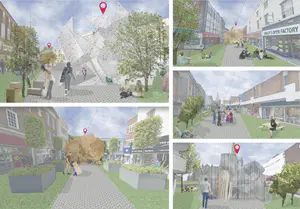
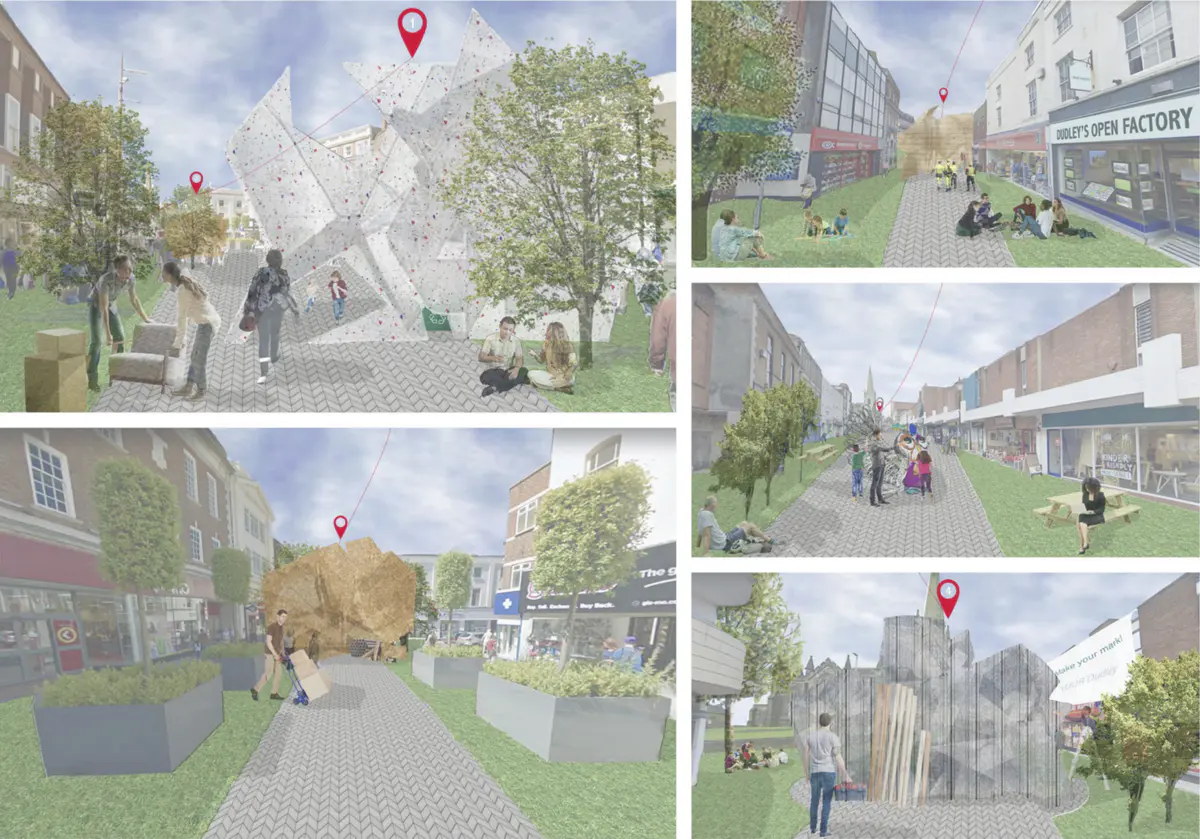
Our collective vision for Dudley is to support a creative community that is connected through our internet of things; creating spaces that allow for the collection and redistribution of materials that locals can use to construct products with. Community engagement is central to this design network with local businesses encouraged to get involved in manufacturing. 

We decided to bring alive this vision through a series of pavilions positioned through the High Street, following a process through recycling, storing constructing and manufacturing. To take this idea further, we allocated several empty units along the High Street to become spaces involved in the open factory, from workshops, educational centres and co-working hubs. Since we wanted to show the journey people would be able to take, we decided to create a storyboard for our final visual.

These visuals show how the pavilions could sit in the High Street, starting at the market place, past CoLab Dudley’s base, and ending up at Top Church. We wanted to show how people would be able to interact with these different spaces and navigate between them. - 1_VMp1Jai-Vr7tZ4pe8U752Q.png
Our collective vision for Dudley is to support a creative community that is connected through our internet of things; creating spaces that allow for the collection and redistribution of materials that locals can use to construct products with. Community engagement is central to this design network with local businesses encouraged to get involved in manufacturing. We decided to bring alive this vision through a series of pavilions positioned through the High Street, following a process through recycling, storing constructing and manufacturing. To take this idea further, we allocated several empty units along the High Street to become spaces involved in the open factory, from workshops, educational centres and co-working hubs. Since we wanted to show the journey people would be able to take, we decided to create a storyboard for our final visual. These visuals show how the pavilions could sit in the High Street, starting at the market place, past CoLab Dudley’s base, and ending up at Top Church. We wanted to show how people would be able to interact with these different spaces and navigate between them.
Collage Map Drawing Imagining Community Creativity Technology Doughnut Regenerative Material Making Connection Economics Unused Ownership Learning Agency Abundance Actions Change Future Imagination Industry Interacting Invitations Opportunity People Potential Shelter Architecture Difference
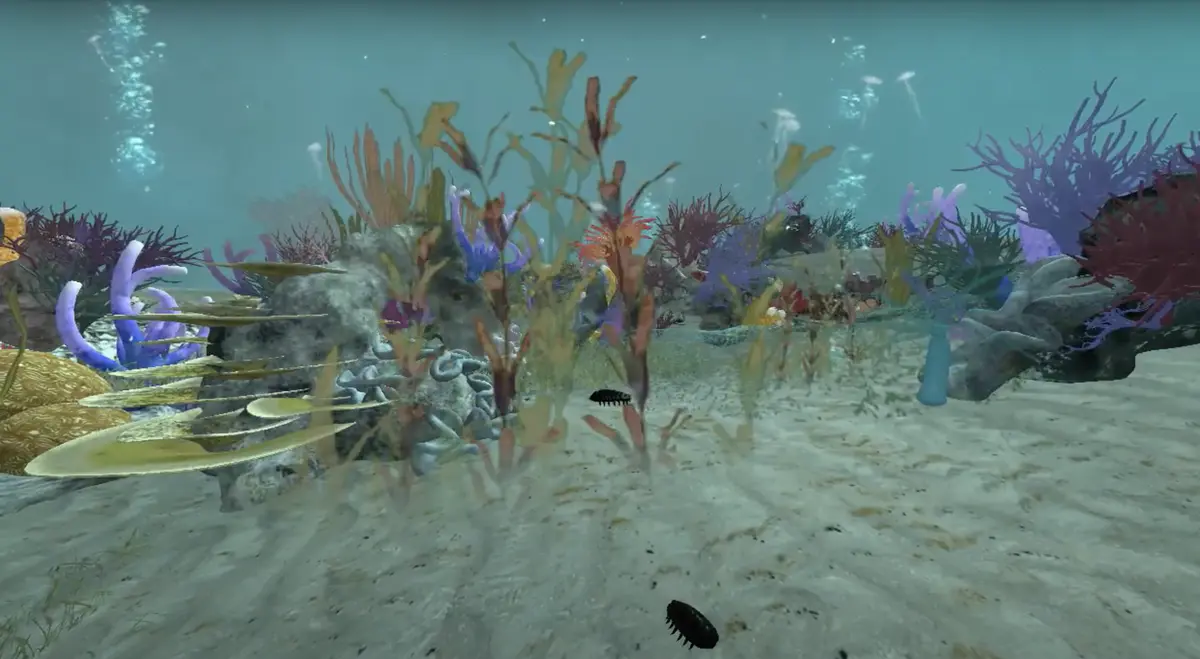
Geological story of the Black Country
Video by Ellie Ramsey
Narrated by Graham Worton
https://www.youtube.com/watch?v=PaxRX8-c2fU - Screenshot 2022-01-27 at 14_21_08.png
Geological story of the Black Country Video by Ellie Ramsey Narrated by Graham Worton https://www.youtube.com/watch?v=PaxRX8-c2fU
Video Big Things Change Connection Contrast Creatures Difference Growing Industry Life Memory Nature Old Past Plantlife Sounds Tiny Things Survival Stories Unfamiliar Views Water Moving
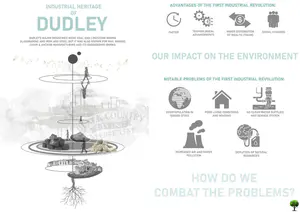
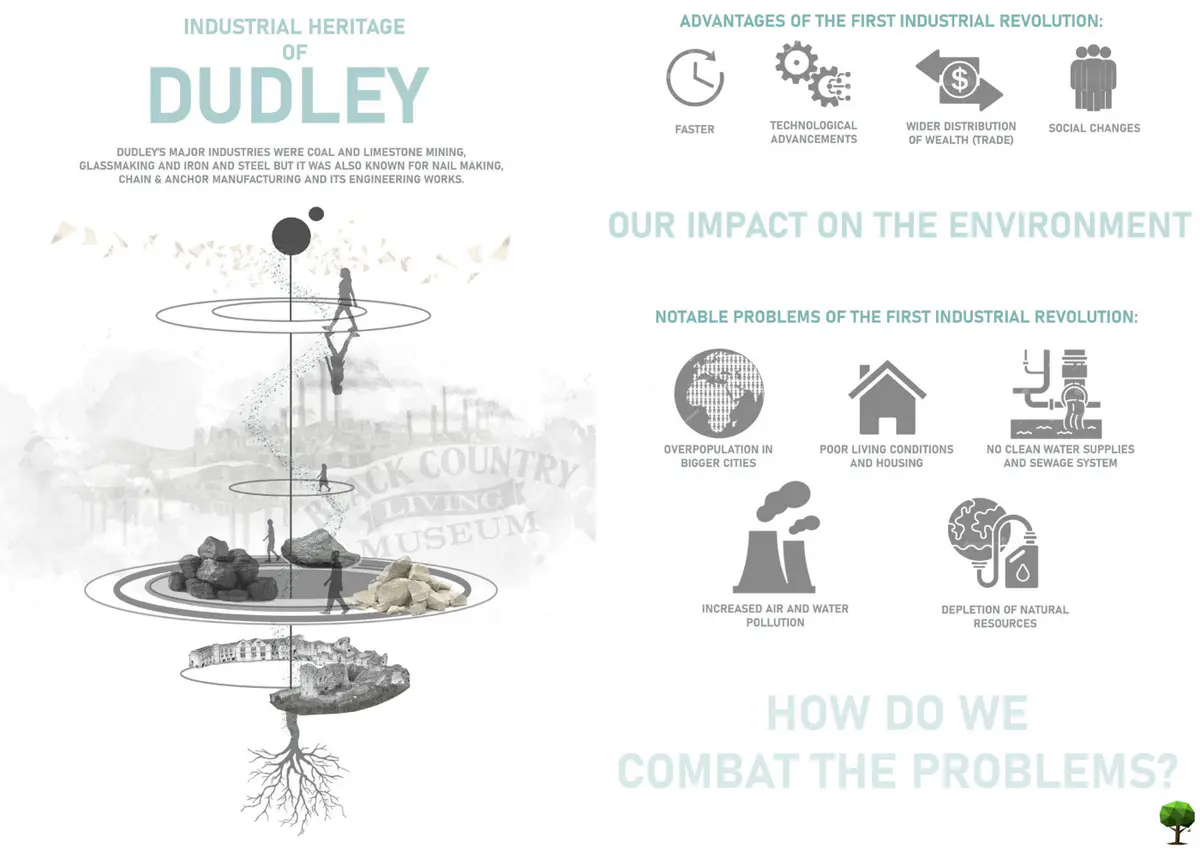
Dudley was pretty much at the centre of the Industrial Revolution. It had many advantages like making things faster, leading to technological advancements, a wider distribution of wealth and the social changes that came with this. However, it also had its own set of problems that are still relevant today which we need to acknowledge and address to successfully move forward, mainly: overpopulation, housing, water, air pollution and depletion of natural resources.  - 1_DKKRYjcJTsB-G2mICyI8qw.png
Dudley was pretty much at the centre of the Industrial Revolution. It had many advantages like making things faster, leading to technological advancements, a wider distribution of wealth and the social changes that came with this. However, it also had its own set of problems that are still relevant today which we need to acknowledge and address to successfully move forward, mainly: overpopulation, housing, water, air pollution and depletion of natural resources.
Collage Economics Play Technology Waste Fairness Material Past Commerce Industry Speeds People Homes Water Nature