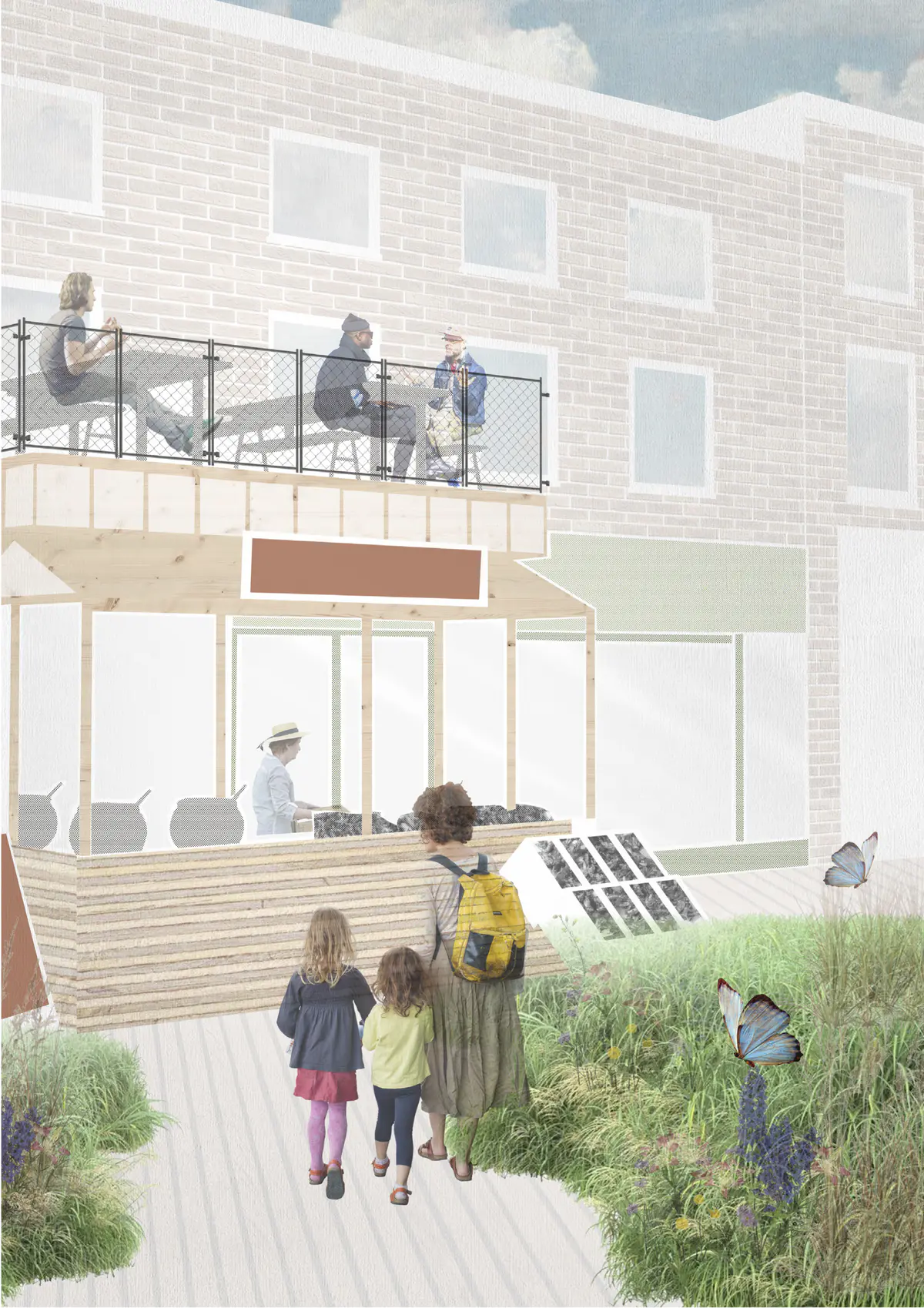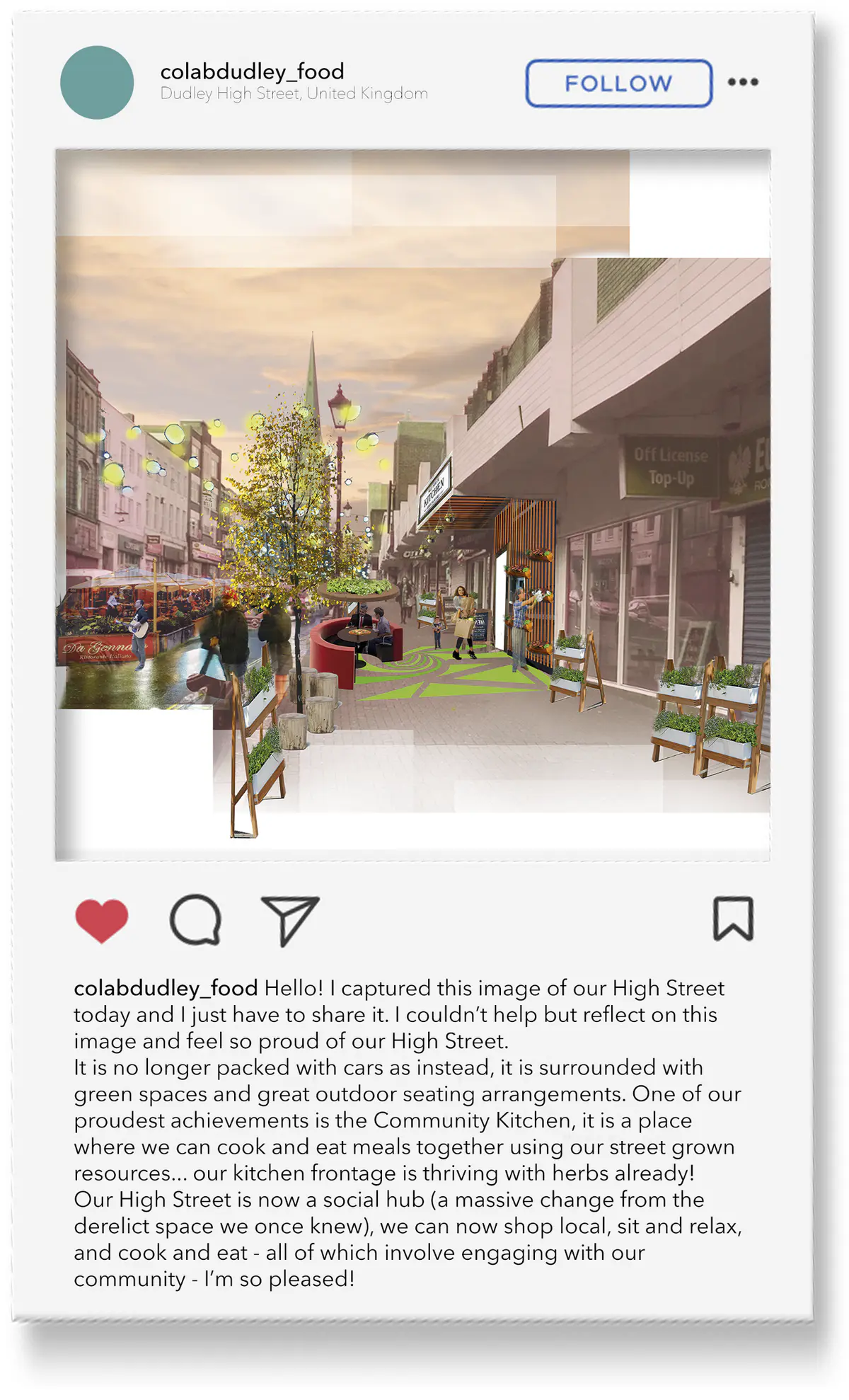
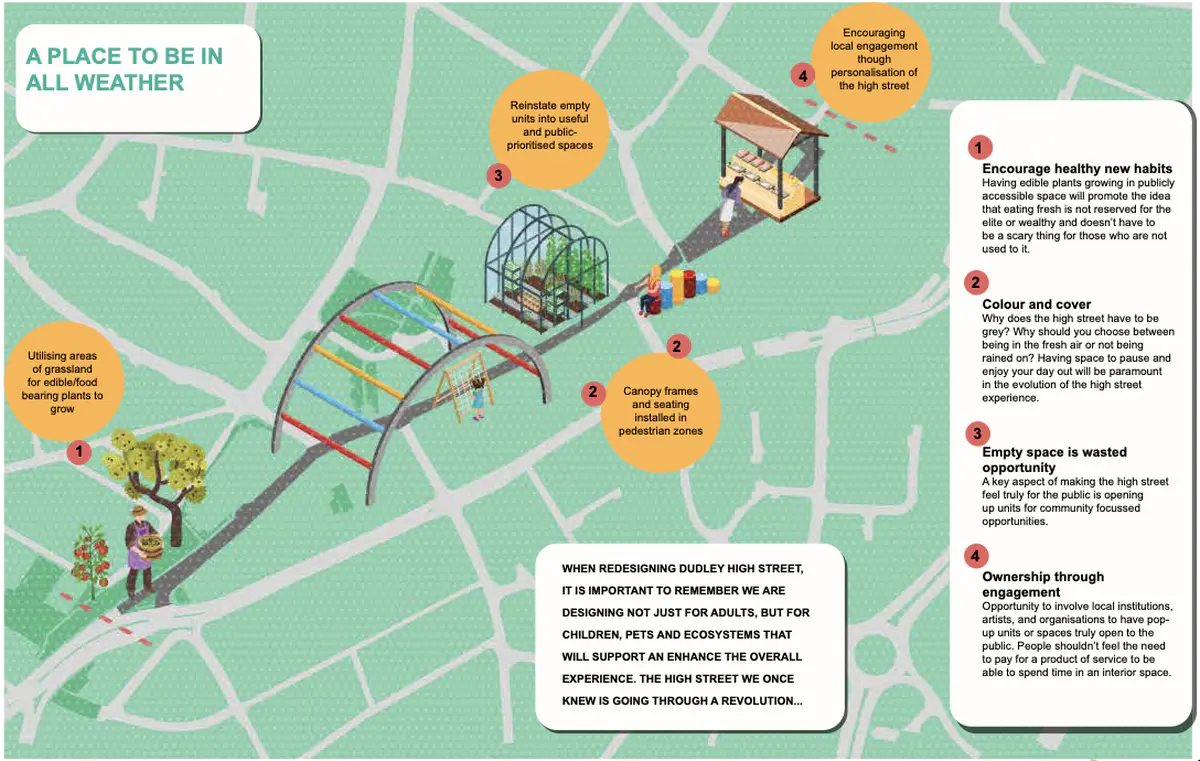
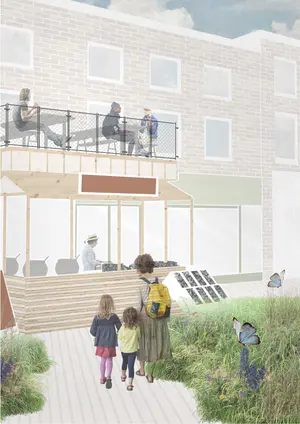
Jack and his friends visited the High Street with their school teacher during a study trip. He learned a lot of things about sustainability, and how to grow food. He was so inspired. Atifa gave him some seeds from fruits on the street garden, and later he planted them in a small unused bucket. After a few months he came back to street to gift the kitchen some of the fruit from his tiny garden at home. Atifa felt so proud of the young generation of Dudley.
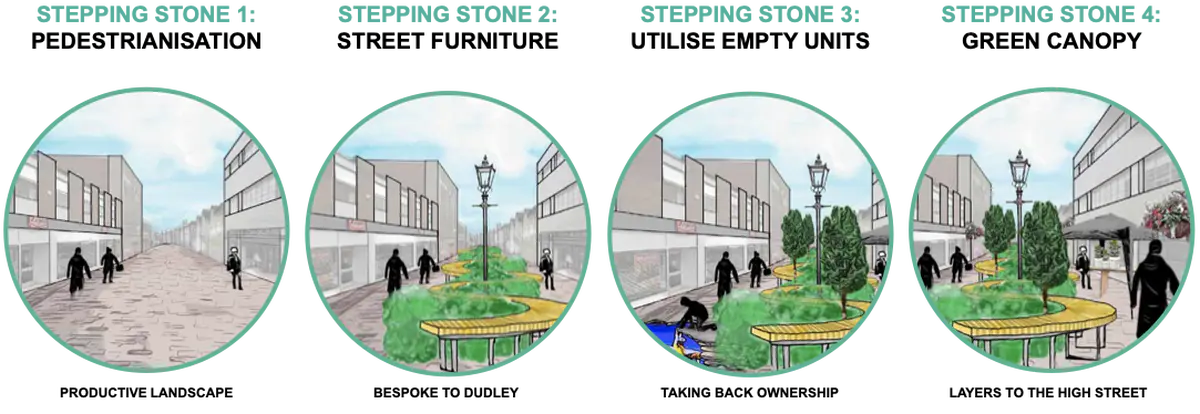
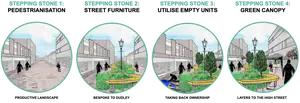
Stepping Stone 4 adds layers to the High Street. Like the other visions, we wanted to use CoLab Dudley’s principles ‘use nature as a guidebook’ and ‘create conditions for curiosity and experimentation’. The main way we proposed to do this was adding a green canopy to provide shelter, create a hybrid indoor outdoor space welcoming to families and a more communal open space, and support ecosystems.
These are stepping stones that we wanted to achieve, with a scale of intervention, starting with small changes that could still have a big impact e.g. street furniture. At the other end of the scale is topography, where larger adaptations can be made for what we want to achieve.
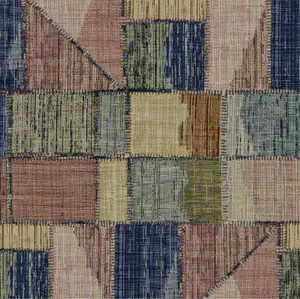
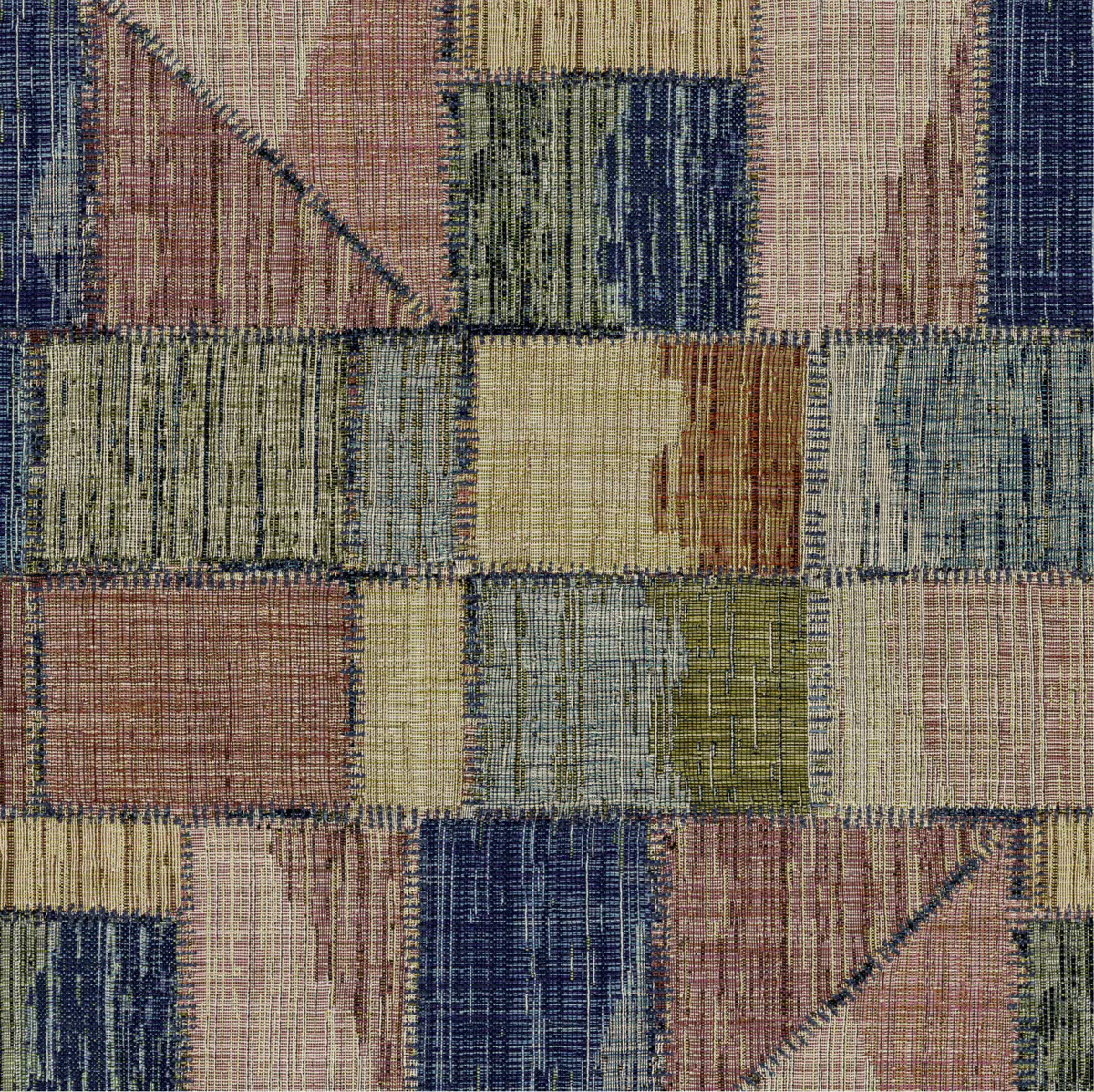
Street scale patchwork
Investigating Facade Damage will highlight where the repair needs to be undertaken.
It is creating an irregular pattern of repair that evolves.
Only intervene when necessary; this proposal will not ‘repair what does not need fixing’ as it appreciates there could be a negative effect on an already declining high street.
Repairs will be constructed with the materials grown on the street as part of the Macro-scale intervention.
Explore The History Of Site Voids - This will provide an opportunity to reimplement these to allow vertical green corridors to occur.
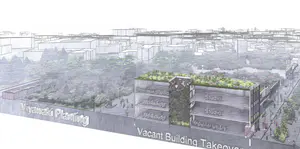
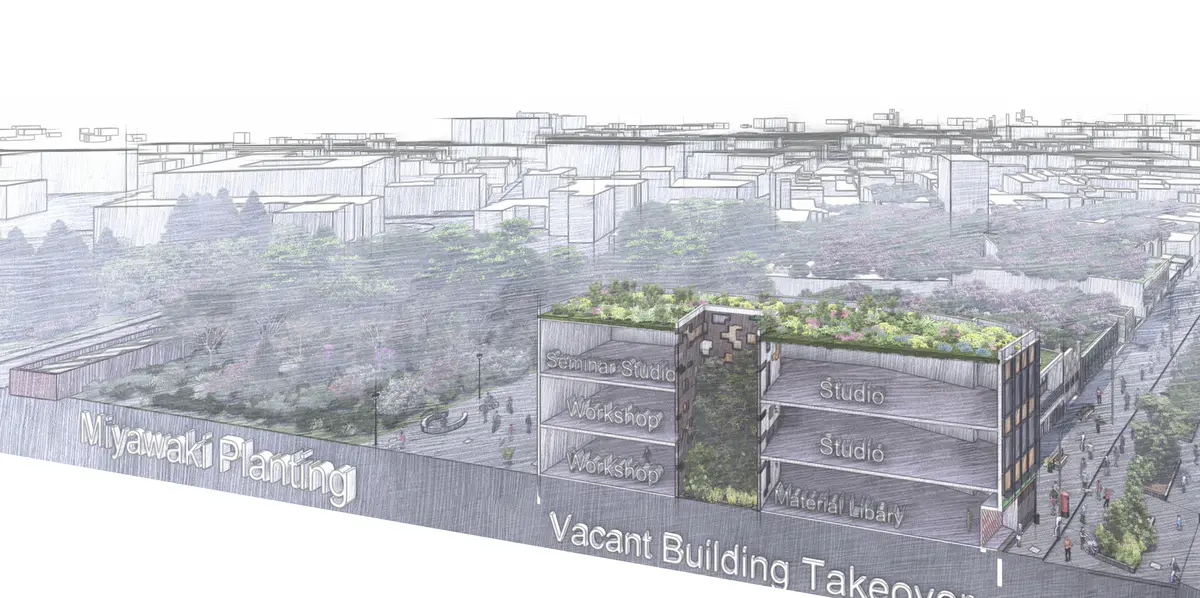
Explore Vacant Buildings - To avoid damaging an already deteriorating high street, I aim only to take over vacant plots.
Investigate the opportunity for Miyawaki planting - understand the conditions required to grow a sustainable material source on-site, including ground, water, and space conditions.
It takes over a building that leads directly to an open space where a community hub is the centre of the thesis, offering education, community engagement and material celebration.
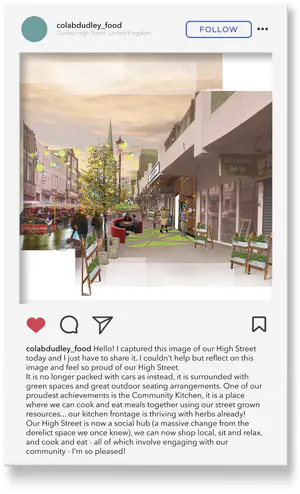
This post develops what the community kitchen has to offer with street grown resources and community engagement.
(We decided to present our narrative through social media and instagram posts as we wanted to showcase what individual experiences might be like when experiencing the future High Street. Each of our posts captures a different element of experience on the High Street to form a collective scenario.)
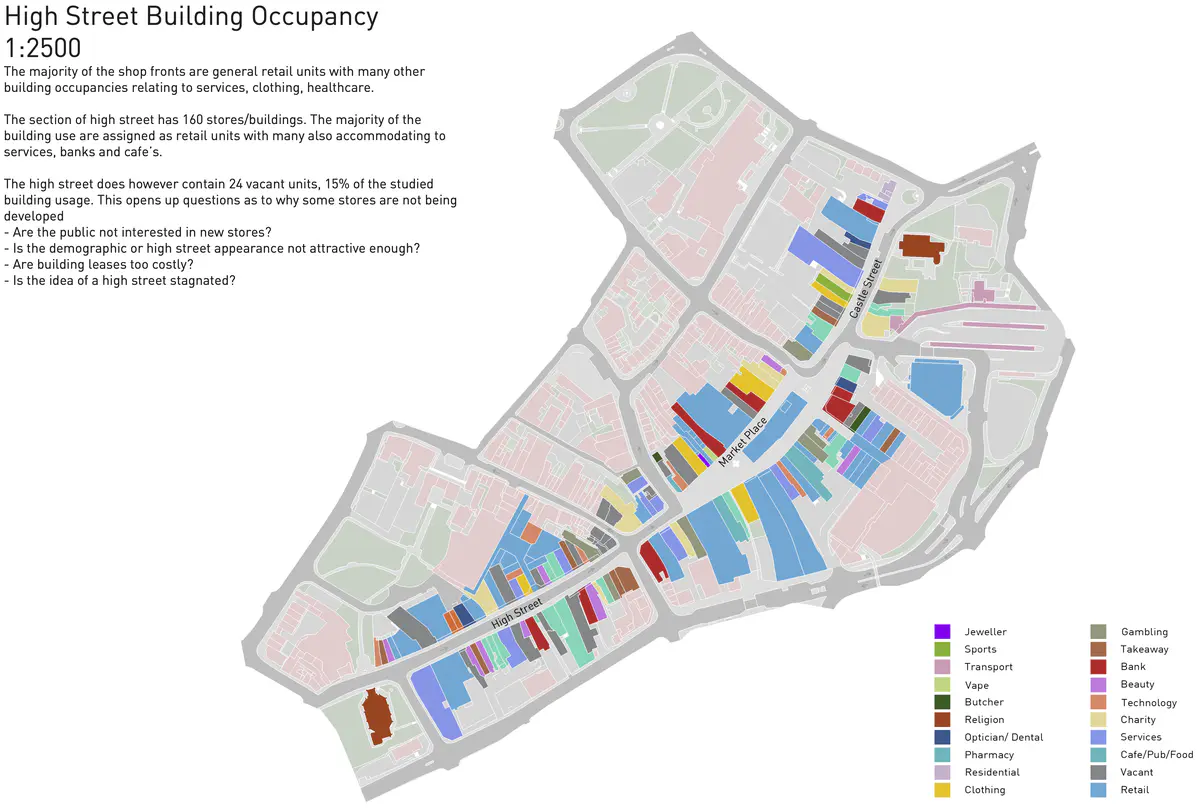
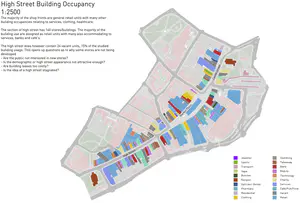
High Street Building Occupancy
The majority of the shop fronts are general retail units with many other building occupancies relating to services, clothing, healthcare.
The section of high street has 160 stores/buildings. The majority of the building use are assigned as retail units with many also accommodating to services, banks and cafe’s.
The high street does however contain 24 vacant units, 15% of the studied building usage.
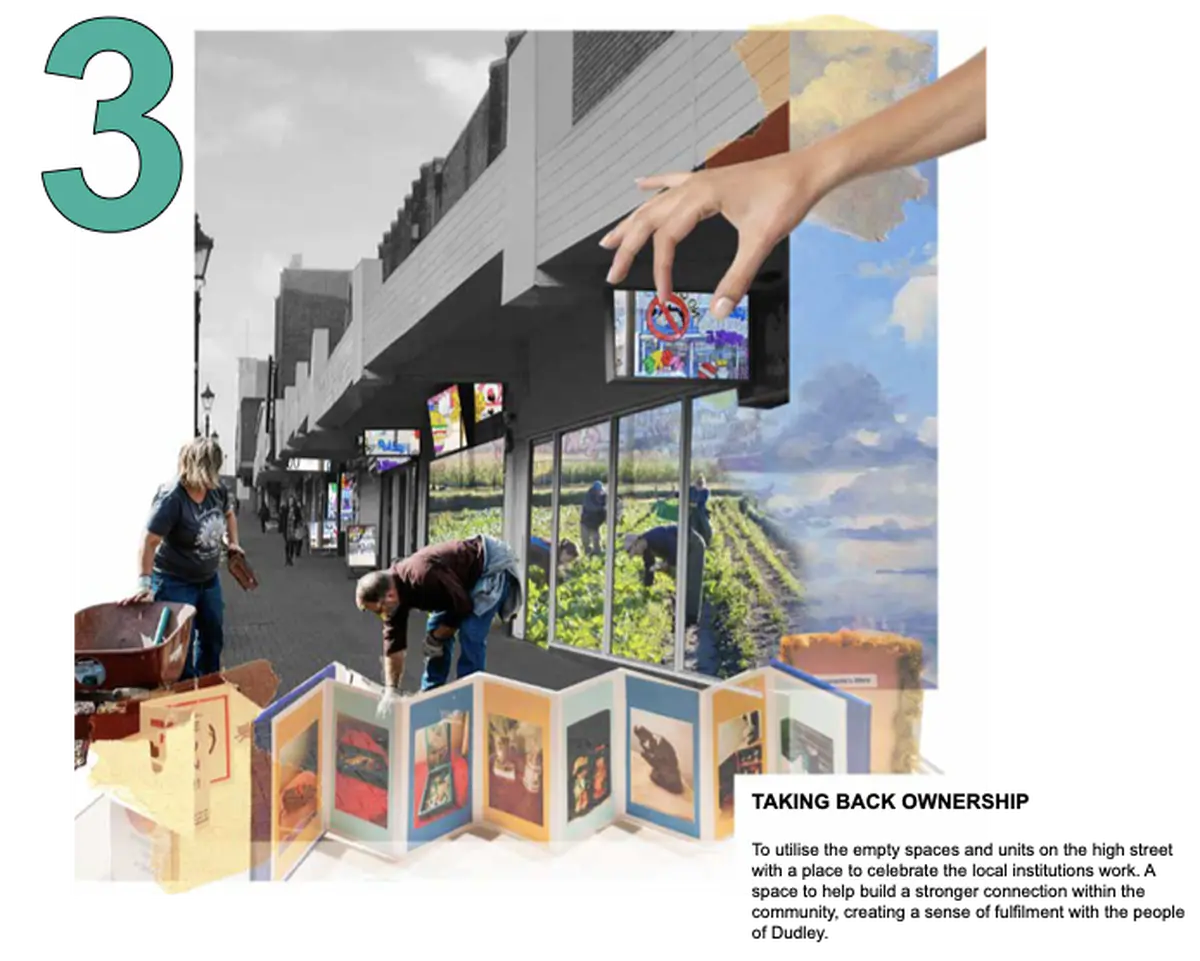
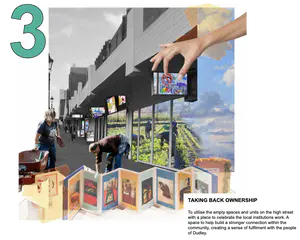
TAKING BACK OWNERSHIP - To utilise the empty spaces and units on the high street with a place to celebrate the local institutions work. A space to help build a stronger connection within the community, creating a sense of fulfilment with the people of Dudley.
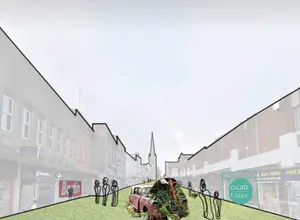
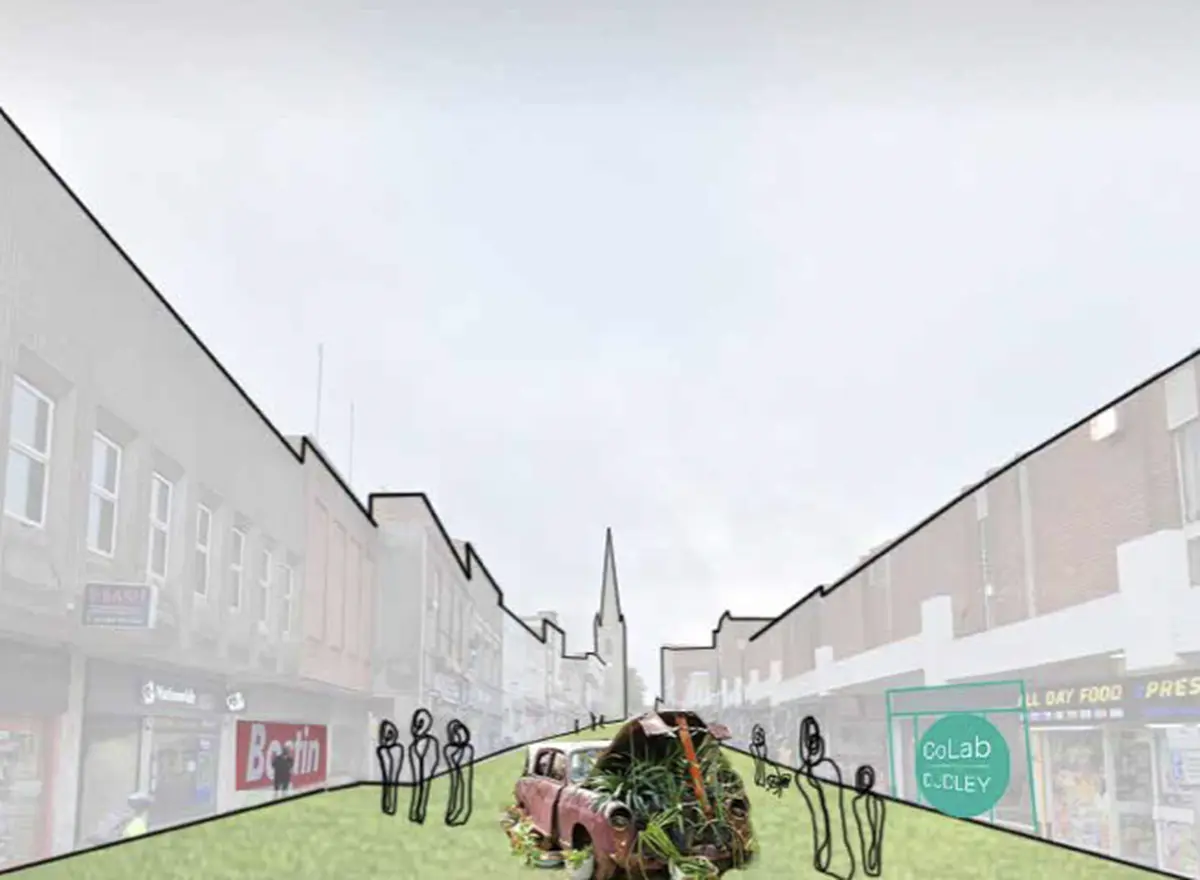
New use for cars — As part of pedestrianisation we would like to suggest a memorial of sorts to cars. The feature would sit in the middle of the High Street and would consist of an old out-of-use car, being used as a planter and being filled with plants. This gesture symbolises the movement of the High Street’s priorities shifting from the automobile to plants, people and food.
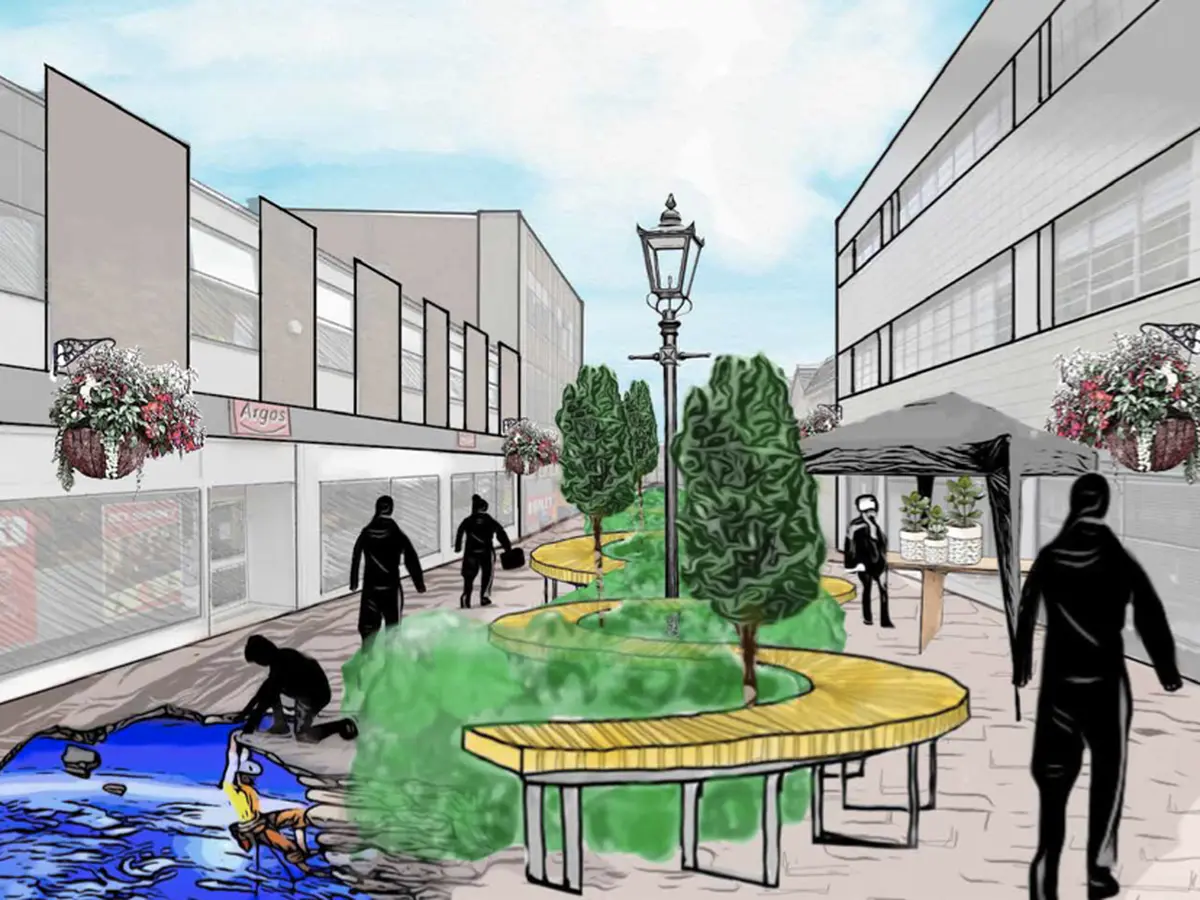
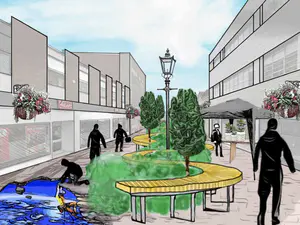
A sketch showing workshops utilising the empty spaces, street furniture, canopies on the side, and street art to brighten and liven the current High Street.
Creating a stronger connecting between the current food spaces by:
- Pedestrianising the road with a grassland
- Utilising abandoned building for education centres and community farming.
Linked to the Food Hub is an education centre sharing information on edible insects and Dudley’s biodiversity. Also offers insect cooking lessons to the local community and schools.
Immersed within the grassland is areas where existing buildings can extend out onto the street to create a stronger bond with new sustainable environment.
Redesigning the Market Place with more levels of outdoor seating to create a new experience and environment of eating food on the High Street.
Gardening and insect farming spaces integrated within the buildings. By bringing all the food production onto the High Street will help reduce food waste and also offer fresh produce to the locals.
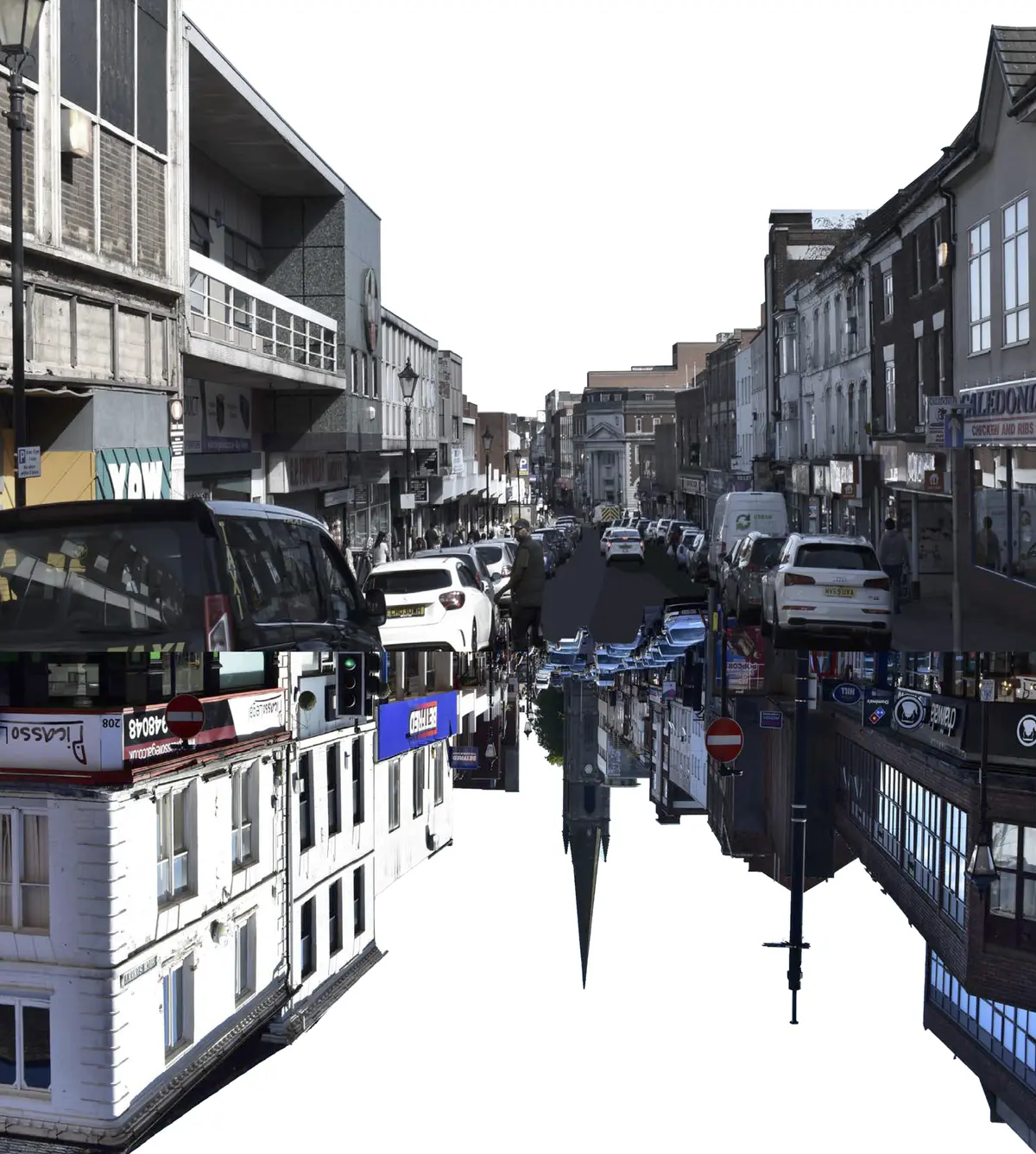
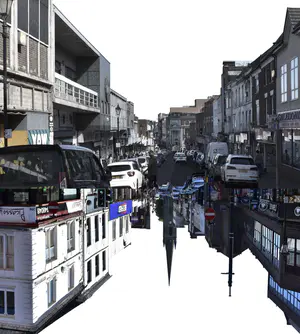
Seen as the heart of the town, Dudley High Street stretch- es from the Dudley ASDA, all the way up to the St. Edmund King & Martyr Church. Although, the street has seen better days.
Along the High Street itself, there are 28 abandoned shop fronts, accounting for 1/5 shops being neglected. It is also home to a few of Dudley’s landmarks:
The Drinking Fountain, a Grade II listed fountain, which had a portion of a £4.6 million funding from the HLF European 2015 funding go towards to its restoration (Richards, 2017).
The Market Place is a fixed centre of trading and selling at the heart of the market square. It too benefited from the funding, allowing for permanent fixings.
The Top Church, St. Thomas and St. Luke, overlooking the entire street, and most of the surrounding town itself.
Our collective vision for Dudley is to support a creative community that is connected through our internet of things; creating spaces that allow for the collection and redistribution of materials that locals can use to construct products with. Community engagement is central to this design network with local businesses encouraged to get involved in manufacturing.
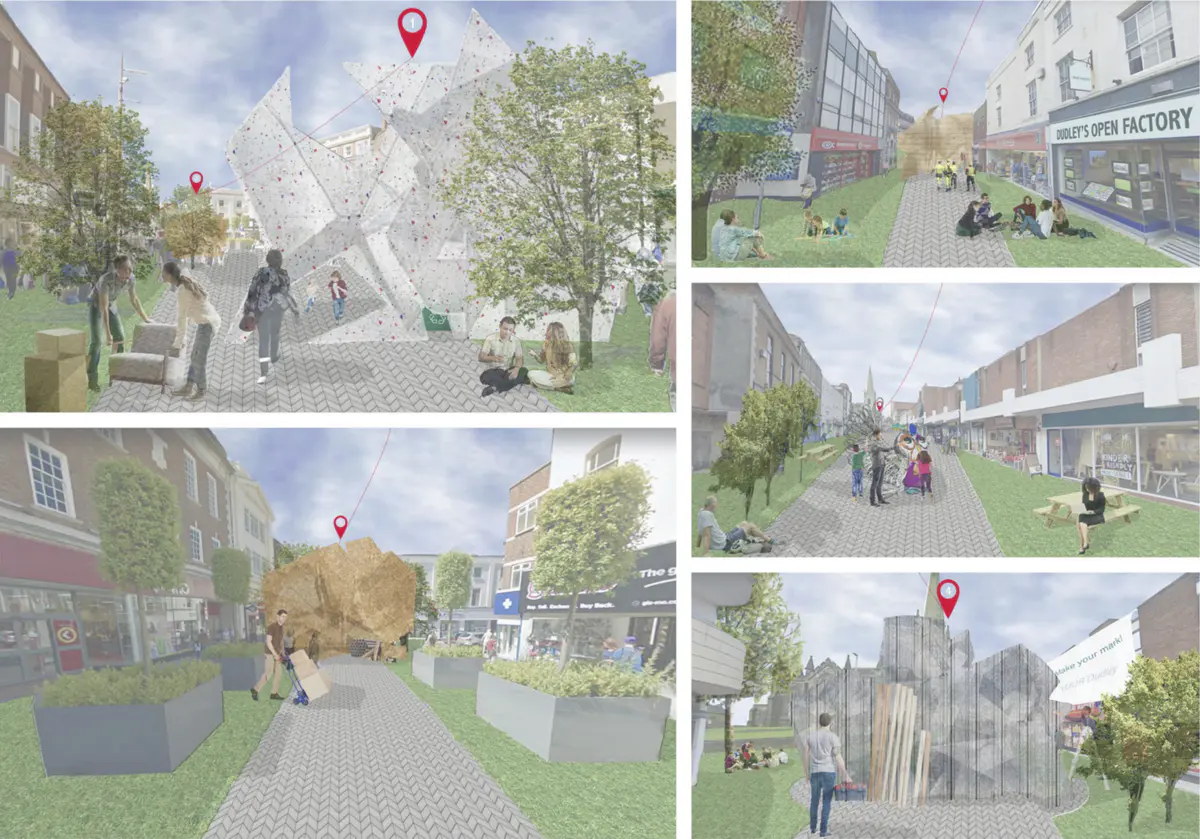
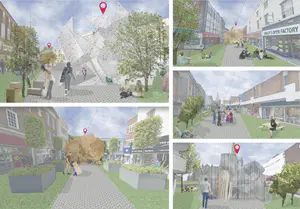
We decided to bring alive this vision through a series of pavilions positioned through the High Street, following a process through recycling, storing constructing and manufacturing. To take this idea further, we allocated several empty units along the High Street to become spaces involved in the open factory, from workshops, educational centres and co-working hubs. Since we wanted to show the journey people would be able to take, we decided to create a storyboard for our final visual.
These visuals show how the pavilions could sit in the High Street, starting at the market place, past CoLab Dudley’s base, and ending up at Top Church. We wanted to show how people would be able to interact with these different spaces and navigate between them.