"Four Debenhams staff with 100-years service between them were bidding a fond farewell as the store in Dudley High Street closed for the last time in January 1981. Manager Douglas Spalding, who was with the company for 26 years, was photographed with Nancy Robinson, Kathleen Jackson and Marion Sutton."
Provision
I invite you to stand in my shoes
In the space between dark and light
To imagine a room laid bare
Where you sleep in the bath
In the clothes you wear every day
Because you don’t have a bed or
Even a mattress on the floor
To rest your tired frame.
You are in crisis
Slipped through the cracks It doesn’t matter how or why Just that you are here
Needing help
Needing compassion
Practical support
To get back on your feet
To feel cared for
Provided for
Prayers answered.
I sit here listening to Blur
On the CD player I have just bought from Provision House
A beacon-topped Aladdin’s cave of treasures
That occupies a space right opposite
It’s higher calling
Old Co-op
Old shoe shop
New lease of life
For this art-deco giant
Three floors of stepping back in time
Down history rich stairs
Through formica inlaid doors
Its belly stuffed with
Furniture and bedding
Tables and lamps
Wardrobes and kitchenware
The things that we take for granted
Destined for those that have nothing
Absolutely nothing
A lifeline.
In the shop I can still buy a pair of shoes
Anything an old department store may well have stocked
Ironic I feel.
They save the sleeping bags
To hand to homeless folk
Health-packs and new socks
Whatever helps.
The Food Club caters for those
That need to feed themselves
Their families
On budgets stretched to breaking
They mind the gap that governments should fill
By remembering that everybody counts Black Country rules.
Kim chats to a woman
Buying sticker-books for her granddaughter
Laughter slips through this conversation
Two books for a pound and you know
The girl will have a fun filled afternoon.
I ask about the future
Plans for expansion
Rooms to hire
Office space
Training programmes on their way
Perhaps a life for the room upstairs and I see progress
New from old
Right from wrong.
So, step through this door and lend a hand
To those that need it more than
You and I will ever understand.
"The days were numbered for these historic buildings when this picture of Dudley High Street was taken in November 1970. A public inquiry was being held to decide whether five listed buildings in the street could be demolished to make way for the new Trident Centre shopping complex. Permission was granted, and it was discovered during demolition that parts of these buildings dated back to the Middle Ages."
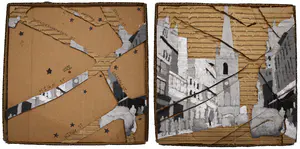
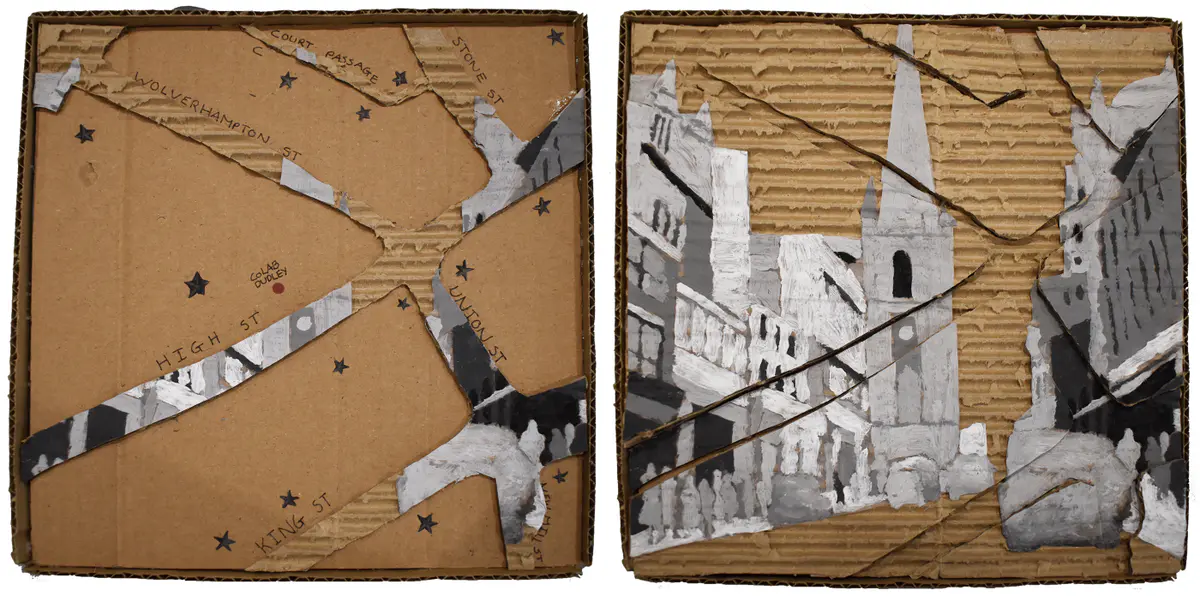
This gift aims to address the disconnect between Dudley and its industrial history. Once the ‘Capital of the Black Country’ its high street now looks like any other. With the intention of public engagement, this gift could be handed out at CoLab Dudley’s base. Starting from there, people would be able to follow the map and visit the places marked by stars — all of which hold some historical significance whether it be the location of an old factory or school — where one missing puzzle piece may be located. Only after visiting these locations would they be able to complete the puzzle and see the final image of Dudley’s high street.
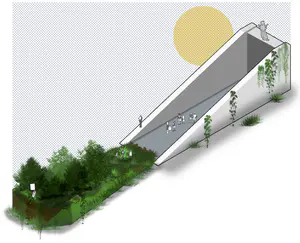
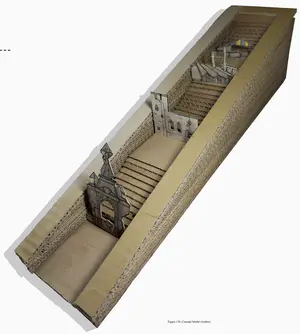
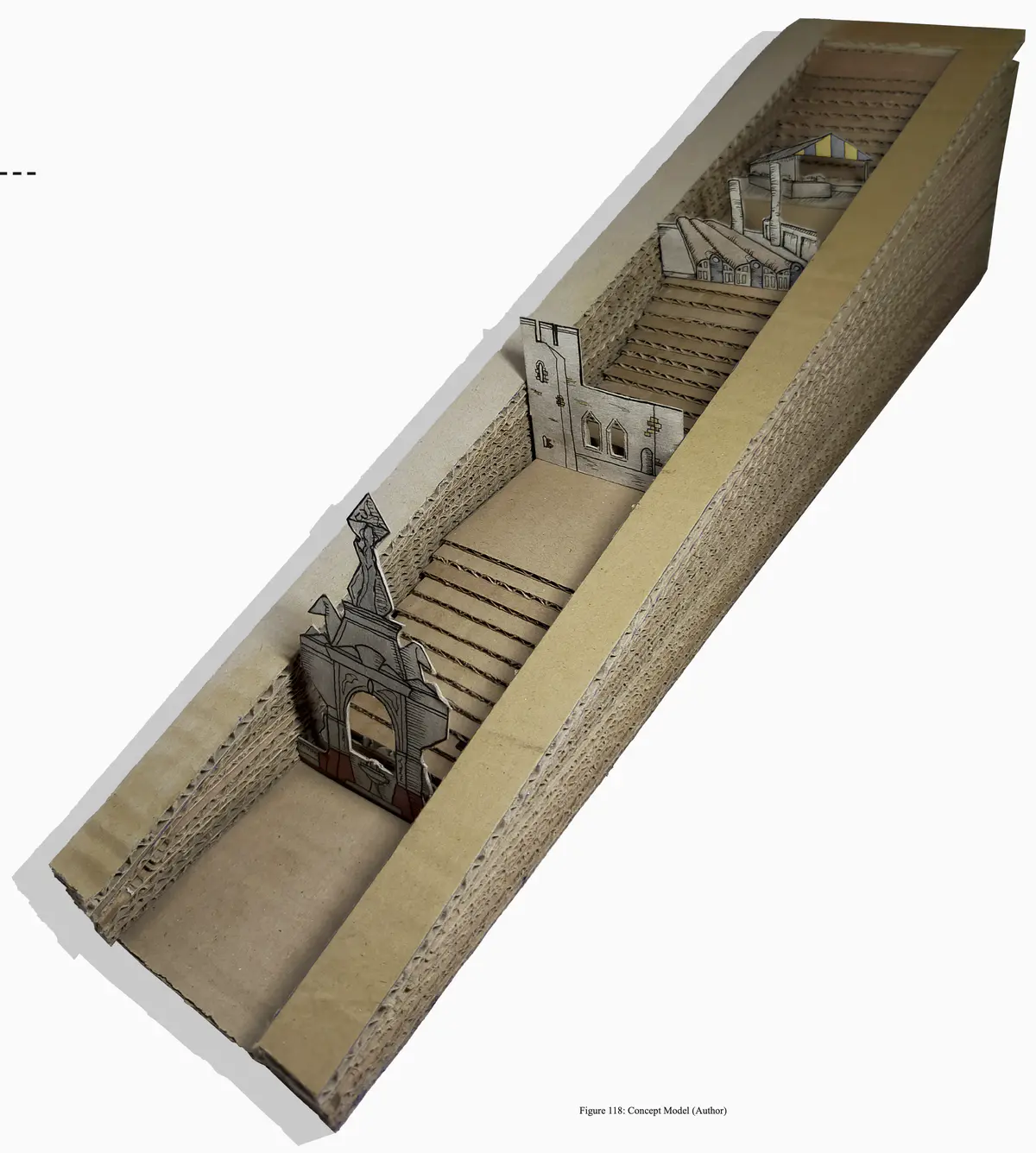
Concept Model - The model represents the idea of digging into the High Street itself. The idea was to drastically alter the form of the High Street to a point that it altered the ways that people in Dudley would live their day-to- day, changing the theatre of their lives, so that they could learn about their own history, their legacy, and about the endless possibilities of Dudley’s future. The idea was inspired by the word “Cut”, which in Black Country Dialect means “Canals”, as they were long cuts through the land.
Dudley’s fountain represents the Middle Ages, showing the growth of Dudley over time. While it was the Capital of the Black Country (and still is), the Middle Ages is when Dudley saw itself come into it’s own place, being recognised as a big market town, and slowly expanding it’s territories and influence.
The Castle represents the Dudley Castle, built in the 11th Century. Ruling over the land, the Castle is a key component of the Legacy of Dudley, sitting on the highest point for miles around, rich with history, from Being demolished twice, to the civil war, to now watching over the Zoo.
The factories represent the Industrial Revolution era of Dudley, a time when Dudley was the king of England, and basically ran the entire process. It was an important aspect of Dudley’s Legacy, and sits as probably its crowning glory - even if today we can recognise the disastrous affects it had on the world in the short period of time the era passed.
The Market represents the modern day. Dudley has seen better years, but it is with this project that I propose that even better ones are just around the corner. While people don’t look fondly at Dudley, those from there have a fierce dedication to the legacy of Dudley, which hopefully will burn to a brighter future.
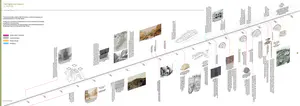
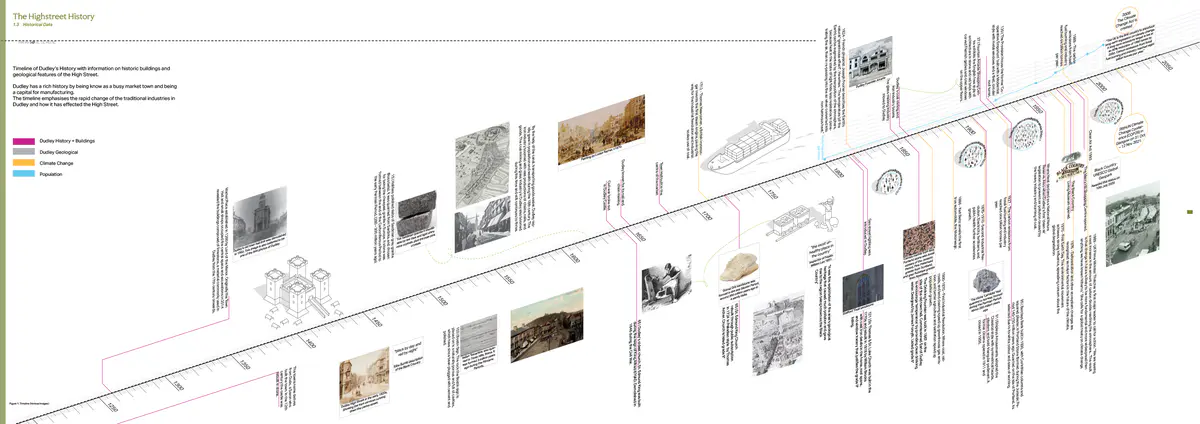
Timeline of Dudley’s History with information on historic buildings and geological features of the High Street.
Dudley has a rich history by being know as a busy market town and being a capital for manufacturing.
The timeline emphasises the rapid change of the traditional industries in Dudley and how it has effected the High Street.
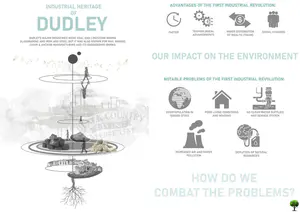
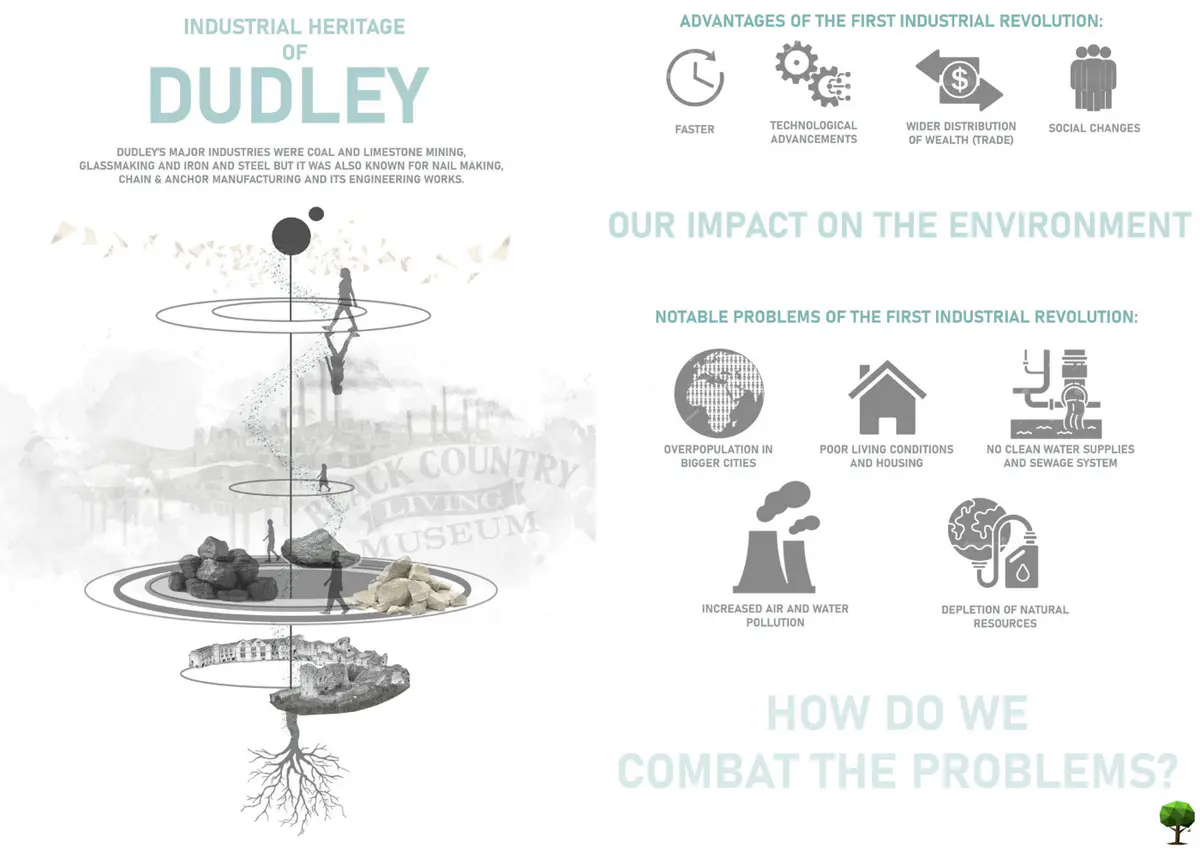
Dudley was pretty much at the centre of the Industrial Revolution. It had many advantages like making things faster, leading to technological advancements, a wider distribution of wealth and the social changes that came with this. However, it also had its own set of problems that are still relevant today which we need to acknowledge and address to successfully move forward, mainly: overpopulation, housing, water, air pollution and depletion of natural resources.
"Dudley Market Place where archaeologists found the foundations of old market buildings while preparing for the redevelopment of the area in April 2014."
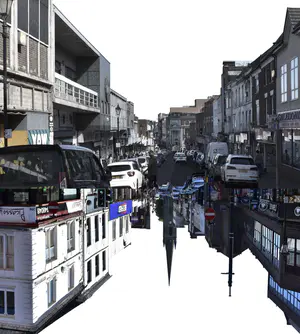
A collage response to a Co.LAB gift for the High St - “It was nice to be able to use the image for something else. It made me think about placing the cut-out roadmap onto a slightly brighter future version, with colour, vibrancy and plantlife, so that it reminds me what we are heading towards, but still with a hark back to the people and the industry that made Dudley the town it is...”
Bake ‘n’ Butty
Fairy lights all year round
Three clocks working triple time
More seating at the rear and
Above the sound of something frying in a pan
Laughter
The scrape of cutlery on finished plates
Stacked and cleared
Two cappuccinos
Two toasted teacakes
Footsteps on the lino floor
The hum of radio from somewhere
The clash of a saucepan lid
Tea, milk, two sugars
The tapping of a spoon on a plastic bowl
Fishfinger sandwich to take away
Do you need a receipt?
It won’t be long, alright?
Chips sizzling in the deep fat
Steam escaping the coffee machine
There’s your knife and fork
Musical buttons singing from the till
No sugar, I’m sweet enough
A message left on the answering machine
Phone rings
How can I help you?
Mobile notification
Chatter
Printing
There’s your change
I’ll bring your coffee over
Sausage, egg and chips
Large breakfast, no beans
Two lattes
Milk delivery
Grated cheese in a bag
Butter balanced in the crock of an arm
Is there enough money in the till?
Bacon and egg sandwich to go
Cappuccino
Cheers love
It was lovely, thank you
All this is seen and heard as
I am joined at my table
To talk through
Covid
Cars
Past lives
Old homes
Acceptance
Cooking
Gender
Pubs
Health and
Putting the world back together
My tea is done
I pop my mug back on the counter
All this for the prices of a cuppa I think
Stepping out past the flashing fairy lights
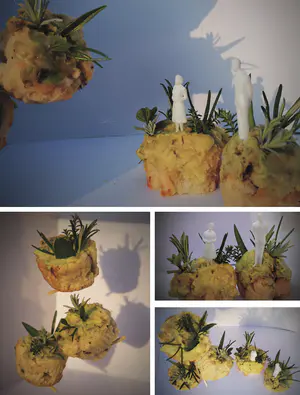
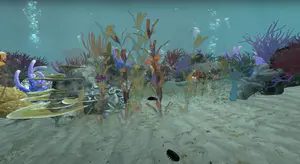
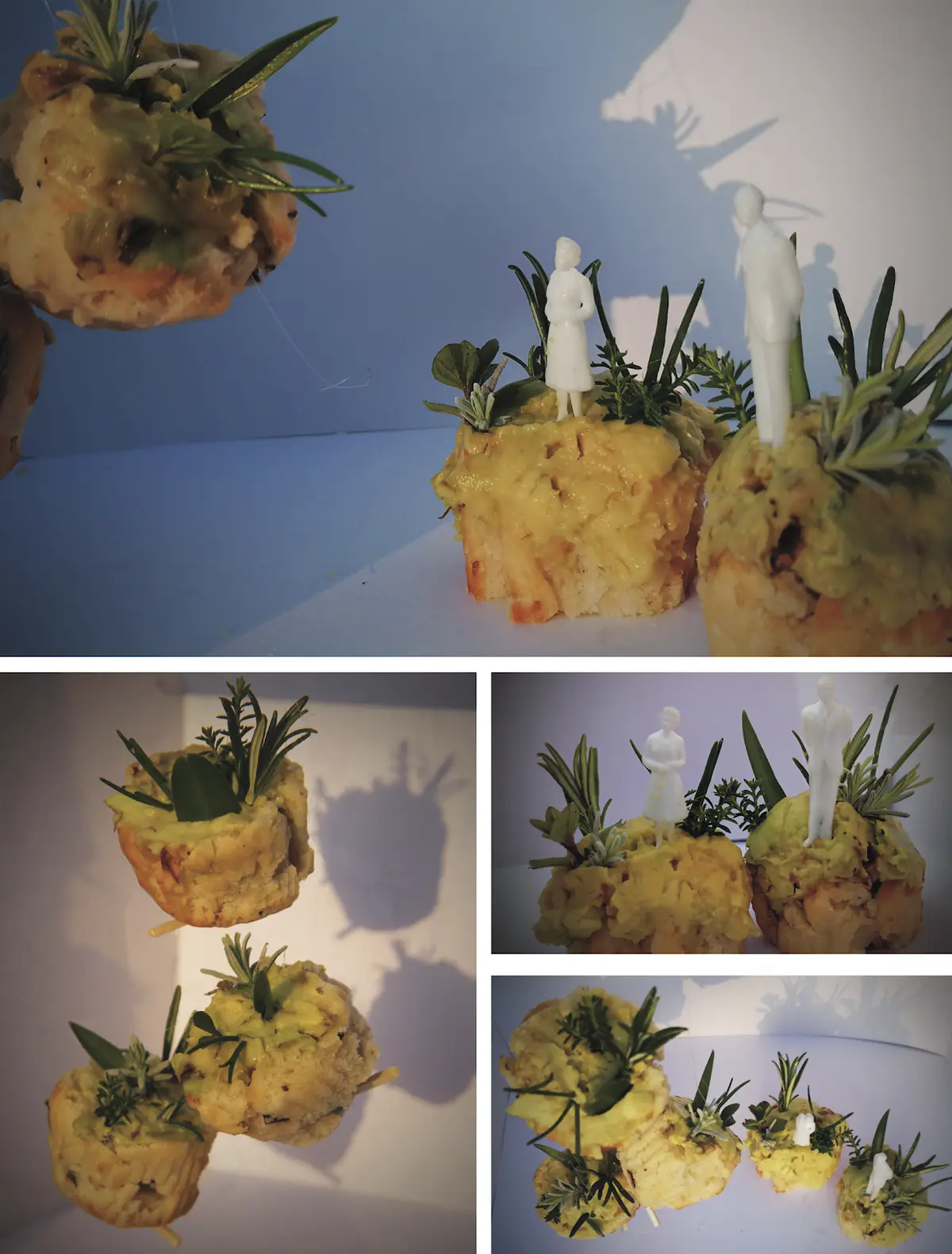
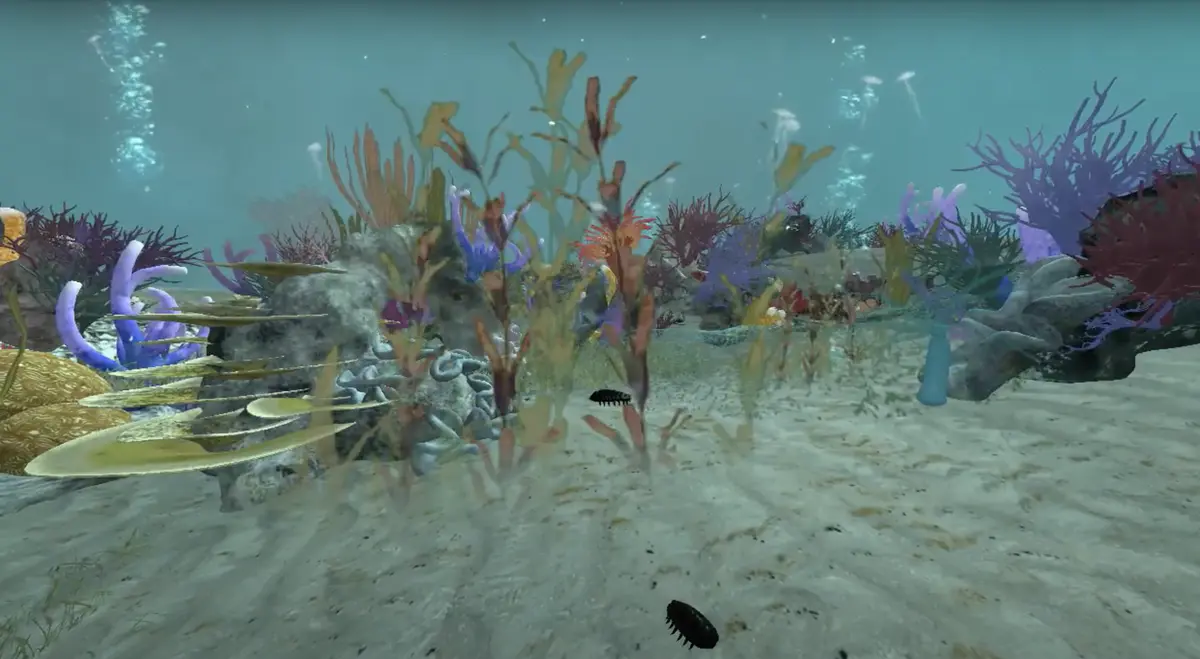
For Colab Dudley, I baked a model that ties into the final proposal. Food is a huge part of history and culture and part of Dudley’s history and culture is using what food there is available. Bread is cheap and easy to make, so is found in many traditional black country dishes. I foraged for edible plants in my garden and neighbourhood and built hanging baskets and islands to show in an abstract way how public space could be more productive and beautiful. They were a tasty treat and a sustainable model!
"Locals would pop into The Hen and Chickens Hotel for a quick pint and a chat in December 1982. The popular watering hole dominated the corner of New Street and Castle Street in Dudley Market Place."
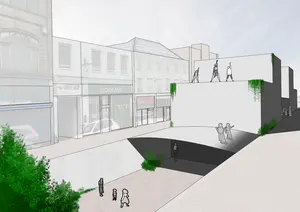
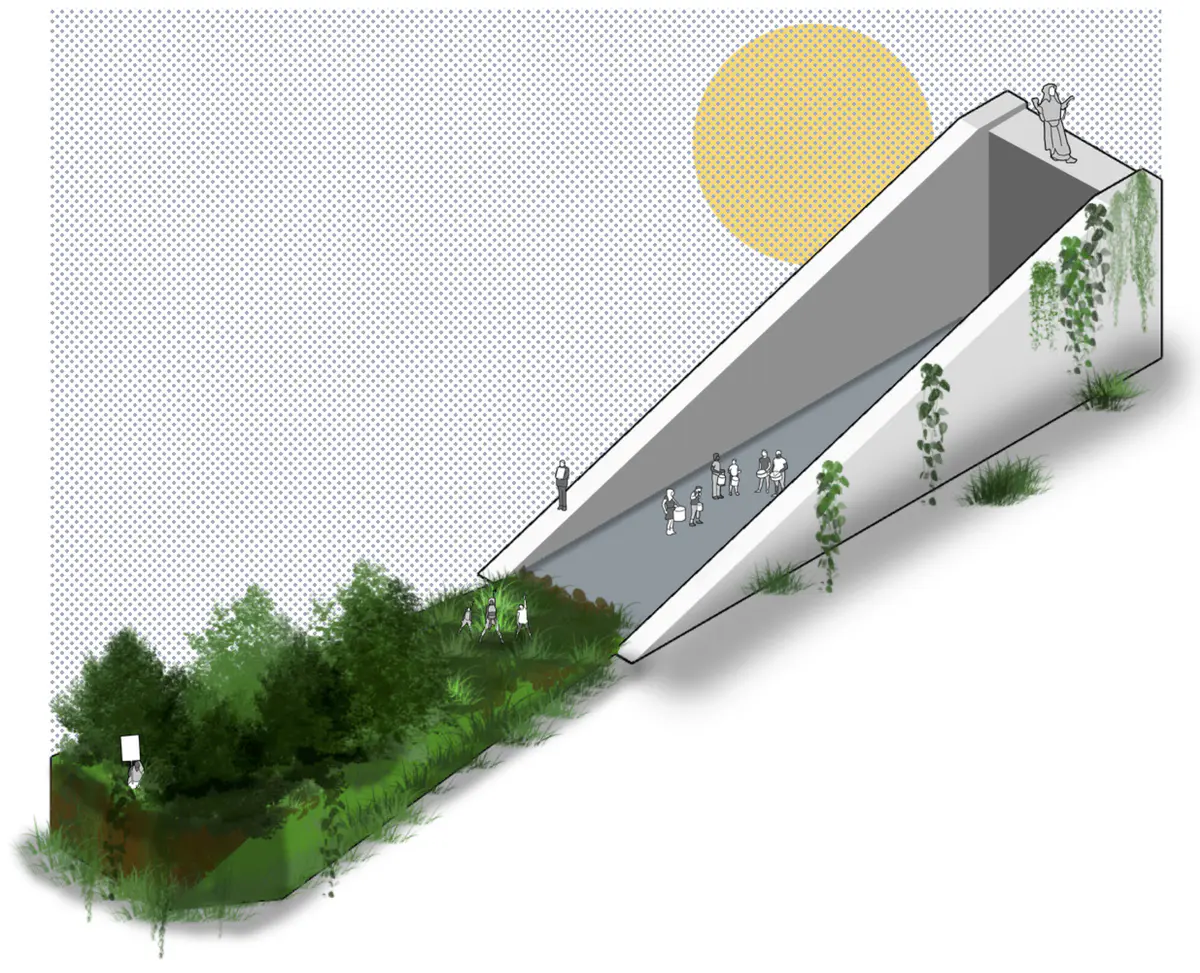
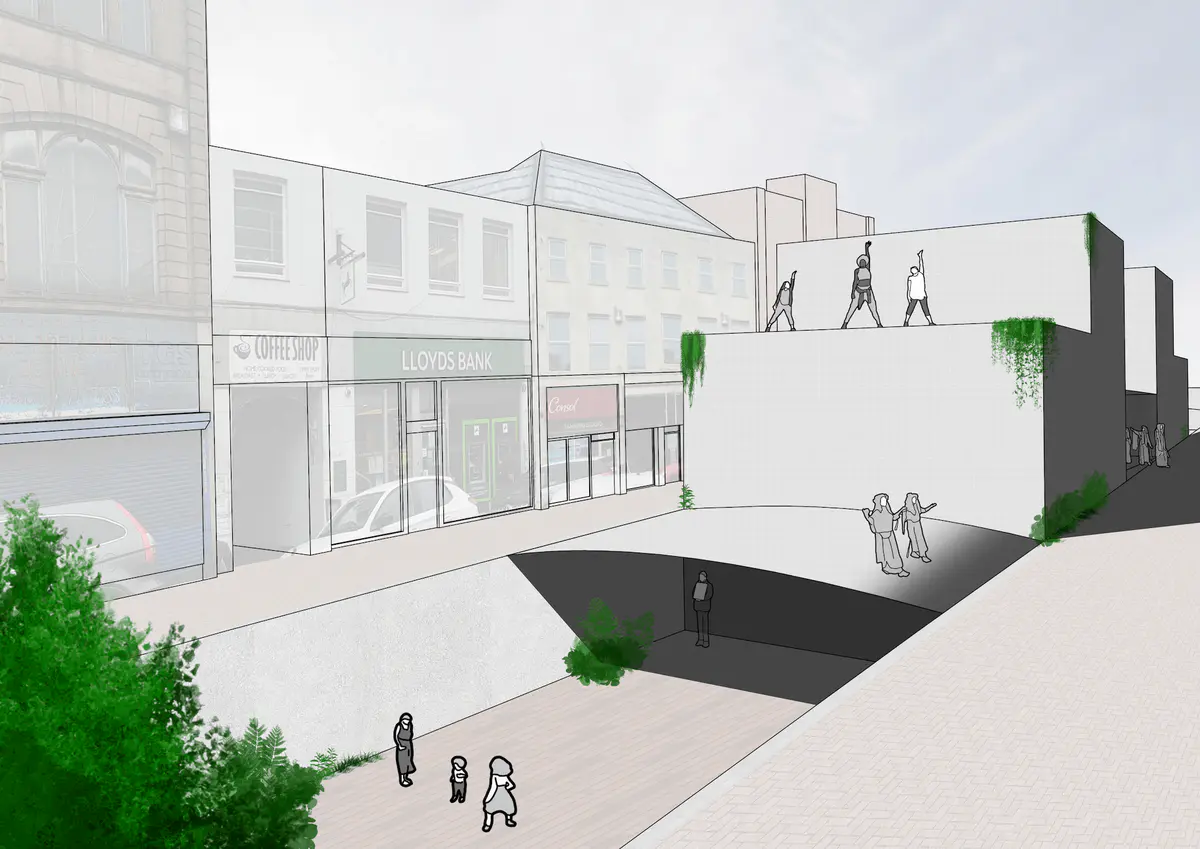
The whole High Street would be dug out to make way for this new kind of “street”. The idea, as stated, is to alter the way that people use this street, so that they can learn about the legacy of Dudley. This would mean that there would be a canopy that sits on top of the cut, that would also act as a means to shelter everything underneath, but would also be made in Dudley to promote local craftsmans. This canopy can then hold something like Theatre Curtains with the history of Dudley presented on them. As you walk through the cut, you go through all the different parts of Dudley’s Legacy - Saxon, Middle Ages, Industrial Revolution, Modern, and you would end the walk on the “Future”. You would start at one end, up by the top church, and as you walk through towards the market place, you would walk through the eras in chronological order. Then, once you exit the tunnel, you would leave the Modern era, and come out into the reclaimed green space, which would represent the future of Dudley’s Legacy. This would be a Miyawaki Forest that would be expanded out through the streets, taking over the spots where cars used to drive, to now benefit Dudley, it’s people, and the world as a whole.
Dudley’s High Street is about 240 metres long, about 9 metres wide, and rises about 8 metres. This would provided a very prominent feature for the High Street if it was dug out and recommissioned.
An added aspect to the dug out street would be that of the canopy that would reside above it. While thinking of the design, two ideas stood out - one that would stand raised, at about the same level as the end of the street, which would create this arcade styled archway that would reside high above the street. The second was having the canopy be flush with the pavement all the way up, except at the end that would then provide a small increase around the steps.
Both ideas serve the same purpose, but provide drastically different means of doing so.
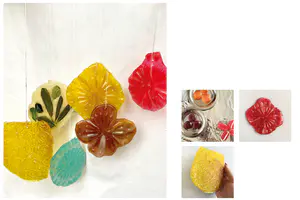
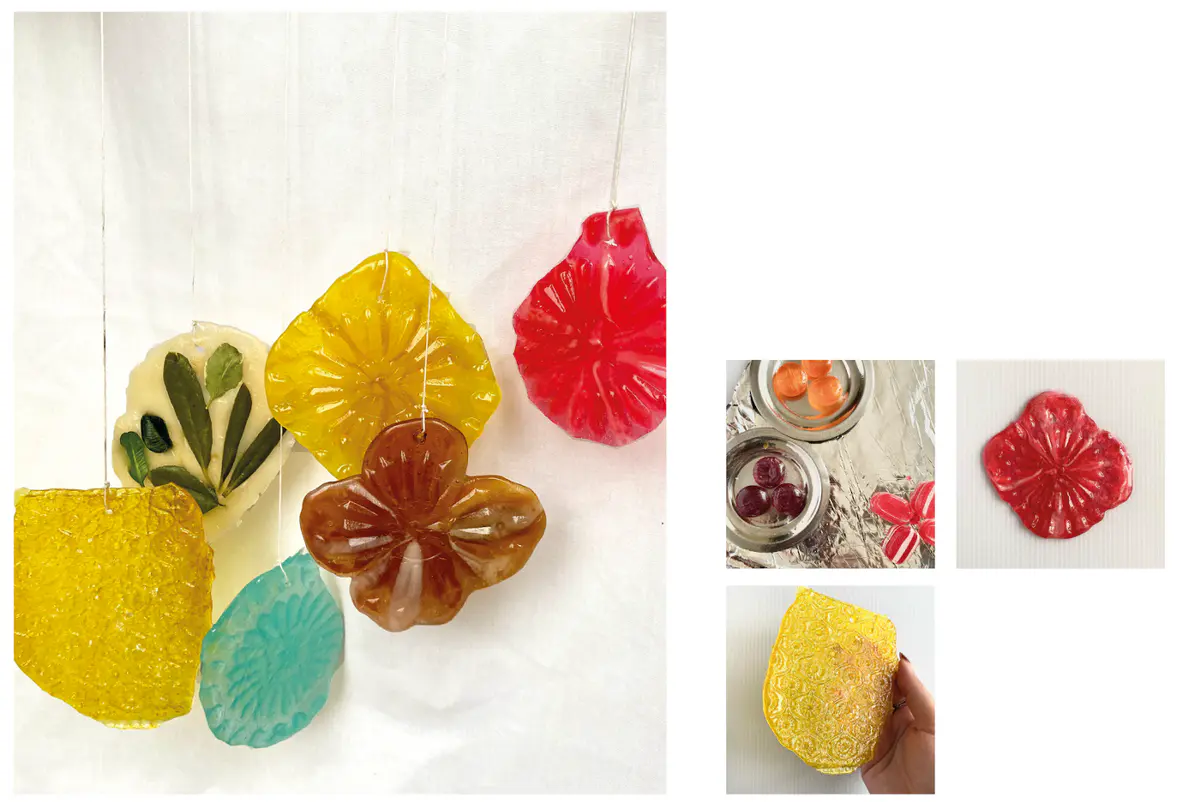
This gift was created to highlight different points in the social spaces on the high street. Aspects that we can improve on and celebrate. One point found was to incorporate more green spaces to improve health and wellbeing. The other to celebrate the textures and embossings in Dudley’s early ironworking. These ornaments were created by melting sweets and printing patterns onto them.
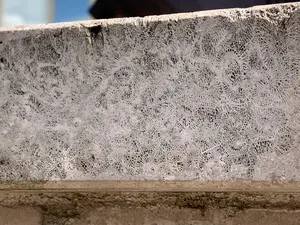
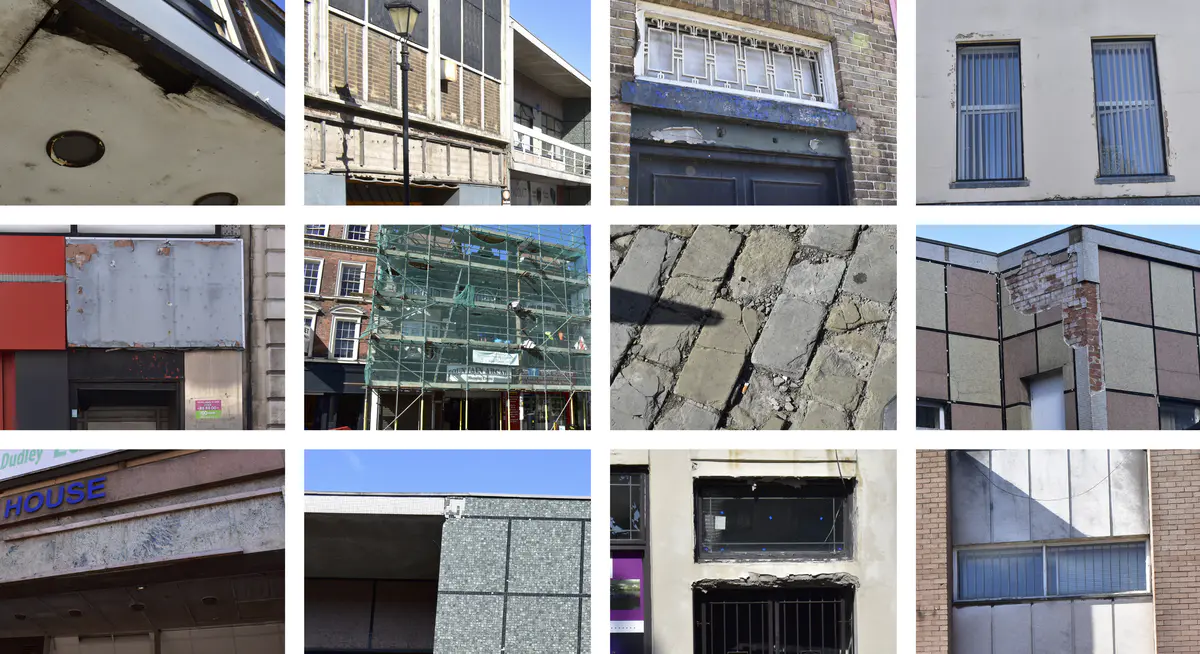
Building Deterioration
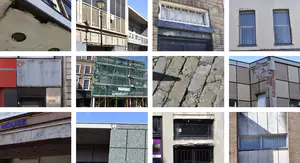
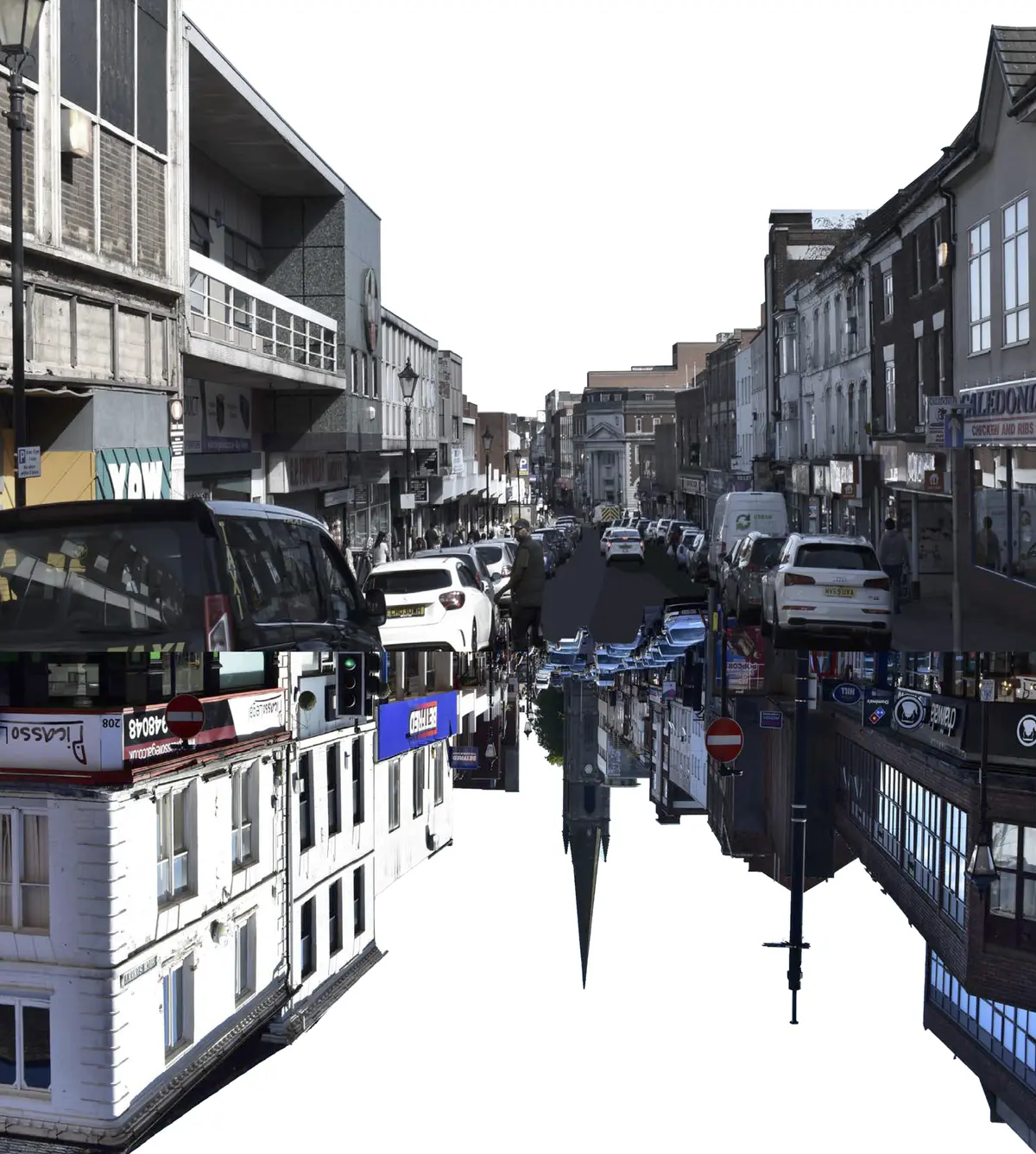
There was a familiar aesthetic regarding the buildings during the initial site visit to Dudley High Street. However, a large proportion of the façades that look onto the street have noticeable damage, graffiti or structural issues.
With that said, these images (right) are an insight into some of the damage. If the local authorities saw the high street as a priority, then damages and aesthetics would have been resolved and fixed. However, as there are multiple damages, this assumes that this high street is not one authority wish to preserve.
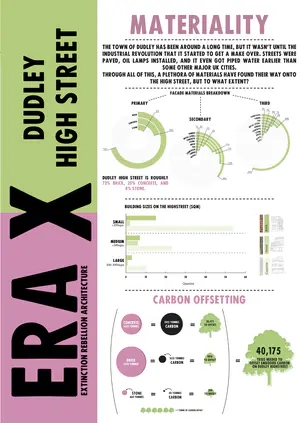
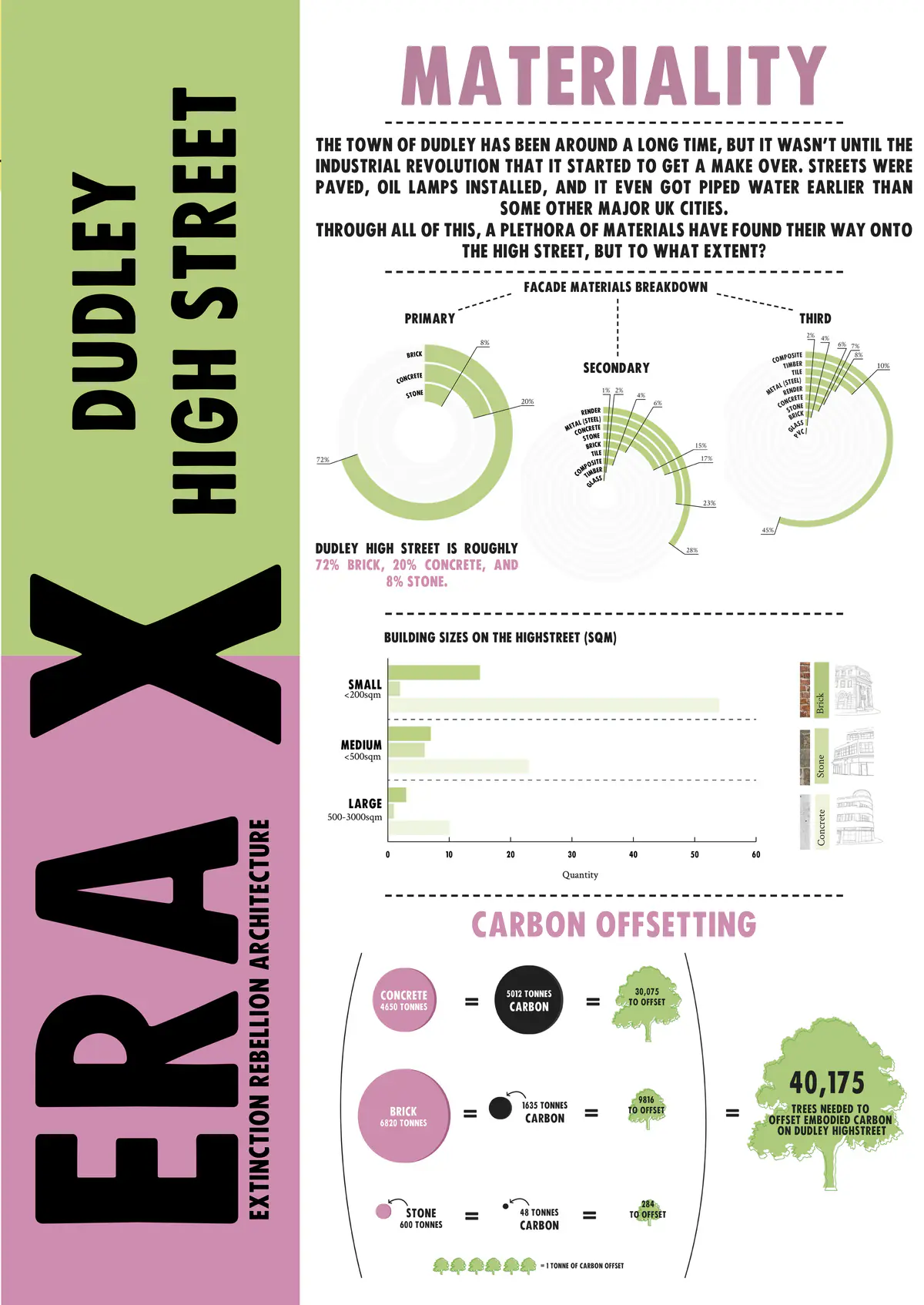
That said, this opens an opportunity. Instead of being a conservationist and repairing these buildings to their former glory, why not make them a statement piece within the high street. Possibly by placing a blanket ban on all of the current materials seen on the street. Instead, any repairs must be in Zero carbon / Carbon negative materials. This could then become an educational street with great architectural character. Both combined may increase the high streets footfall.
The first step would be to highlight any listed buildings or monuments within the high street.
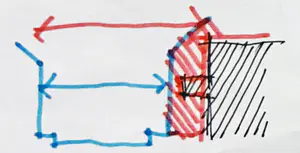
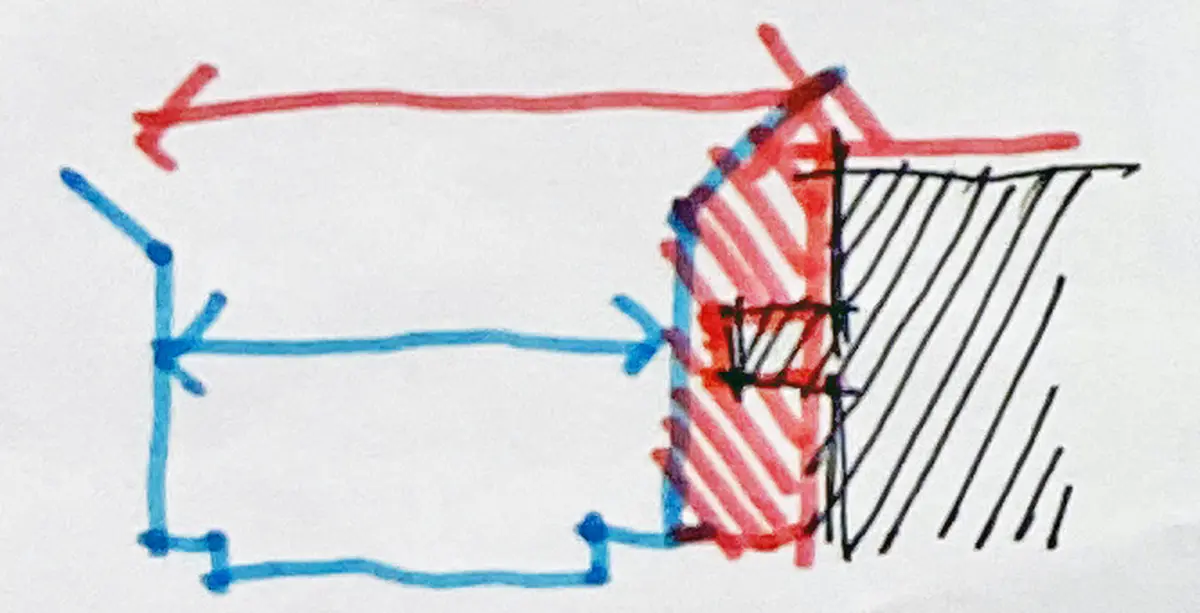
The main structure would have various spaces such as the Museum space, possibly a place that people can pin up local activities, and maybe rooms for either changing or for performance practice. As the street is 11m wide on average, there is plenty of space to have the building
fill the space. As the sunlight comes from mainly the south, the south side buildings often shadow the street entirely, which would mean that something being built (especially as it will be dug down a bit) would not shadow out the other buildings. The biggest hurdle to tackle is
that the space shouldn’t not feel overwhelming to the other shops or those who walk down the pavement. Because of this, most of the building’s structure would be in the underneath area, and only parts of it would pop out over the pavement. As the design would be flush
with the pavement, there are also opportunities to have crossing bridges that are both useful by the public, but also incorporated with the design of the new street.
The back of the street would create a unique space for social activities. The space is wide enough and long enough for a performance theatre space to be erected there, but it also has the possibility of having some kind of altered shape to the area, like a raised platform that could house
seating and other social activities. However, the space can also perfectly fit a fully regulated tennis court, badminton court, and volley ball court. People have mentioned that there is also a lack of sport engagement in the area, so this could be used to provide that kind of space.
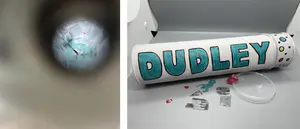
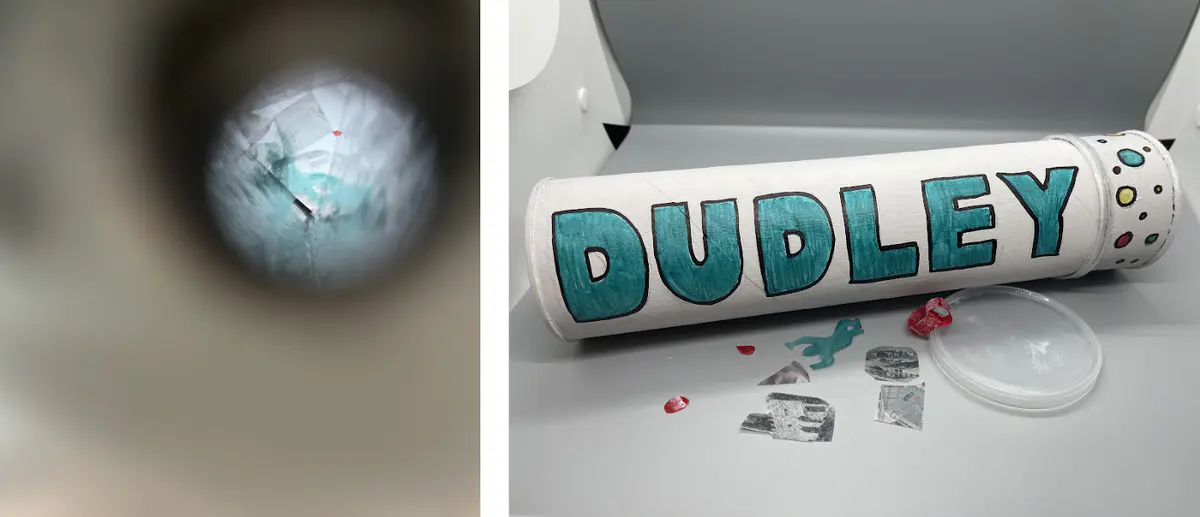
After investigating the history, heritage, culture and institutions of Dudley and its High street, I made a kaleidoscope gift based around the themes ‘overlooked’, ‘resilience’ and ‘layered’. Although sight is the most immediate sense in which many people engage with their surroundings, it’s not until you look beneath the surface and start to see things from a new perspective that you fully appreciate what is there and the potential beyond. I wanted people to engage with my gift, have fun and evoke a sense of nostalgia, whilst also using it as a way to look forward to what the High Street could be, all the while embodying the CoLab Dudley principle of allowing this object to be a co-op piece. The gift relates to the people and allows for each user to interpret and express their own thoughts.
"The new market in Dudley market place in 1983 had a little more aisle space between the stalls, making shopping easier for customers. The market had just reopened after three months spent in Stone Street while it was refurbished. Traditionalists had bitterly attacked the replacing of wooden stalls with metal and the removal of the old-fashioned cobbles. This was taken on May 15, 1983."
The Spiers home furnishing store in Dudley High Street in April 1970 - "Plans to demolish the Spiers home furnishing store in Dudley High Street were met with opposition in April 1970, with campaigners voicing fears the town would become subject to rectangular uniformity and called for the building to be preserved."
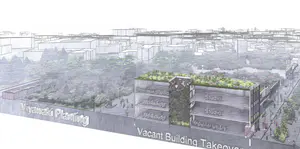
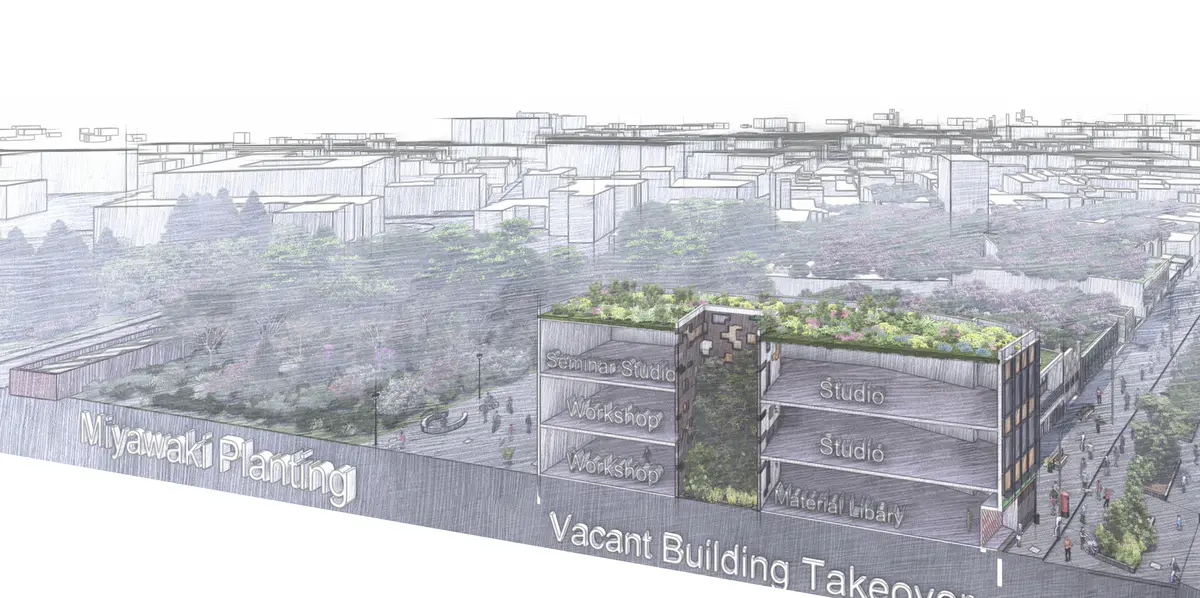
Explore The History Of Site Voids - This will provide an opportunity to reimplement these to allow vertical green corridors to occur.
Explore Vacant Buildings - To avoid damaging an already deteriorating high street, I aim only to take over vacant plots.
Investigate the opportunity for Miyawaki planting - understand the conditions required to grow a sustainable material source on-site, including ground, water, and space conditions.
It takes over a building that leads directly to an open space where a community hub is the centre of the thesis, offering education, community engagement and material celebration.
"Hanson's Brewery at the top of Dudley High Street, pictured here in November 1991, shortly before it closed. An Asda supermarket now stands on the site."
Caribbean One Stop
The sign above the door
Shows a tropical island
But in Dudley Town
There’s a chill in the air
As Earl runs nine miles
Before jam and toast and
A cup of tea with nine sugars
To recharge batteries.
He’s not getting any younger but
Age is just a mindset.
When you’ve worked forty years
On the wholesale markets
Grafting and providing
Your perspective shifts
To what is really important.
We talk family
Community
Among plantain and yams
We talk heritage
Education
Among chopped hake and Jamaican pears.
Gloria can’t find any mangos
Because Earl has stashed them
Behind the counter
Too soft and sweet for handling.
When he gets a ripe breadfruit
Earl thinks of Gloria
“Know your customers”
He tells me
“Know a little bit about everything”.
I ask Gloria about
Triple Blue Cross
She tells me about white shirts
Bed linen
Drying under a Jamaican sun
This shop is an education
If you just ask the right questions.
Earl’s father came in 1954
Bloodlines stretched
Across continents
Across boundaries
Nigeria
Scotland
Jamaica
Germany
A mix Earl’s grown into
Via Handsworth
Birmingham
England.
He knows a Bristol accent
When he hears one
They talk about Montpelier
Meat markets in Newport
Veg markets in St Pauls
She comes from Tipton each month
To get the things she needs
It’s personal
She likes personal.
The freezer is full of
Chicken feet
Ox tail
Turkey neck
Cow foot
Flavour is the thing
Even water gets spiced
For mash Earl tells me
As he trims Ghanian yam
With a very sharp knife
To just the right size.
There is barely anything
I recognise in this shop
But I’m drawn to the colours
The stories
The journey
The difference
Halfway around the world or
Baked up the road
For customers who bang on the window and wave
Who stand in the doorway
Giving back the banter
Who leave with the Caribbean
In a blue plastic bag.
I leave with a bag of Zoomers
Earl tells me
“That once I taste Jamaica
I’ll be back”
I stand in the High Street
Cheesy snacks in hand
Reminding myself
To buy two packets next time.
Seen as the heart of the town, Dudley High Street stretch- es from the Dudley ASDA, all the way up to the St. Edmund King & Martyr Church. Although, the street has seen better days.
Along the High Street itself, there are 28 abandoned shop fronts, accounting for 1/5 shops being neglected. It is also home to a few of Dudley’s landmarks:
The Drinking Fountain, a Grade II listed fountain, which had a portion of a £4.6 million funding from the HLF European 2015 funding go towards to its restoration (Richards, 2017).
The Market Place is a fixed centre of trading and selling at the heart of the market square. It too benefited from the funding, allowing for permanent fixings.
The Top Church, St. Thomas and St. Luke, overlooking the entire street, and most of the surrounding town itself.
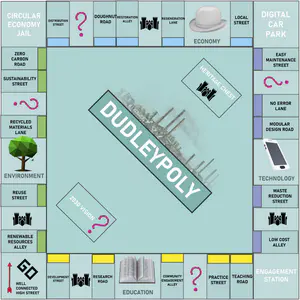
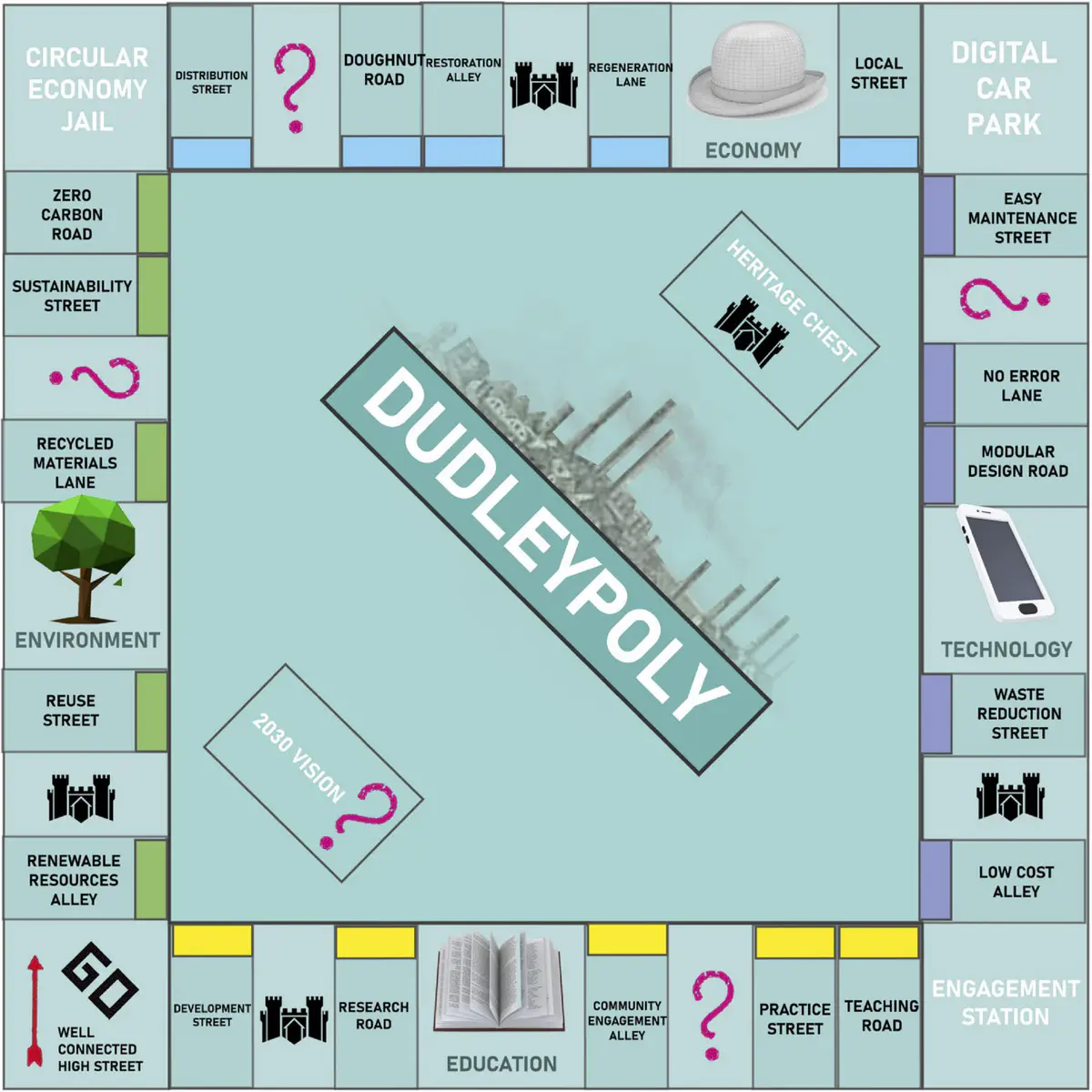
We created a visual representation of the main factors and sectors we came across in our research and explored individually: environment, economy, technology and education. It also summarises our goal of creating a connected High Street, and the steps we took to achieve this goal.
In this picture from 1914 in Dudley, you can just make out my grandfather. He's the small boy with the cap running across Wolverhampton Street in the days when the trams were still running. Years later we worked out that this day was probably a defining moment in his life, the day he chose never to have a second thought or to be bullied by others. You can see him running. This is because he had stolen the ham you can see him carrying under his arm. This one action started a chain of events for my grandfather that would go on to dominate his formative years. Petty larceny, theft, criminal activity that would shape him, turn him into one of the most notorious villains in the Black Country.
When he died in 1972, this photograph turned up amongst his possessions, in a locked drawer of his bureau. We agreed amongst us that no one in the family had ever seen this photo before, curious as to its importance to him. On the back of the photo he had written the date and time, together with a brief note - "Me stealing ham from W.Smiths, butcher". He would have been 10 years old and this was perhaps his first, or at least one of his first criminal acts.
We have no idea who took the photograph or how he had come to have the original print in his possession, but it appears that it held some significance for him as he kept it all of his life locked away in his bureau drawer.