Our collective vision for Dudley is to support a creative community that is connected through our internet of things; creating spaces that allow for the collection and redistribution of materials that locals can use to construct products with. Community engagement is central to this design network with local businesses encouraged to get involved in manufacturing.
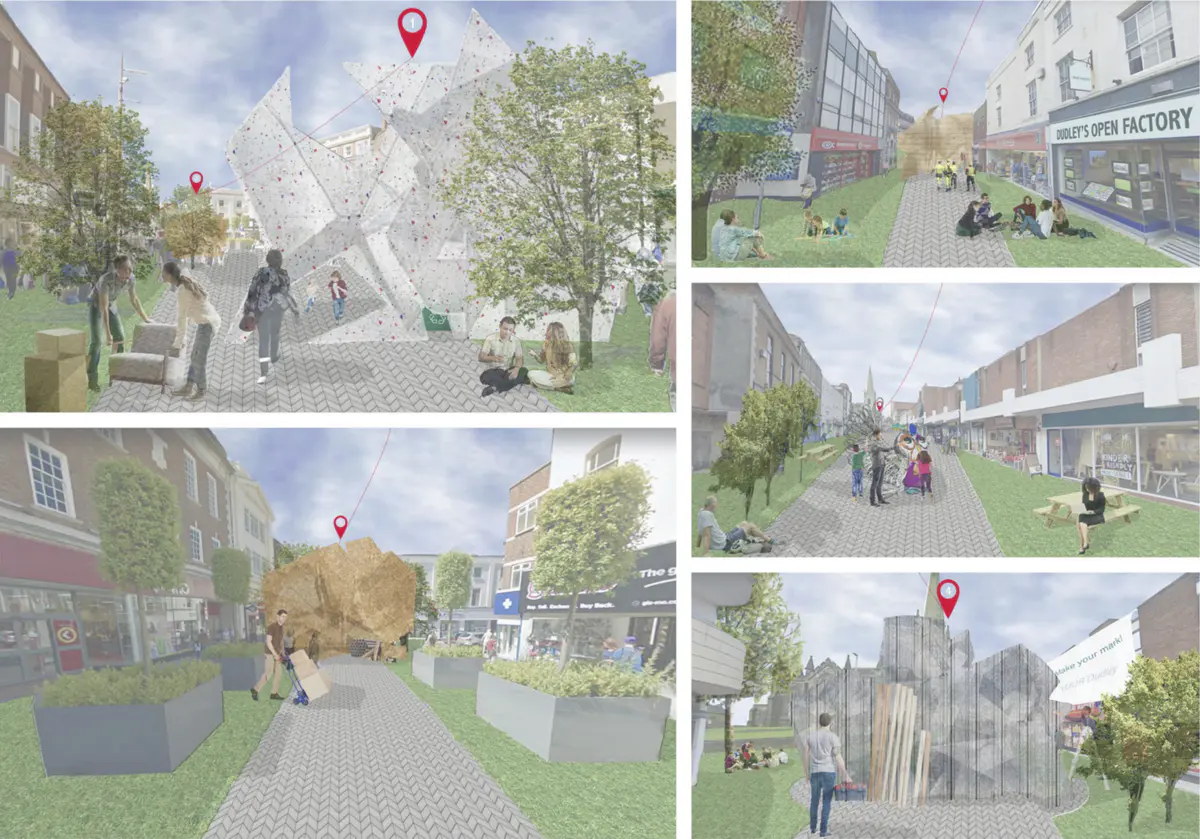
We decided to bring alive this vision through a series of pavilions positioned through the High Street, following a process through recycling, storing constructing and manufacturing. To take this idea further, we allocated several empty units along the High Street to become spaces involved in the open factory, from workshops, educational centres and co-working hubs. Since we wanted to show the journey people would be able to take, we decided to create a storyboard for our final visual.
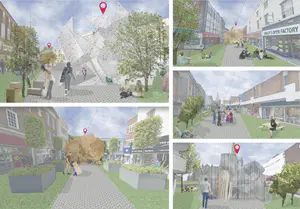
These visuals show how the pavilions could sit in the High Street, starting at the market place, past CoLab Dudley’s base, and ending up at Top Church. We wanted to show how people would be able to interact with these different spaces and navigate between them.
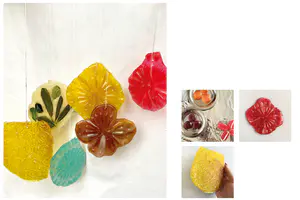
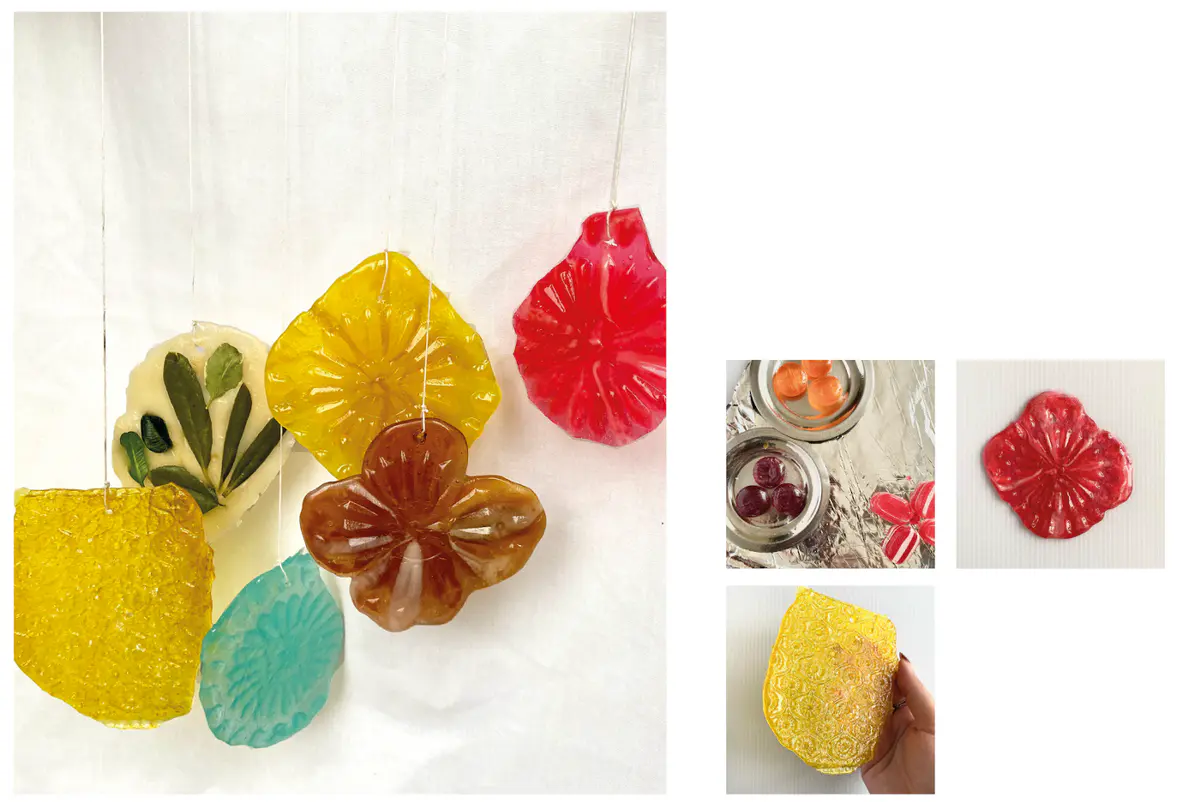
This gift was created to highlight different points in the social spaces on the high street. Aspects that we can improve on and celebrate. One point found was to incorporate more green spaces to improve health and wellbeing. The other to celebrate the textures and embossings in Dudley’s early ironworking. These ornaments were created by melting sweets and printing patterns onto them.
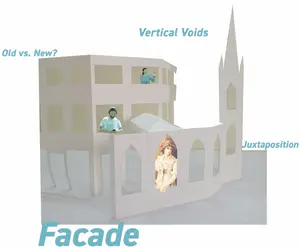
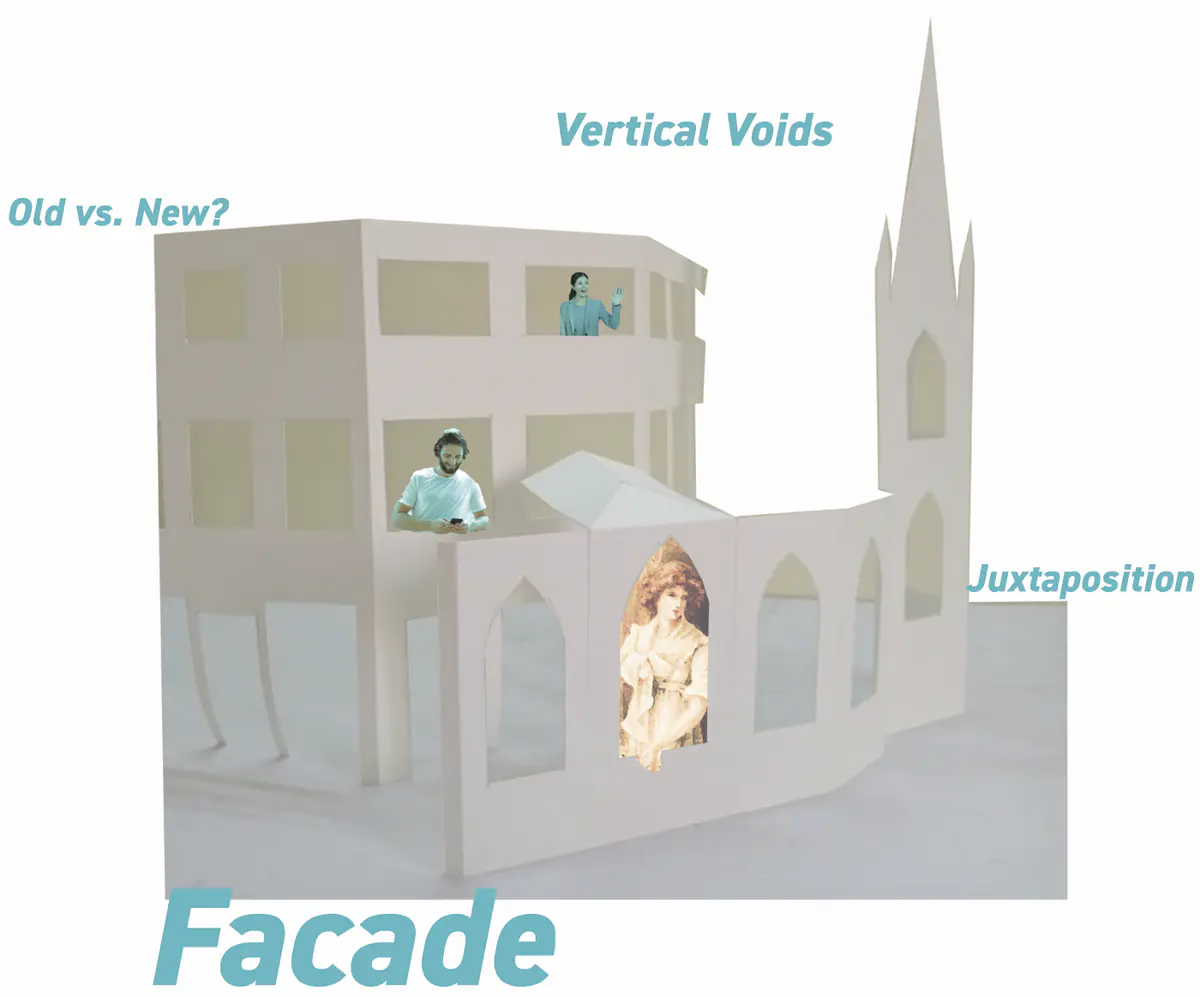
The Gift represents the two different typologies of building and its facade located on the High Street. One resembles St. Thomas Top Church and the other is the common modern building facade. The design of High Street buildings has evolved throughout the period. Its use, materiality, construction technique etc.
The High Street has always represented a role as a commercial and social hub. The concentration of public on the High Street provides the opportunities to designers to showcase creativity and innovation in design which impacts on visitors. We can say in other words, an ‘Exhibition’ of evolution of buildings in a row. So, facade plays a key role as it reflects the local identity of the town and its culture. So I did a little experiment to understand the street in the form of juxtaposition of facade by placing two different typologies of buildings located on the street. The voids on the facade have changed and adapted to more convenient rectilinear shapes during the past few decades.
The model made of plain paper can represent the periodical difference in buildings to which people of the High Street can easily relate and take a place within their memory.
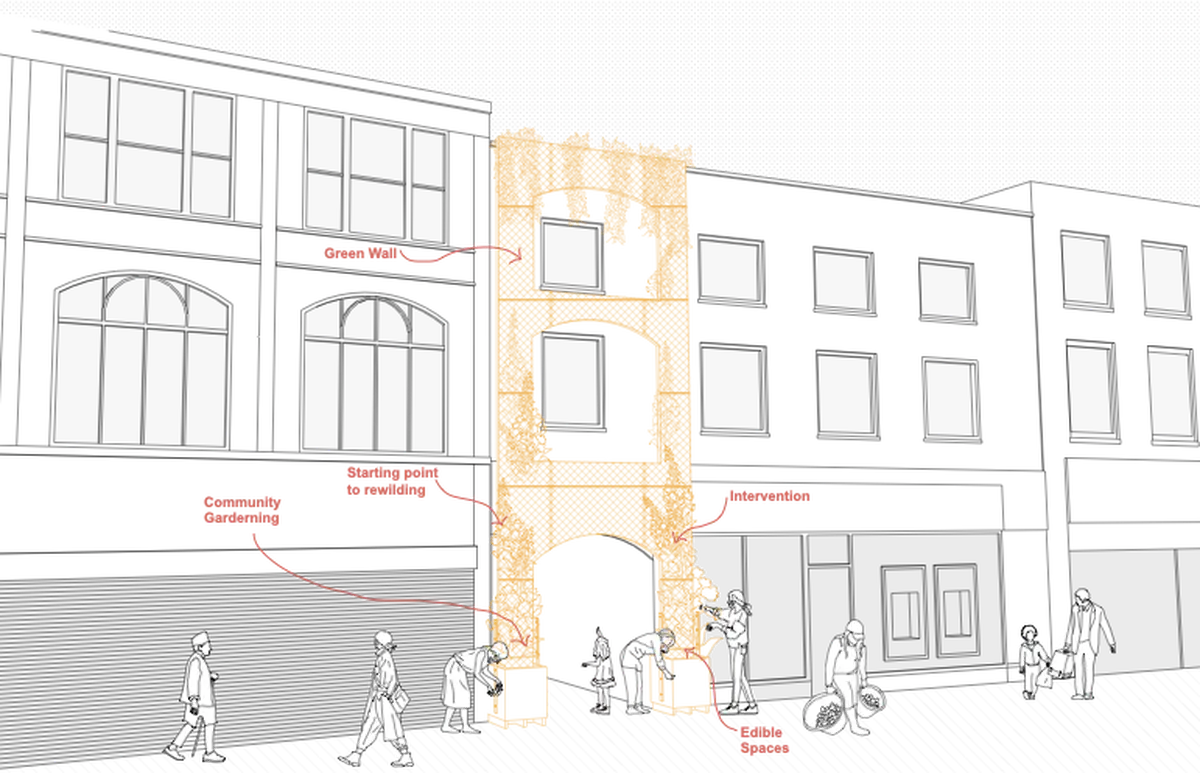
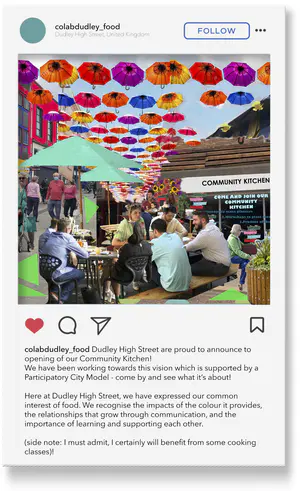
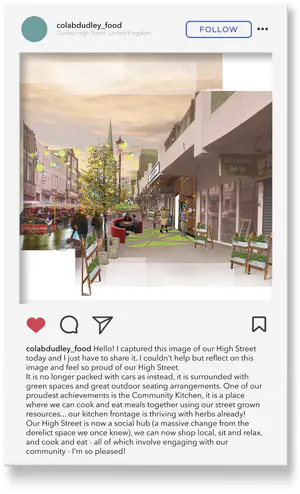
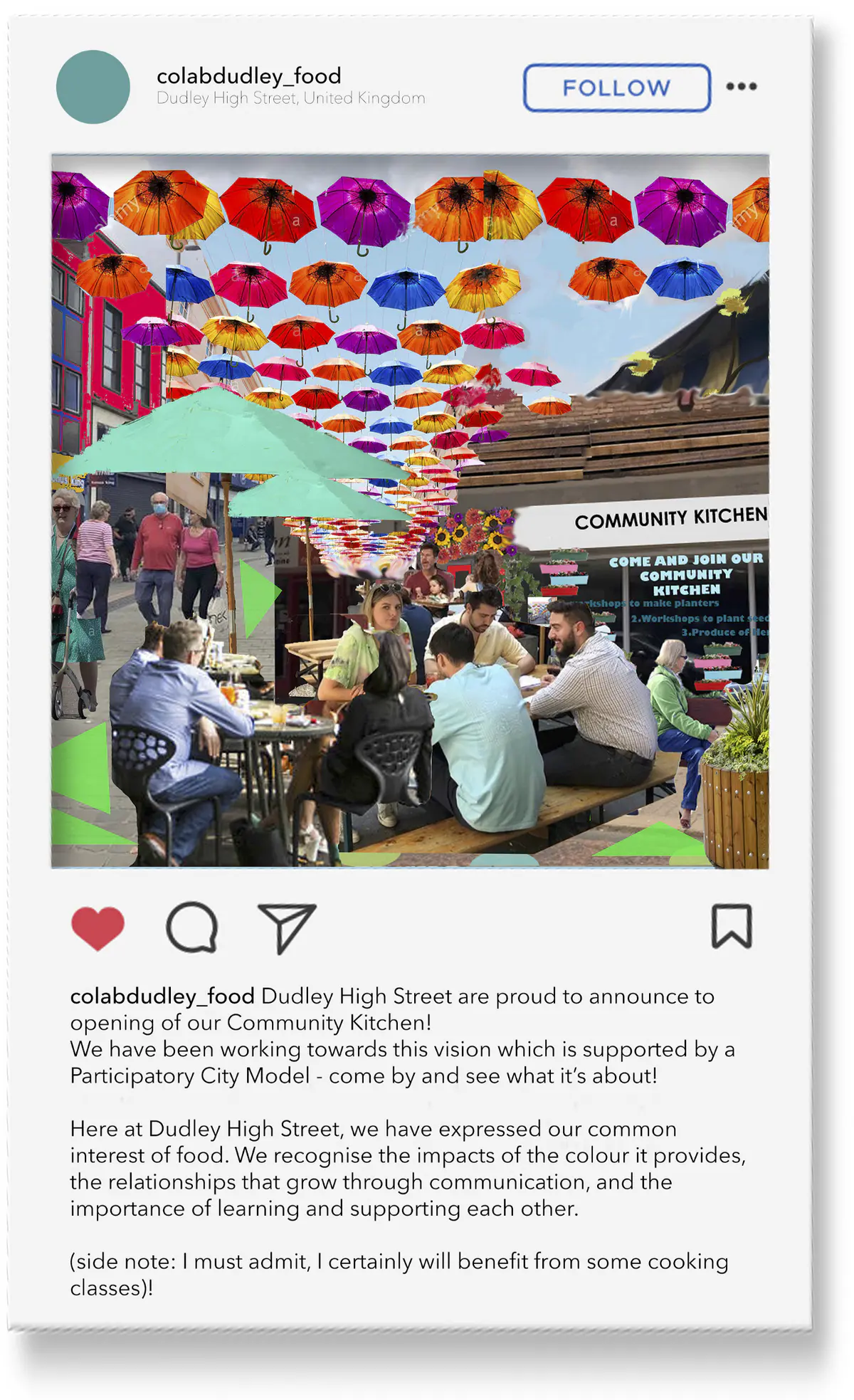
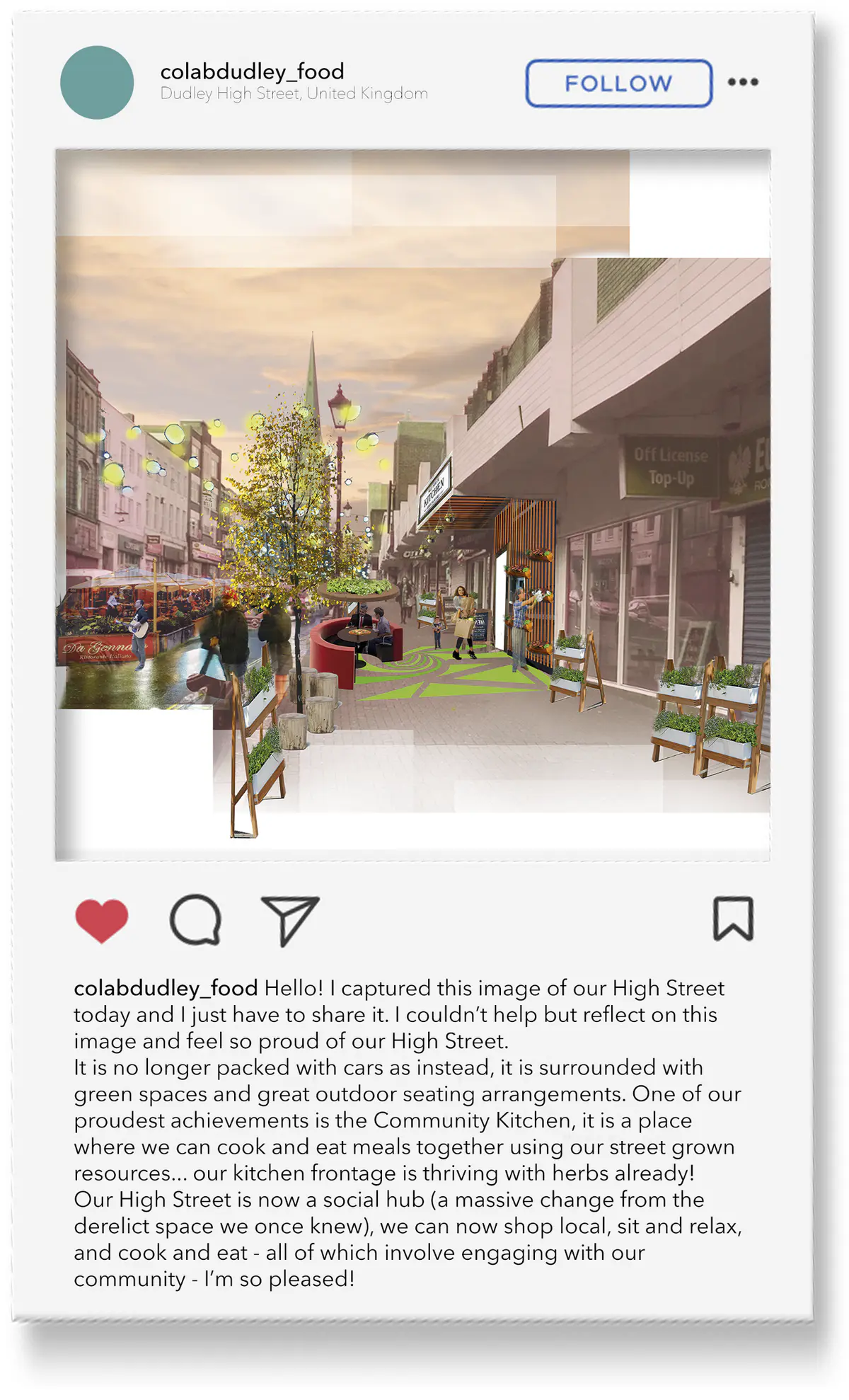
This post develops what the community kitchen has to offer with street grown resources and community engagement.
(We decided to present our narrative through social media and instagram posts as we wanted to showcase what individual experiences might be like when experiencing the future High Street. Each of our posts captures a different element of experience on the High Street to form a collective scenario.)
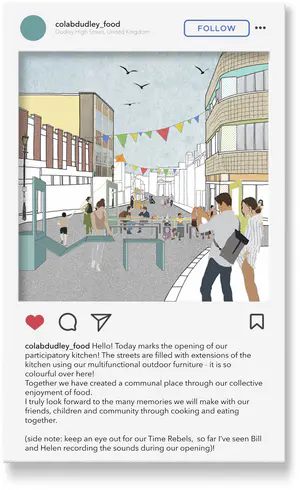
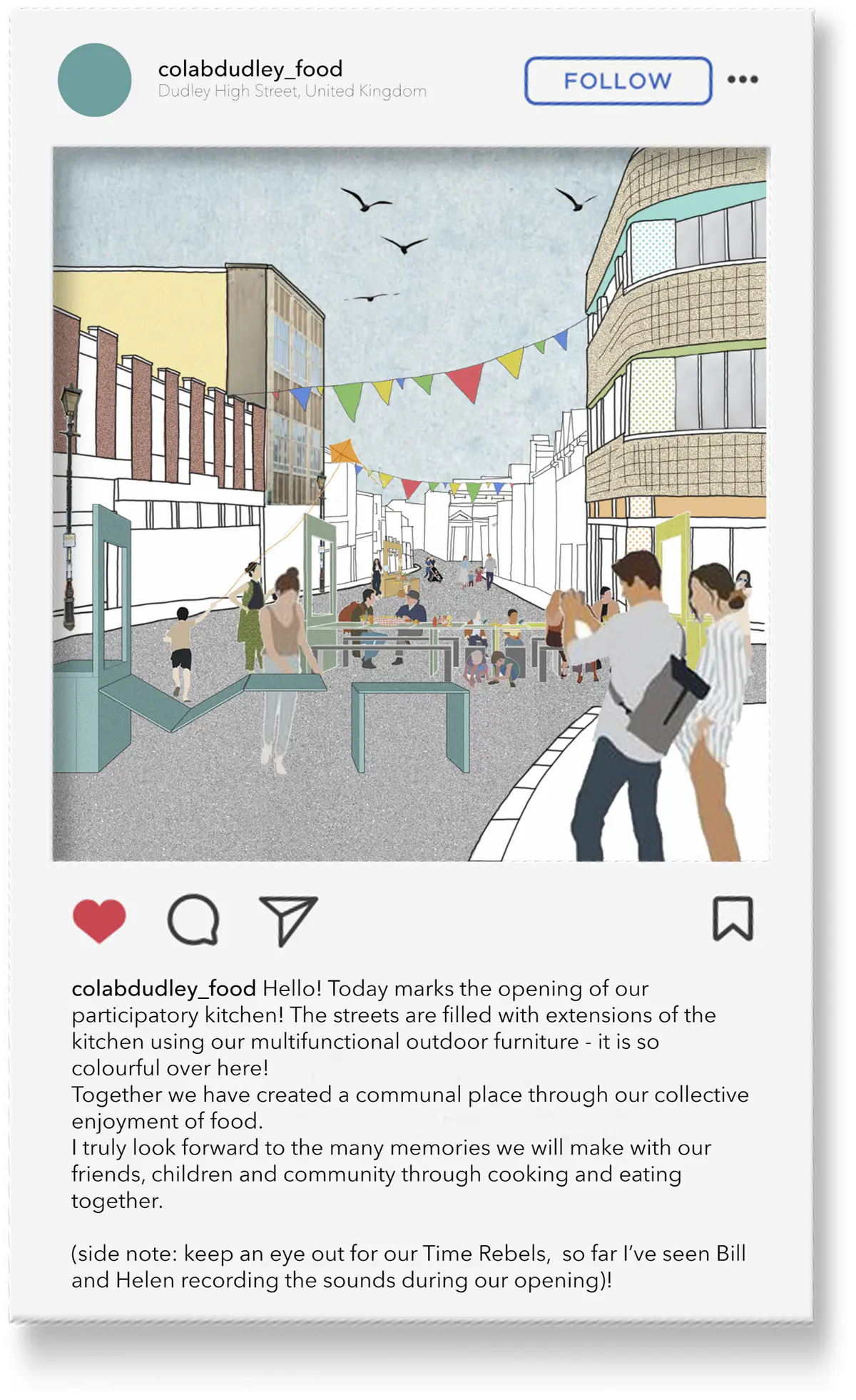
This post promotes the opening of a community kitchen, supported by the Participatory City model.
(We decided to present our narrative through social media and instagram posts as we wanted to showcase what individual experiences might be like when experiencing the future High Street. Each of our posts captures a different element of experience on the High Street to form a collective scenario.)
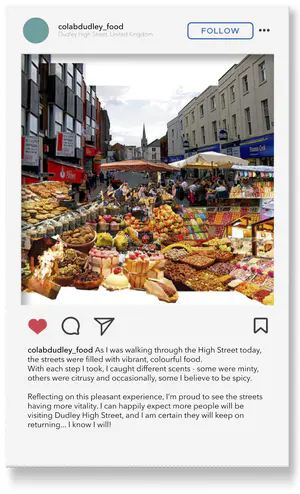
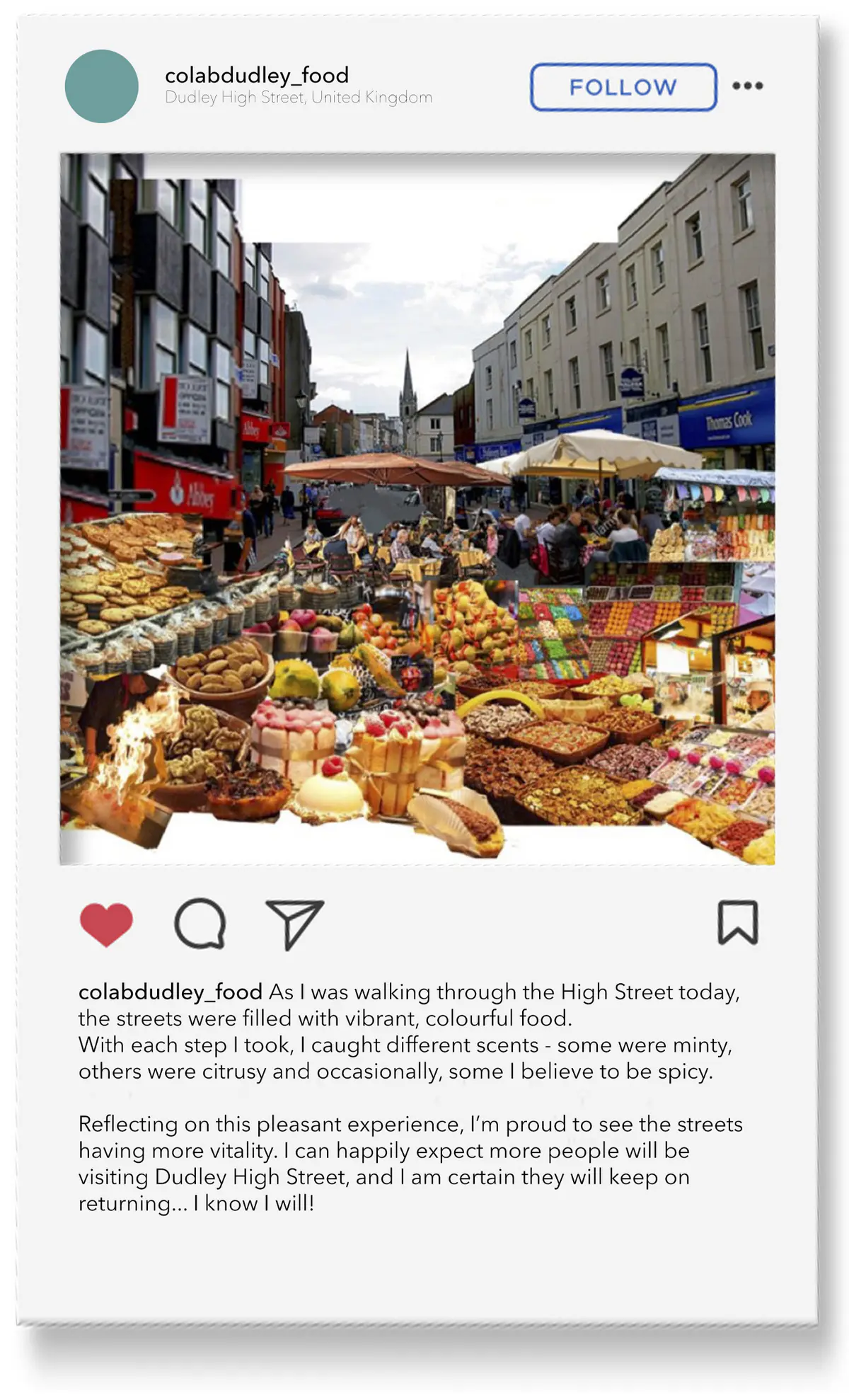
This post captures the street qualities where the visitors experience the colour and aromas of the food.
(We decided to present our narrative through social media and instagram posts as we wanted to showcase what individual experiences might be like when experiencing the future High Street. Each of our posts captures a different element of experience on the High Street to form a collective scenario.)
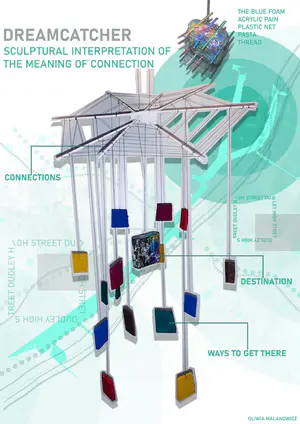
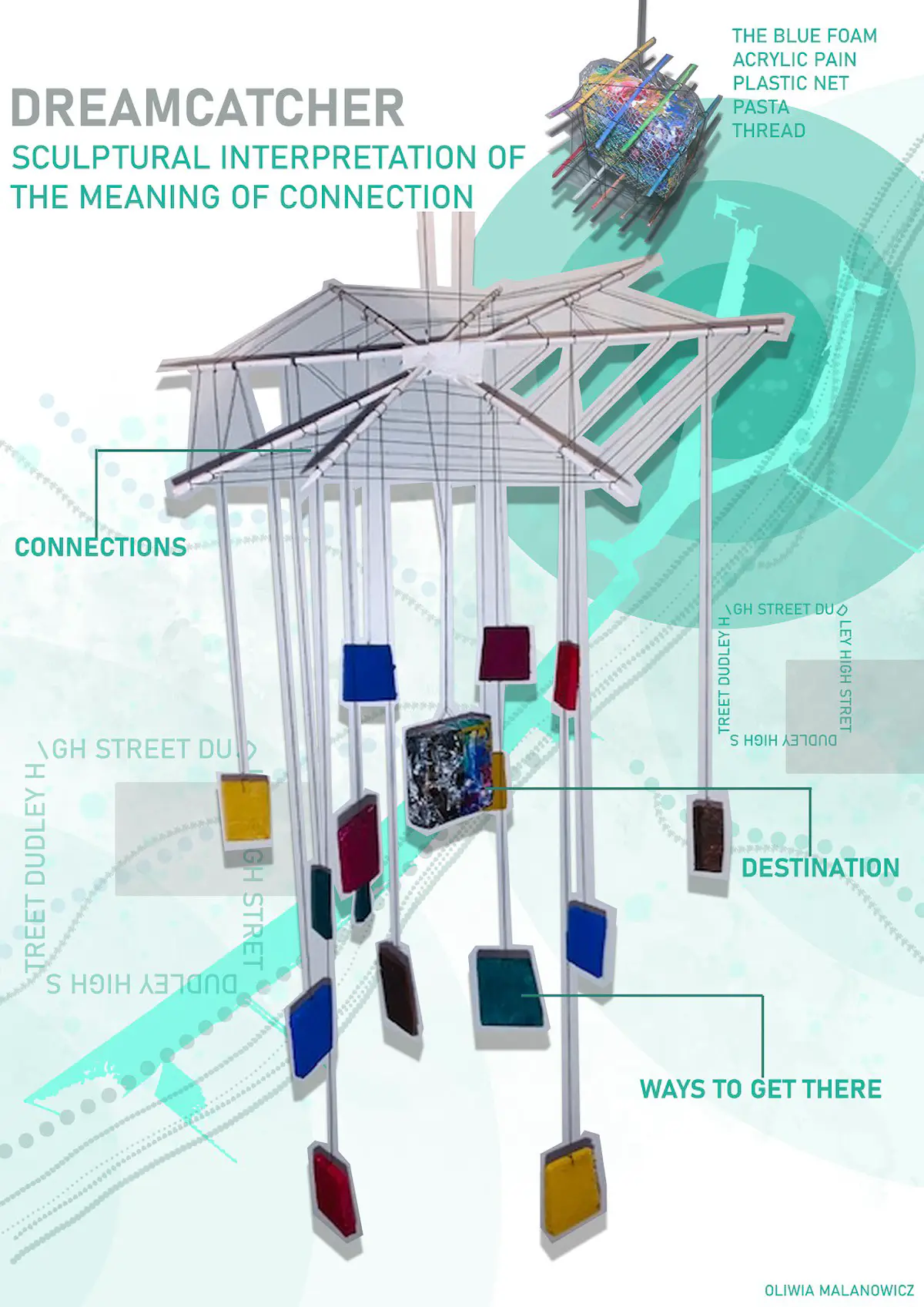
The themes I investigated were the Connections, Movement, Routes and Ways. My gift explores those themes through a figurative expression hidden within the structure of the dreamcatcher, allowing for a flexible interpretation by the audience, and to aid the imagination.
The structure of the dreamcatcher symbolizes the relationship between the destination and the journey the user undertakes, but while it highlights the importance of the destination, placing it in the centre as the biggest piece, it emphasizes the significance of the journey over the destination in the ratio of one big element vs many small elements.
This can be relevant to the High Street, if the connections are thought of beyond the transport means, and can relate to anything from the layout of the landscape of the High Street, to the interactions between the users.
The web symbolizes the connections between the pieces, plotting the blue foam pieces around the different lengths of the thread, off the centre where the destination piece is plotted. This is meant to show how the connections can be made in various ways and that there is no set order or pattern, meaning that the movement is individual and the connections are adaptable.
The blue foam pieces can be viewed as points or highlights of the journey, or they can represent different ways of getting to, and from the centre, suggesting that the journey doesn’t end with the destination.
Another way in which the web can be interpreted is that the small foam pieces are the destinations, the thread is the connection between them and the big piece symbolizes the decision making.
Caribbean One Stop
The sign above the door
Shows a tropical island
But in Dudley Town
There’s a chill in the air
As Earl runs nine miles
Before jam and toast and
A cup of tea with nine sugars
To recharge batteries.
He’s not getting any younger but
Age is just a mindset.
When you’ve worked forty years
On the wholesale markets
Grafting and providing
Your perspective shifts
To what is really important.
We talk family
Community
Among plantain and yams
We talk heritage
Education
Among chopped hake and Jamaican pears.
Gloria can’t find any mangos
Because Earl has stashed them
Behind the counter
Too soft and sweet for handling.
When he gets a ripe breadfruit
Earl thinks of Gloria
“Know your customers”
He tells me
“Know a little bit about everything”.
I ask Gloria about
Triple Blue Cross
She tells me about white shirts
Bed linen
Drying under a Jamaican sun
This shop is an education
If you just ask the right questions.
Earl’s father came in 1954
Bloodlines stretched
Across continents
Across boundaries
Nigeria
Scotland
Jamaica
Germany
A mix Earl’s grown into
Via Handsworth
Birmingham
England.
He knows a Bristol accent
When he hears one
They talk about Montpelier
Meat markets in Newport
Veg markets in St Pauls
She comes from Tipton each month
To get the things she needs
It’s personal
She likes personal.
The freezer is full of
Chicken feet
Ox tail
Turkey neck
Cow foot
Flavour is the thing
Even water gets spiced
For mash Earl tells me
As he trims Ghanian yam
With a very sharp knife
To just the right size.
There is barely anything
I recognise in this shop
But I’m drawn to the colours
The stories
The journey
The difference
Halfway around the world or
Baked up the road
For customers who bang on the window and wave
Who stand in the doorway
Giving back the banter
Who leave with the Caribbean
In a blue plastic bag.
I leave with a bag of Zoomers
Earl tells me
“That once I taste Jamaica
I’ll be back”
I stand in the High Street
Cheesy snacks in hand
Reminding myself
To buy two packets next time.
In this post, we captured the street’s atmosphere filled with colour, activity, and pedestrianised streets.
(We decided to present our narrative through social media and instagram posts as we wanted to showcase what individual experiences might be like when experiencing the future High Street. Each of our posts captures a different element of experience on the High Street to form a collective scenario.)