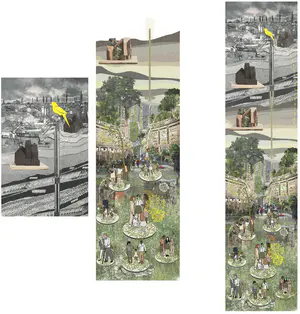
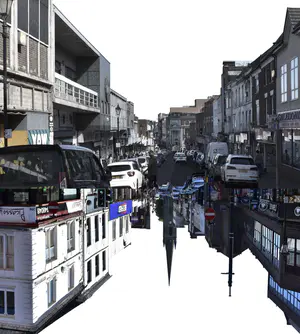
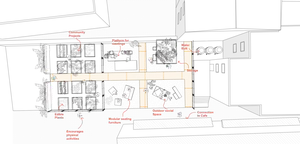
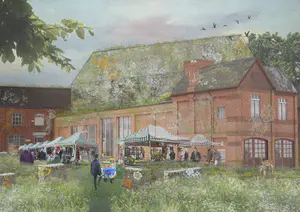
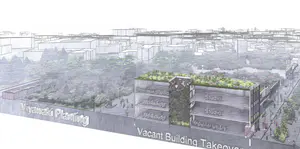
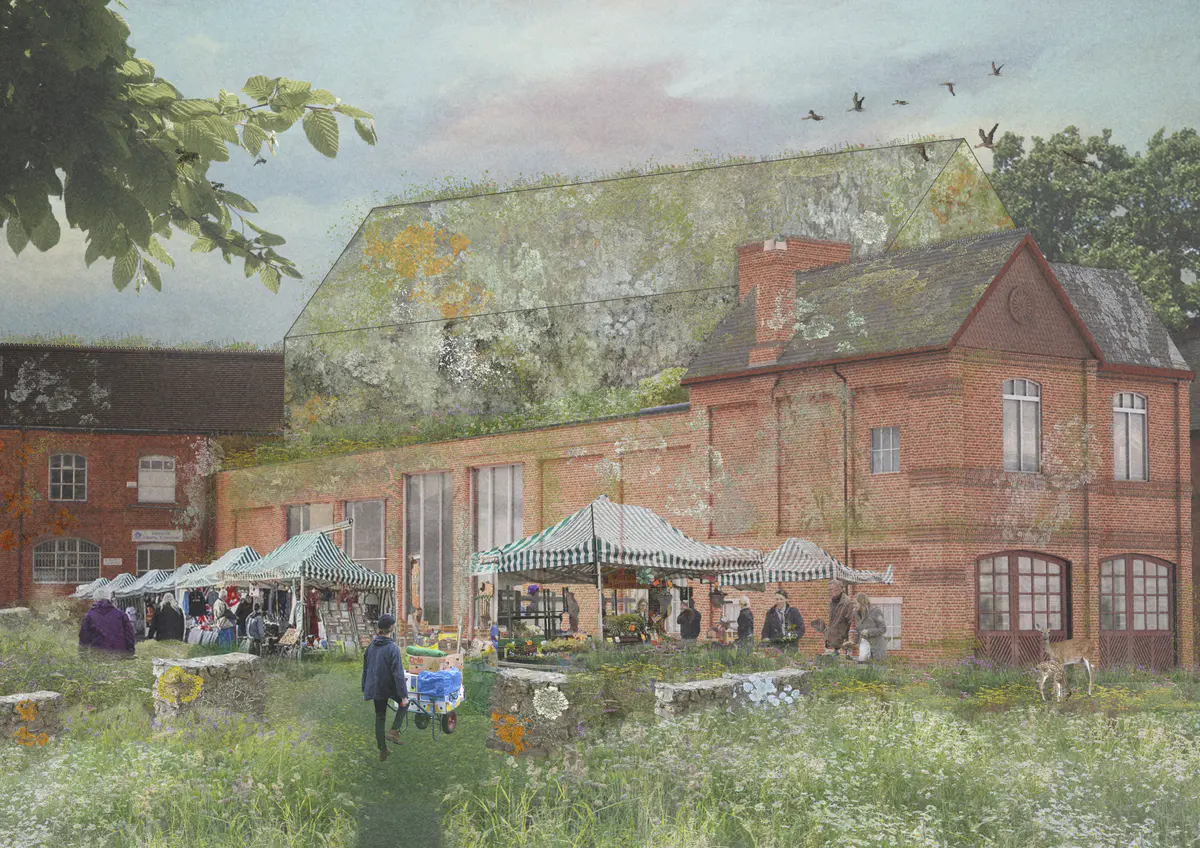
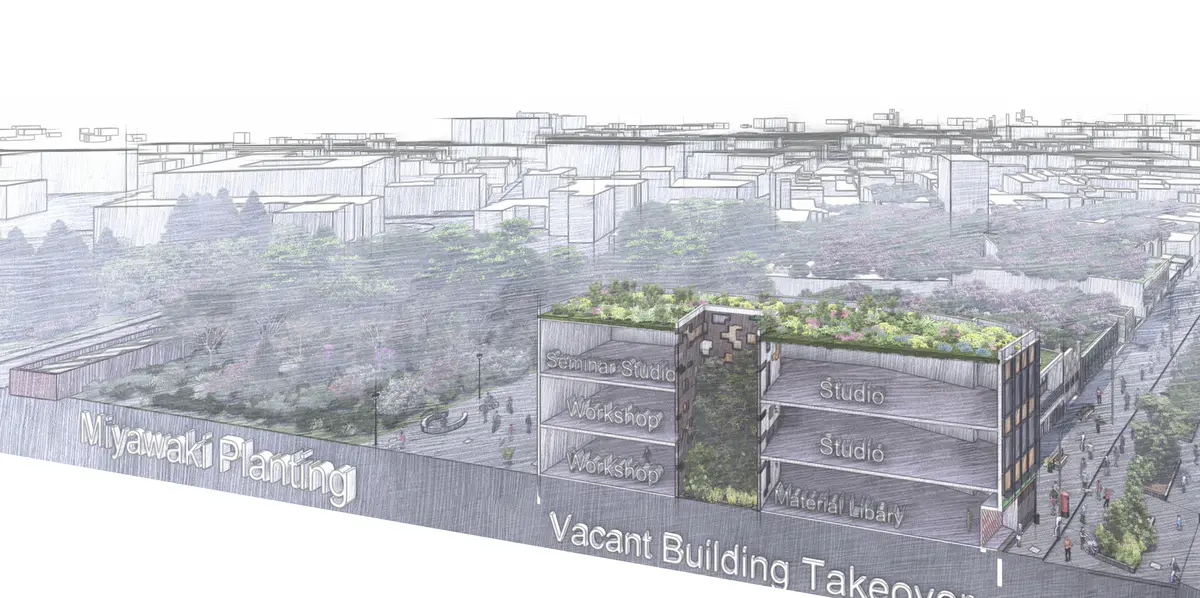
This visual represents the vision for the thesis, buildings covered in lichens, air purifying plants and community activities held on the Highstreet. This visual focuses in on the proposed site for the building and shows expression of a raised new build component on site as well as a full and wild landscaping plan.
Water Collection
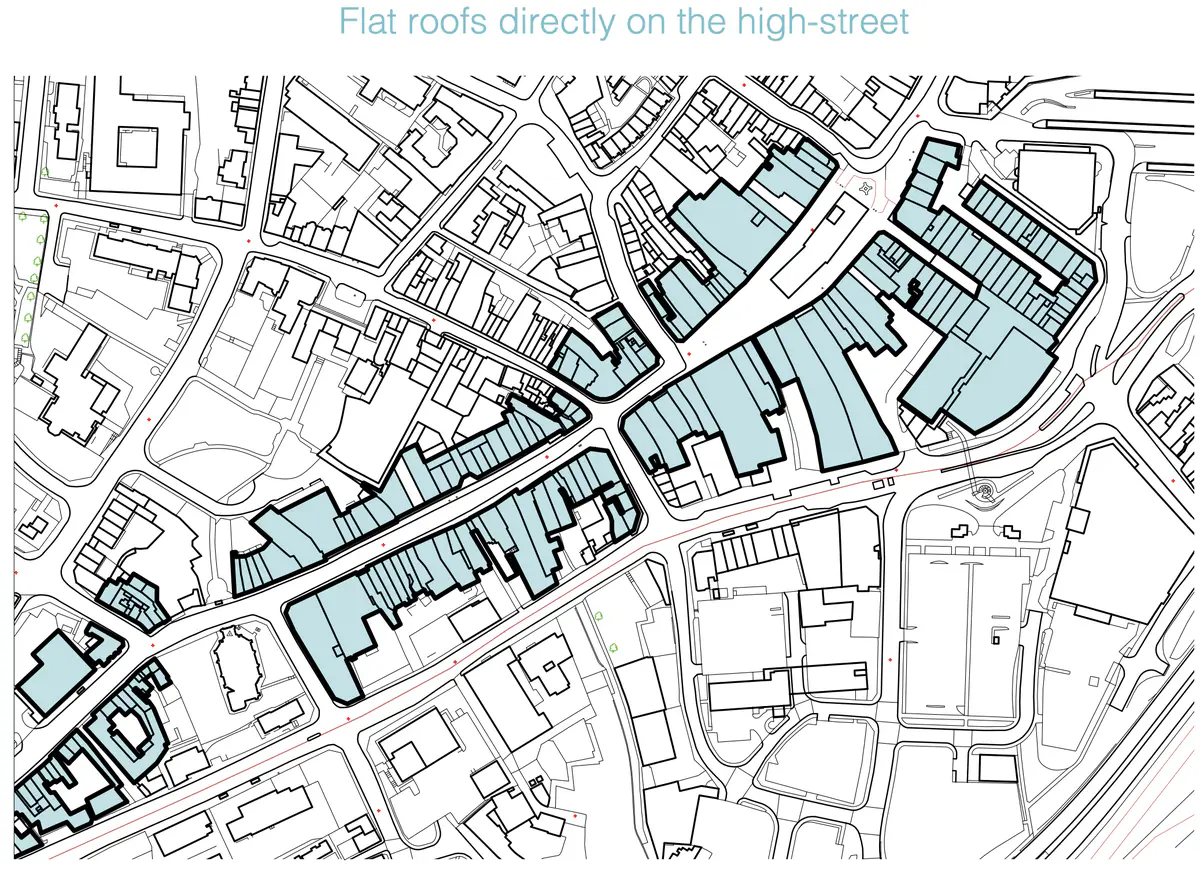
With this information I can begin to map out 1038m2 of miyawaki forests.
It is crucial that the forests do not use more water than stored as then the project isn’t zero carbon as it would require fresh water. It is important that the water collected is sufficient for this project to work. This data also provides the information to how much storage is required on the site.
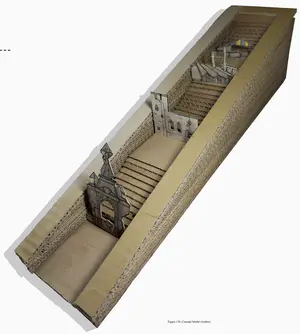
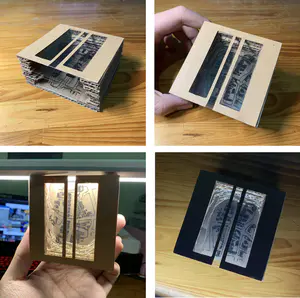
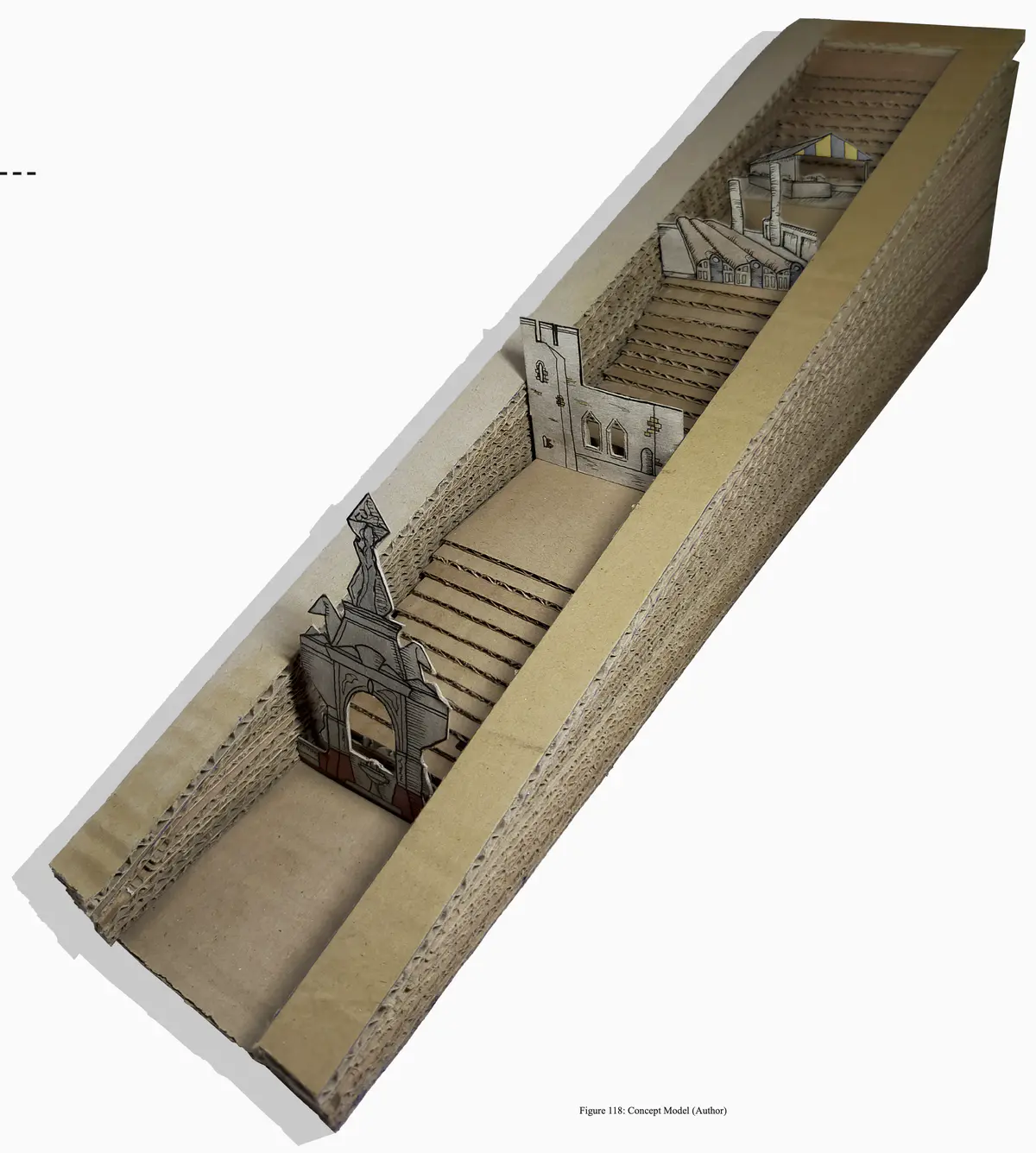
Concept Model - The model represents the idea of digging into the High Street itself. The idea was to drastically alter the form of the High Street to a point that it altered the ways that people in Dudley would live their day-to- day, changing the theatre of their lives, so that they could learn about their own history, their legacy, and about the endless possibilities of Dudley’s future. The idea was inspired by the word “Cut”, which in Black Country Dialect means “Canals”, as they were long cuts through the land.
Dudley’s fountain represents the Middle Ages, showing the growth of Dudley over time. While it was the Capital of the Black Country (and still is), the Middle Ages is when Dudley saw itself come into it’s own place, being recognised as a big market town, and slowly expanding it’s territories and influence.
The Castle represents the Dudley Castle, built in the 11th Century. Ruling over the land, the Castle is a key component of the Legacy of Dudley, sitting on the highest point for miles around, rich with history, from Being demolished twice, to the civil war, to now watching over the Zoo.
The factories represent the Industrial Revolution era of Dudley, a time when Dudley was the king of England, and basically ran the entire process. It was an important aspect of Dudley’s Legacy, and sits as probably its crowning glory - even if today we can recognise the disastrous affects it had on the world in the short period of time the era passed.
The Market represents the modern day. Dudley has seen better years, but it is with this project that I propose that even better ones are just around the corner. While people don’t look fondly at Dudley, those from there have a fierce dedication to the legacy of Dudley, which hopefully will burn to a brighter future.
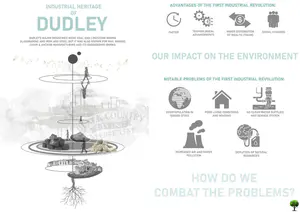
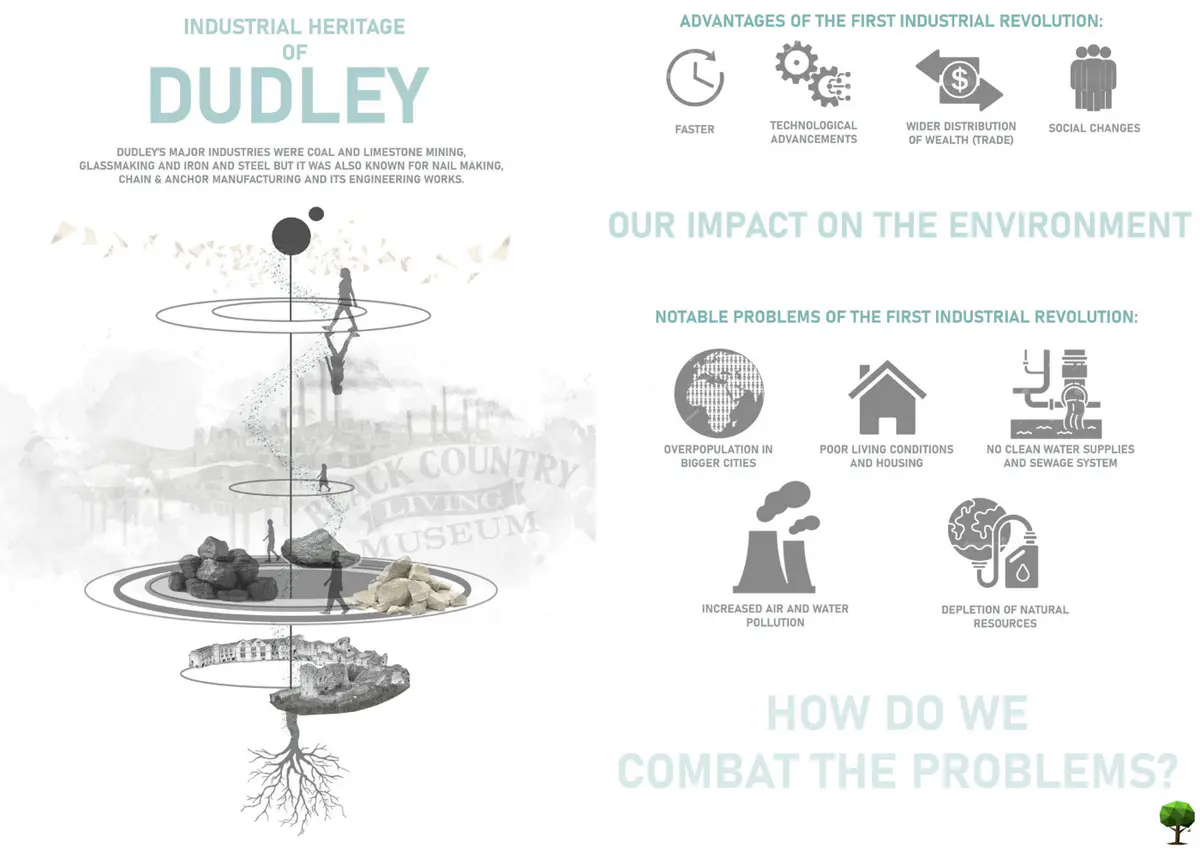
Dudley was pretty much at the centre of the Industrial Revolution. It had many advantages like making things faster, leading to technological advancements, a wider distribution of wealth and the social changes that came with this. However, it also had its own set of problems that are still relevant today which we need to acknowledge and address to successfully move forward, mainly: overpopulation, housing, water, air pollution and depletion of natural resources.
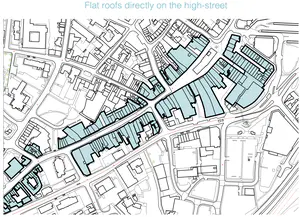
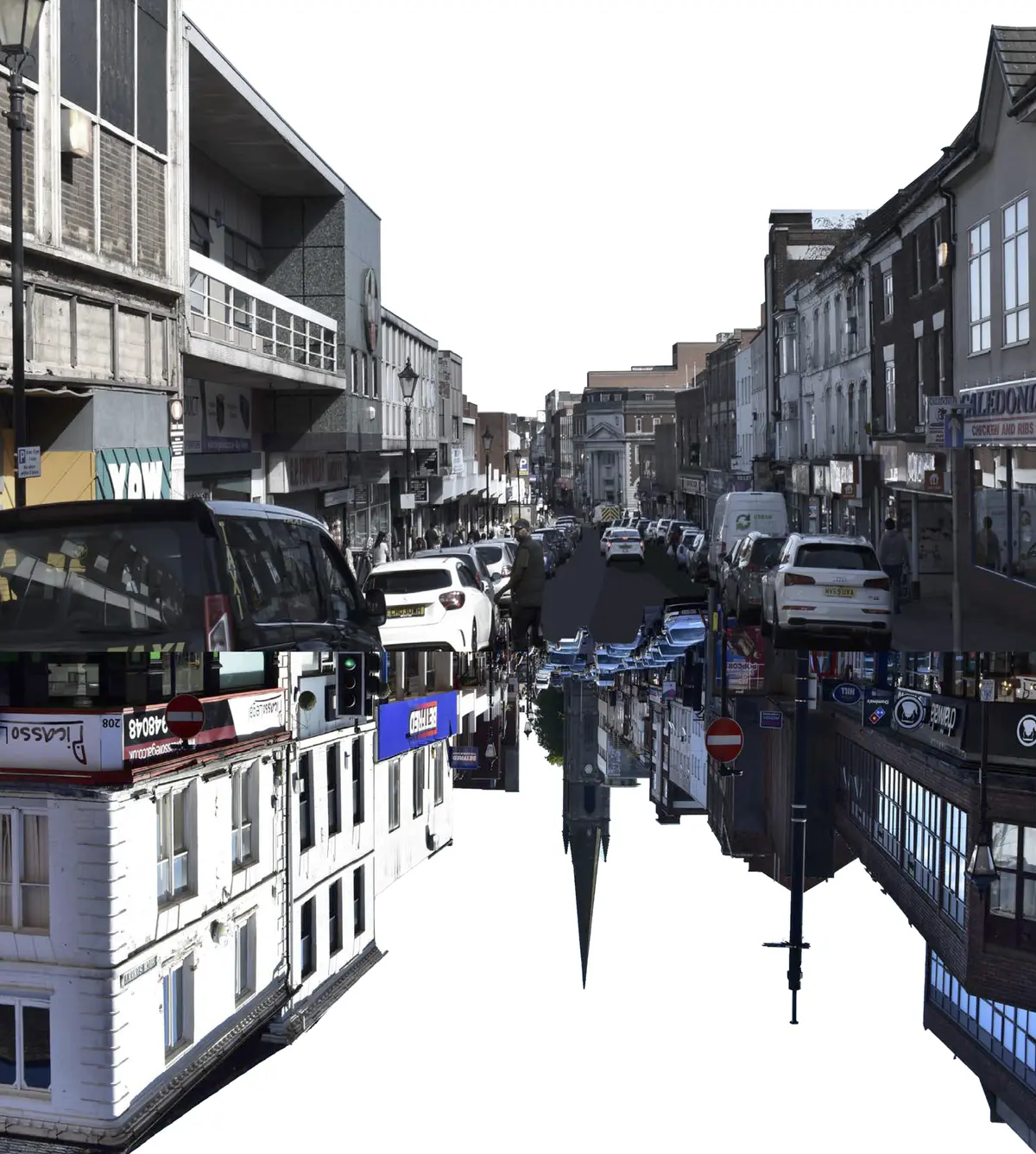
Seen as the heart of the town, Dudley High Street stretch- es from the Dudley ASDA, all the way up to the St. Edmund King & Martyr Church. Although, the street has seen better days.
Along the High Street itself, there are 28 abandoned shop fronts, accounting for 1/5 shops being neglected. It is also home to a few of Dudley’s landmarks:
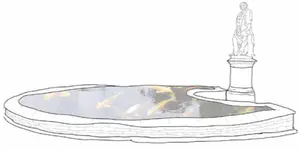
The Drinking Fountain, a Grade II listed fountain, which had a portion of a £4.6 million funding from the HLF European 2015 funding go towards to its restoration (Richards, 2017).
The Market Place is a fixed centre of trading and selling at the heart of the market square. It too benefited from the funding, allowing for permanent fixings.
The Top Church, St. Thomas and St. Luke, overlooking the entire street, and most of the surrounding town itself.
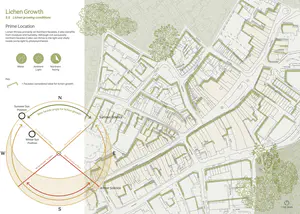
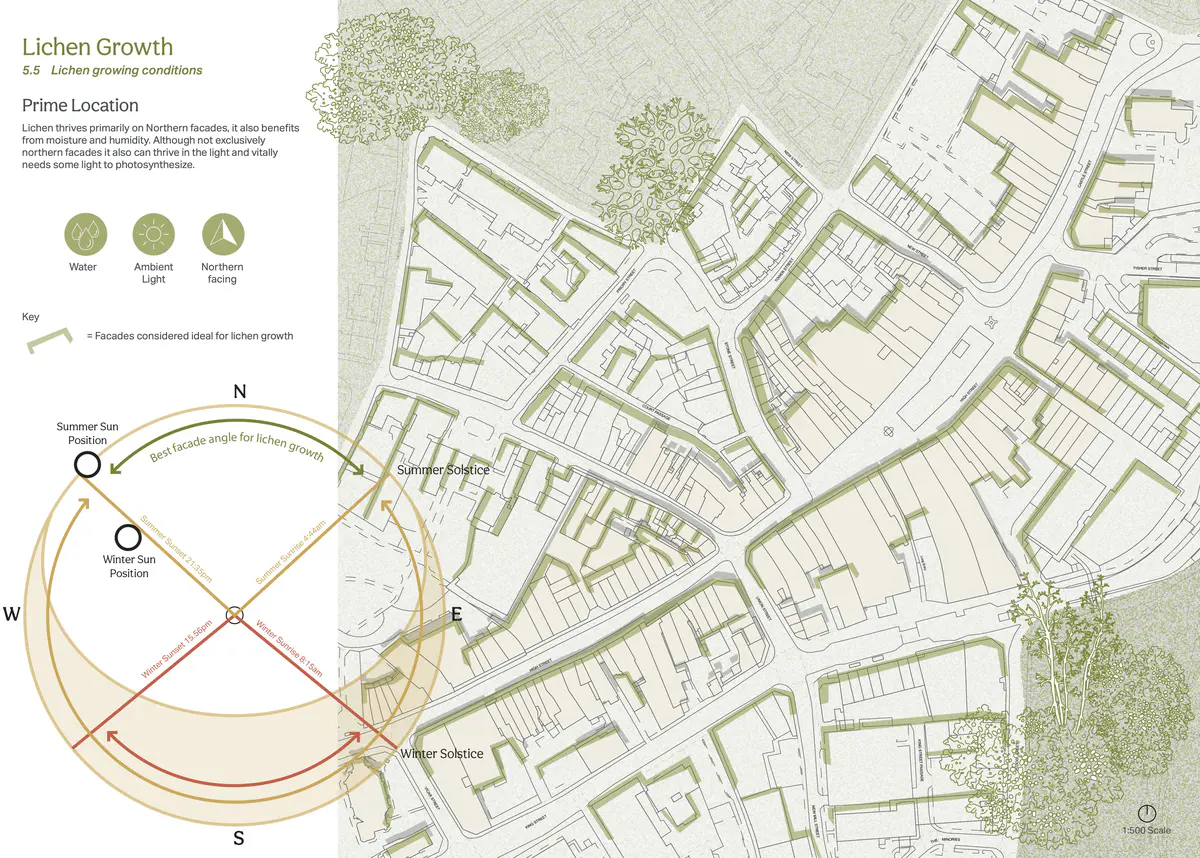
Lichen Growth
Lichen thrives primarily on Northern facades, it also benefits from moisture and humidity. Although not exclusively northern facades it also can thrive in the light and vitally needs some light to photosynthesize.
Caribbean One Stop
The sign above the door
Shows a tropical island
But in Dudley Town
There’s a chill in the air
As Earl runs nine miles
Before jam and toast and
A cup of tea with nine sugars
To recharge batteries.
He’s not getting any younger but
Age is just a mindset.
When you’ve worked forty years
On the wholesale markets
Grafting and providing
Your perspective shifts
To what is really important.
We talk family
Community
Among plantain and yams
We talk heritage
Education
Among chopped hake and Jamaican pears.
Gloria can’t find any mangos
Because Earl has stashed them
Behind the counter
Too soft and sweet for handling.
When he gets a ripe breadfruit
Earl thinks of Gloria
“Know your customers”
He tells me
“Know a little bit about everything”.
I ask Gloria about
Triple Blue Cross
She tells me about white shirts
Bed linen
Drying under a Jamaican sun
This shop is an education
If you just ask the right questions.
Earl’s father came in 1954
Bloodlines stretched
Across continents
Across boundaries
Nigeria
Scotland
Jamaica
Germany
A mix Earl’s grown into
Via Handsworth
Birmingham
England.
He knows a Bristol accent
When he hears one
They talk about Montpelier
Meat markets in Newport
Veg markets in St Pauls
She comes from Tipton each month
To get the things she needs
It’s personal
She likes personal.
The freezer is full of
Chicken feet
Ox tail
Turkey neck
Cow foot
Flavour is the thing
Even water gets spiced
For mash Earl tells me
As he trims Ghanian yam
With a very sharp knife
To just the right size.
There is barely anything
I recognise in this shop
But I’m drawn to the colours
The stories
The journey
The difference
Halfway around the world or
Baked up the road
For customers who bang on the window and wave
Who stand in the doorway
Giving back the banter
Who leave with the Caribbean
In a blue plastic bag.
I leave with a bag of Zoomers
Earl tells me
“That once I taste Jamaica
I’ll be back”
I stand in the High Street
Cheesy snacks in hand
Reminding myself
To buy two packets next time.
Explore The History Of Site Voids - This will provide an opportunity to reimplement these to allow vertical green corridors to occur.
Explore Vacant Buildings - To avoid damaging an already deteriorating high street, I aim only to take over vacant plots.
Investigate the opportunity for Miyawaki planting - understand the conditions required to grow a sustainable material source on-site, including ground, water, and space conditions.
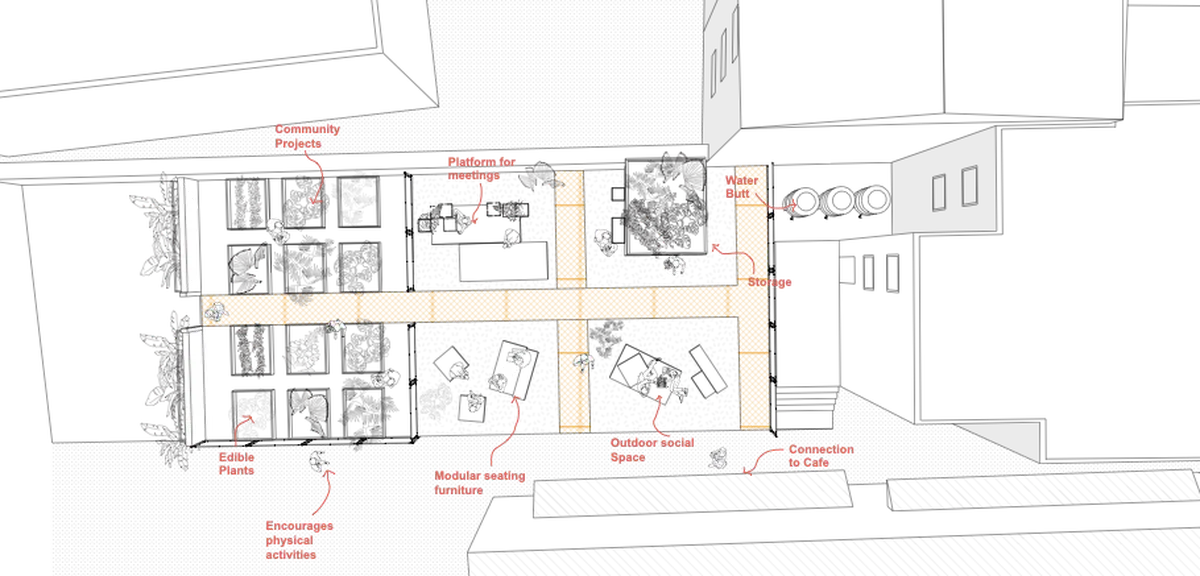
It takes over a building that leads directly to an open space where a community hub is the centre of the thesis, offering education, community engagement and material celebration.
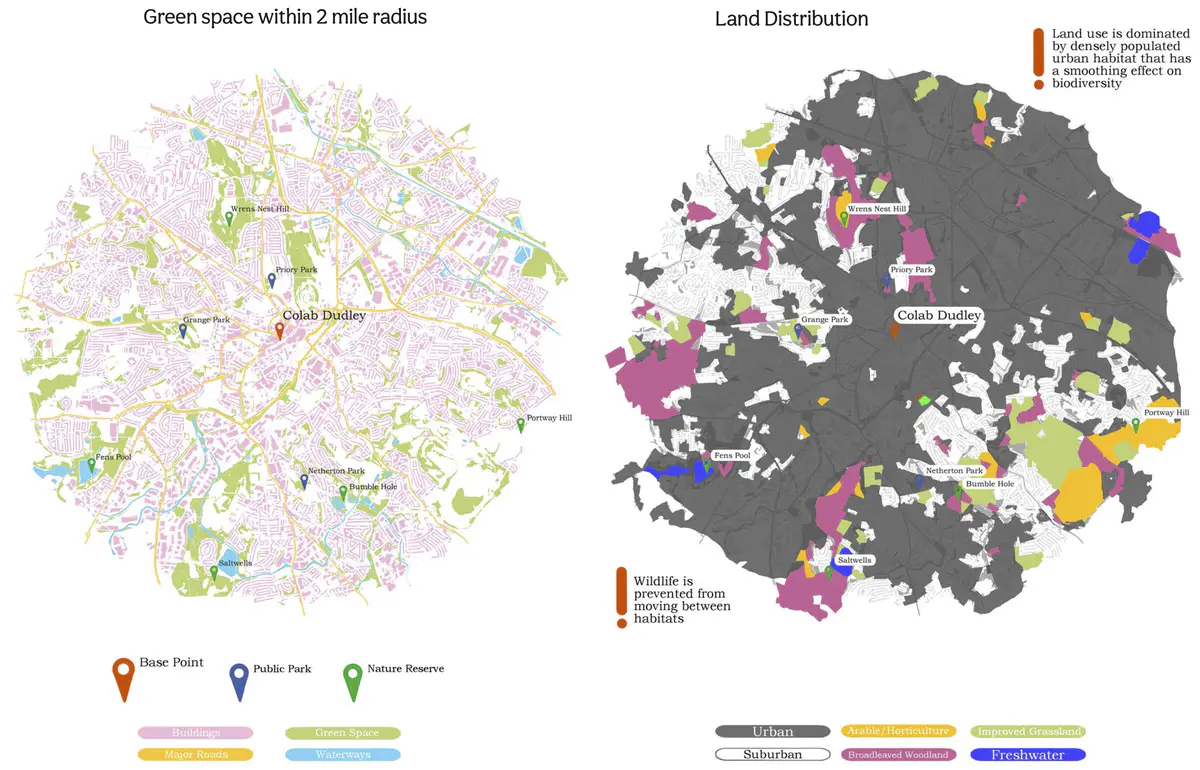
The population of Dudley in 2021 is circ. 80,000 and including the wider borough totals 313,000.
For one person on the average diet, roughly 2.6 Hectares of farm land is required. A family of four, just over 10 Hectares. A population of 313,000 required 813,800 Hectares, the equivalent of 1,162 football fields or 707,652,174 car parking bays.
FEEDING DUDLEY REQUIRES 1,162 FOOTBALL FIELDS OF FARM LAND
Thesis Concept Image - The Farm House
Taking a fun and more literal approach for providing local food production onto the high street, I looked at layering a farm growing different fruits, vegetables and meat products into the same structure to view the absurdity of growing, processing and packaging within a single structure. Ultimately the project would be as close to being a closed system as possible, where food grown could be fed to the animals and the waste from the animals will be used as fertiliser from the food. Air flow and lighting would not only be critical for the animals, but it also allows the fruit and vegetables to grow faster and more efficiently.
The processes within the Farm House would be very energy intense due to the amount of heating, water and lighting that will be required to house the animals and grow the crops. The project utilises conventional farming methods, ploughing, seeding etc., but without the harmful pesticides that would be usually applied. The farming problem of space efficiency is partially targeted in this proposal. Per m2 in plan does contain a greater yield due to the floor layering, however per m2 of gross internal floor area the yield efficiency remains. To ultimately increase overall yield per m2 aeroponics should be applied to massively increase yield and decrease water consumption.
THESIS PROPOSAL
The redevelopment of the high street is a re-envisaged perception of what the high street is and what it will become. A future look at what the high street will become, with mixed use residential and food growth structure to create dense living accommodation and localised food growth which prevents the need to contribute to deforestation and loss of biodiversity from urbanisation.
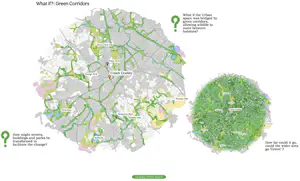
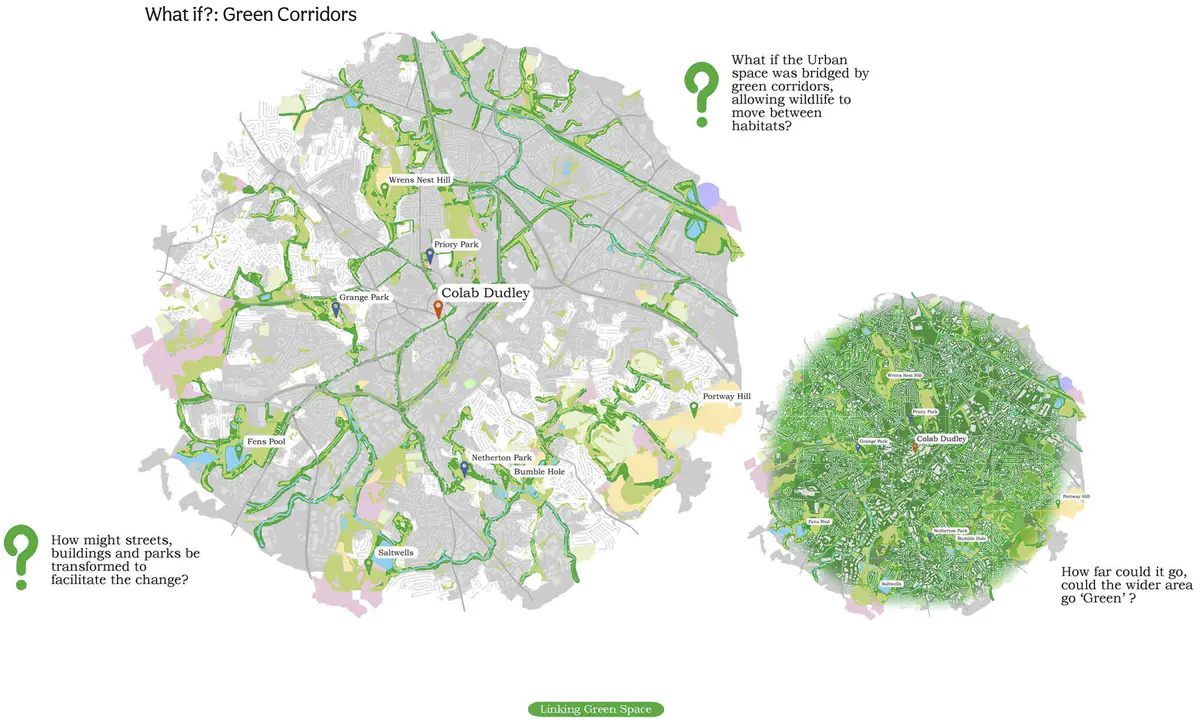
As part of the schemes wider aims, the high street and surrounding roads will become part of a network of green corridors, where pedestrian footfall/cycling can increase and the use of polluting vehicles will be greatly reduced. The idea of greatly increasing the density of vegetation along roads and reducing lanes will not only improve the rate of absorbing carbon dioxide, but also reduce noise and reduce temperature spots. The Miyawaki planted method would be used where ever possible to create dense areas of trees and shrubs, as well as quickly create new living conditions for new biodiversity.
The primary focus for the building will be the localised food growth in the vertical farms, several floors of food growth will create a new economy centred around the high street, removing the need to import fresh food from farms from across the country or on the other side of the world. The environment within the farms will be climate controlled, allowing the farms to adjust their climate to the optimum for the specific food. The density at which food can be grown in is almost 400 times greater than conventional farming, which greatly reduces the need to create new farms.
The residential aspects pairs with the farm, in bringing a new generation of people to live above the high street. The new vision of the high street would become an attraction point for people to not only visit but to live in as well. Access to land converted from roads and paving to nature will create value and attraction to the area once again. Eventually the low income stores will transition to stores that cater to the new environment.
This project targets all the XR themes directly or indirectly.
Air & Biodiversity - Creating new and preventing the loss of woodland and habitats.
Food - Growing food local and a much greater yield.
Water - Greatly reducing the resource requirement during farming.
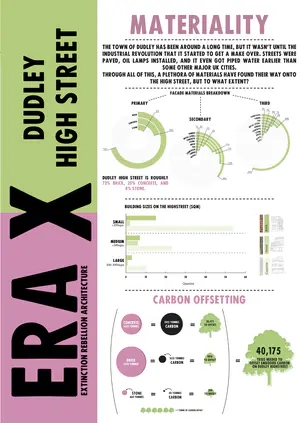
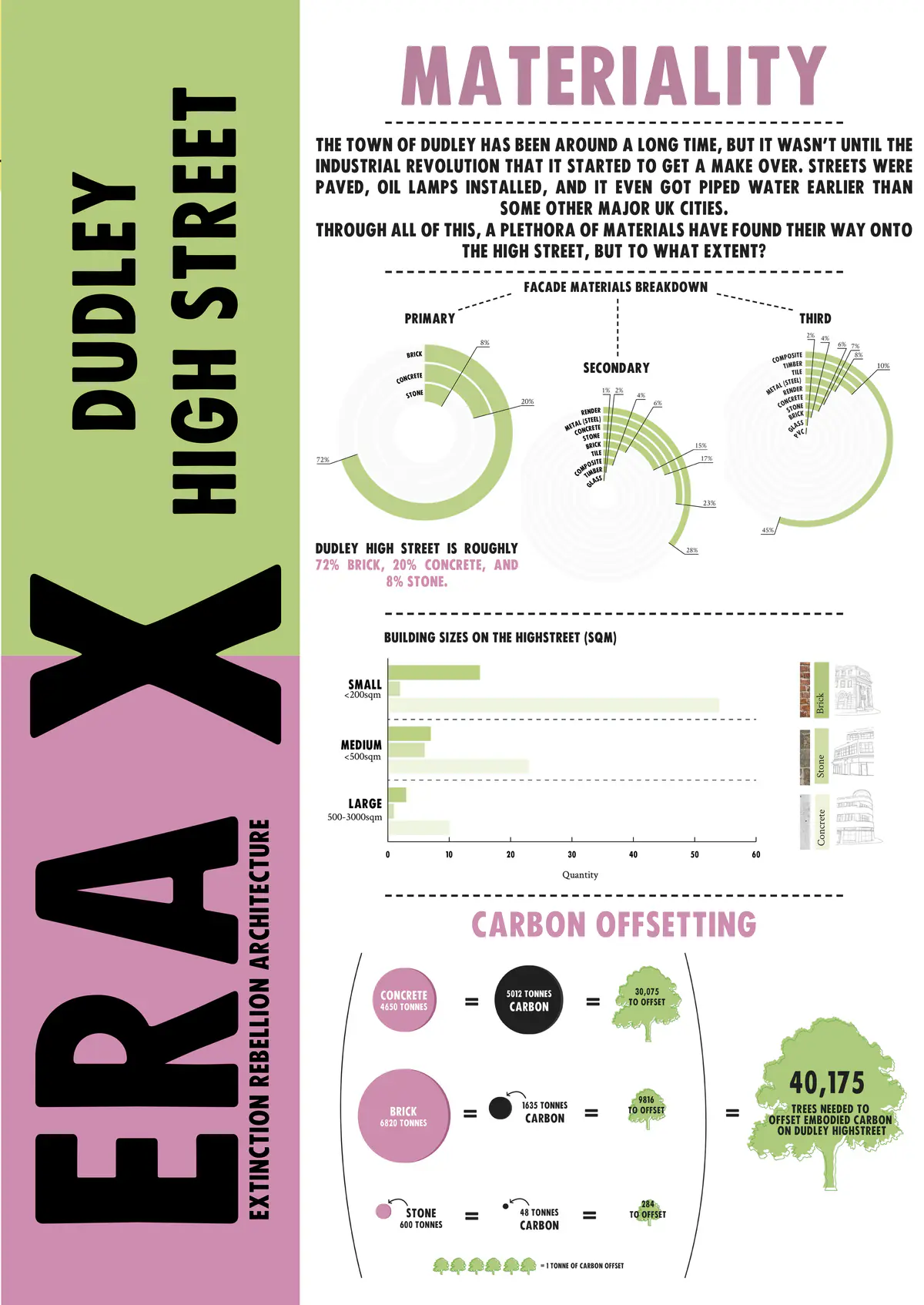
Materiality - Managing sustainable usage of the deconstructed buildings and sourcing of the proposed.
Community - Creating new environments for communities to interact with each other.
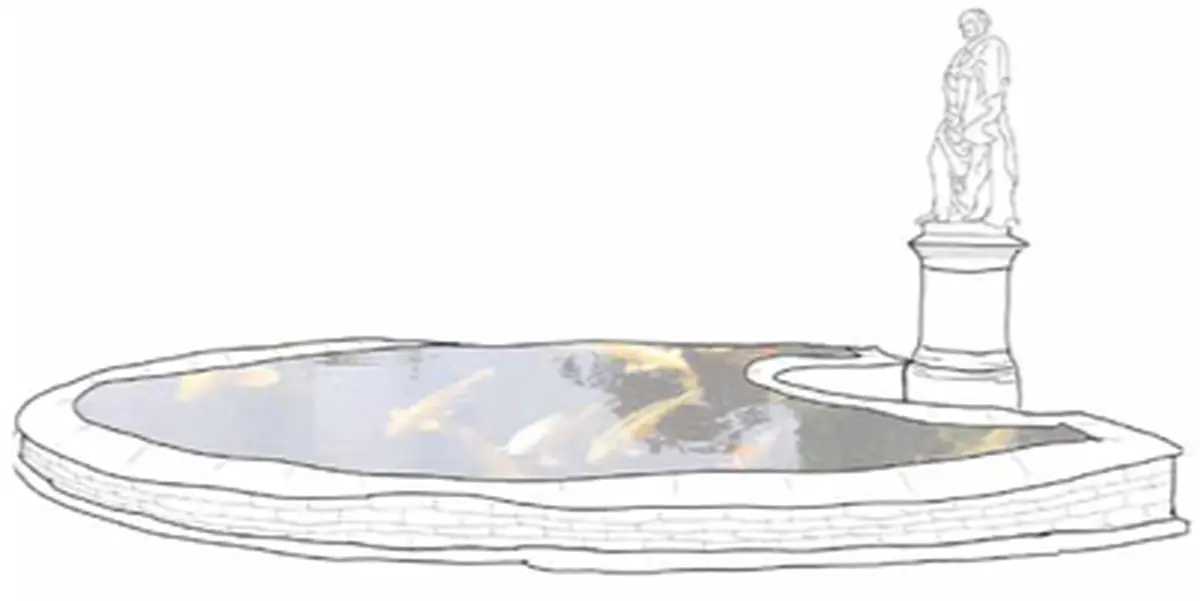
Pond — At the northern reaches of the High Street lies a raised bed with nothing but a sterile patch of grass. We suggest as a miniature stepping stone, we replace the grass with a pond. The sounds of water can soften the noise of the traffic and it will invite pedestrians onto the high street by having this point of interest. It also works with the plans for re-wilding and growing food along the High Street as it aids pollination.
Lichen as bioindicators
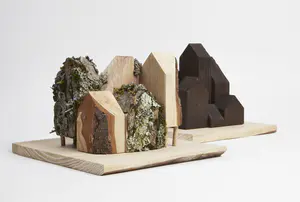
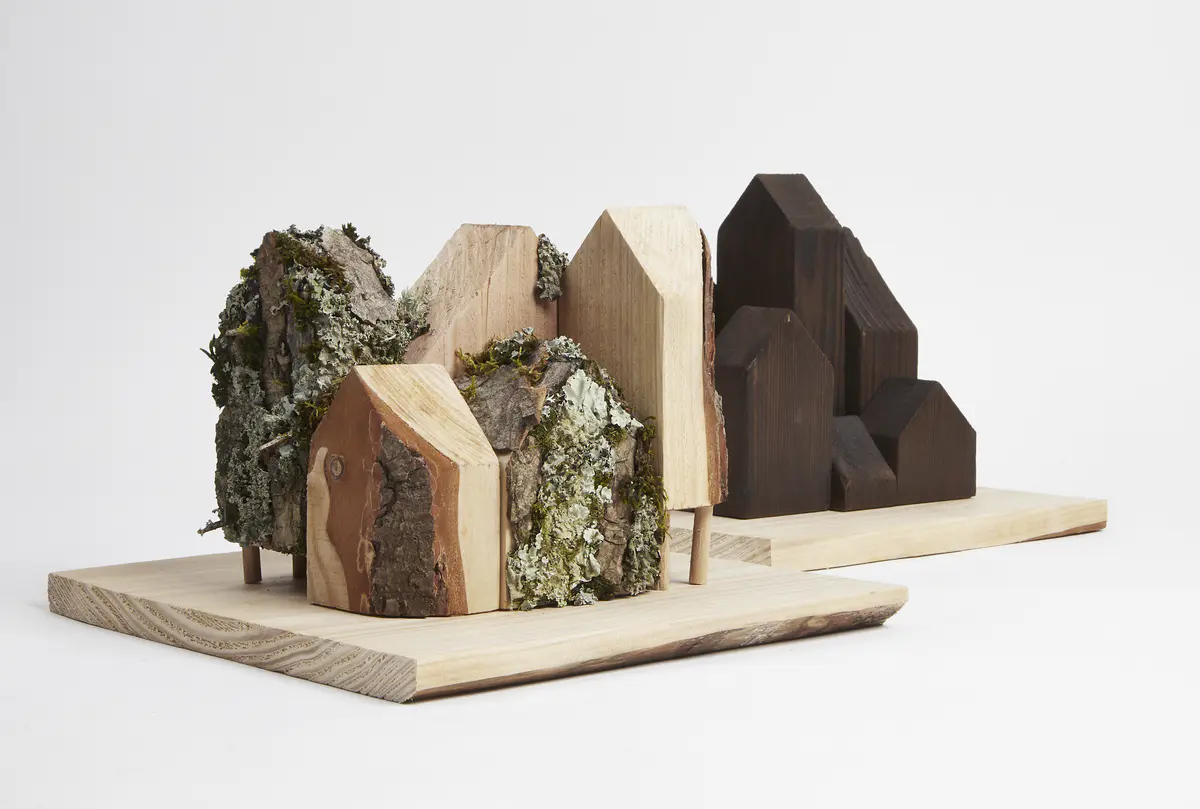
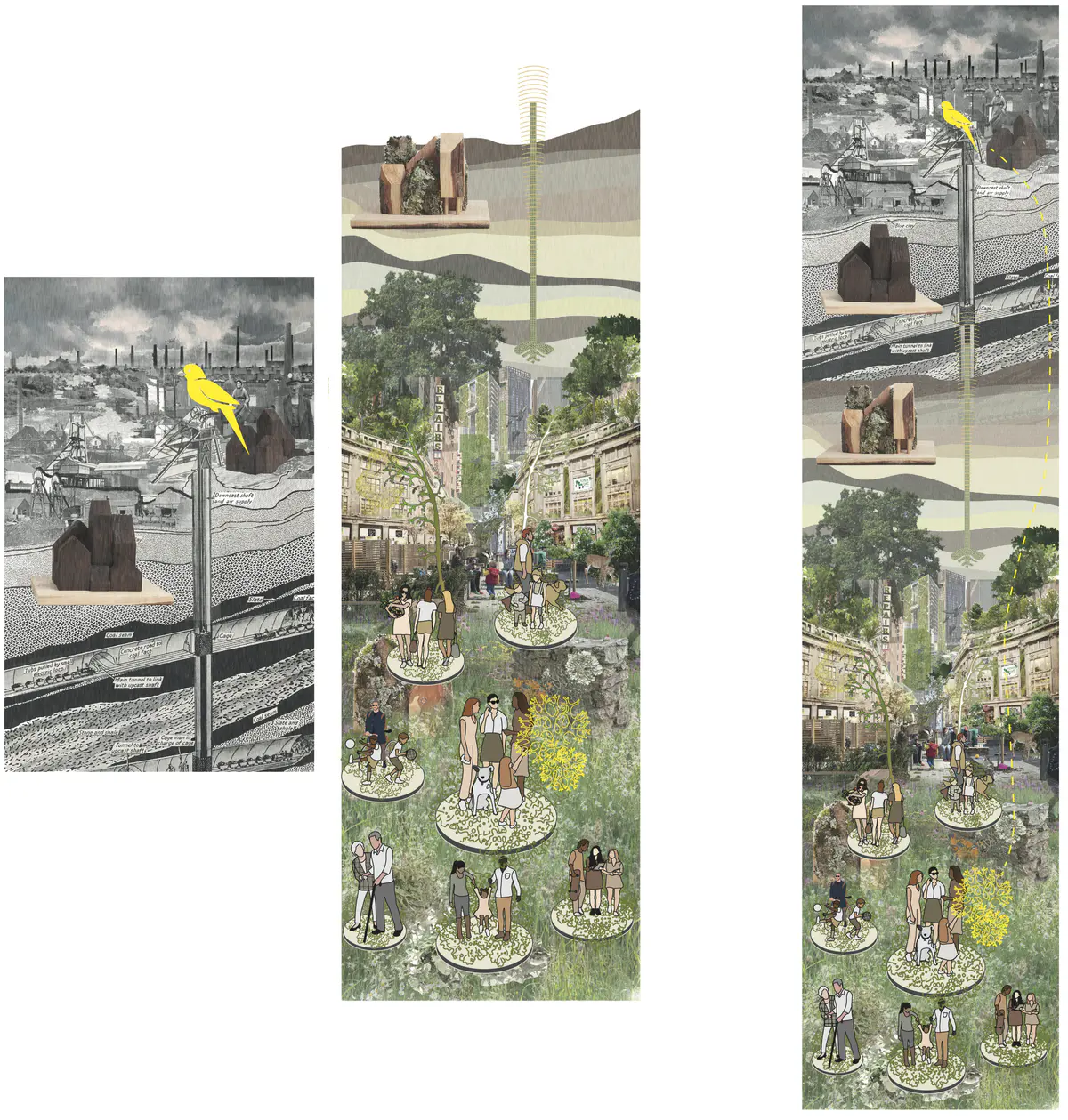
Lichen Vs Carbon. These concept models look to document both the current state of Dudley Highstreet and the vision looking towards the future within this thesis project.
The lichen covered model looks towards a future in Dudley that is rich in texture, colour, nature and oxygen. Natural materials promote natural growth, and textures such as rough sawn timber and stone are the prefect hosts for lichen. All new buildings in Dudley would benefit massively from following a fabric first approach and adopt the use of sustainable and recycled building materials along with systems that use minimal energy.
The lichen model represents a vision for this thesis, buildings that are covered in natural materials and lichens that help sequester carbon and promote a healthier Highstreet. Suggestions of raised buildings also proposes less disruption to the ground and natural landscape, giving plants and animals the opportunity to thrive in an otherwise hostile concrete environment. Raised buildings also look towards a future planet with rising sea levels, future factors that will drastically affect the way we carry out daily lives and futureproofing all buildings for generations to come.
This second model uses the Shou Sugi Ban method of charring timber to waterproof it. In this case however it represents the embodied carbon and pollution within the highstreet as it exists now. The simplicity and repetition is also used to symbolise the plain nature of the highstreet with only a few materials exhibited, mainly brick & concrete. Once burnt the timber forms were brushed with wire wool to reveal the natural grain of the wood, a visual representation of degradation of layers of buildings that are built poorly or not constructed to last longer than a generation.
The yellow canary of the mines, a symbol of protection for miners spending time in highly polluted areas. The yellow lichen becomes the new symbol for Dudley, protecting inhabitants through carbon sequestration & clean air.
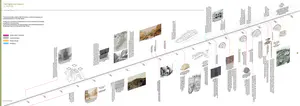
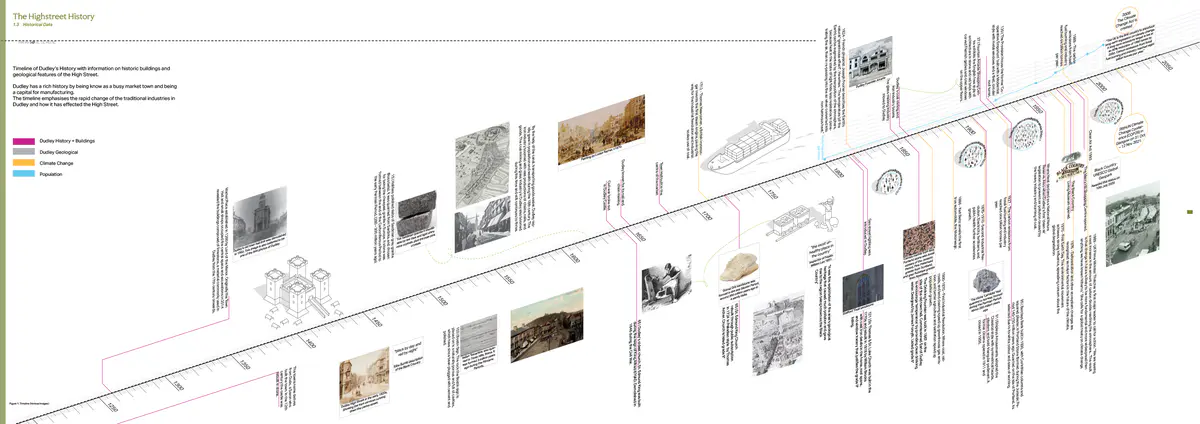
Timeline of Dudley’s History with information on historic buildings and geological features of the High Street.
Dudley has a rich history by being know as a busy market town and being a capital for manufacturing.
The timeline emphasises the rapid change of the traditional industries in Dudley and how it has effected the High Street.
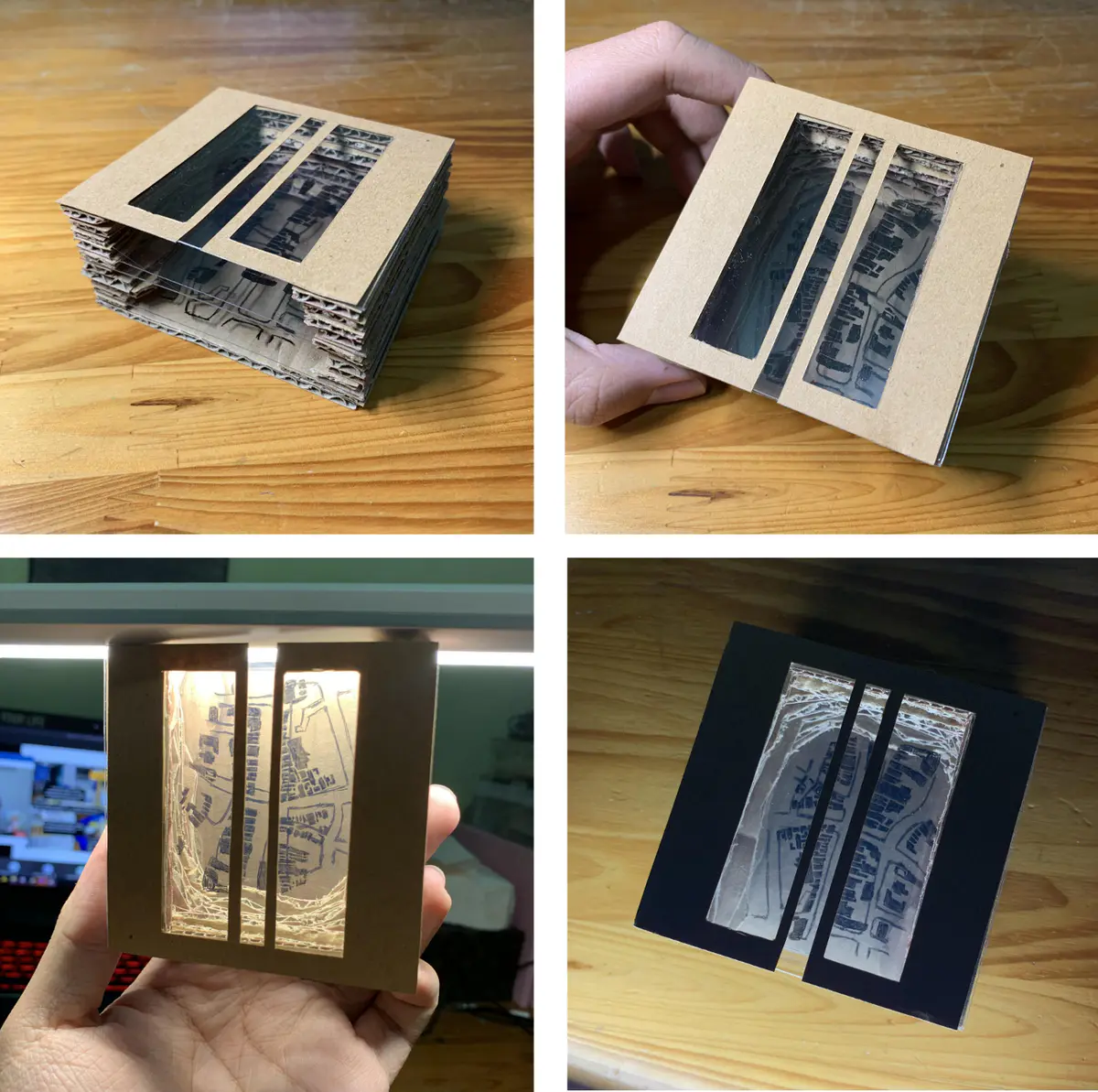
This gift is made of cardboard and acrylic. A map of the High Street is drawn on the acrylic sheet, and the distribution of buildings and roads are drawn on different acrylic sheets. Through my research, I know that the annual precipitation rate in Dudley is very high, but from the photo, there is no place to block the rain beside the buildings on the street, so I want to add the element of the poncho and make it transparent, so that it will not block the sun, and it is also more convenient for people to travel.