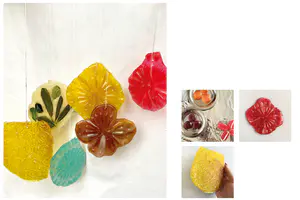
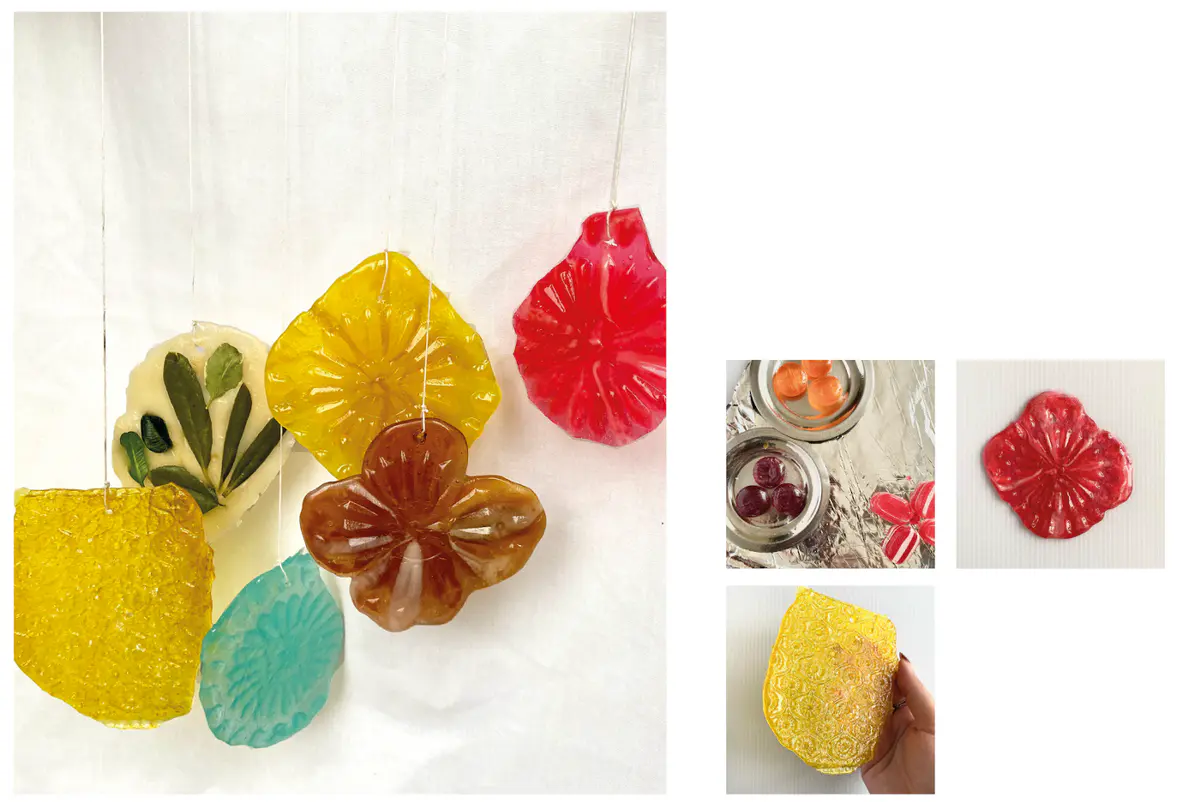
This gift was created to highlight different points in the social spaces on the high street. Aspects that we can improve on and celebrate. One point found was to incorporate more green spaces to improve health and wellbeing. The other to celebrate the textures and embossings in Dudley’s early ironworking. These ornaments were created by melting sweets and printing patterns onto them.
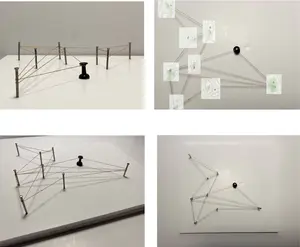
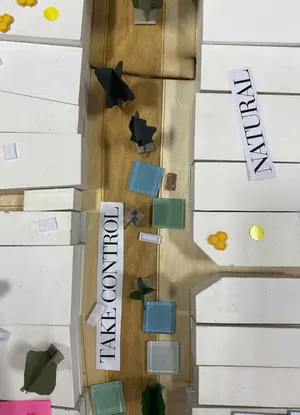
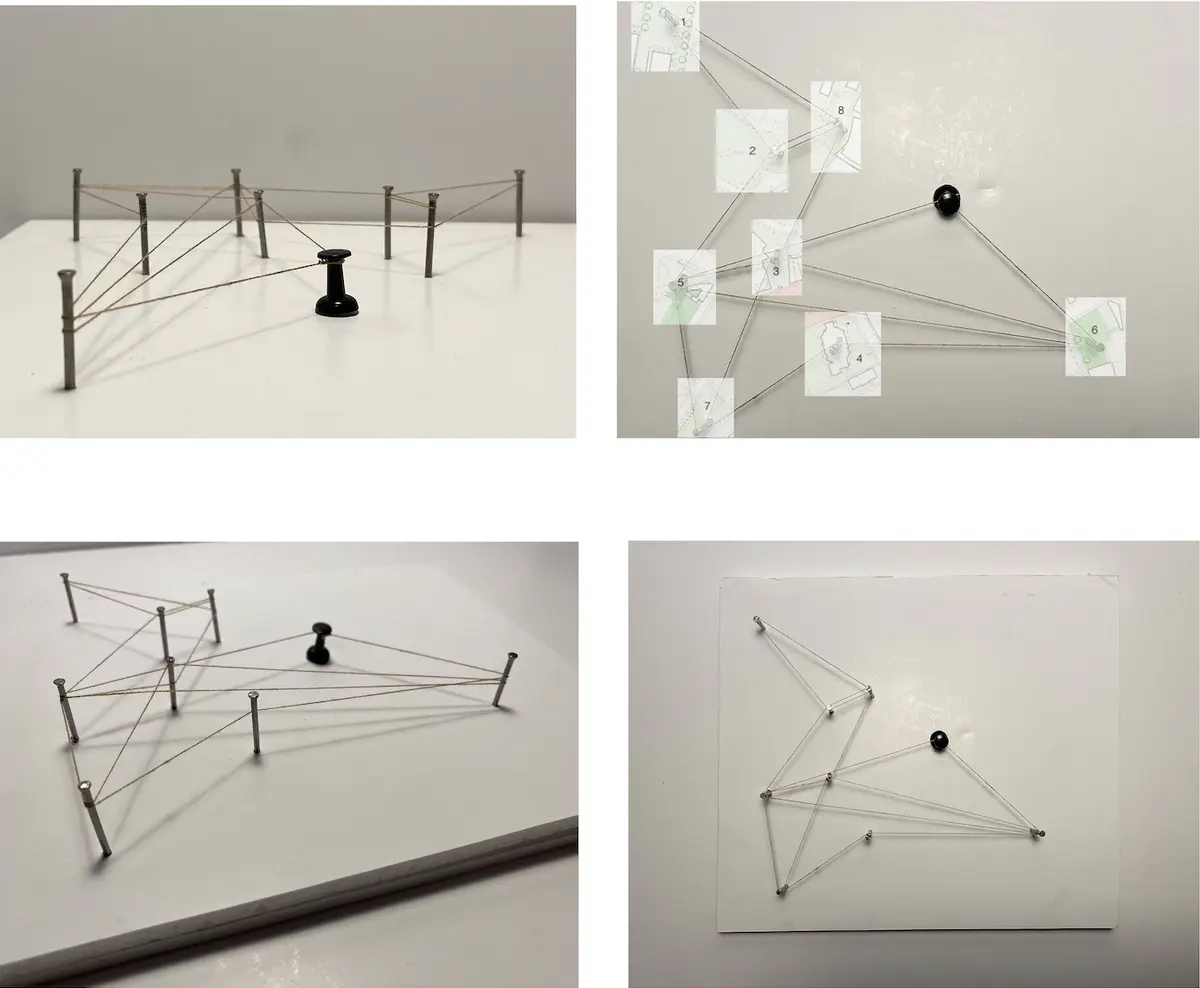
This gift represents the green spaces around CoLab Dudley and the connections they have to the high street. The black point marks the location of the High Street and the other pins mark each green space within the High Street’s immediate location. The lines act as a travel route that you may take in order to get from one green space to another. From this we can establish that there is a lack of greenery in some spaces. This then impacts the High Street as people do not need to use it as a travel route. By simply creating more of these green spaces like in the top right it will add more connections to the High Street which will draw more people to this particular location.
Lichen as bioindicators
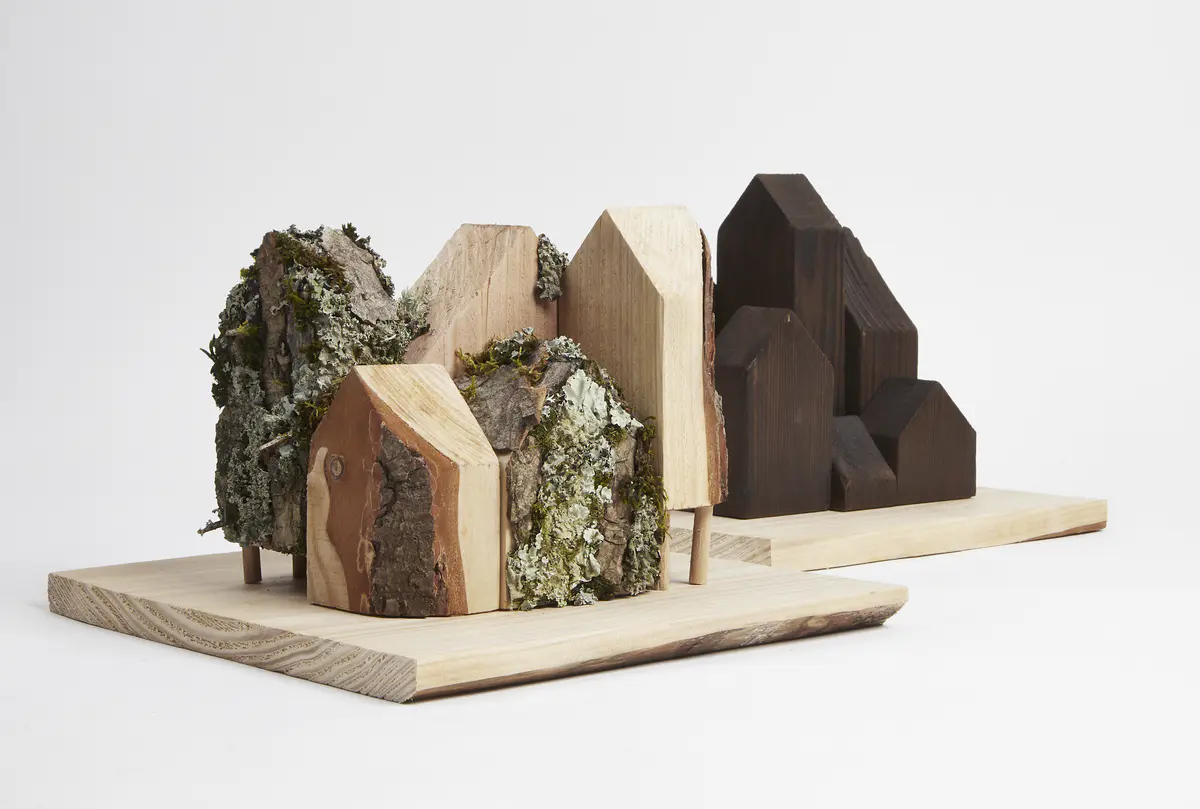
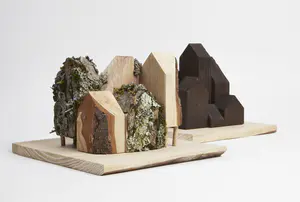
Lichen Vs Carbon. These concept models look to document both the current state of Dudley Highstreet and the vision looking towards the future within this thesis project.
The lichen covered model looks towards a future in Dudley that is rich in texture, colour, nature and oxygen. Natural materials promote natural growth, and textures such as rough sawn timber and stone are the prefect hosts for lichen. All new buildings in Dudley would benefit massively from following a fabric first approach and adopt the use of sustainable and recycled building materials along with systems that use minimal energy.
The lichen model represents a vision for this thesis, buildings that are covered in natural materials and lichens that help sequester carbon and promote a healthier Highstreet. Suggestions of raised buildings also proposes less disruption to the ground and natural landscape, giving plants and animals the opportunity to thrive in an otherwise hostile concrete environment. Raised buildings also look towards a future planet with rising sea levels, future factors that will drastically affect the way we carry out daily lives and futureproofing all buildings for generations to come.
This second model uses the Shou Sugi Ban method of charring timber to waterproof it. In this case however it represents the embodied carbon and pollution within the highstreet as it exists now. The simplicity and repetition is also used to symbolise the plain nature of the highstreet with only a few materials exhibited, mainly brick & concrete. Once burnt the timber forms were brushed with wire wool to reveal the natural grain of the wood, a visual representation of degradation of layers of buildings that are built poorly or not constructed to last longer than a generation.
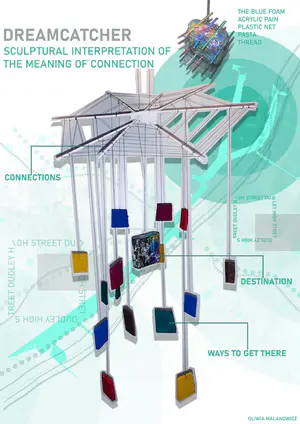
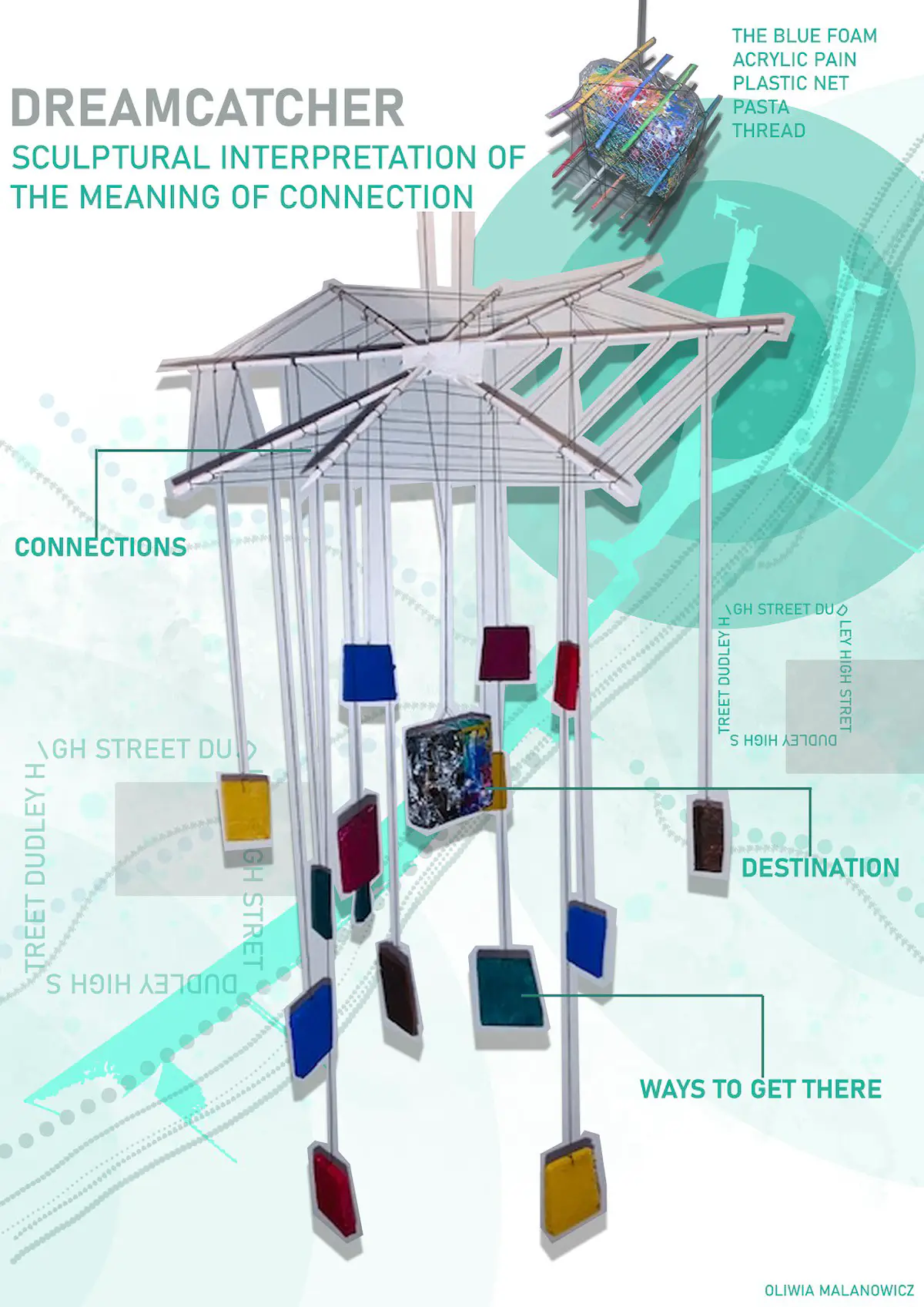
The themes I investigated were the Connections, Movement, Routes and Ways. My gift explores those themes through a figurative expression hidden within the structure of the dreamcatcher, allowing for a flexible interpretation by the audience, and to aid the imagination.
The structure of the dreamcatcher symbolizes the relationship between the destination and the journey the user undertakes, but while it highlights the importance of the destination, placing it in the centre as the biggest piece, it emphasizes the significance of the journey over the destination in the ratio of one big element vs many small elements.
This can be relevant to the High Street, if the connections are thought of beyond the transport means, and can relate to anything from the layout of the landscape of the High Street, to the interactions between the users.
The web symbolizes the connections between the pieces, plotting the blue foam pieces around the different lengths of the thread, off the centre where the destination piece is plotted. This is meant to show how the connections can be made in various ways and that there is no set order or pattern, meaning that the movement is individual and the connections are adaptable.
The blue foam pieces can be viewed as points or highlights of the journey, or they can represent different ways of getting to, and from the centre, suggesting that the journey doesn’t end with the destination.
Another way in which the web can be interpreted is that the small foam pieces are the destinations, the thread is the connection between them and the big piece symbolizes the decision making.
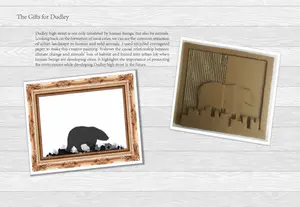
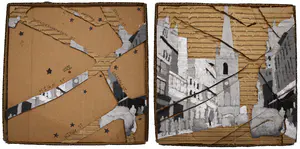
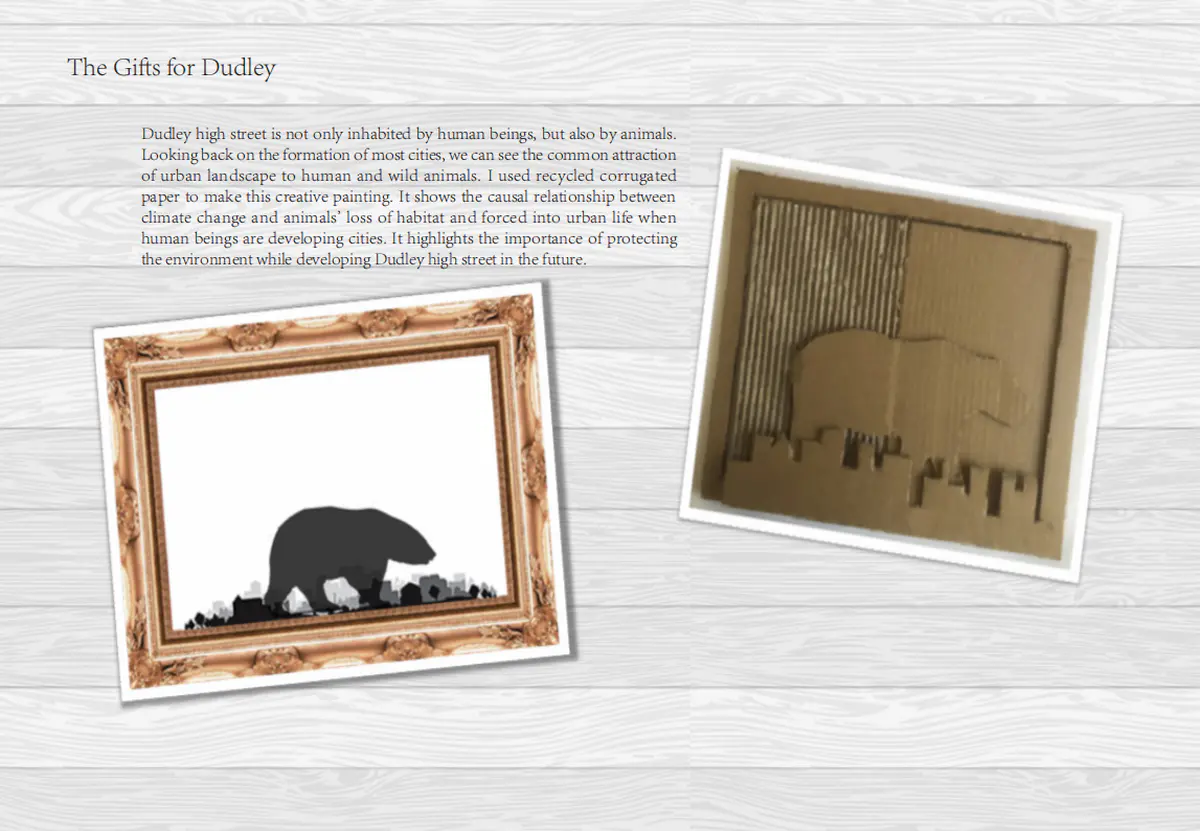
Dudley High Street is not only inhabited by human beings, but also by animals. Looking back on the formation of most cities, we can see the common attraction of urban landscapes to humans and and wild animals. I used recycled corrugated paper to make this creative painting. It shows the causal relationship between climate change and animals’ loss of habitat and forced into urban life when human beings are developing cities. It highlights the importance of protecting the environment while developing Dudley High Street in the future.
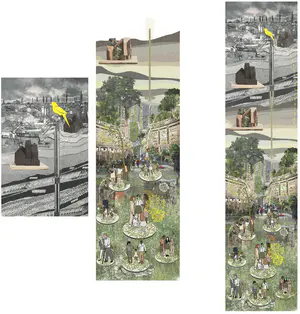
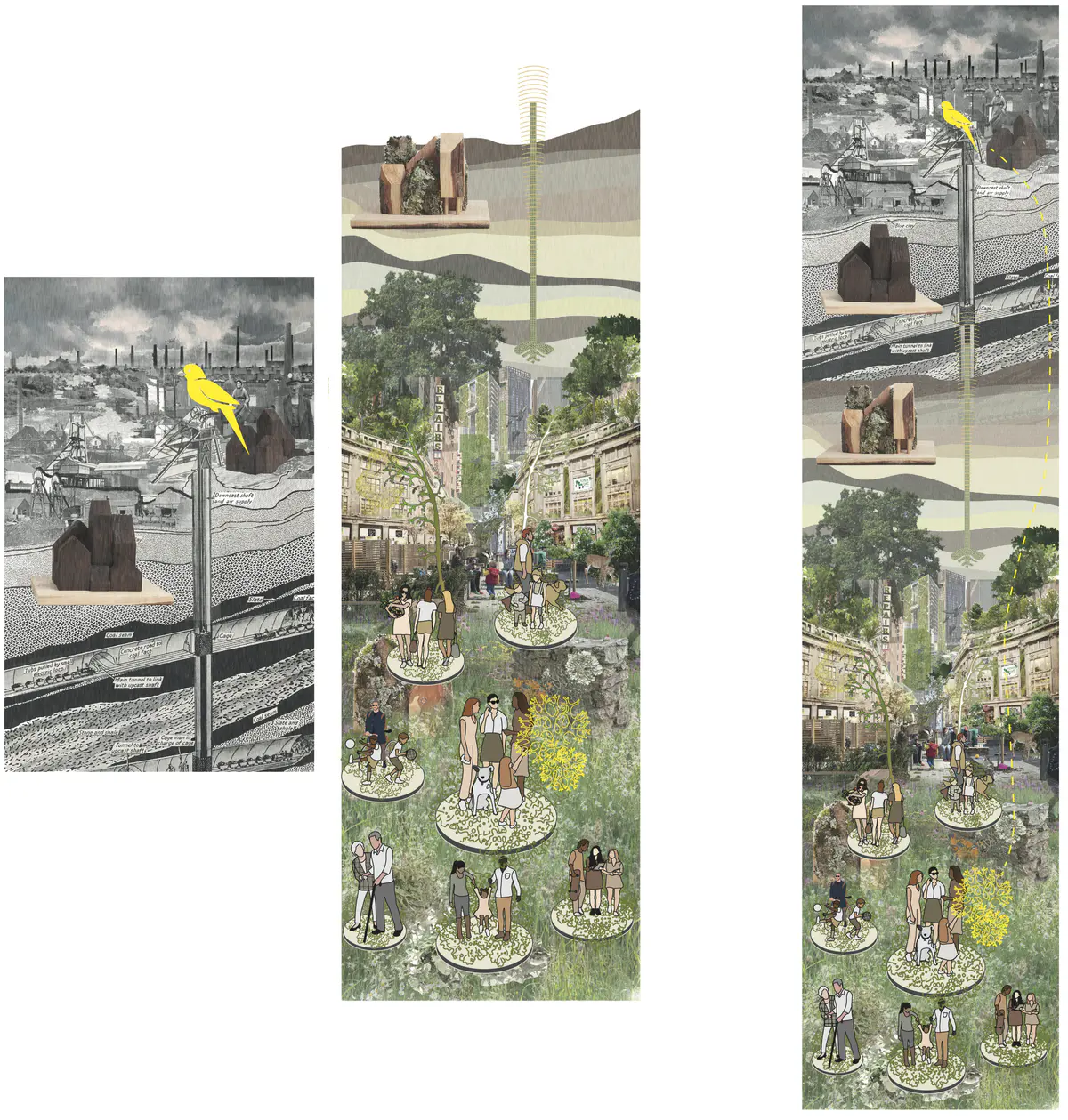
The yellow canary of the mines, a symbol of protection for miners spending time in highly polluted areas. The yellow lichen becomes the new symbol for Dudley, protecting inhabitants through carbon sequestration & clean air.
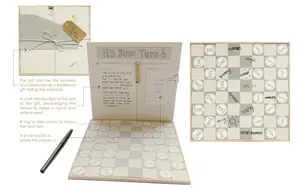
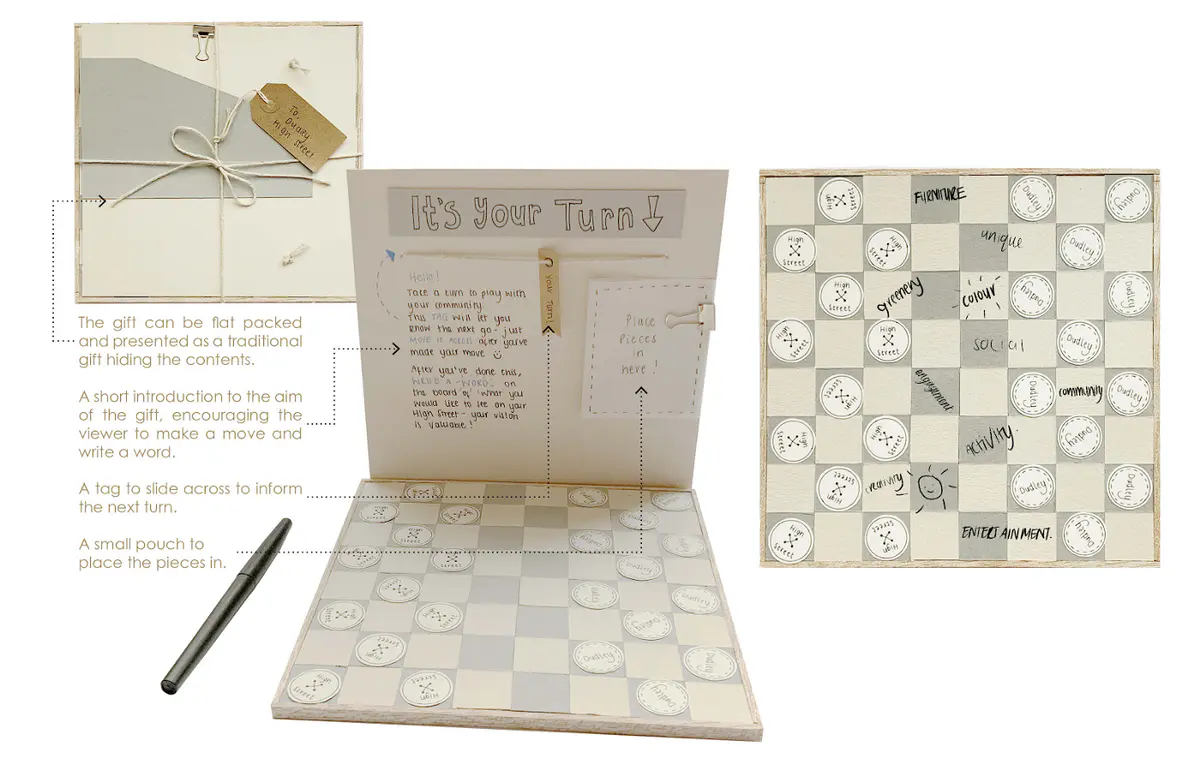
My purpose of my Gift to Dudley High Street is to encourage the users to become involved in the changes that occur in a place they use. The aim is to gain feedback from the users of the game to inform any progress made, this way, the focus of regeneration can come from the users themselves, becoming a collective collaboration. Through the users interacting with each other on the High Street using this game, the presence of users can be recognised, reminding the people of a sense of community to promote and celebrate going forward.
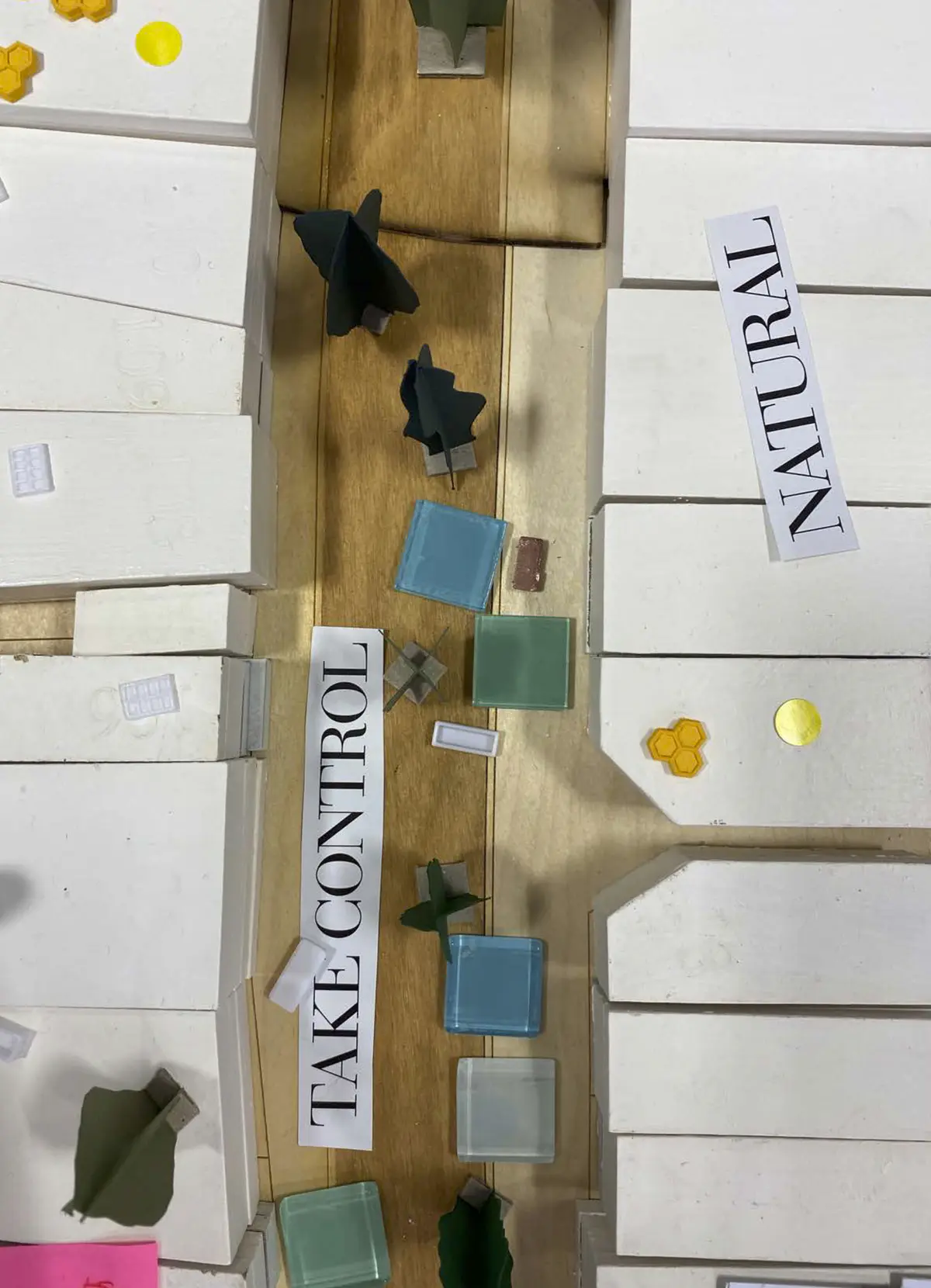
Looking to be the centrepiece of our exhibition, we proposed to create a site model of Dudley Highstreet at 1:200 scale with buildings modelled in a simple form. Local residents and visitors to the exhibition are then invited to decorate a chosen building to how they would envision it sat within the context of a greener Highstreet. We want to tie in our themes of biodiversity and materials by proposing that buildings can, and do, have the potential to be a lot healthier, sustainable, and interactive on the street. This site model also helps gain vital public opinions on the Highstreet and prompts discussion of areas most in need of attention.
To ensure that the model is utilising the MDF to the most efficient standard possible. First, the centres of the massing blocks have been hollowed out. This allows a reduction in materials used as other buildings can be cut in the centres of the model. Then the top is finished with a solid piece.
The waste material is placed into the recycling rack where other students can reuse it; otherwise, if the material left cannot be used for another project, it is recycled correctly by the university.
The model spanned just over 3.4m long and over 50cm wide. With the majority being cut from scrap woods that would fit the jigsaw of the shape, we were able to drastically cut down on waste. We also got some small benches and bee hives printed from recycled plastics, and used dried flowers as trees to represent the green spaces. Ultimately, the model seemed like a huge success, and really helped portray our ideas about Dudley High Street to those who came by. Everyone from Dudley who saw the model knew that it was the High Street, and interacted well with it. The size did make it difficult to move, especially to carry to the site, but it sat nicely in the centre of the the room and really drew people in to interact with it.
The model brought people in from outside to play with, write on, interact with. It became a spectacle for the public to come in and see what was happening and offer their ideas about what could be done.
The event was a success. Many people from the public (those who heard about the event, and those who just happened across it on the day) came in to interact with the model, which sat as the centre piece in the room. Kids liked to play with the pieces while the adults talked about things that could come from actions to help the High Street, not just leave it as is.
SOME OF THE KEY IDEAS WERE:
- The Shops need to be inviting for everyone. It’s no good having these places to go if people would rather take a bus to the next town.
- Just putting up boards across the windows is awful. Paint, Posters, Graffiti: Anything that actually makes the High Street look still alive is better than just wooden boards.
- More Green is needed. While it is obvious that there is a lack of Trees, many people wanted to push for these small bushes or planting spaces that could easily be implemented across the street.
- Spaces for public events or for people to at least gather at. While there is the Market and Fountain, it is not enough for the people of Dudley.
- Something needs to be done about the cars on the High Street. Some were Pro-Removal of all Cars, while some just wanted to limit when they could access the High Street.
Following the exhibition we created a series of drawings with our own interpretation of Sarah Wigglesworth ‘The Dining Table’ drawing. The drawings are a perfect representation of the our interactive model at the ERA Environmental Exhibition and Event. Showing the interaction the public had with the model, as well as the conversations that were held around the model.
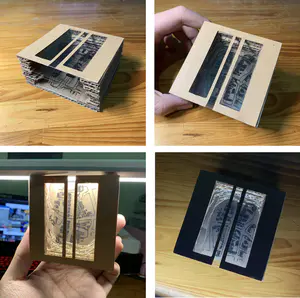
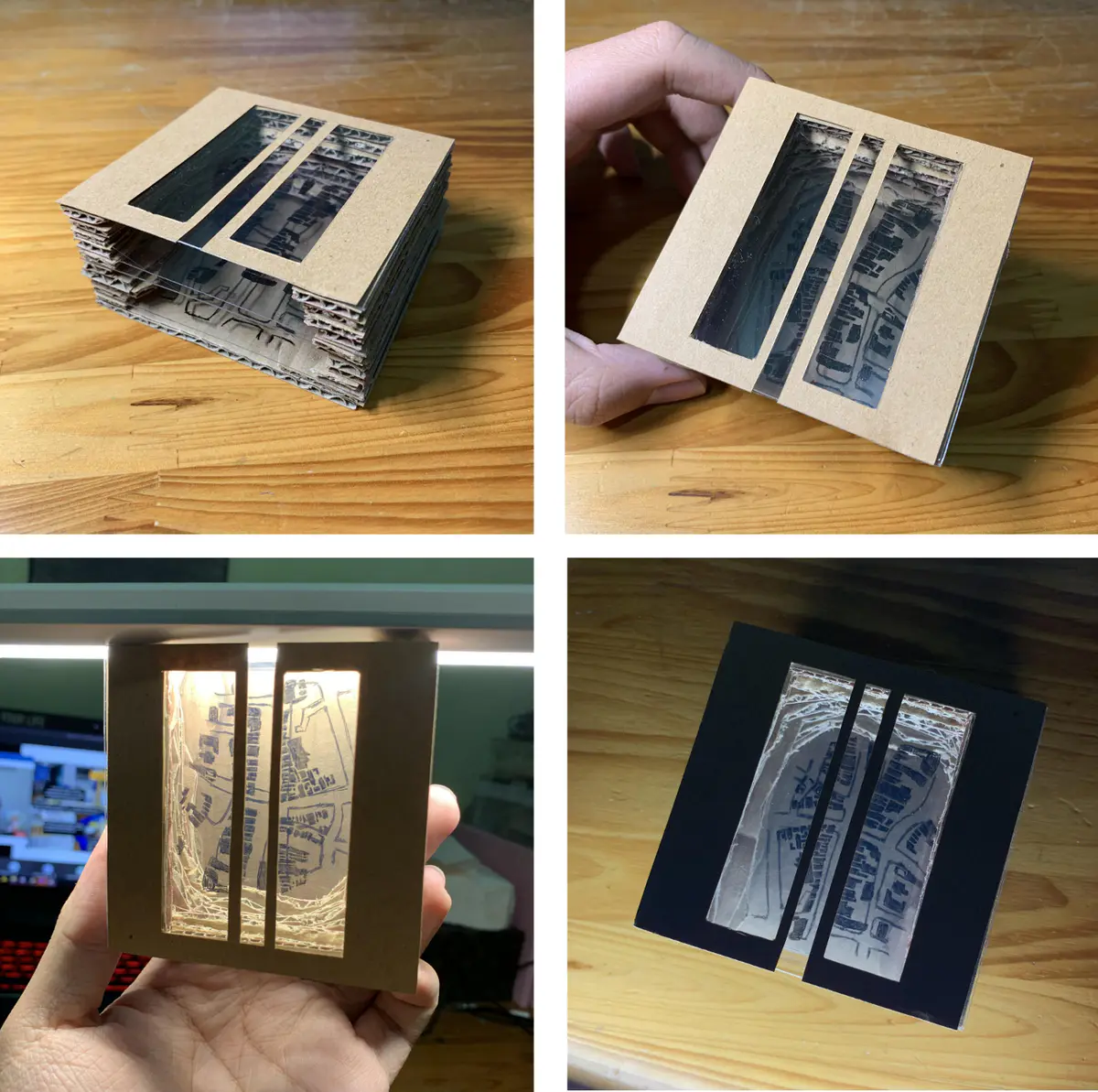
This gift is made of cardboard and acrylic. A map of the High Street is drawn on the acrylic sheet, and the distribution of buildings and roads are drawn on different acrylic sheets. Through my research, I know that the annual precipitation rate in Dudley is very high, but from the photo, there is no place to block the rain beside the buildings on the street, so I want to add the element of the poncho and make it transparent, so that it will not block the sun, and it is also more convenient for people to travel.
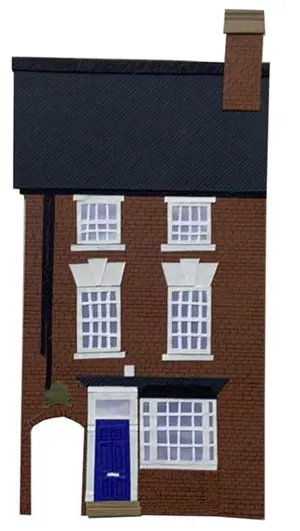
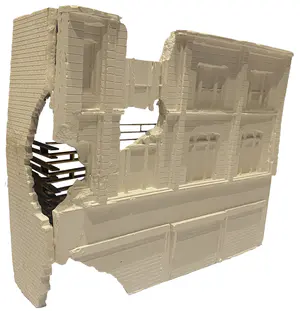
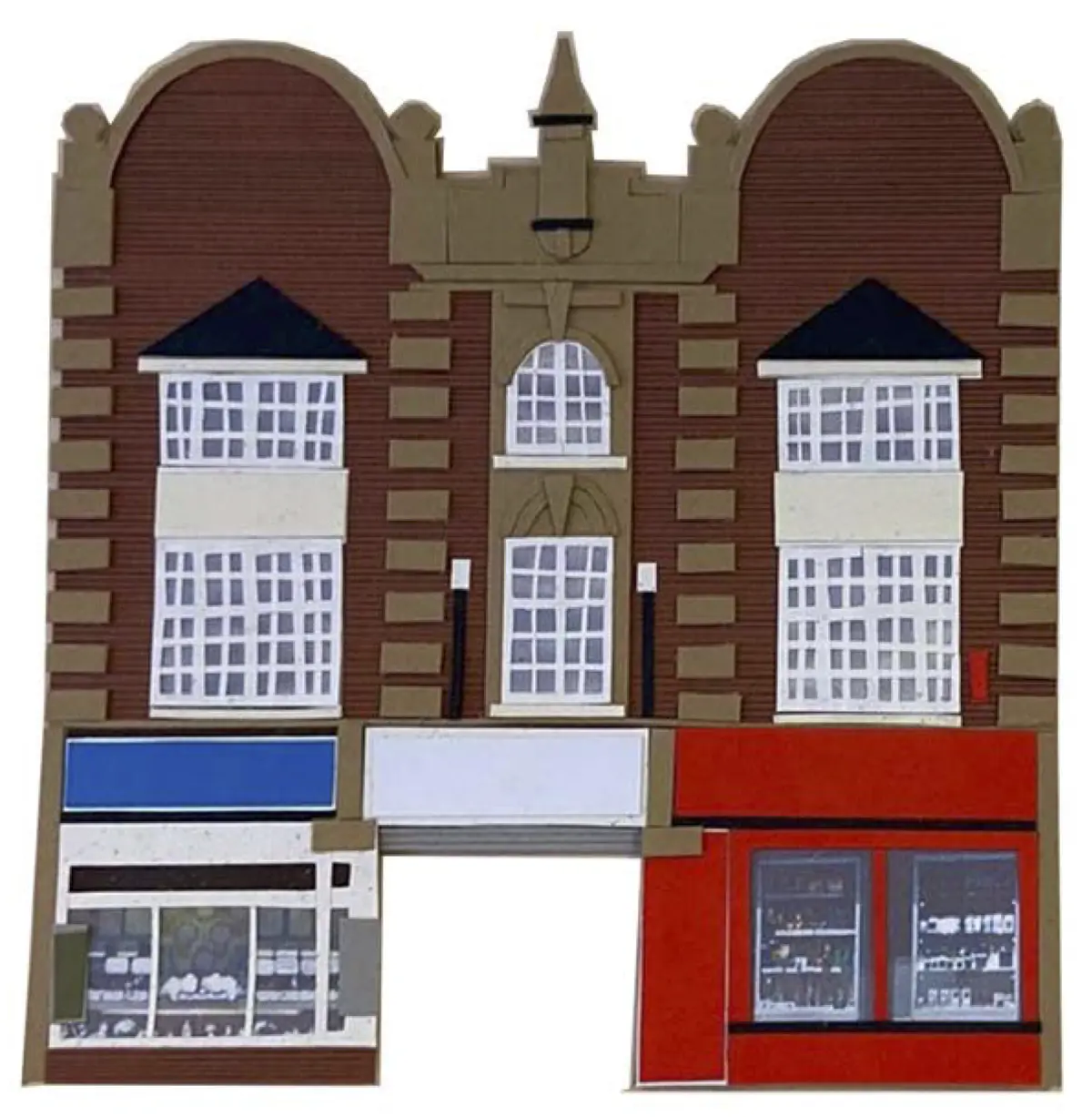
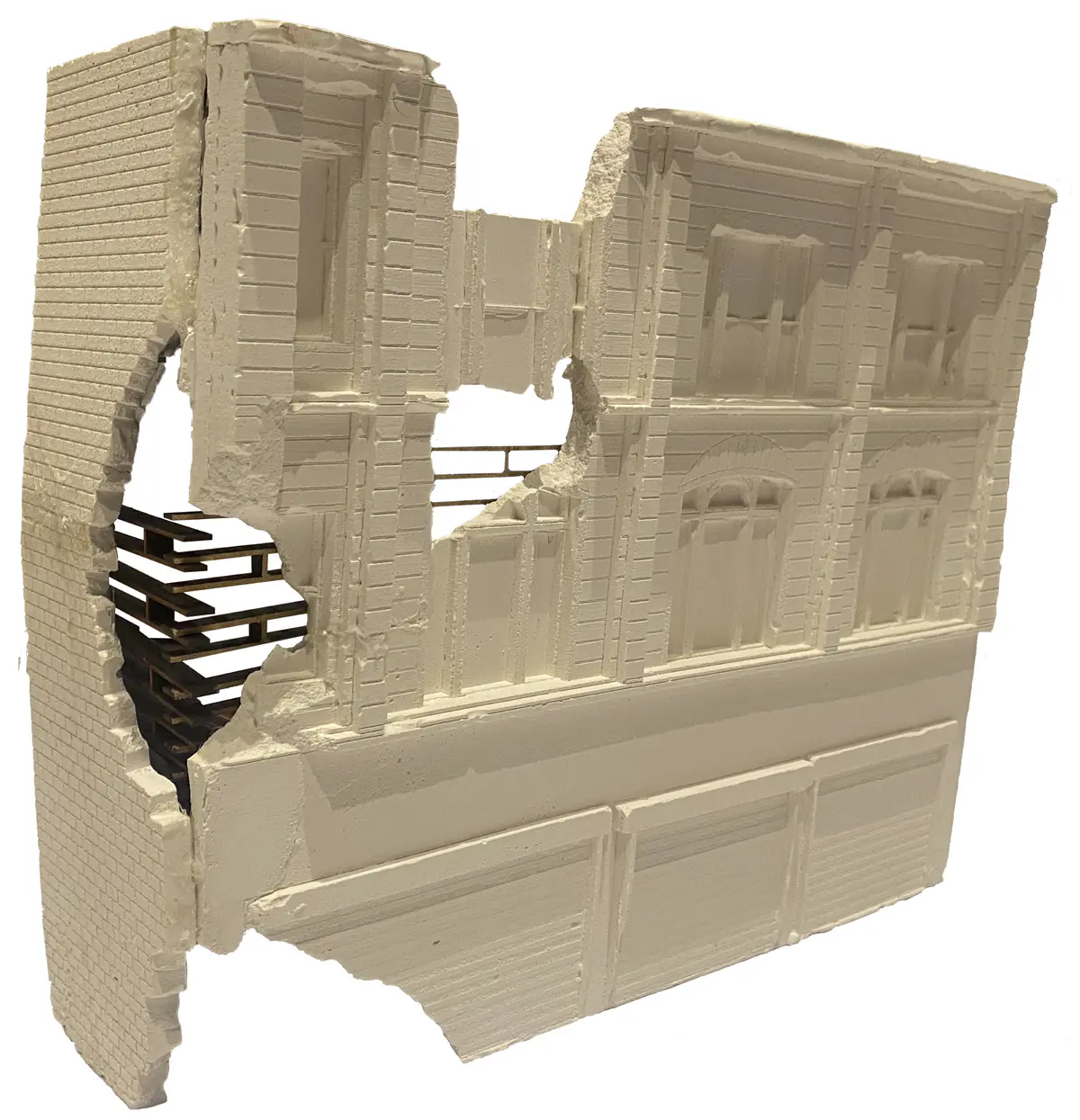
This building has been chosen due to the clear retrofit it has already undergone. The building has two halves, a modern function on street level with roller shutter doors. These doors seem very out of place as they are not shy in hiding their presence. Then the top half is traditional stone and mortar with some elements of detailing around the windows. I wonder what the addition would look like with the zero- carbon material repair pallet.
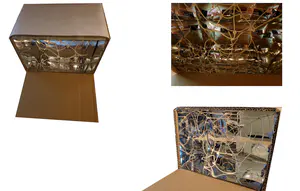
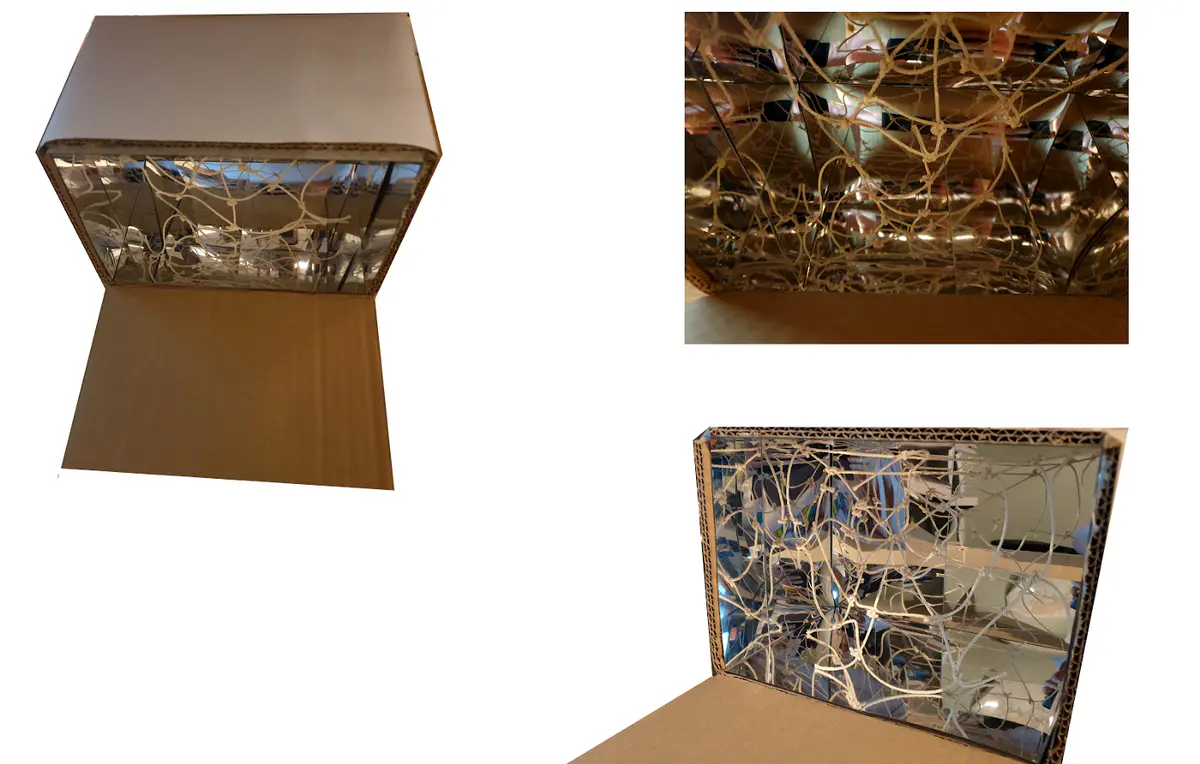
A cardboard box that when opened shows mirrors in all internal faces reflecting a web made with strings that represents Dudley as a complex system of interconnected elements. The Dudley High street has lack in colour, public spaces, and green areas, reflecting the local population that is experiencing deprivations and vice versa. Making a high street attractive can improve the local population in health, social and economic aspects.
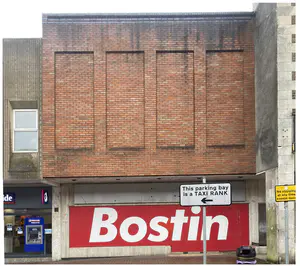
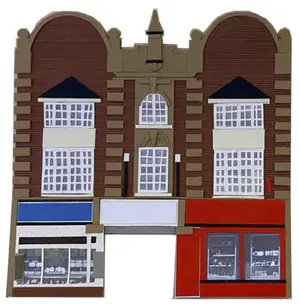
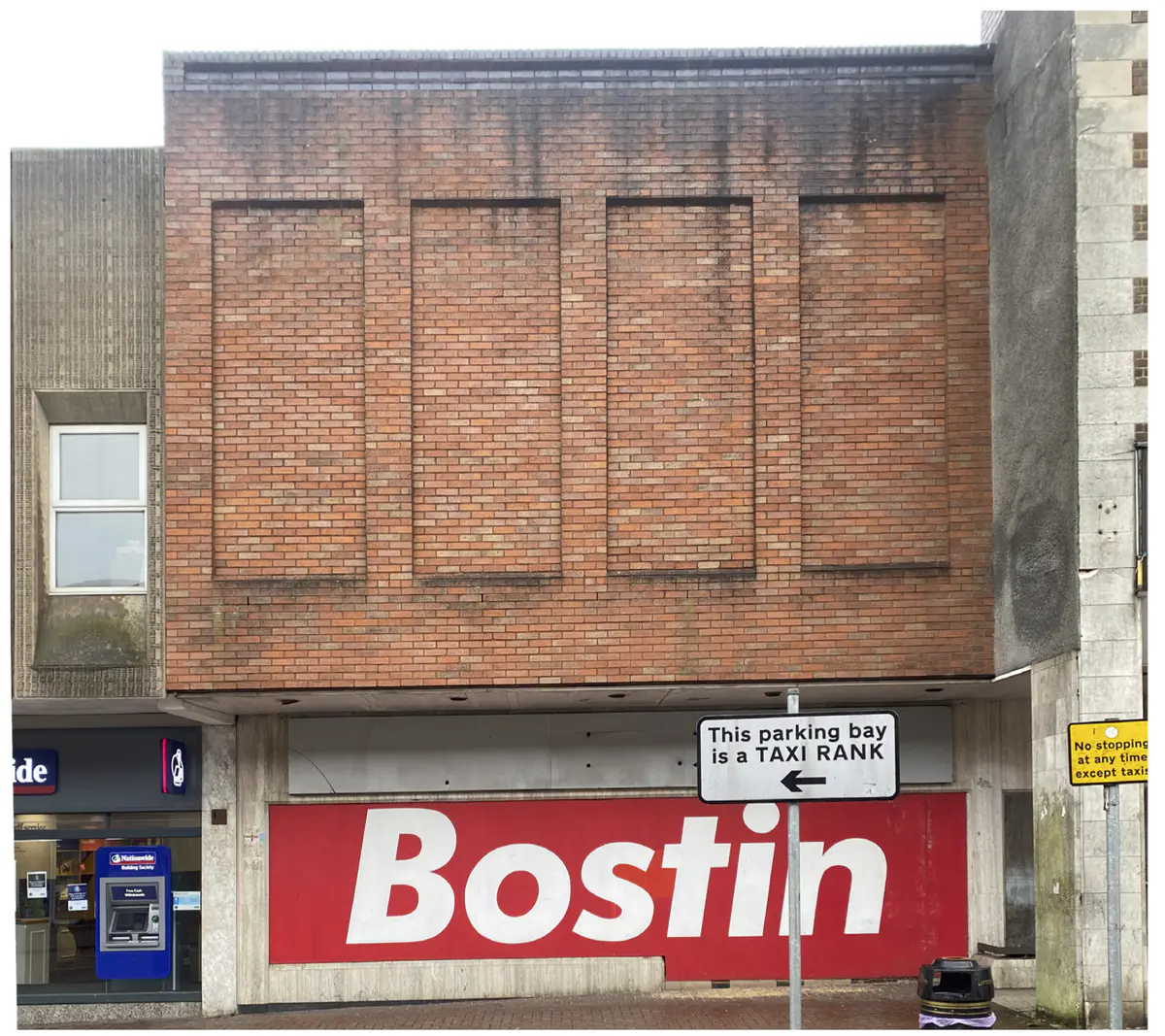
There is a clear presence representing Dudley with the bold red ‘Bostin’ sign at ground level. Chosen for its cantilever first and the second floor, this building could be adapted to have an external space. Also, there is a slight ‘hotel Fouquet barrière’ about the facade as its bricked-up windows represent change over time.
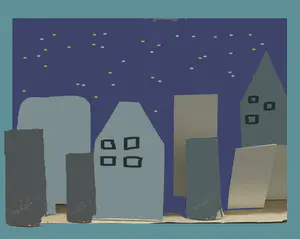
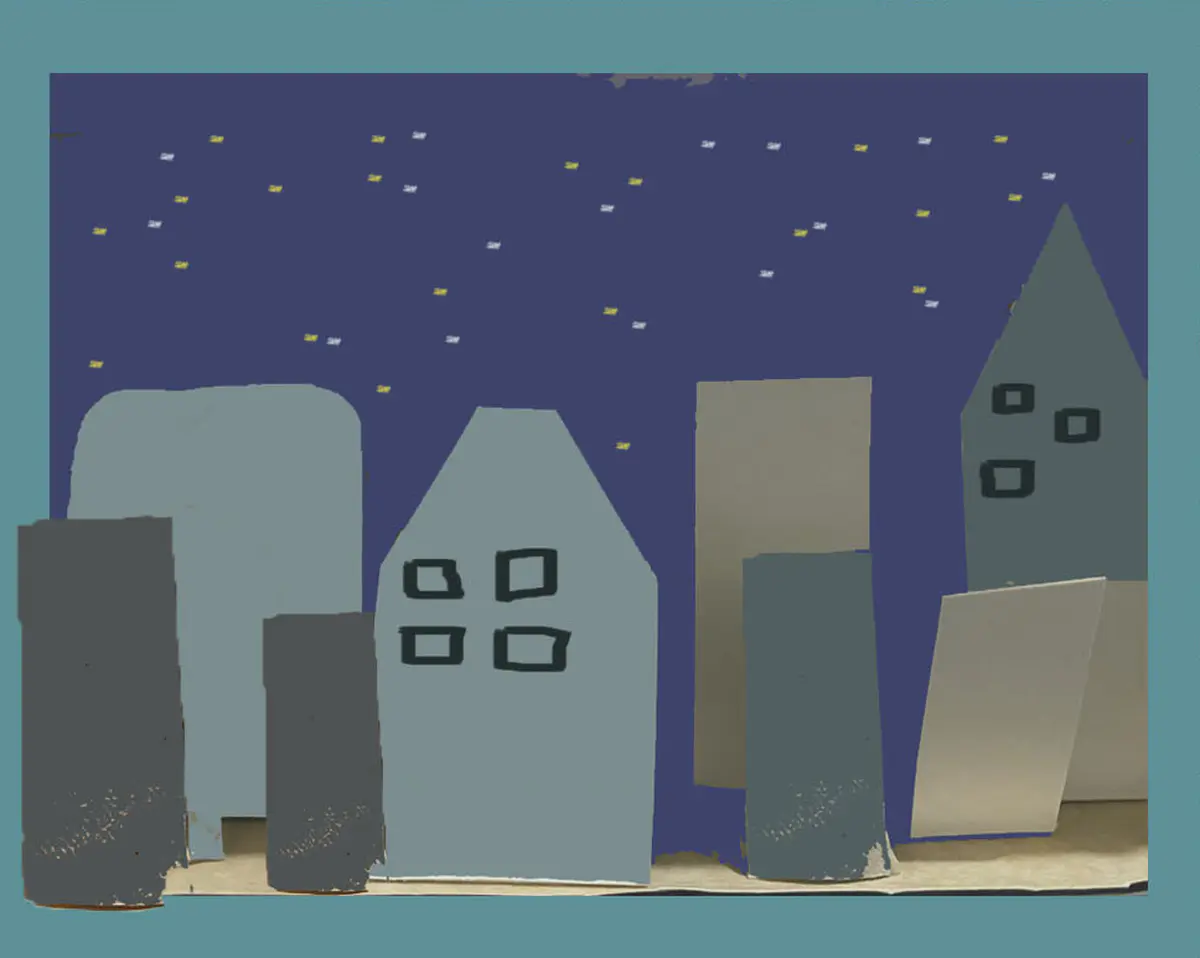
My gift focused on the issue that I found most prevalent in my research, which was the lack of nightlife and social entertainment on Dudley High Street. I created an abstract storyboard that highlights the gap on the High Street. This model can be packed away and used at different events. It can also be used as a puppet show. People can add their own contributions to the High Street. The storyboard was made out of recycled materials. This puts emphasis on looking after our environment.
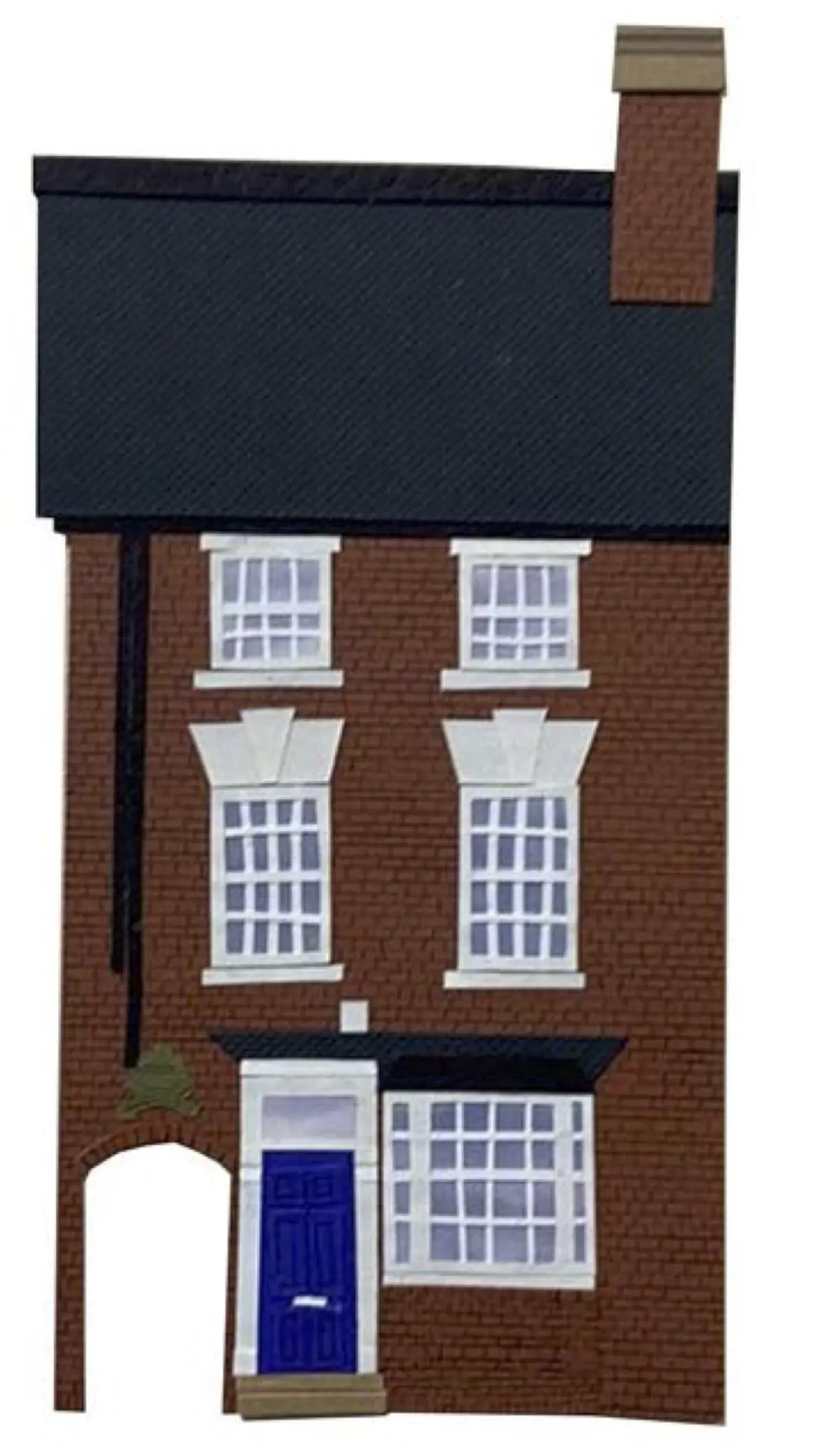
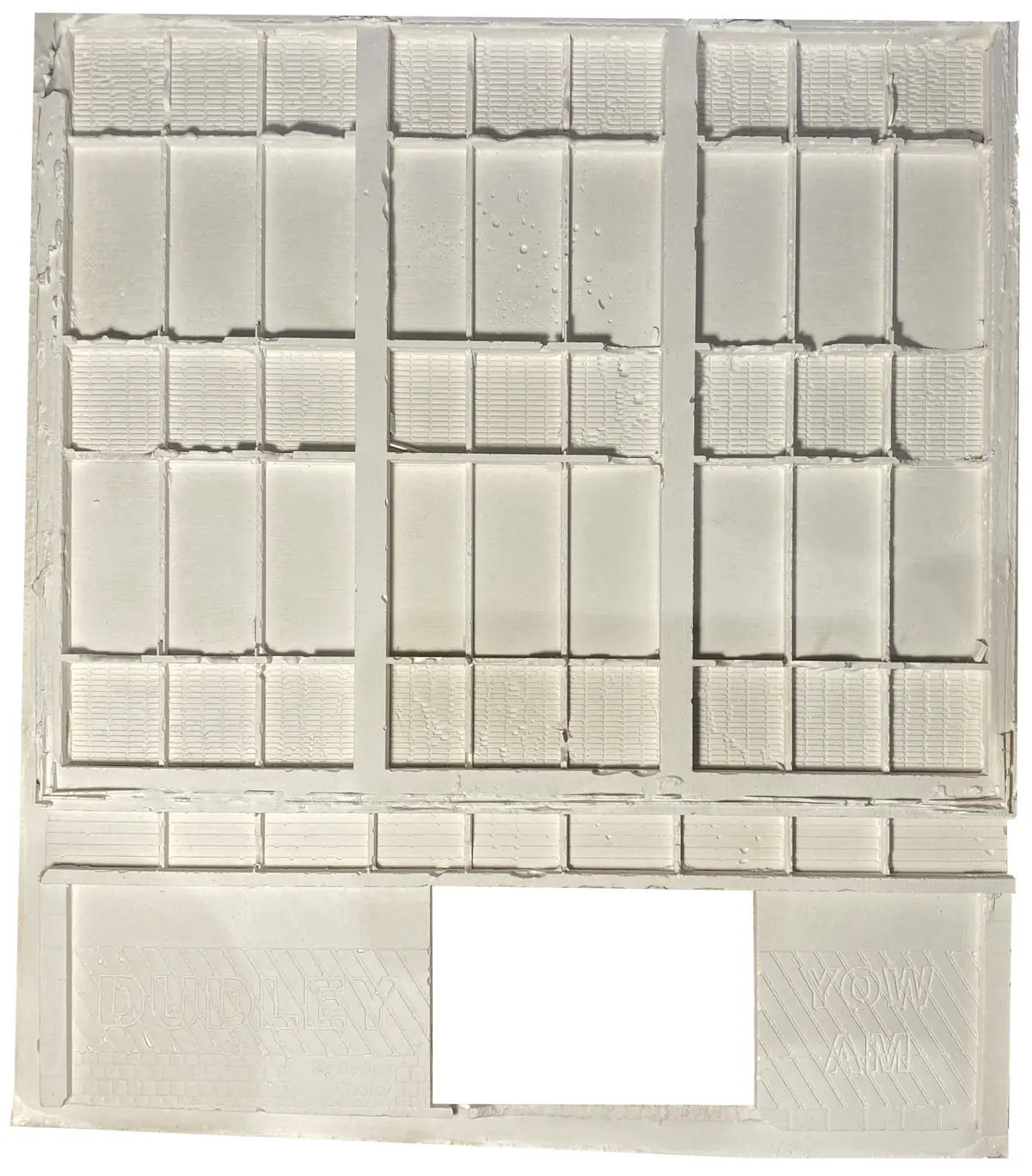
This building has been picked because it is significant as it represents the language slang used in the local area. Not only that, the facade clearly looks worn and requires repair throughout. This is the best place to start as the locals would easily refer to it via slang. So when spreading the news of repair, people would instantly know which building it is.
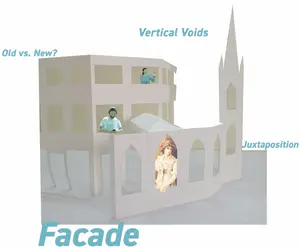
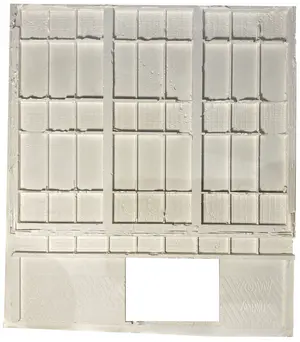
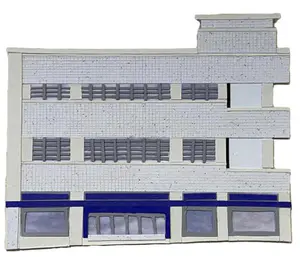
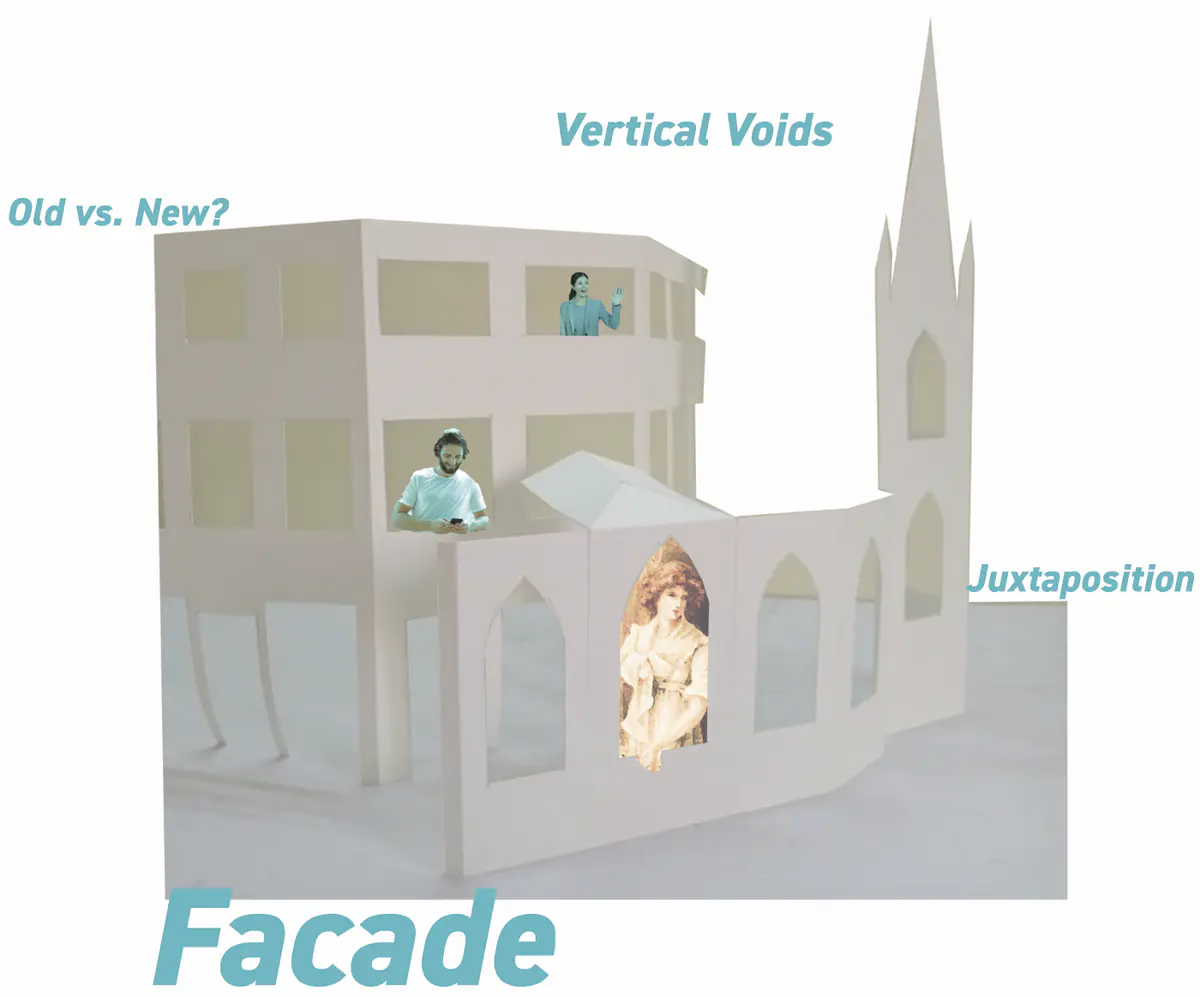
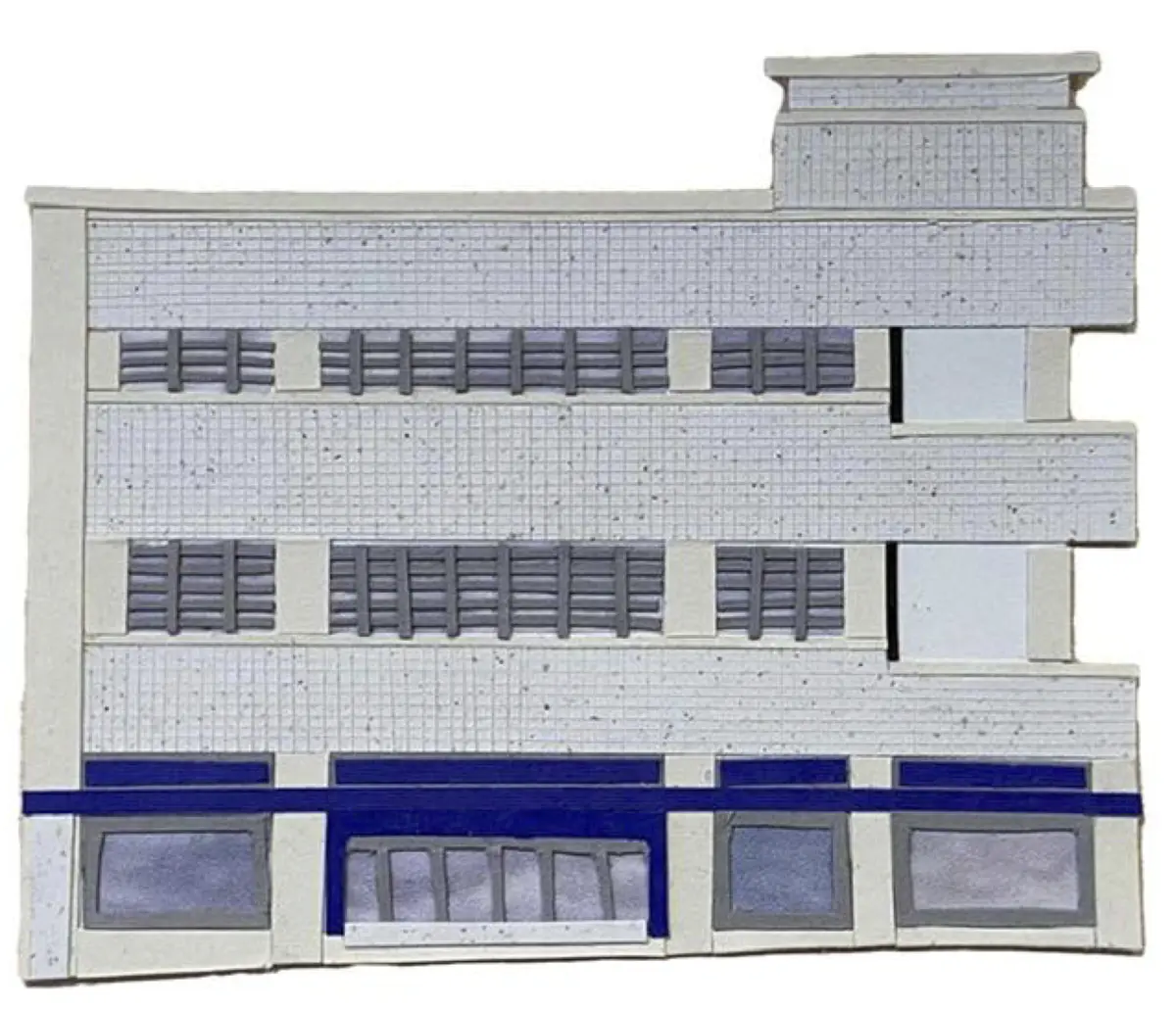
The Gift represents the two different typologies of building and its facade located on the High Street. One resembles St. Thomas Top Church and the other is the common modern building facade. The design of High Street buildings has evolved throughout the period. Its use, materiality, construction technique etc.
The High Street has always represented a role as a commercial and social hub. The concentration of public on the High Street provides the opportunities to designers to showcase creativity and innovation in design which impacts on visitors. We can say in other words, an ‘Exhibition’ of evolution of buildings in a row. So, facade plays a key role as it reflects the local identity of the town and its culture. So I did a little experiment to understand the street in the form of juxtaposition of facade by placing two different typologies of buildings located on the street. The voids on the facade have changed and adapted to more convenient rectilinear shapes during the past few decades.
The model made of plain paper can represent the periodical difference in buildings to which people of the High Street can easily relate and take a place within their memory.
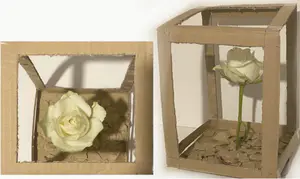
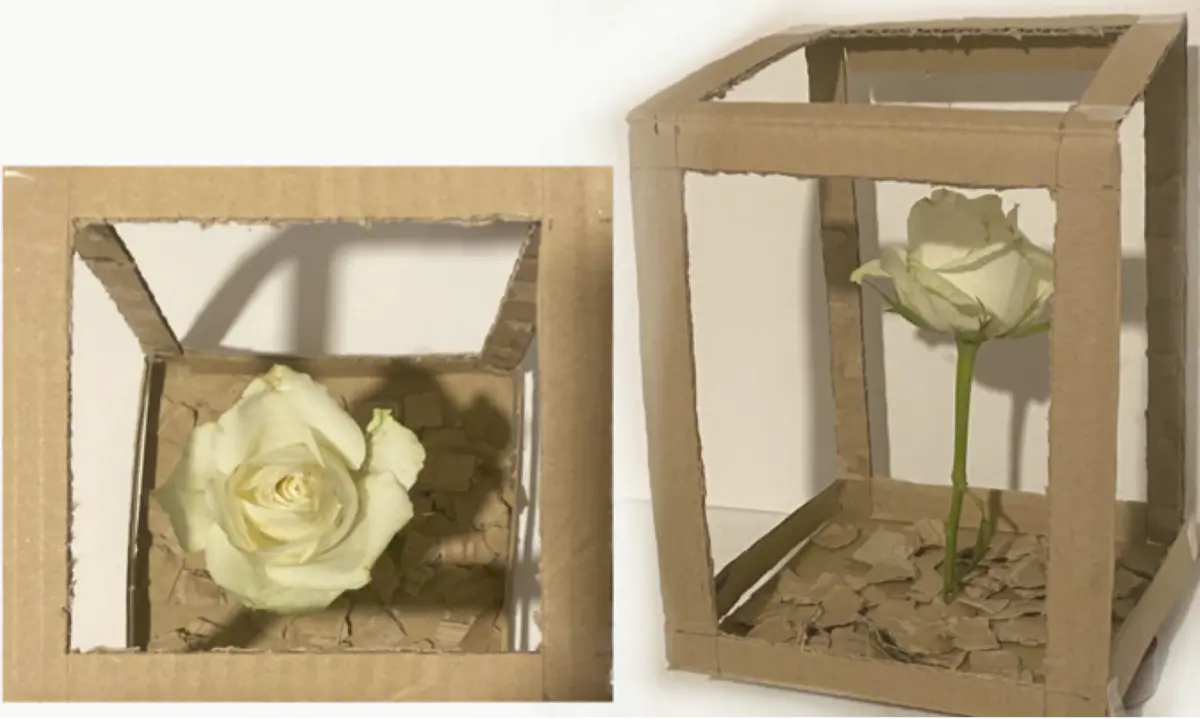
The meaning behind this gift is composed of three main foundations which are biodiversity, social and enclosure. The box represents the enclosed feeling of the surrounding buildings that you receive when walking down Dudley High Street. The ‘High Street’ gives the impression that the buildings are closing in on you, with very little open space around. The open element of the box is to create an airy space which is what Co-LAB Dudley is trying to achieve and make the atmosphere more sociable for the local people/ community. Therefore, attracting more people to the high street. Conducting research it is evident that the ‘High Street’ severely suffers from a lack of green space resulting in a lack of biodiversity across Dudley. Centrally, located within the box is a rose which resembles the biodiversity and the need for growth amongst the ‘High Street’. The white rose connotes the purity for the future of Dudley High Street and what it could become.
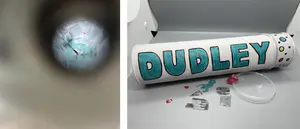
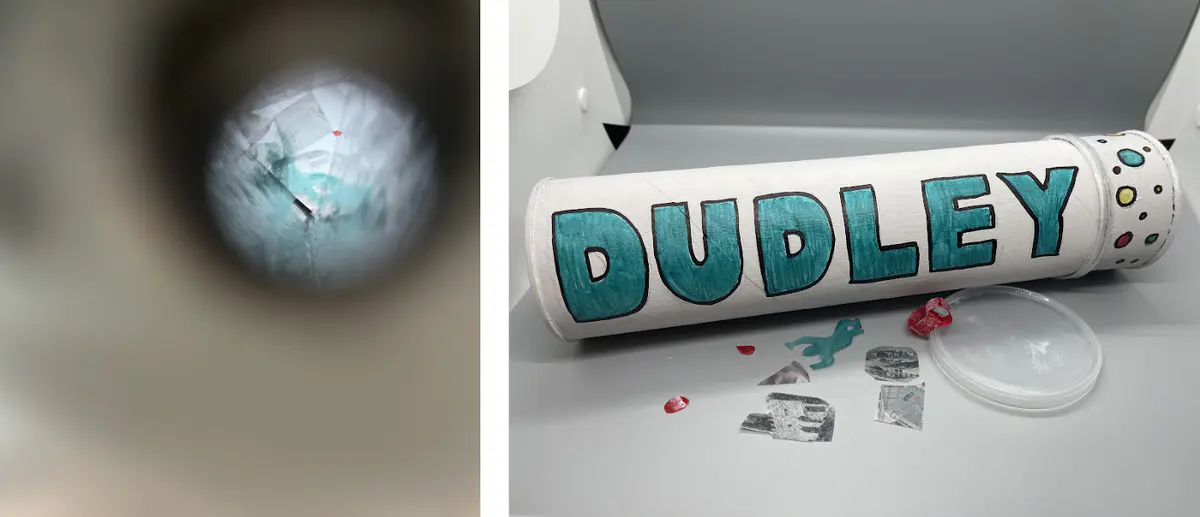
After investigating the history, heritage, culture and institutions of Dudley and its High street, I made a kaleidoscope gift based around the themes ‘overlooked’, ‘resilience’ and ‘layered’. Although sight is the most immediate sense in which many people engage with their surroundings, it’s not until you look beneath the surface and start to see things from a new perspective that you fully appreciate what is there and the potential beyond. I wanted people to engage with my gift, have fun and evoke a sense of nostalgia, whilst also using it as a way to look forward to what the High Street could be, all the while embodying the CoLab Dudley principle of allowing this object to be a co-op piece. The gift relates to the people and allows for each user to interpret and express their own thoughts.
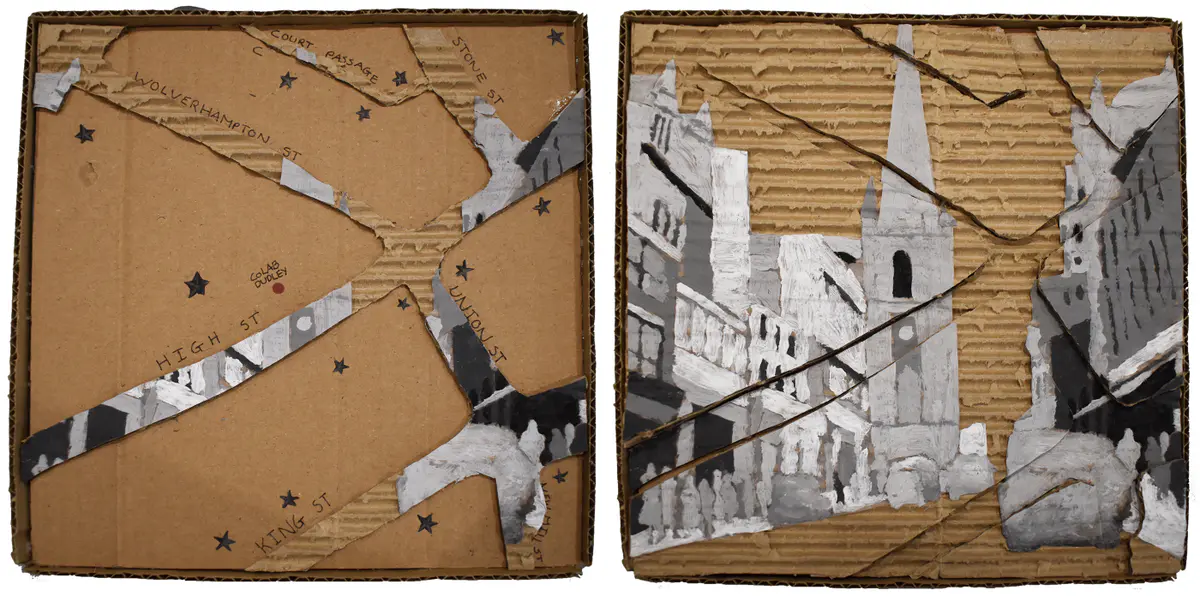
This gift aims to address the disconnect between Dudley and its industrial history. Once the ‘Capital of the Black Country’ its high street now looks like any other. With the intention of public engagement, this gift could be handed out at CoLab Dudley’s base. Starting from there, people would be able to follow the map and visit the places marked by stars — all of which hold some historical significance whether it be the location of an old factory or school — where one missing puzzle piece may be located. Only after visiting these locations would they be able to complete the puzzle and see the final image of Dudley’s high street.
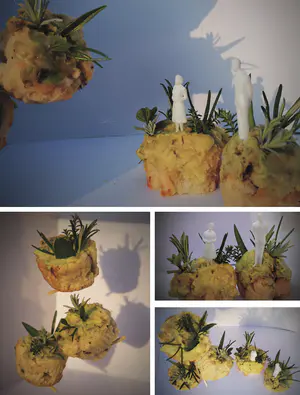
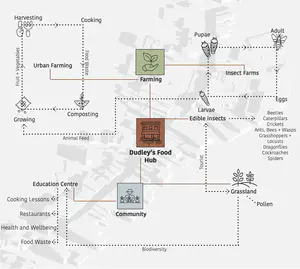
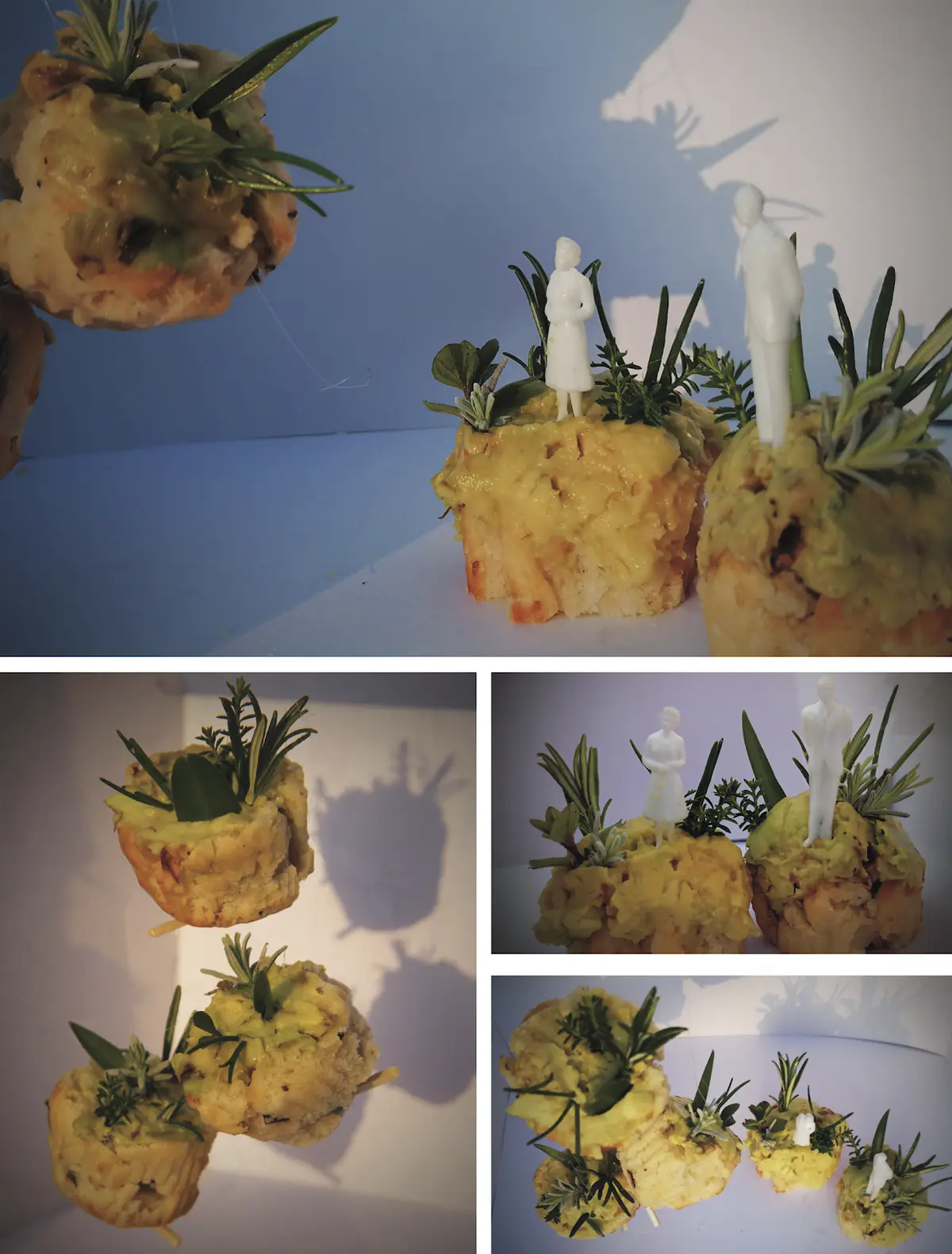
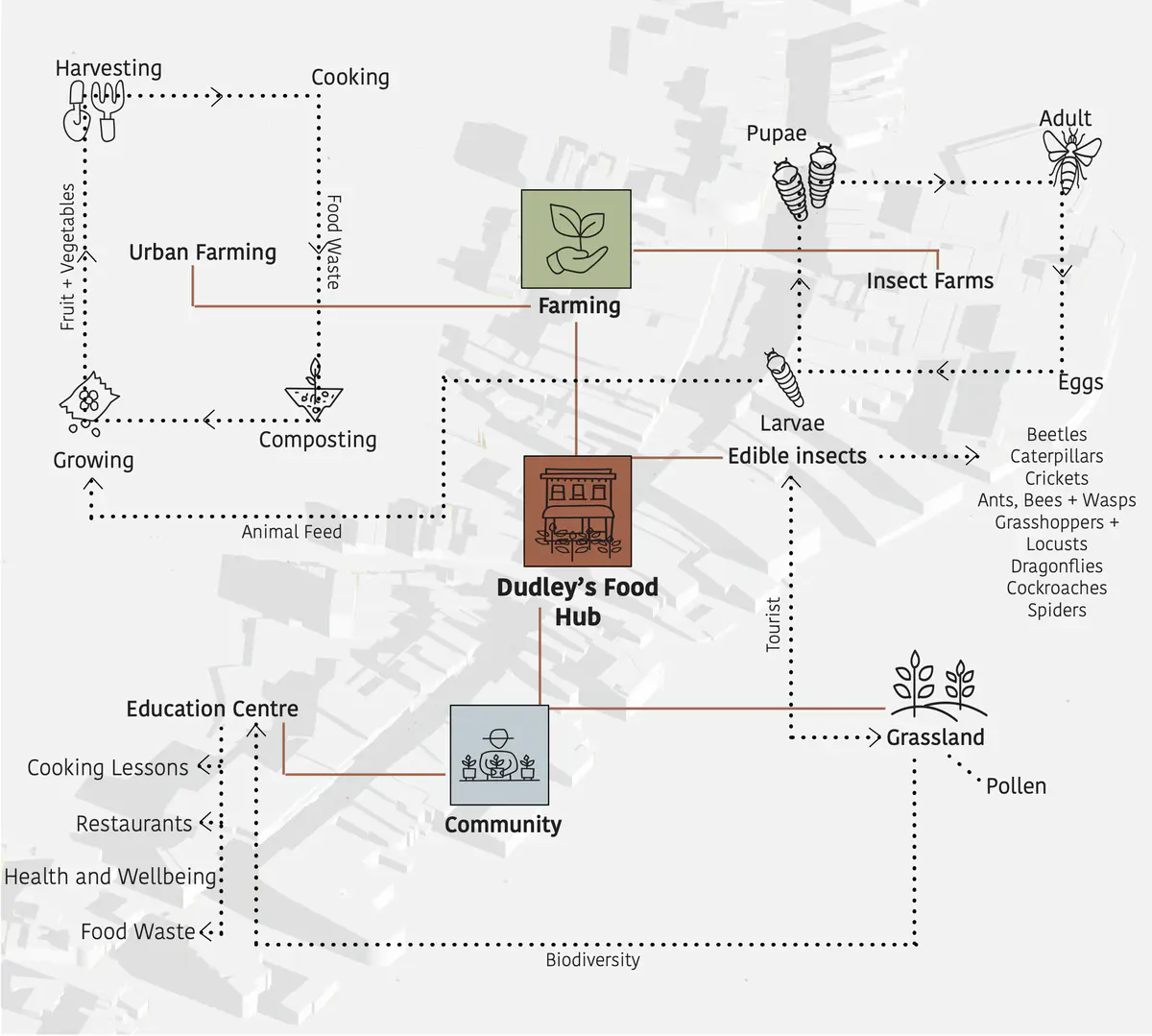
For Colab Dudley, I baked a model that ties into the final proposal. Food is a huge part of history and culture and part of Dudley’s history and culture is using what food there is available. Bread is cheap and easy to make, so is found in many traditional black country dishes. I foraged for edible plants in my garden and neighbourhood and built hanging baskets and islands to show in an abstract way how public space could be more productive and beautiful. They were a tasty treat and a sustainable model!
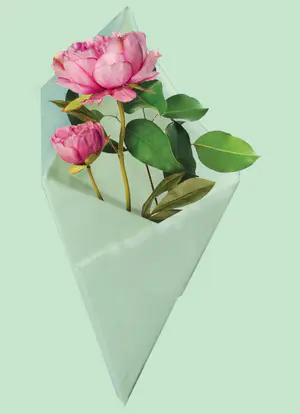
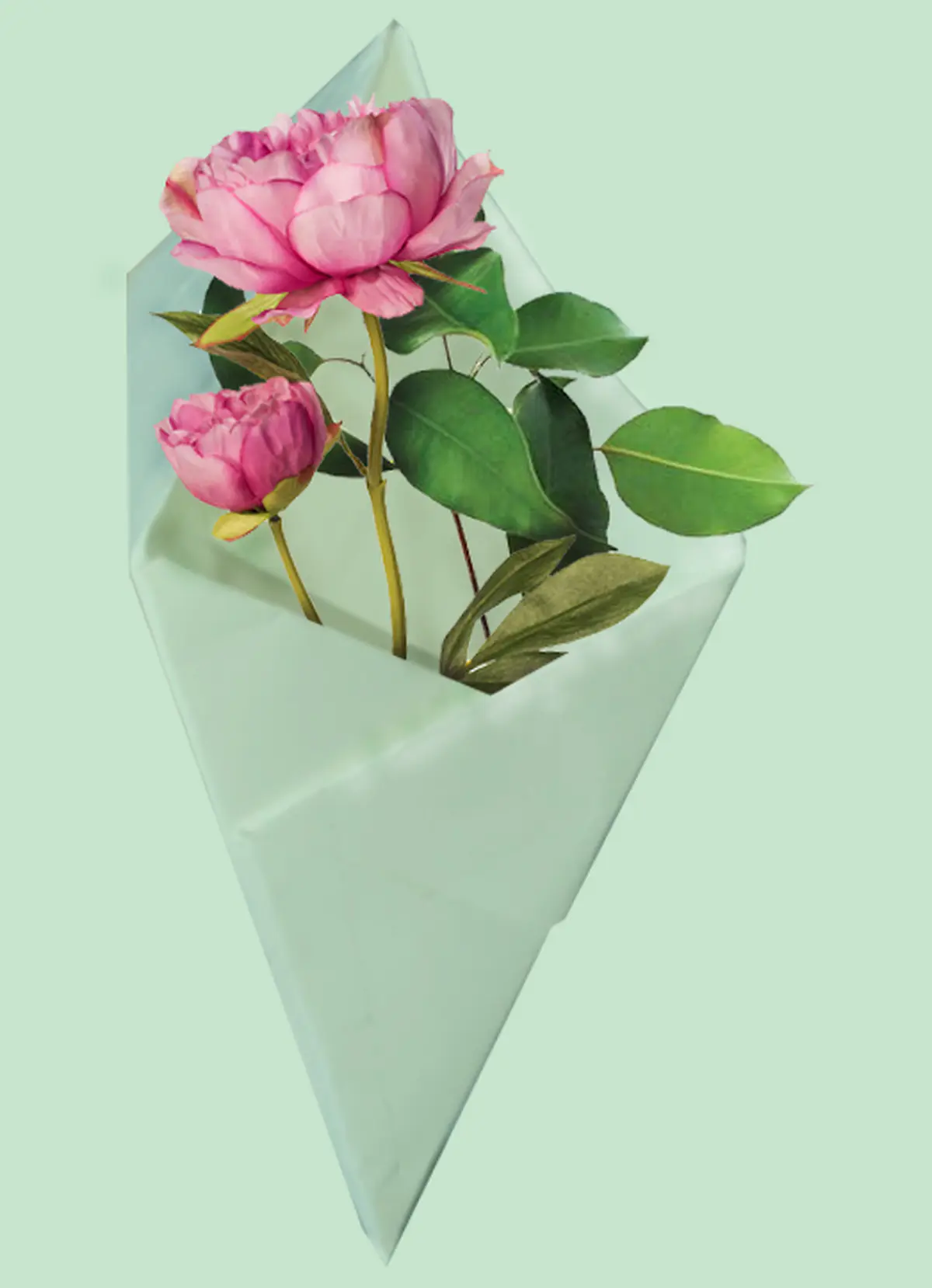
From the research that I collated, I found that the High Street was a very under-valued place that lacked both colour and nature. Therefore, the origami plant holder was a gift designed to bring natural elements such as flowers to the High Street, which could be taken home by the public.
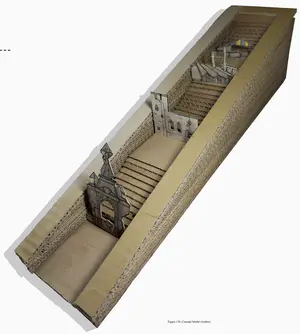
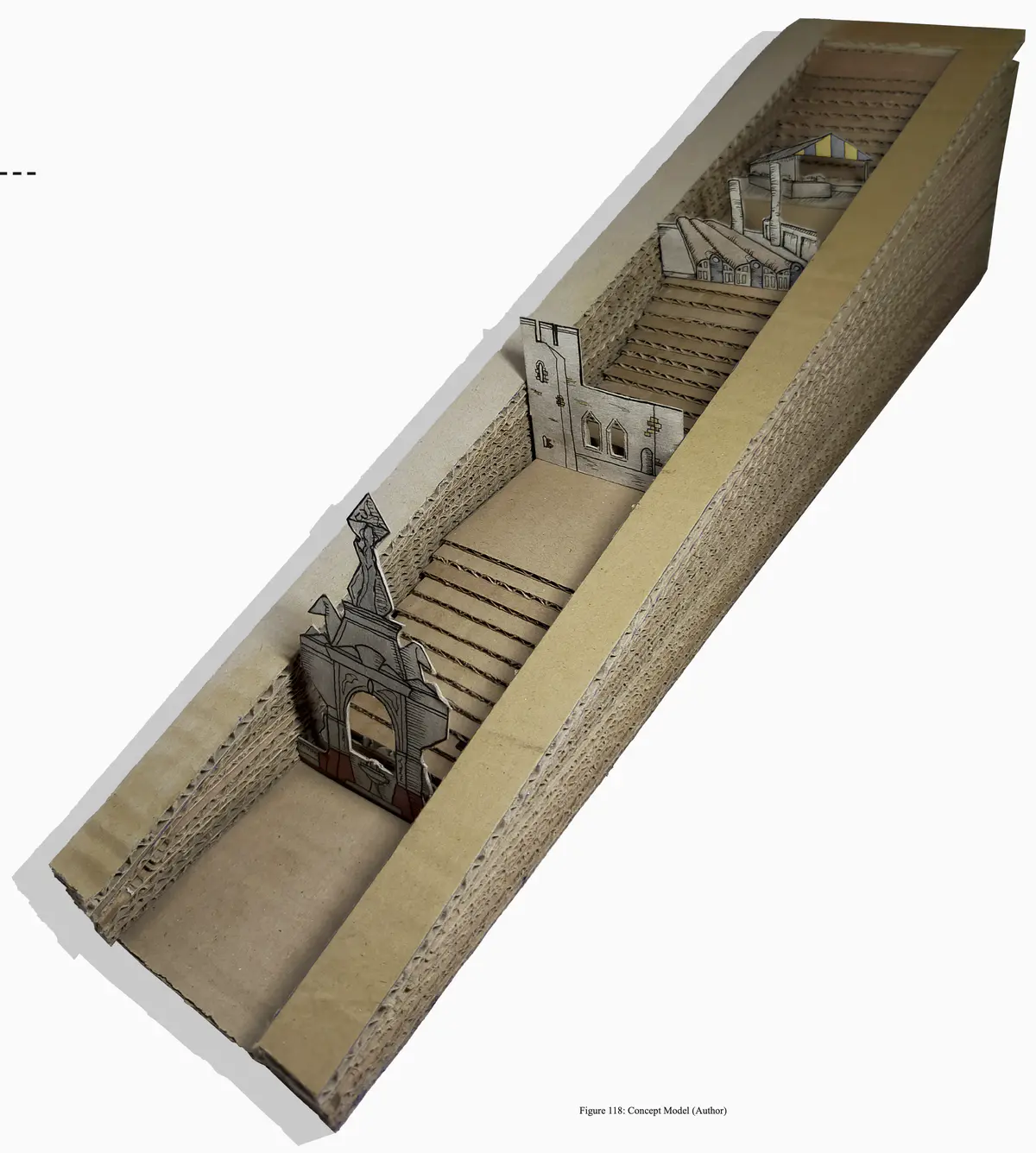
Concept Model - The model represents the idea of digging into the High Street itself. The idea was to drastically alter the form of the High Street to a point that it altered the ways that people in Dudley would live their day-to- day, changing the theatre of their lives, so that they could learn about their own history, their legacy, and about the endless possibilities of Dudley’s future. The idea was inspired by the word “Cut”, which in Black Country Dialect means “Canals”, as they were long cuts through the land.
Dudley’s fountain represents the Middle Ages, showing the growth of Dudley over time. While it was the Capital of the Black Country (and still is), the Middle Ages is when Dudley saw itself come into it’s own place, being recognised as a big market town, and slowly expanding it’s territories and influence.
The Castle represents the Dudley Castle, built in the 11th Century. Ruling over the land, the Castle is a key component of the Legacy of Dudley, sitting on the highest point for miles around, rich with history, from Being demolished twice, to the civil war, to now watching over the Zoo.
The factories represent the Industrial Revolution era of Dudley, a time when Dudley was the king of England, and basically ran the entire process. It was an important aspect of Dudley’s Legacy, and sits as probably its crowning glory - even if today we can recognise the disastrous affects it had on the world in the short period of time the era passed.
The Market represents the modern day. Dudley has seen better years, but it is with this project that I propose that even better ones are just around the corner. While people don’t look fondly at Dudley, those from there have a fierce dedication to the legacy of Dudley, which hopefully will burn to a brighter future.