Dudley Time Portal

Items tagged: Energy
Lichen as bioindicators

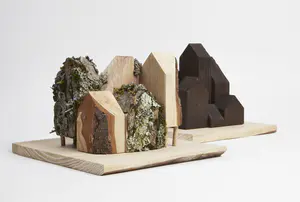
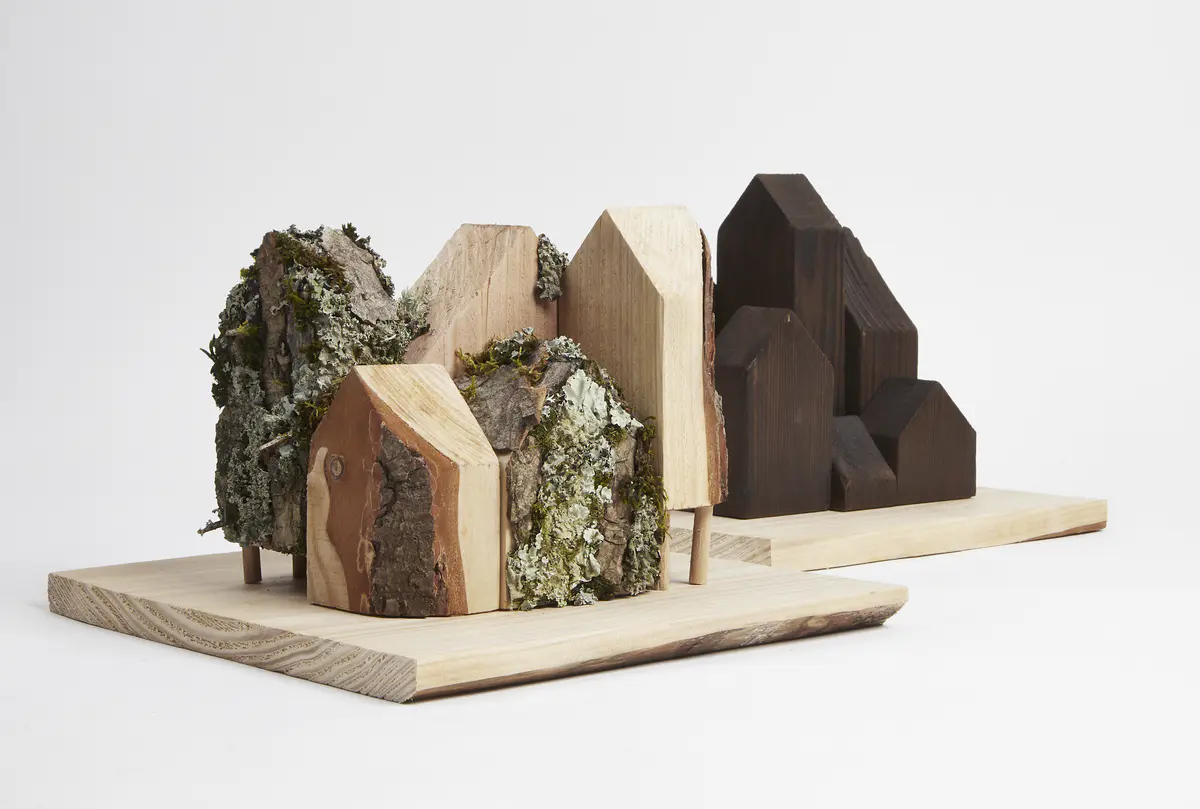
Lichen Vs Carbon. These concept models look to document both the current state of Dudley Highstreet and the vision looking towards the future within this thesis project.

The lichen covered model looks towards a future in Dudley that is rich in texture, colour, nature and oxygen. Natural materials promote natural growth, and textures such as rough sawn timber and stone are the prefect hosts for lichen. All new buildings in Dudley would benefit massively from following a fabric first approach and adopt the use of sustainable and recycled building materials along with systems that use minimal energy.

The lichen model represents a vision for this thesis, buildings that are covered in natural materials and lichens that help sequester carbon and promote a healthier Highstreet. Suggestions of raised buildings also proposes less disruption to the ground and natural landscape, giving plants and animals the opportunity to thrive in an otherwise hostile concrete environment. Raised buildings also look towards a future planet with rising sea levels, future factors that will drastically affect the way we carry out daily lives and futureproofing all buildings for generations to come.

This second model uses the Shou Sugi Ban method of charring timber to waterproof it. In this case however it represents the embodied carbon and pollution within the highstreet as it exists now. The simplicity and repetition is also used to symbolise the plain nature of the highstreet with only a few materials exhibited, mainly brick & concrete. Once burnt the timber forms were brushed with wire wool to reveal the natural grain of the wood, a visual representation of degradation of layers of buildings that are built poorly or not constructed to last longer than a generation. - Michelle Gartside Model 5.png
Lichen as bioindicators Lichen Vs Carbon. These concept models look to document both the current state of Dudley Highstreet and the vision looking towards the future within this thesis project. The lichen covered model looks towards a future in Dudley that is rich in texture, colour, nature and oxygen. Natural materials promote natural growth, and textures such as rough sawn timber and stone are the prefect hosts for lichen. All new buildings in Dudley would benefit massively from following a fabric first approach and adopt the use of sustainable and recycled building materials along with systems that use minimal energy. The lichen model represents a vision for this thesis, buildings that are covered in natural materials and lichens that help sequester carbon and promote a healthier Highstreet. Suggestions of raised buildings also proposes less disruption to the ground and natural landscape, giving plants and animals the opportunity to thrive in an otherwise hostile concrete environment. Raised buildings also look towards a future planet with rising sea levels, future factors that will drastically affect the way we carry out daily lives and futureproofing all buildings for generations to come. This second model uses the Shou Sugi Ban method of charring timber to waterproof it. In this case however it represents the embodied carbon and pollution within the highstreet as it exists now. The simplicity and repetition is also used to symbolise the plain nature of the highstreet with only a few materials exhibited, mainly brick & concrete. Once burnt the timber forms were brushed with wire wool to reveal the natural grain of the wood, a visual representation of degradation of layers of buildings that are built poorly or not constructed to last longer than a generation.
Model Drawing Collage Architecture Material Nature Plantlife Growing Making Creativity Craft Colour Future Imagination Texture Air Energy Sustainable Creatures Life Water
The population of Dudley in 2021 is circ. 80,000 and including the wider borough totals 313,000.

For one person on the average diet, roughly 2.6 Hectares of farm land is required. A family of four, just over 10 Hectares. A population of 313,000 required 813,800 Hectares, the equivalent of 1,162 football fields or 707,652,174 car parking bays.

FEEDING DUDLEY REQUIRES 1,162 FOOTBALL FIELDS OF FARM LAND

Thesis Concept Image - The Farm House

Taking a fun and more literal approach for providing local food production onto the high street, I looked at layering a farm growing different fruits, vegetables and meat products into the same structure to view the absurdity of growing, processing and packaging within a single structure. Ultimately the project would be as close to being a closed system as possible, where food grown could be fed to the animals and the waste from the animals will be used as fertiliser from the food. Air flow and lighting would not only be critical for the animals, but it also allows the fruit and vegetables to grow faster and more efficiently.

The processes within the Farm House would be very energy intense due to the amount of heating, water and lighting that will be required to house the animals and grow the crops. The project utilises conventional farming methods, ploughing, seeding etc., but without the harmful pesticides that would be usually applied. The farming problem of space efficiency is partially targeted in this proposal. Per m2 in plan does contain a greater yield due to the floor layering, however per m2 of gross internal floor area the yield efficiency remains. To ultimately increase overall yield per m2 aeroponics should be applied to massively increase yield and decrease water consumption.

THESIS PROPOSAL

The redevelopment of the high street is a re-envisaged perception of what the high street is and what it will become. A future look at what the high street will become, with mixed use residential and food growth structure to create dense living accommodation and localised food growth which prevents the need to contribute to deforestation and loss of biodiversity from urbanisation.

As part of the schemes wider aims, the high street and surrounding roads will become part of a network of green corridors, where pedestrian footfall/cycling can increase and the use of polluting vehicles will be greatly reduced. The idea of greatly increasing the density of vegetation along roads and reducing lanes will not only improve the rate of absorbing carbon dioxide, but also reduce noise and reduce temperature spots. The Miyawaki planted method would be used where ever possible to create dense areas of trees and shrubs, as well as quickly create new living conditions for new biodiversity.

The primary focus for the building will be the localised food growth in the vertical farms, several floors of food growth will create a new economy centred around the high street, removing the need to import fresh food from farms from across the country or on the other side of the world. The environment within the farms will be climate controlled, allowing the farms to adjust their climate to the optimum for the specific food. The density at which food can be grown in is almost 400 times greater than conventional farming, which greatly reduces the need to create new farms.

The residential aspects pairs with the farm, in bringing a new generation of people to live above the high street. The new vision of the high street would become an attraction point for people to not only visit but to live in as well. Access to land converted from roads and paving to nature will create value and attraction to the area once again. Eventually the low income stores will transition to stores that cater to the new environment.

This project targets all the XR themes directly or indirectly.
Air & Biodiversity - Creating new and preventing the loss of woodland and habitats.
Food - Growing food local and a much greater yield.
Water - Greatly reducing the resource requirement during farming.
Materiality - Managing sustainable usage of the deconstructed buildings and sourcing of the proposed. 
Community - Creating new environments for communities to interact with each other. - Matthew Hewitt Thesis Concept.png
The population of Dudley in 2021 is circ. 80,000 and including the wider borough totals 313,000. For one person on the average diet, roughly 2.6 Hectares of farm land is required. A family of four, just over 10 Hectares. A population of 313,000 required 813,800 Hectares, the equivalent of 1,162 football fields or 707,652,174 car parking bays. FEEDING DUDLEY REQUIRES 1,162 FOOTBALL FIELDS OF FARM LAND Thesis Concept Image - The Farm House Taking a fun and more literal approach for providing local food production onto the high street, I looked at layering a farm growing different fruits, vegetables and meat products into the same structure to view the absurdity of growing, processing and packaging within a single structure. Ultimately the project would be as close to being a closed system as possible, where food grown could be fed to the animals and the waste from the animals will be used as fertiliser from the food. Air flow and lighting would not only be critical for the animals, but it also allows the fruit and vegetables to grow faster and more efficiently. The processes within the Farm House would be very energy intense due to the amount of heating, water and lighting that will be required to house the animals and grow the crops. The project utilises conventional farming methods, ploughing, seeding etc., but without the harmful pesticides that would be usually applied. The farming problem of space efficiency is partially targeted in this proposal. Per m2 in plan does contain a greater yield due to the floor layering, however per m2 of gross internal floor area the yield efficiency remains. To ultimately increase overall yield per m2 aeroponics should be applied to massively increase yield and decrease water consumption. THESIS PROPOSAL The redevelopment of the high street is a re-envisaged perception of what the high street is and what it will become. A future look at what the high street will become, with mixed use residential and food growth structure to create dense living accommodation and localised food growth which prevents the need to contribute to deforestation and loss of biodiversity from urbanisation. As part of the schemes wider aims, the high street and surrounding roads will become part of a network of green corridors, where pedestrian footfall/cycling can increase and the use of polluting vehicles will be greatly reduced. The idea of greatly increasing the density of vegetation along roads and reducing lanes will not only improve the rate of absorbing carbon dioxide, but also reduce noise and reduce temperature spots. The Miyawaki planted method would be used where ever possible to create dense areas of trees and shrubs, as well as quickly create new living conditions for new biodiversity. The primary focus for the building will be the localised food growth in the vertical farms, several floors of food growth will create a new economy centred around the high street, removing the need to import fresh food from farms from across the country or on the other side of the world. The environment within the farms will be climate controlled, allowing the farms to adjust their climate to the optimum for the specific food. The density at which food can be grown in is almost 400 times greater than conventional farming, which greatly reduces the need to create new farms. The residential aspects pairs with the farm, in bringing a new generation of people to live above the high street. The new vision of the high street would become an attraction point for people to not only visit but to live in as well. Access to land converted from roads and paving to nature will create value and attraction to the area once again. Eventually the low income stores will transition to stores that cater to the new environment. This project targets all the XR themes directly or indirectly. Air & Biodiversity - Creating new and preventing the loss of woodland and habitats. Food - Growing food local and a much greater yield. Water - Greatly reducing the resource requirement during farming. Materiality - Managing sustainable usage of the deconstructed buildings and sourcing of the proposed. Community - Creating new environments for communities to interact with each other.
Drawing Imagining Diagram Architecture Funny Food Layer Growing System Air Light Creatures Energy Water Consumption Imagination Nature Transport Moving Pollution Biodiversity Material Community
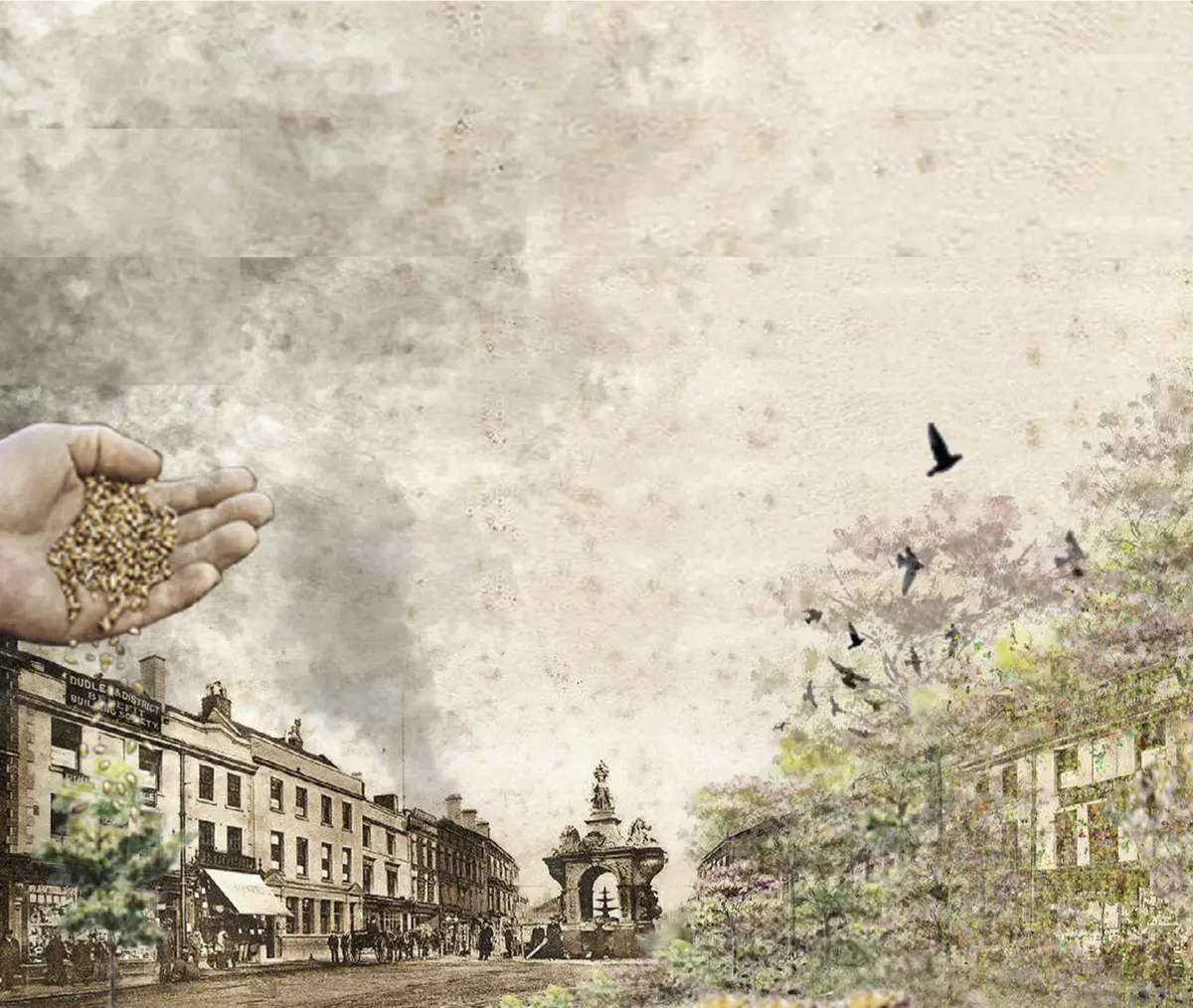
The Overarching Concept

Providing Dudley with a self-sufficient ecosystem improves
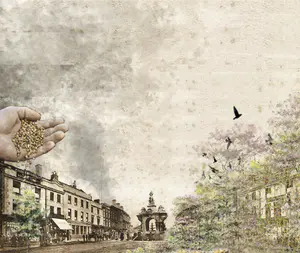
local biodiversity. It is producing enough materials to repair and construct new buildings/interventions within the area. This radical movement could be implemented across many other declining towns. The issue is that we have become too comfortable linking with surrounding areas. For example, importing materials has a vast embodied carbon, likewise for electricity and so on. This thesis aims to grow the required materials and harvests water, capture energy with PV to allow the town of Dudley to be self-sufficient. - Ryan Cooksey Overarching Concept.png
The Overarching Concept Providing Dudley with a self-sufficient ecosystem improves local biodiversity. It is producing enough materials to repair and construct new buildings/interventions within the area. This radical movement could be implemented across many other declining towns. The issue is that we have become too comfortable linking with surrounding areas. For example, importing materials has a vast embodied carbon, likewise for electricity and so on. This thesis aims to grow the required materials and harvests water, capture energy with PV to allow the town of Dudley to be self-sufficient.
Collage Sustainable Regenerative Potential Opportunity System Biodiversity Material Architecture Change Energy
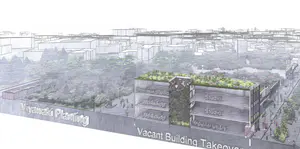
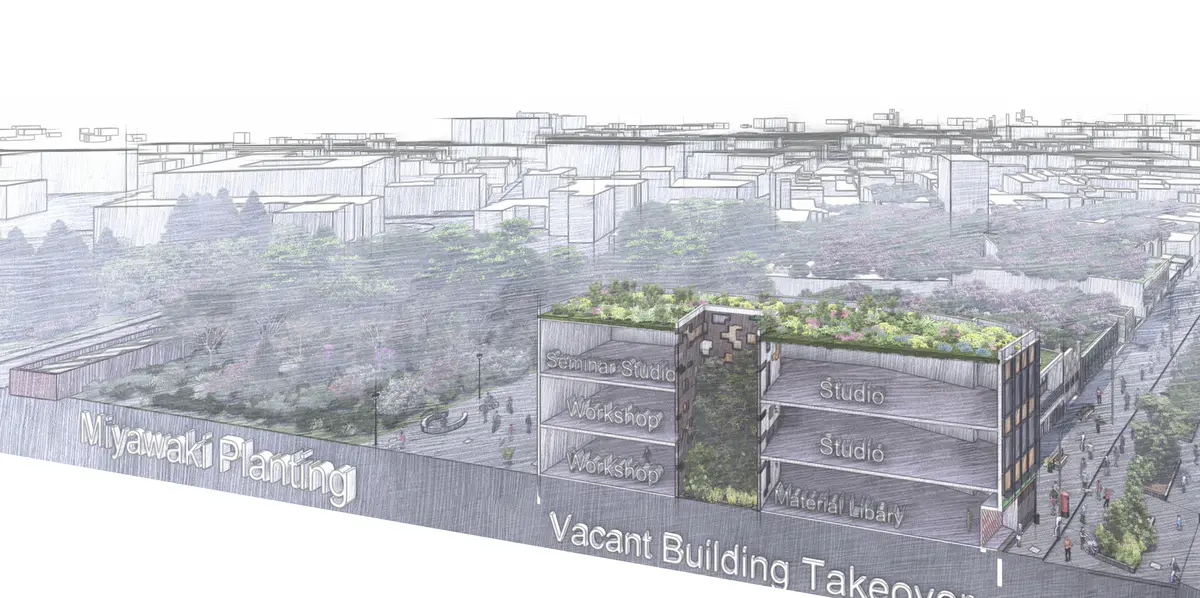
Explore The History Of Site Voids - This will provide an opportunity to reimplement these to allow vertical green corridors to occur.

Explore Vacant Buildings - To avoid damaging an already deteriorating high street, I aim only to take over vacant plots.

Investigate the opportunity for Miyawaki planting - understand the conditions required to grow a sustainable material source on-site, including ground, water, and space conditions.

It takes over a building that leads directly to an open space where a community hub is the centre of the thesis, offering education, community engagement and material celebration. - Ryan Cooksey Material Celebration Hub 1.png
Explore The History Of Site Voids - This will provide an opportunity to reimplement these to allow vertical green corridors to occur. Explore Vacant Buildings - To avoid damaging an already deteriorating high street, I aim only to take over vacant plots. Investigate the opportunity for Miyawaki planting - understand the conditions required to grow a sustainable material source on-site, including ground, water, and space conditions. It takes over a building that leads directly to an open space where a community hub is the centre of the thesis, offering education, community engagement and material celebration.
Collage Diagram Drawing Imagining Map Text Photo Sustainable Regenerative Potential Opportunity Architecture Change Energy Decay Unused Nature Growing Plantlife Water Community Past Archaeology Learning Health Aesthetic Biodiversity Imagination Climate