Dudley Time Portal

Items tagged: Sustainable
Lichen as bioindicators

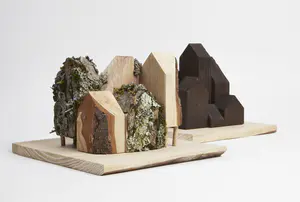
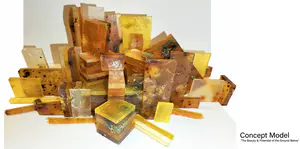
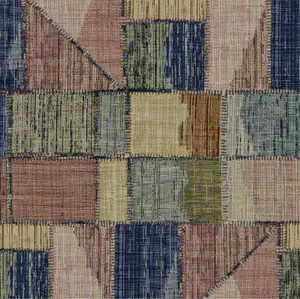
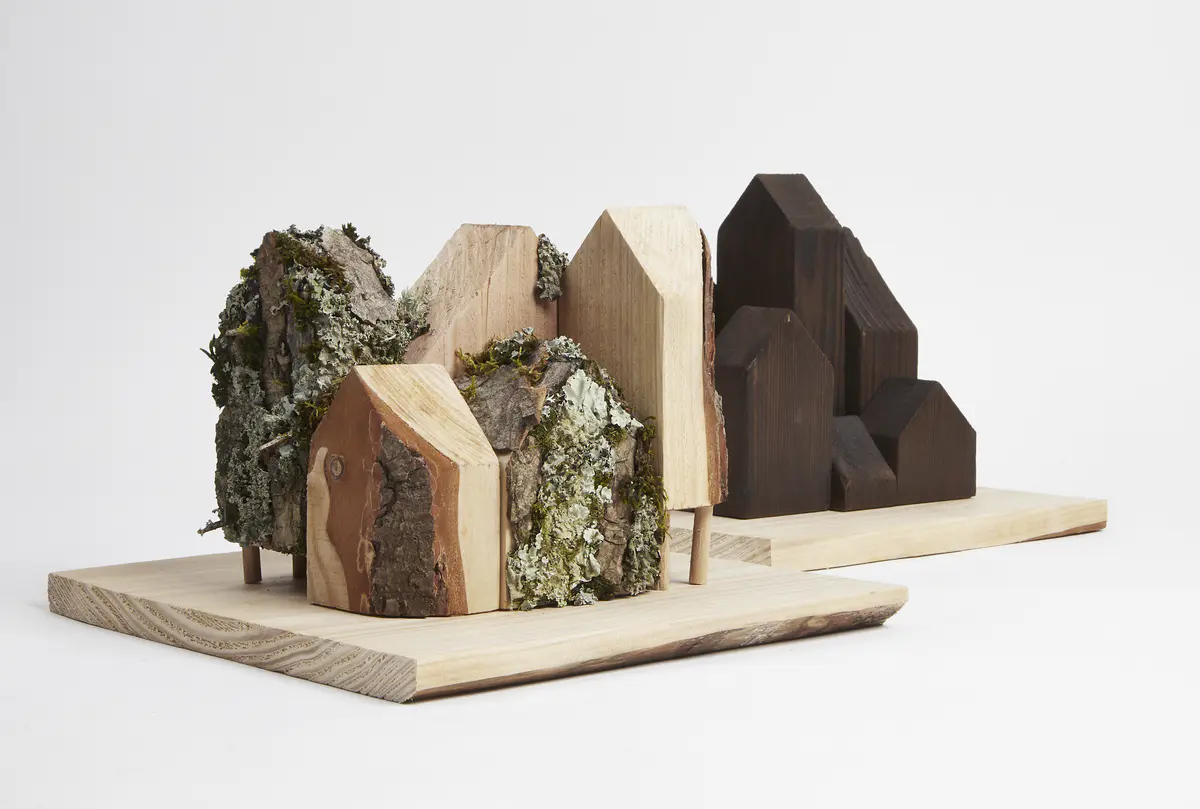
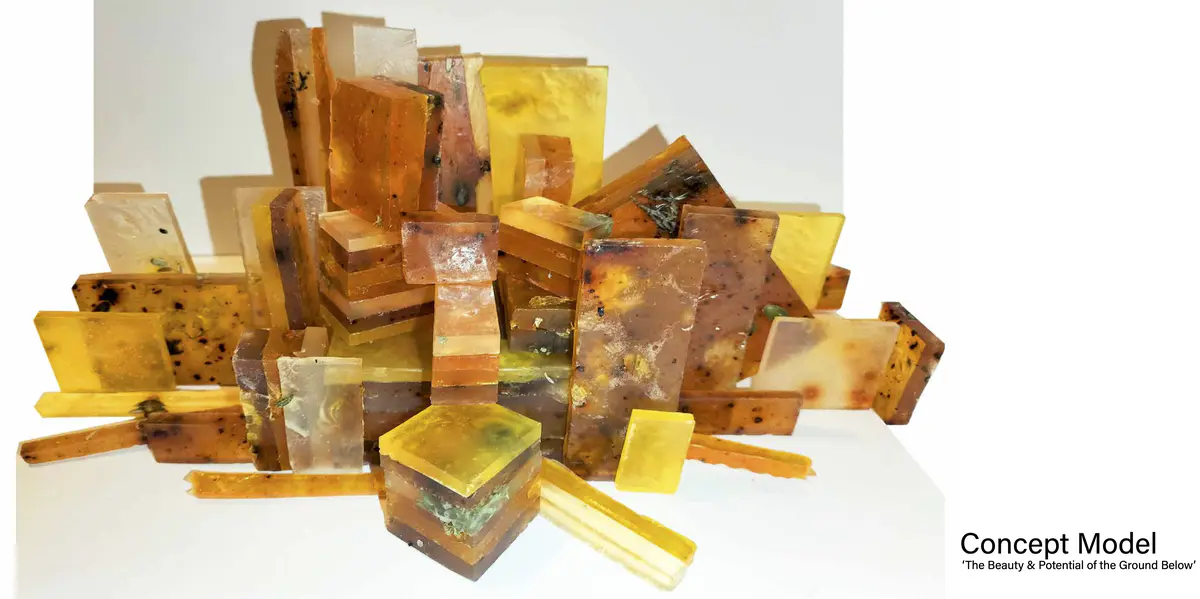
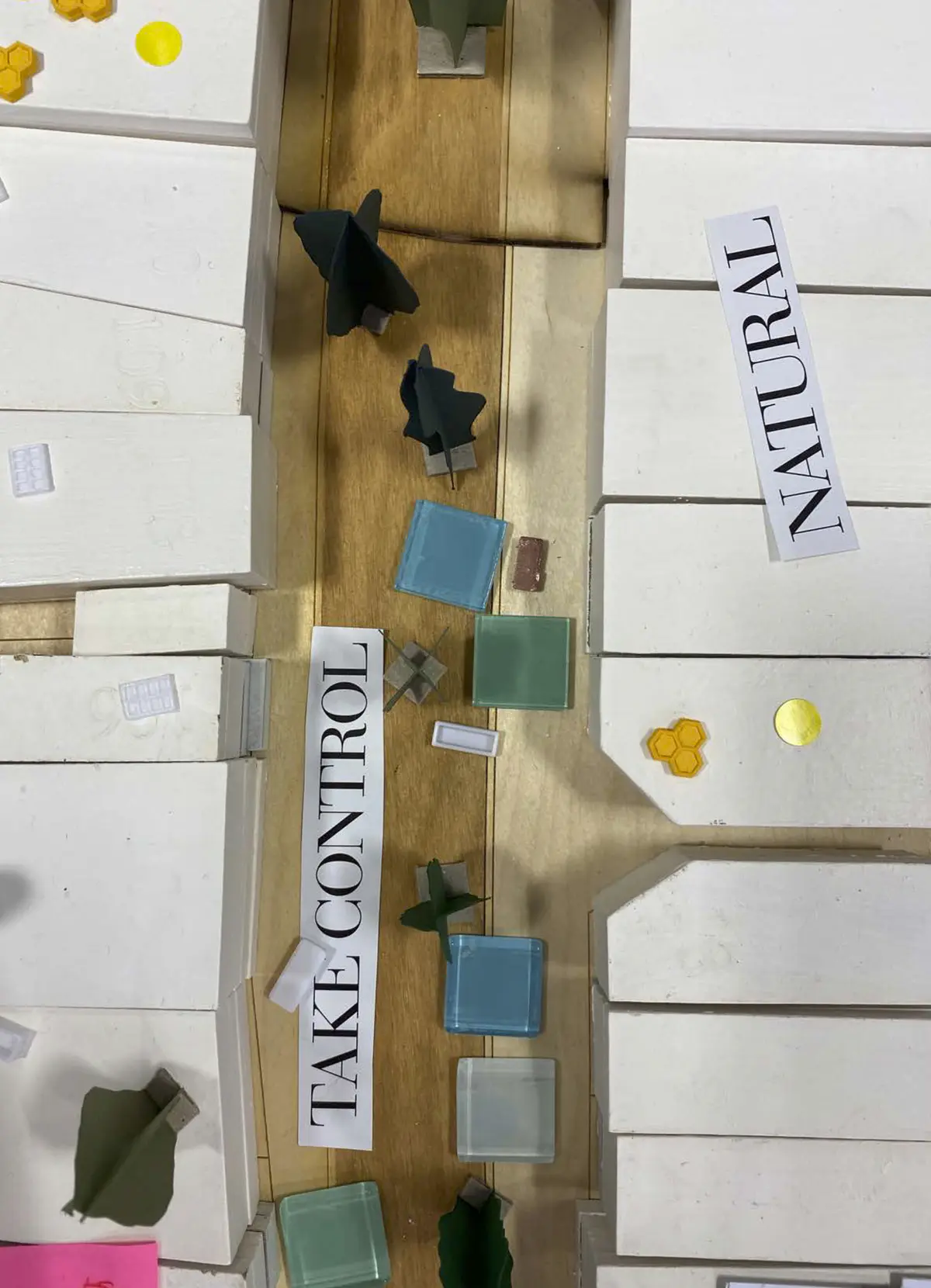
Lichen Vs Carbon. These concept models look to document both the current state of Dudley Highstreet and the vision looking towards the future within this thesis project.

The lichen covered model looks towards a future in Dudley that is rich in texture, colour, nature and oxygen. Natural materials promote natural growth, and textures such as rough sawn timber and stone are the prefect hosts for lichen. All new buildings in Dudley would benefit massively from following a fabric first approach and adopt the use of sustainable and recycled building materials along with systems that use minimal energy.

The lichen model represents a vision for this thesis, buildings that are covered in natural materials and lichens that help sequester carbon and promote a healthier Highstreet. Suggestions of raised buildings also proposes less disruption to the ground and natural landscape, giving plants and animals the opportunity to thrive in an otherwise hostile concrete environment. Raised buildings also look towards a future planet with rising sea levels, future factors that will drastically affect the way we carry out daily lives and futureproofing all buildings for generations to come.

This second model uses the Shou Sugi Ban method of charring timber to waterproof it. In this case however it represents the embodied carbon and pollution within the highstreet as it exists now. The simplicity and repetition is also used to symbolise the plain nature of the highstreet with only a few materials exhibited, mainly brick & concrete. Once burnt the timber forms were brushed with wire wool to reveal the natural grain of the wood, a visual representation of degradation of layers of buildings that are built poorly or not constructed to last longer than a generation. - Michelle Gartside Model 5.png
Lichen as bioindicators Lichen Vs Carbon. These concept models look to document both the current state of Dudley Highstreet and the vision looking towards the future within this thesis project. The lichen covered model looks towards a future in Dudley that is rich in texture, colour, nature and oxygen. Natural materials promote natural growth, and textures such as rough sawn timber and stone are the prefect hosts for lichen. All new buildings in Dudley would benefit massively from following a fabric first approach and adopt the use of sustainable and recycled building materials along with systems that use minimal energy. The lichen model represents a vision for this thesis, buildings that are covered in natural materials and lichens that help sequester carbon and promote a healthier Highstreet. Suggestions of raised buildings also proposes less disruption to the ground and natural landscape, giving plants and animals the opportunity to thrive in an otherwise hostile concrete environment. Raised buildings also look towards a future planet with rising sea levels, future factors that will drastically affect the way we carry out daily lives and futureproofing all buildings for generations to come. This second model uses the Shou Sugi Ban method of charring timber to waterproof it. In this case however it represents the embodied carbon and pollution within the highstreet as it exists now. The simplicity and repetition is also used to symbolise the plain nature of the highstreet with only a few materials exhibited, mainly brick & concrete. Once burnt the timber forms were brushed with wire wool to reveal the natural grain of the wood, a visual representation of degradation of layers of buildings that are built poorly or not constructed to last longer than a generation.
Model Drawing Collage Architecture Material Nature Plantlife Growing Making Creativity Craft Colour Future Imagination Texture Air Energy Sustainable Creatures Life Water
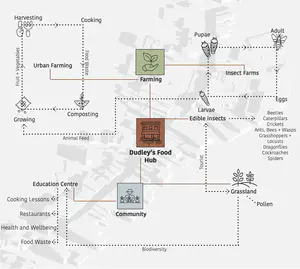
Creating a stronger connecting between the current food spaces by:
- Pedestrianising the road with a grassland
- Utilising abandoned building for education centres and community farming.

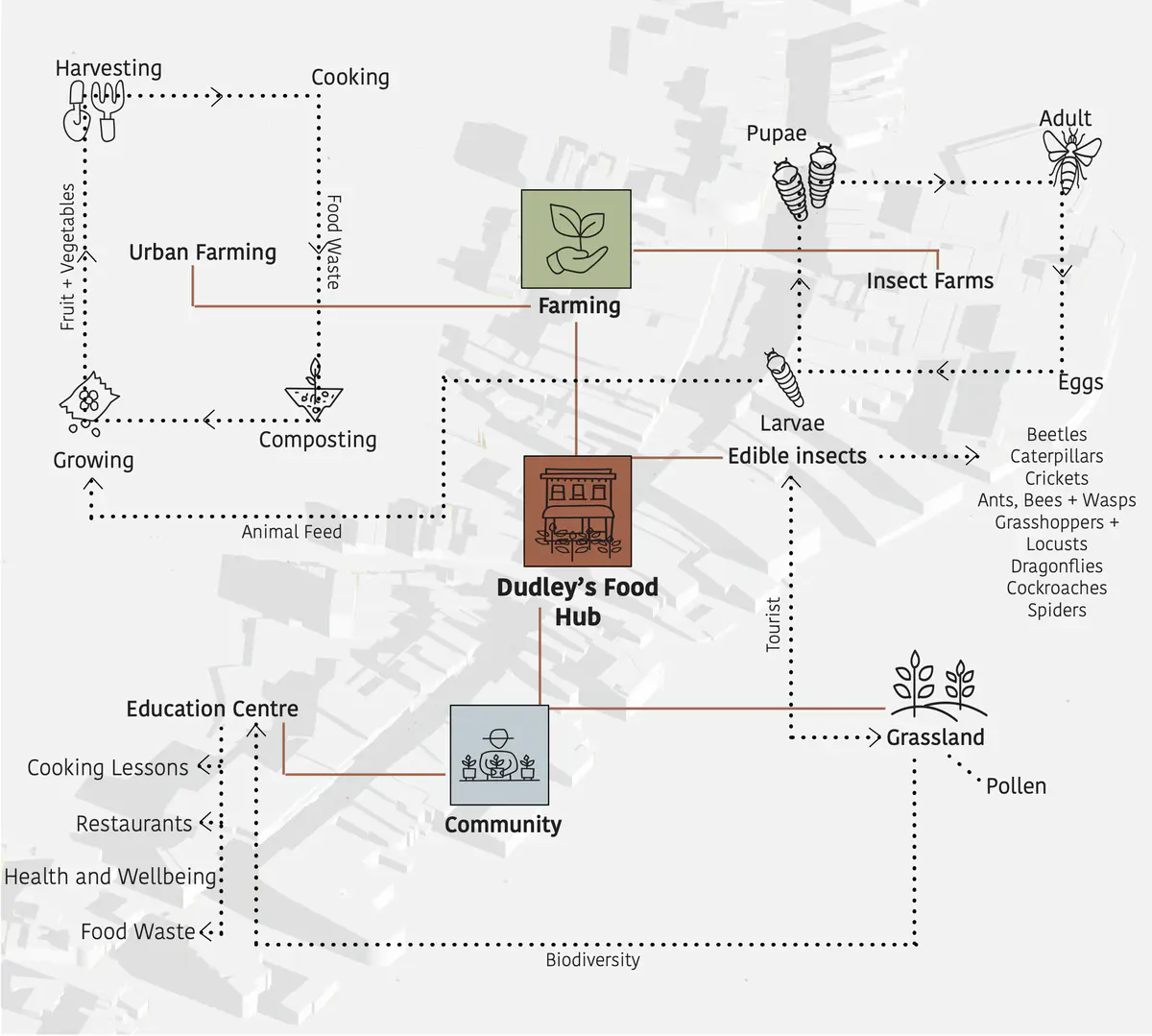
Linked to the Food Hub is an education centre sharing information on edible insects and Dudley’s biodiversity. Also offers insect cooking lessons to the local community and schools.

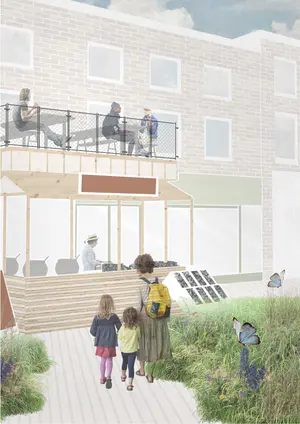
Immersed within the grassland is areas where existing buildings can extend out onto the street to create a stronger bond with new sustainable environment.

Redesigning the Market Place with more levels of outdoor seating to create a new experience and environment of eating food on the High Street.

Gardening and insect farming spaces integrated within the buildings. By bringing all the food production onto the High Street will help reduce food waste and also offer fresh produce to the locals. - Sita Patel Food Hub 0.png
Creating a stronger connecting between the current food spaces by: - Pedestrianising the road with a grassland - Utilising abandoned building for education centres and community farming. Linked to the Food Hub is an education centre sharing information on edible insects and Dudley’s biodiversity. Also offers insect cooking lessons to the local community and schools. Immersed within the grassland is areas where existing buildings can extend out onto the street to create a stronger bond with new sustainable environment. Redesigning the Market Place with more levels of outdoor seating to create a new experience and environment of eating food on the High Street. Gardening and insect farming spaces integrated within the buildings. By bringing all the food production onto the High Street will help reduce food waste and also offer fresh produce to the locals.
Diagram Drawing Photo Map Food System Growing Regenerative Sustainable Creatures Nature Plantlife Learning Community Health Waste Unused Architecture Biodiversity
Nurturing AgroEcology in Urban Life
A strategy for living alongside food production

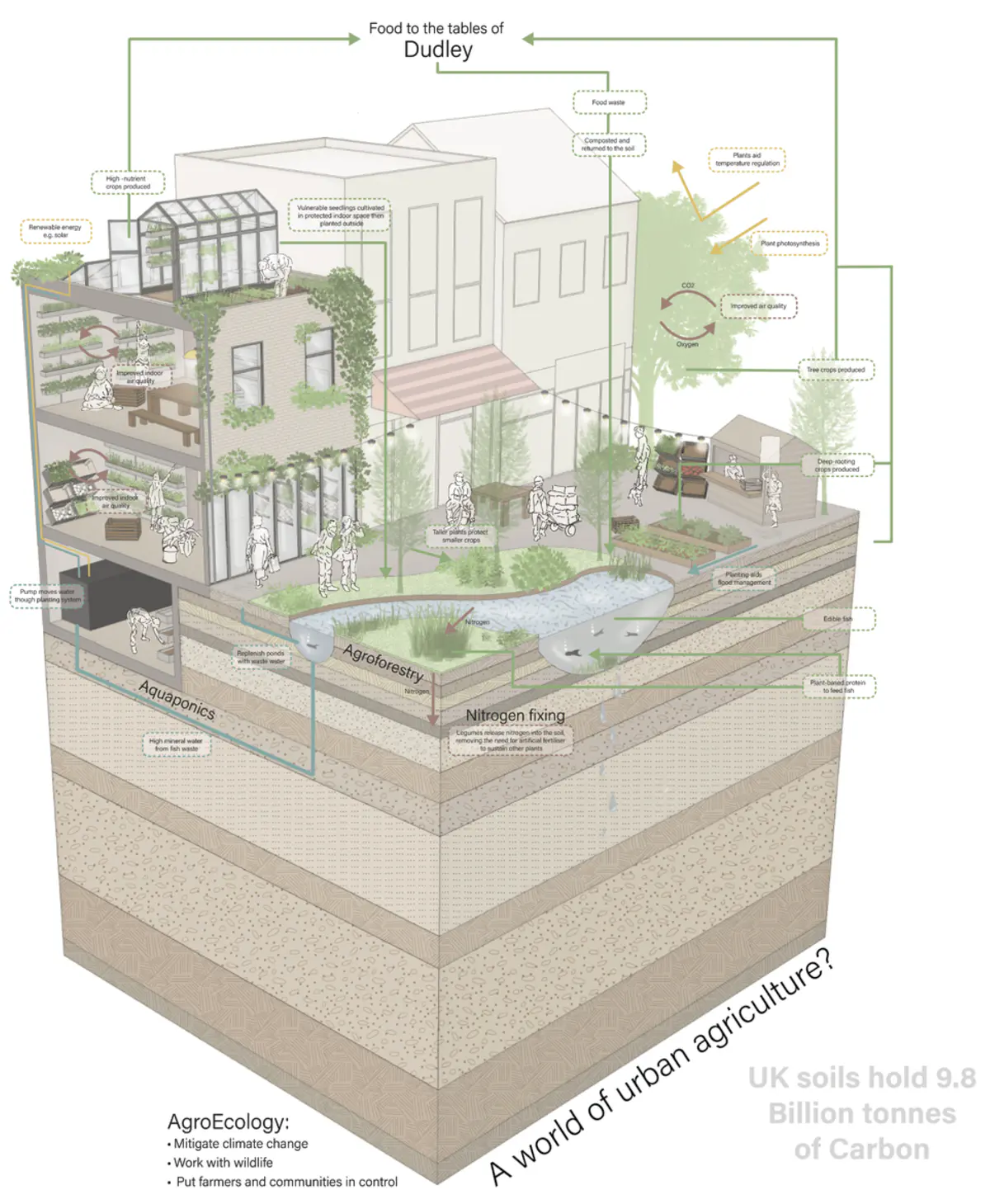
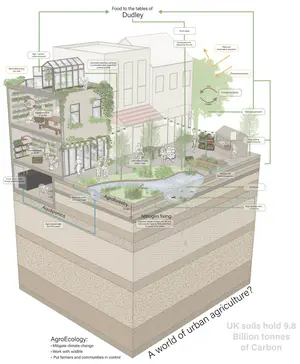
A critical part of the climate crisis is the degradation of soil, leading to scientists predicting the UK has approximately 100 harvests left of stable crop production. As an attempt to address the problem this project will explore the possibility of integrating sustainable agriculture into an urban setting, reducing the strain on agricultural land, reducing food miles and widening city biodiversity. Taking guidance from the farming movement, ‘Agroecology,’ a climate conscious, wildlife supporting and community engaged closed loop system will be developed, combining traditional growing with technology driven techniques that will support each other to produce a diverse plate.

Dudley High Street will be the focal point, reinvented as a destination not just for the purchase and consumption of food but also its creation, driven by the needs and engagement of local people. Connecting the community to the food they eat.  - Annabel Linch 4.png
Nurturing AgroEcology in Urban Life A strategy for living alongside food production A critical part of the climate crisis is the degradation of soil, leading to scientists predicting the UK has approximately 100 harvests left of stable crop production. As an attempt to address the problem this project will explore the possibility of integrating sustainable agriculture into an urban setting, reducing the strain on agricultural land, reducing food miles and widening city biodiversity. Taking guidance from the farming movement, ‘Agroecology,’ a climate conscious, wildlife supporting and community engaged closed loop system will be developed, combining traditional growing with technology driven techniques that will support each other to produce a diverse plate. Dudley High Street will be the focal point, reinvented as a destination not just for the purchase and consumption of food but also its creation, driven by the needs and engagement of local people. Connecting the community to the food they eat.
Drawing Map Imagining Nature Life Plantlife Growing Climate Soil Sustainable Food Biodiversity Creatures Community System Technology Consumption Creativity People Connection Architecture Pollution Regenerative Potential Opportunity Imagination Craft Making Material
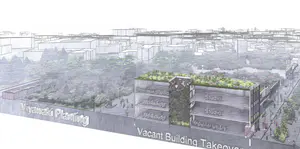
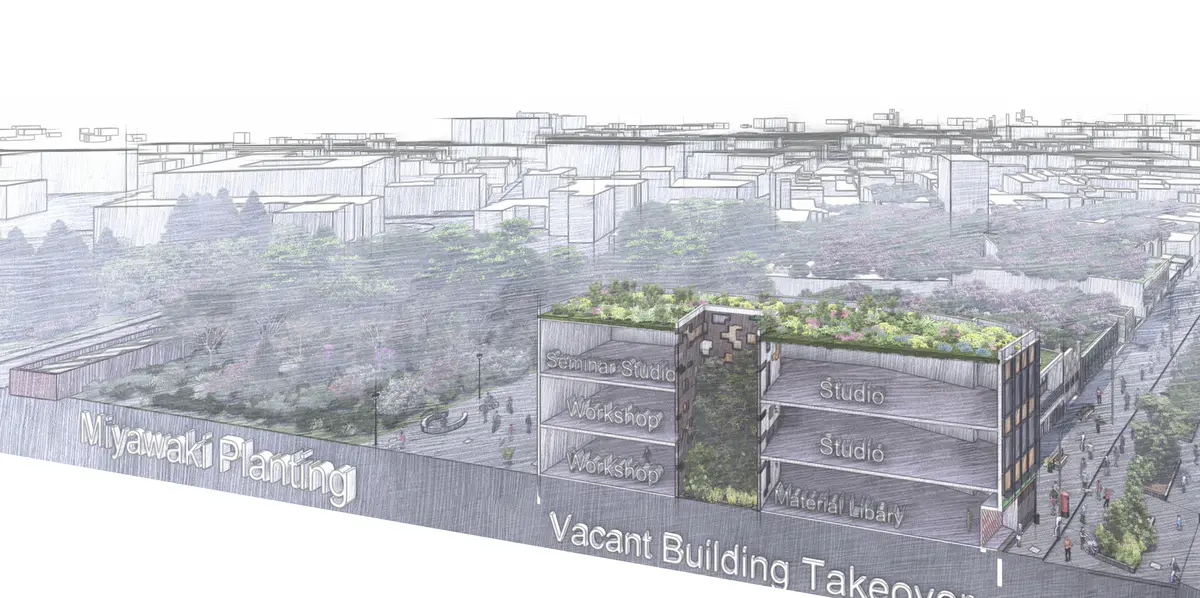
Explore The History Of Site Voids - This will provide an opportunity to reimplement these to allow vertical green corridors to occur.

Explore Vacant Buildings - To avoid damaging an already deteriorating high street, I aim only to take over vacant plots.

Investigate the opportunity for Miyawaki planting - understand the conditions required to grow a sustainable material source on-site, including ground, water, and space conditions.

It takes over a building that leads directly to an open space where a community hub is the centre of the thesis, offering education, community engagement and material celebration. - Ryan Cooksey Material Celebration Hub 1.png
Explore The History Of Site Voids - This will provide an opportunity to reimplement these to allow vertical green corridors to occur. Explore Vacant Buildings - To avoid damaging an already deteriorating high street, I aim only to take over vacant plots. Investigate the opportunity for Miyawaki planting - understand the conditions required to grow a sustainable material source on-site, including ground, water, and space conditions. It takes over a building that leads directly to an open space where a community hub is the centre of the thesis, offering education, community engagement and material celebration.
Collage Diagram Drawing Imagining Map Text Photo Sustainable Regenerative Potential Opportunity Architecture Change Energy Decay Unused Nature Growing Plantlife Water Community Past Archaeology Learning Health Aesthetic Biodiversity Imagination Climate
Water Collection
With this information I can begin to map out 1038m2 of miyawaki forests.
It is crucial that the forests do not use more water than stored as then the project isn’t zero carbon as it would require fresh water. It is important that the water collected is sufficient for this project to work. This data also provides the information to how much storage is required on the site. - Ryan Cooksey Water 1.png
Water Collection With this information I can begin to map out 1038m2 of miyawaki forests. It is crucial that the forests do not use more water than stored as then the project isn’t zero carbon as it would require fresh water. It is important that the water collected is sufficient for this project to work. This data also provides the information to how much storage is required on the site.
Map Diagram Text Count Water High Nature Growing Plantlife Sustainable Regenerative Potential Opportunity Material Waste System
Street scale patchwork

Investigating Facade Damage will highlight where the repair needs to be undertaken.

It is creating an irregular pattern of repair that evolves.

Only intervene when necessary; this proposal will not ‘repair what does not need fixing’ as it appreciates there could be a negative effect on an already declining high street.

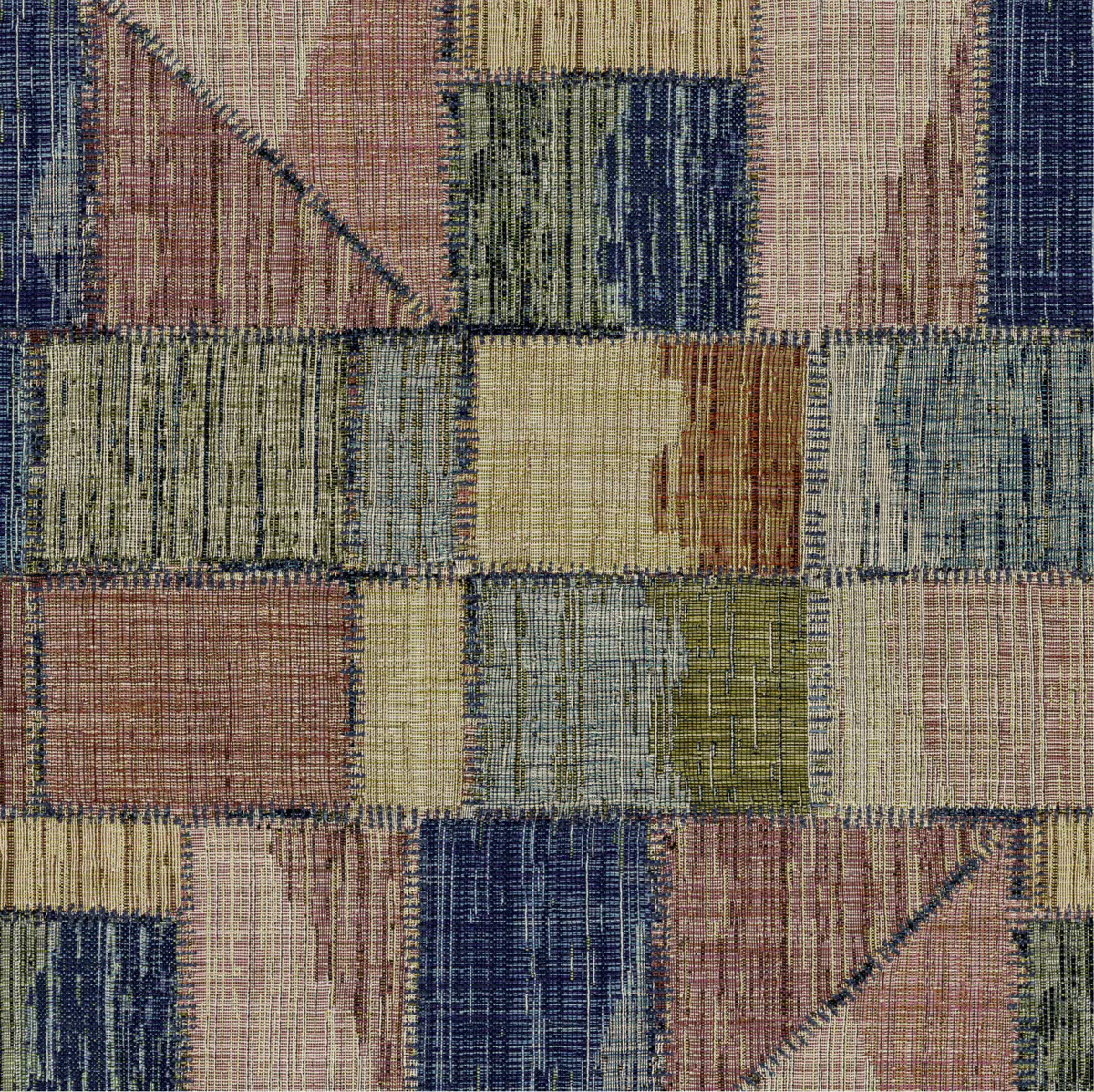
Repairs will be constructed with the materials grown on the street as part of the Macro-scale intervention. - Ryan Cooksey Street Scale Patchwork 1.png
Street scale patchwork Investigating Facade Damage will highlight where the repair needs to be undertaken. It is creating an irregular pattern of repair that evolves. Only intervene when necessary; this proposal will not ‘repair what does not need fixing’ as it appreciates there could be a negative effect on an already declining high street. Repairs will be constructed with the materials grown on the street as part of the Macro-scale intervention.
Diagram Drawing Imagining Text Photo Textile Sustainable Regenerative Potential Opportunity Architecture Change Decay Unused Aesthetic Repair Care Broken Pattern Material Growing Nature Plantlife Imagination Climate
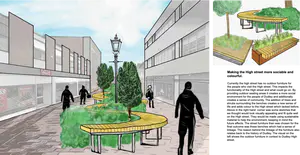
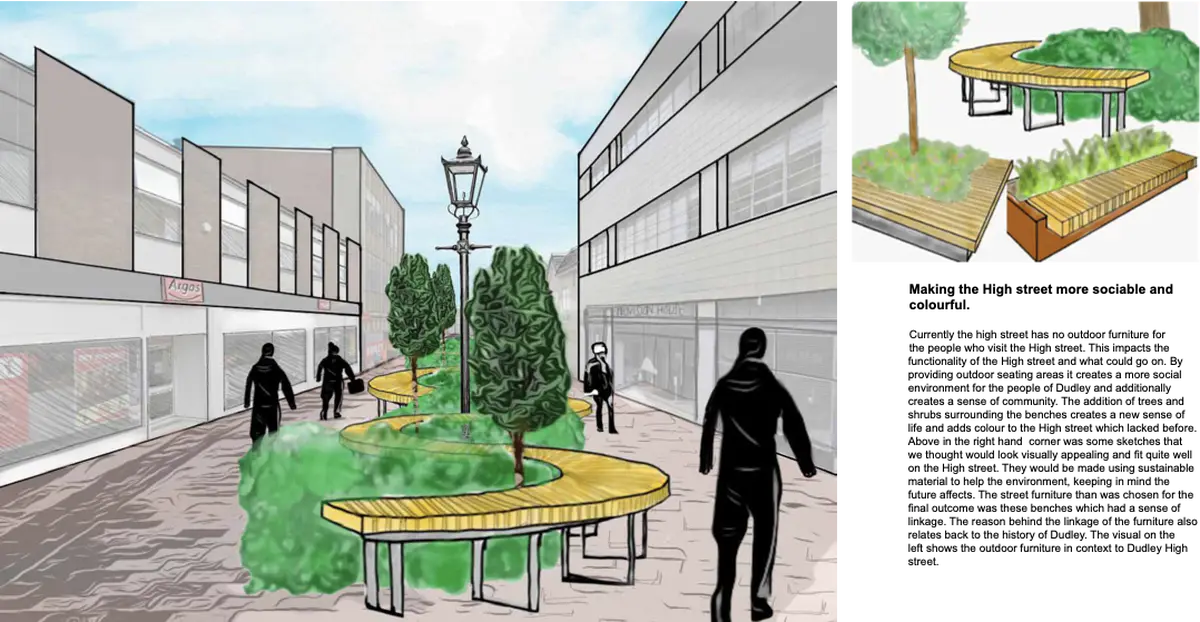
Stepping Stone 2 is about making the High Street bespoke to Dudley through street furniture. We wanted to make the High Street more sociable and colourful. By providing outdoor seating areas, people would be invited to speak to each other and bring back a sense of community. - 1_o3nY3c2woc53u0TgQDtpOw.png
Stepping Stone 2 is about making the High Street bespoke to Dudley through street furniture. We wanted to make the High Street more sociable and colourful. By providing outdoor seating areas, people would be invited to speak to each other and bring back a sense of community.
Collage Imagining Drawing Actions Future Growing Imagination Nature Opportunity People Plantlife Potential Colour Conversation Interacting Sustainable Lingering
Localising Material Accessibility
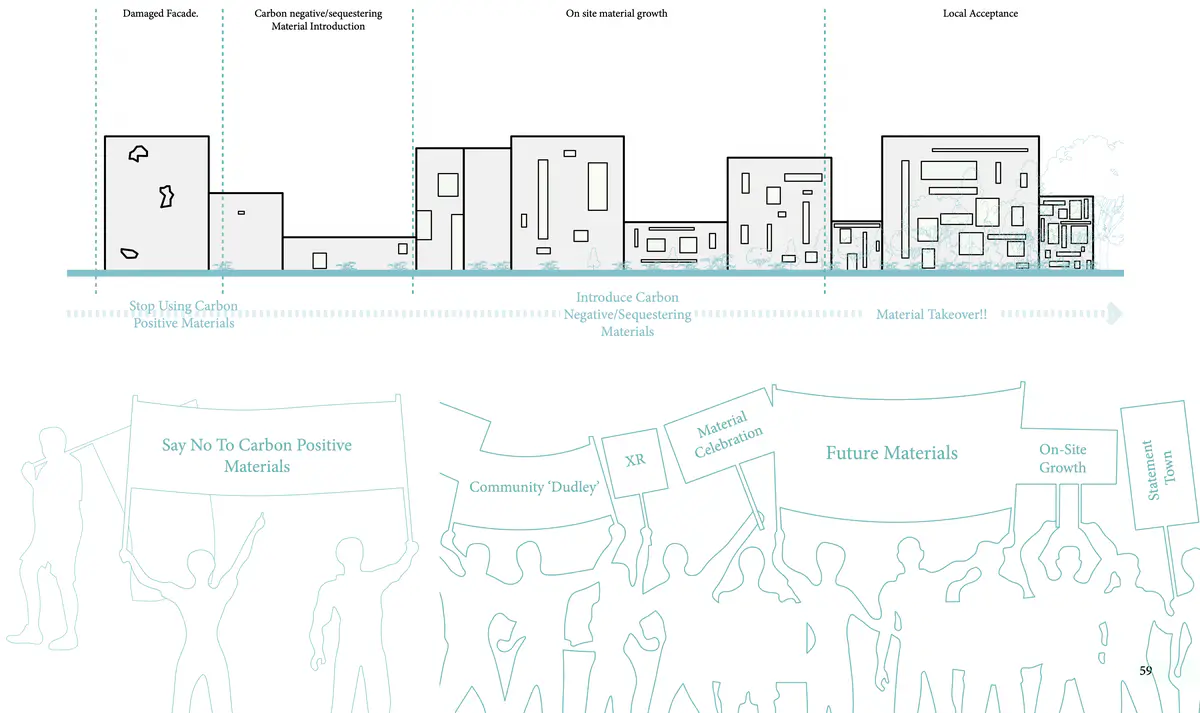
During my initial walk through the High Street of Dudley, I noticed an inevitable decline in the area. There were vacant shops, but those open had apparent facade damage. For the area to thrive, there needs to be an aesthetical uplift. Here I began to question how to make the repairs. On the one hand, one could complete a like for like repair with a deep clean to provide a new lease of life to achieve an aesthetical value. Alternatively, the repairs could be a status of where the street aims to be in the future. To achieve a statement, the implementation of repair work needs to stand out. It needs to be futuristic, a bold contrast to the existing.

At this point, I decided that after being informed of the damage the built environment has on the climate crisis, only carbon zero/ carbon sequestering materials would be present during repairs. This does not aim to destroy existing buildings but instead carefully implement repairs creating a patchwork effect across the street. This would then grow over time as more repair work is required.

Over time, the high street would transform into a zero-carbon environment. The manufacturing and growth of these materials need to be local, so consideration is vital. This provides an opportunity for the site to be a material producer itself. - Ryan Cooksey Ban Materials.png
Localising Material Accessibility During my initial walk through the High Street of Dudley, I noticed an inevitable decline in the area. There were vacant shops, but those open had apparent facade damage. For the area to thrive, there needs to be an aesthetical uplift. Here I began to question how to make the repairs. On the one hand, one could complete a like for like repair with a deep clean to provide a new lease of life to achieve an aesthetical value. Alternatively, the repairs could be a status of where the street aims to be in the future. To achieve a statement, the implementation of repair work needs to stand out. It needs to be futuristic, a bold contrast to the existing. At this point, I decided that after being informed of the damage the built environment has on the climate crisis, only carbon zero/ carbon sequestering materials would be present during repairs. This does not aim to destroy existing buildings but instead carefully implement repairs creating a patchwork effect across the street. This would then grow over time as more repair work is required. Over time, the high street would transform into a zero-carbon environment. The manufacturing and growth of these materials need to be local, so consideration is vital. This provides an opportunity for the site to be a material producer itself.
Map Diagram Material Transport Climate Change Potential Opportunity System Decay Aesthetic Future Imagination Regenerative Growing Community Identity Pollution Industry Sustainable Connection Nature Biodiversity Creatures Doughnut Architecture
View story
Jack and his friends visited the High Street with their school teacher during a study trip. He learned a lot of things about sustainability, and how to grow food. He was so inspired. Atifa gave him some seeds from fruits on the street garden, and later he planted them in a small unused bucket. After a few months he came back to street to gift the kitchen some of the fruit from his tiny garden at home. Atifa felt so proud of the young generation of Dudley.
Creative writing Imagining Imagination Future People Learning Sustainable Growing Food Gift Plantlife Nature Actions Unused Tiny Things Happiness Emotion
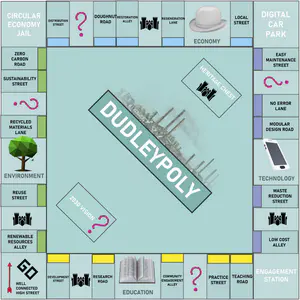
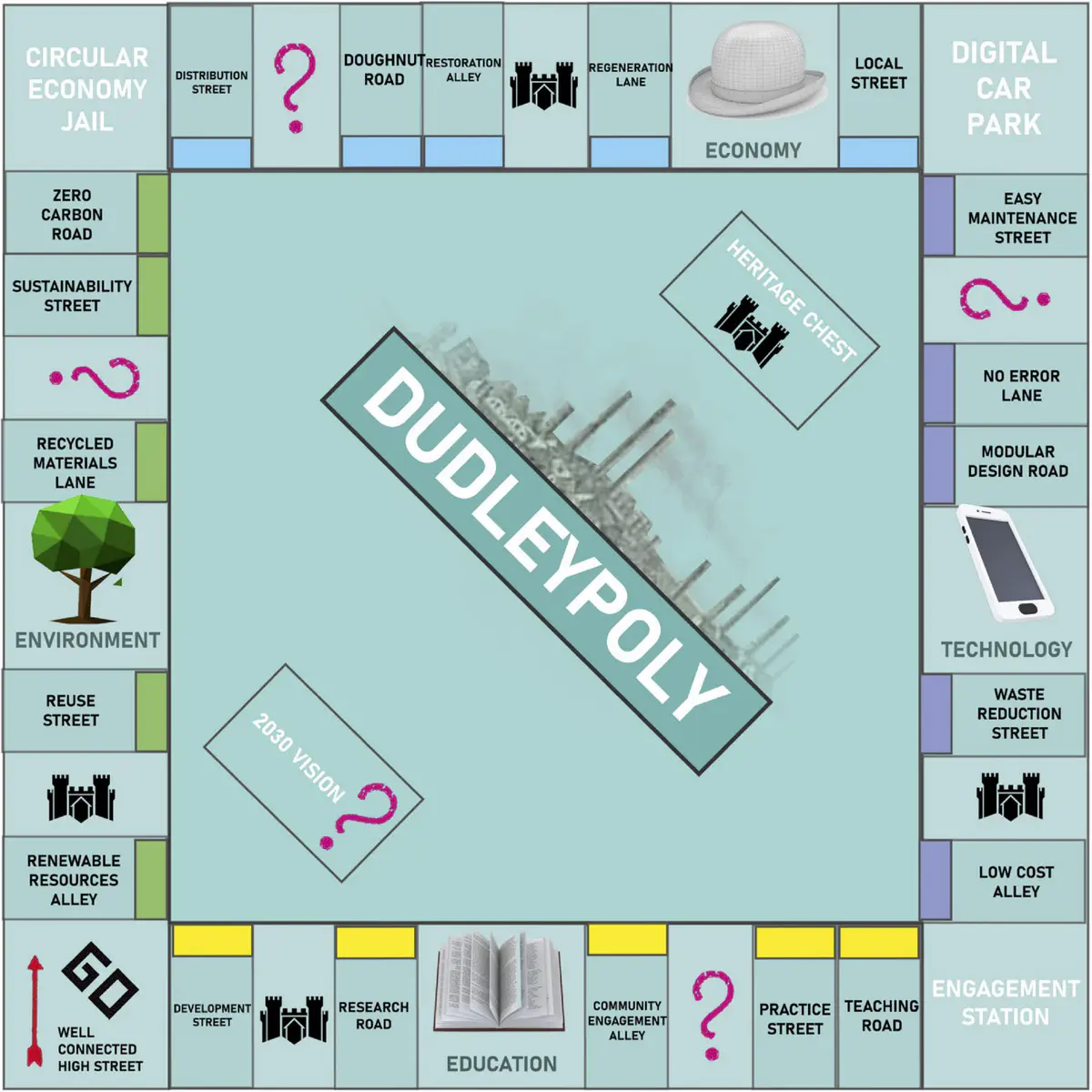
We created a visual representation of the main factors and sectors we came across in our research and explored individually: environment, economy, technology and education. It also summarises our goal of creating a connected High Street, and the steps we took to achieve this goal. - 1_7s93a2RG5Ut3waM0oEJExw.png
We created a visual representation of the main factors and sectors we came across in our research and explored individually: environment, economy, technology and education. It also summarises our goal of creating a connected High Street, and the steps we took to achieve this goal.
Other visual delight Imagining Economics Play Regenerative Technology Waste Learning Fairness Community Connection Material Sustainable Future Past Doughnut Industry
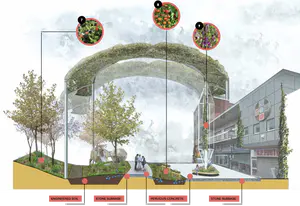
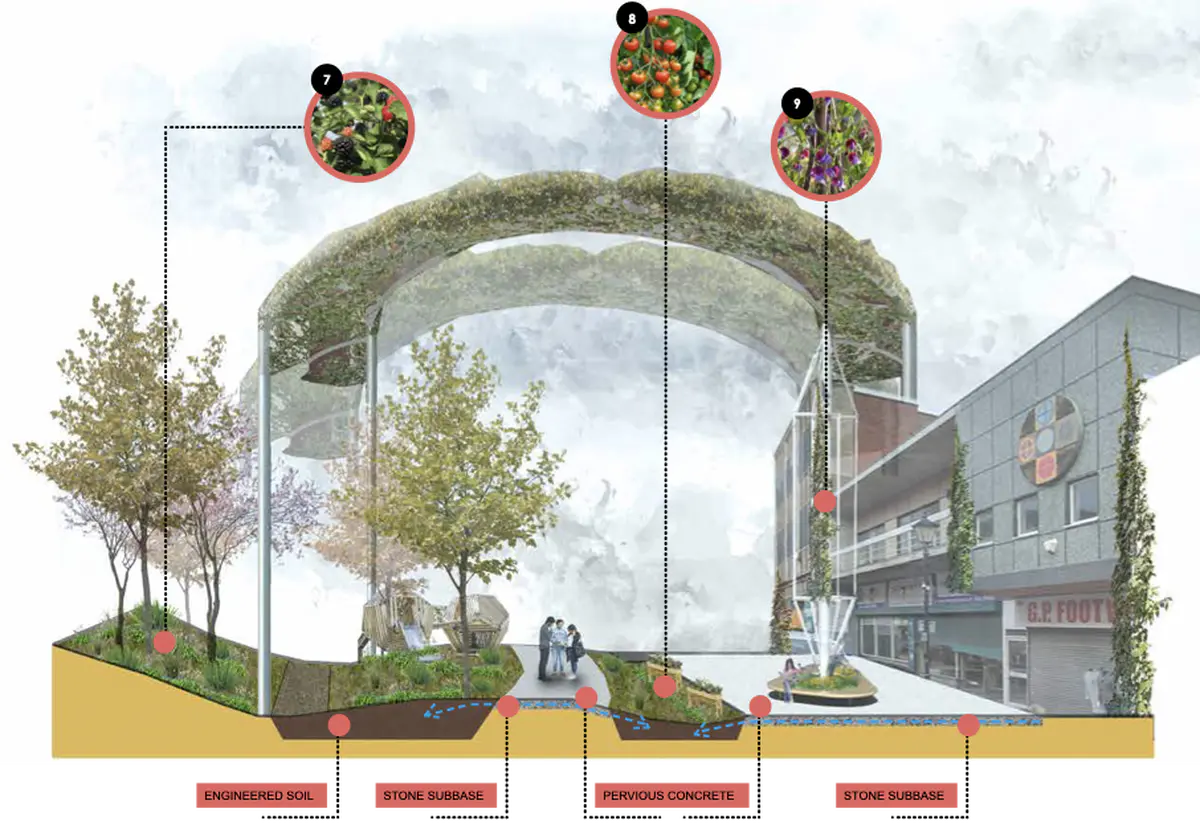
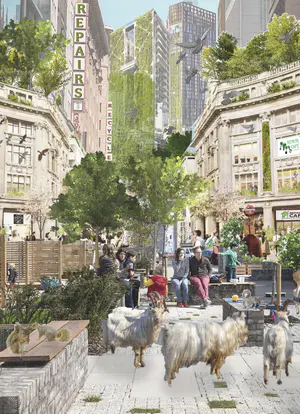
This visual represents Dudley High Street re-imagined; a new vision of a re-wilded, food-centric town centre. The green canopy will begin as a frame that will encourage the growth of plants. Smaller scale units will be integrated at the start and build towards the final vision. - 1_8oJ0eISAIDZ0uX4_VksliQ.png
This visual represents Dudley High Street re-imagined; a new vision of a re-wilded, food-centric town centre. The green canopy will begin as a frame that will encourage the growth of plants. Smaller scale units will be integrated at the start and build towards the final vision.
Collage Imagining Abundance Access Big Things Change Food Future Growing High Imagination Layer Life Lingering Material Nature Opportunity People Plantlife Potential Regenerative Relaxing Shelter Sustainable Views
Nurturing AgroEcology in Urban Life
A strategy for living alongside food production

A critical part of the climate crisis is the degradation of soil, leading to scientists predicting the UK has approximately 100 harvests left of stable crop production. As an attempt to address the problem this project will explore the possibility of integrating sustainable agriculture into an urban setting, reducing the strain on agricultural land, reducing food miles and widening city biodiversity. Taking guidance from the farming movement, ‘Agroecology,’ a climate conscious, wildlife supporting and community engaged closed loop system will be developed, combining traditional growing with technology driven techniques that will support each other to produce a diverse plate.

Dudley High Street will be the focal point, reinvented as a destination not just for the purchase and consumption of food but also its creation, driven by the needs and engagement of local people. Connecting the community to the food they eat. - Annabel Linch 1.png
Nurturing AgroEcology in Urban Life A strategy for living alongside food production A critical part of the climate crisis is the degradation of soil, leading to scientists predicting the UK has approximately 100 harvests left of stable crop production. As an attempt to address the problem this project will explore the possibility of integrating sustainable agriculture into an urban setting, reducing the strain on agricultural land, reducing food miles and widening city biodiversity. Taking guidance from the farming movement, ‘Agroecology,’ a climate conscious, wildlife supporting and community engaged closed loop system will be developed, combining traditional growing with technology driven techniques that will support each other to produce a diverse plate. Dudley High Street will be the focal point, reinvented as a destination not just for the purchase and consumption of food but also its creation, driven by the needs and engagement of local people. Connecting the community to the food they eat.
Drawing Map Imagining Nature Life Plantlife Growing Climate Soil Sustainable Food Biodiversity Creatures Community System Technology Consumption Creativity People Connection Architecture Pollution Regenerative Potential Opportunity Imagination Craft Making Material
The Overarching Concept

Providing Dudley with a self-sufficient ecosystem improves
local biodiversity. It is producing enough materials to repair and construct new buildings/interventions within the area. This radical movement could be implemented across many other declining towns. The issue is that we have become too comfortable linking with surrounding areas. For example, importing materials has a vast embodied carbon, likewise for electricity and so on. This thesis aims to grow the required materials and harvests water, capture energy with PV to allow the town of Dudley to be self-sufficient. - Ryan Cooksey Overarching Concept.png
The Overarching Concept Providing Dudley with a self-sufficient ecosystem improves local biodiversity. It is producing enough materials to repair and construct new buildings/interventions within the area. This radical movement could be implemented across many other declining towns. The issue is that we have become too comfortable linking with surrounding areas. For example, importing materials has a vast embodied carbon, likewise for electricity and so on. This thesis aims to grow the required materials and harvests water, capture energy with PV to allow the town of Dudley to be self-sufficient.
Collage Sustainable Regenerative Potential Opportunity System Biodiversity Material Architecture Change Energy
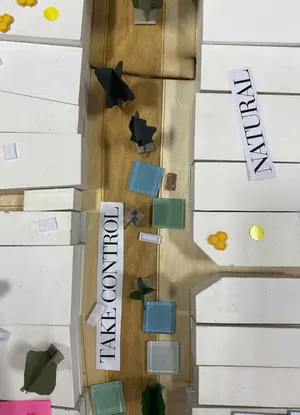
Looking to be the centrepiece of our exhibition, we proposed to create a site model of Dudley Highstreet at 1:200 scale with buildings modelled in a simple form. Local residents and visitors to the exhibition are then invited to decorate a chosen building to how they would envision it sat within the context of a greener Highstreet. We want to tie in our themes of biodiversity and materials by proposing that buildings can, and do, have the potential to be a lot healthier, sustainable, and interactive on the street. This site model also helps gain vital public opinions on the Highstreet and prompts discussion of areas most in need of attention.

To ensure that the model is utilising the MDF to the most efficient standard possible. First, the centres of the massing blocks have been hollowed out. This allows a reduction in materials used as other buildings can be cut in the centres of the model. Then the top is finished with a solid piece.
The waste material is placed into the recycling rack where other students can reuse it; otherwise, if the material left cannot be used for another project, it is recycled correctly by the university.

The model spanned just over 3.4m long and over 50cm wide. With the majority being cut from scrap woods that would fit the jigsaw of the shape, we were able to drastically cut down on waste. We also got some small benches and bee hives printed from recycled plastics, and used dried flowers as trees to represent the green spaces. Ultimately, the model seemed like a huge success, and really helped portray our ideas about Dudley High Street to those who came by. Everyone from Dudley who saw the model knew that it was the High Street, and interacted well with it. The size did make it difficult to move, especially to carry to the site, but it sat nicely in the centre of the the room and really drew people in to interact with it.

The model brought people in from outside to play with, write on, interact with. It became a spectacle for the public to come in and see what was happening and offer their ideas about what could be done.

The event was a success. Many people from the public (those who heard about the event, and those who just happened across it on the day) came in to interact with the model, which sat as the centre piece in the room. Kids liked to play with the pieces while the adults talked about things that could come from actions to help the High Street, not just leave it as is.

SOME OF THE KEY IDEAS WERE:
- The Shops need to be inviting for everyone. It’s no good having these places to go if people would rather take a bus to the next town.
- Just putting up boards across the windows is awful. Paint, Posters, Graffiti: Anything that actually makes the High Street look still alive is better than just wooden boards.
- More Green is needed. While it is obvious that there is a lack of Trees, many people wanted to push for these small bushes or planting spaces that could easily be implemented across the street.
- Spaces for public events or for people to at least gather at. While there is the Market and Fountain, it is not enough for the people of Dudley.
- Something needs to be done about the cars on the High Street. Some were Pro-Removal of all Cars, while some just wanted to limit when they could access the High Street.

Following the exhibition we created a series of drawings with our own interpretation of Sarah Wigglesworth ‘The Dining Table’ drawing. The drawings are a perfect representation of the our interactive model at the ERA Environmental Exhibition and Event. Showing the interaction the public had with the model, as well as the conversations that were held around the model. - Table 7.png
Looking to be the centrepiece of our exhibition, we proposed to create a site model of Dudley Highstreet at 1:200 scale with buildings modelled in a simple form. Local residents and visitors to the exhibition are then invited to decorate a chosen building to how they would envision it sat within the context of a greener Highstreet. We want to tie in our themes of biodiversity and materials by proposing that buildings can, and do, have the potential to be a lot healthier, sustainable, and interactive on the street. This site model also helps gain vital public opinions on the Highstreet and prompts discussion of areas most in need of attention. To ensure that the model is utilising the MDF to the most efficient standard possible. First, the centres of the massing blocks have been hollowed out. This allows a reduction in materials used as other buildings can be cut in the centres of the model. Then the top is finished with a solid piece. The waste material is placed into the recycling rack where other students can reuse it; otherwise, if the material left cannot be used for another project, it is recycled correctly by the university. The model spanned just over 3.4m long and over 50cm wide. With the majority being cut from scrap woods that would fit the jigsaw of the shape, we were able to drastically cut down on waste. We also got some small benches and bee hives printed from recycled plastics, and used dried flowers as trees to represent the green spaces. Ultimately, the model seemed like a huge success, and really helped portray our ideas about Dudley High Street to those who came by. Everyone from Dudley who saw the model knew that it was the High Street, and interacted well with it. The size did make it difficult to move, especially to carry to the site, but it sat nicely in the centre of the the room and really drew people in to interact with it. The model brought people in from outside to play with, write on, interact with. It became a spectacle for the public to come in and see what was happening and offer their ideas about what could be done. The event was a success. Many people from the public (those who heard about the event, and those who just happened across it on the day) came in to interact with the model, which sat as the centre piece in the room. Kids liked to play with the pieces while the adults talked about things that could come from actions to help the High Street, not just leave it as is. SOME OF THE KEY IDEAS WERE: - The Shops need to be inviting for everyone. It’s no good having these places to go if people would rather take a bus to the next town. - Just putting up boards across the windows is awful. Paint, Posters, Graffiti: Anything that actually makes the High Street look still alive is better than just wooden boards. - More Green is needed. While it is obvious that there is a lack of Trees, many people wanted to push for these small bushes or planting spaces that could easily be implemented across the street. - Spaces for public events or for people to at least gather at. While there is the Market and Fountain, it is not enough for the people of Dudley. - Something needs to be done about the cars on the High Street. Some were Pro-Removal of all Cars, while some just wanted to limit when they could access the High Street. Following the exhibition we created a series of drawings with our own interpretation of Sarah Wigglesworth ‘The Dining Table’ drawing. The drawings are a perfect representation of the our interactive model at the ERA Environmental Exhibition and Event. Showing the interaction the public had with the model, as well as the conversations that were held around the model.
Model Drawing Diagram Making Material Architecture People Invitations Nature Plantlife Biodiversity Health Sustainable Interacting Voice Conversation Waste Words Creativity Craft Play Aesthetic Potential Opportunity Imagination Transport Colour Growing Vehicle Stories
Localised Green Spaces

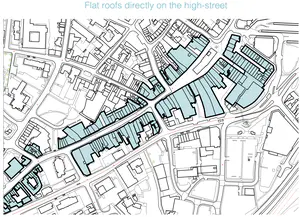
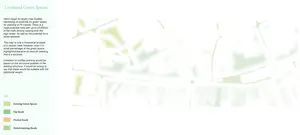
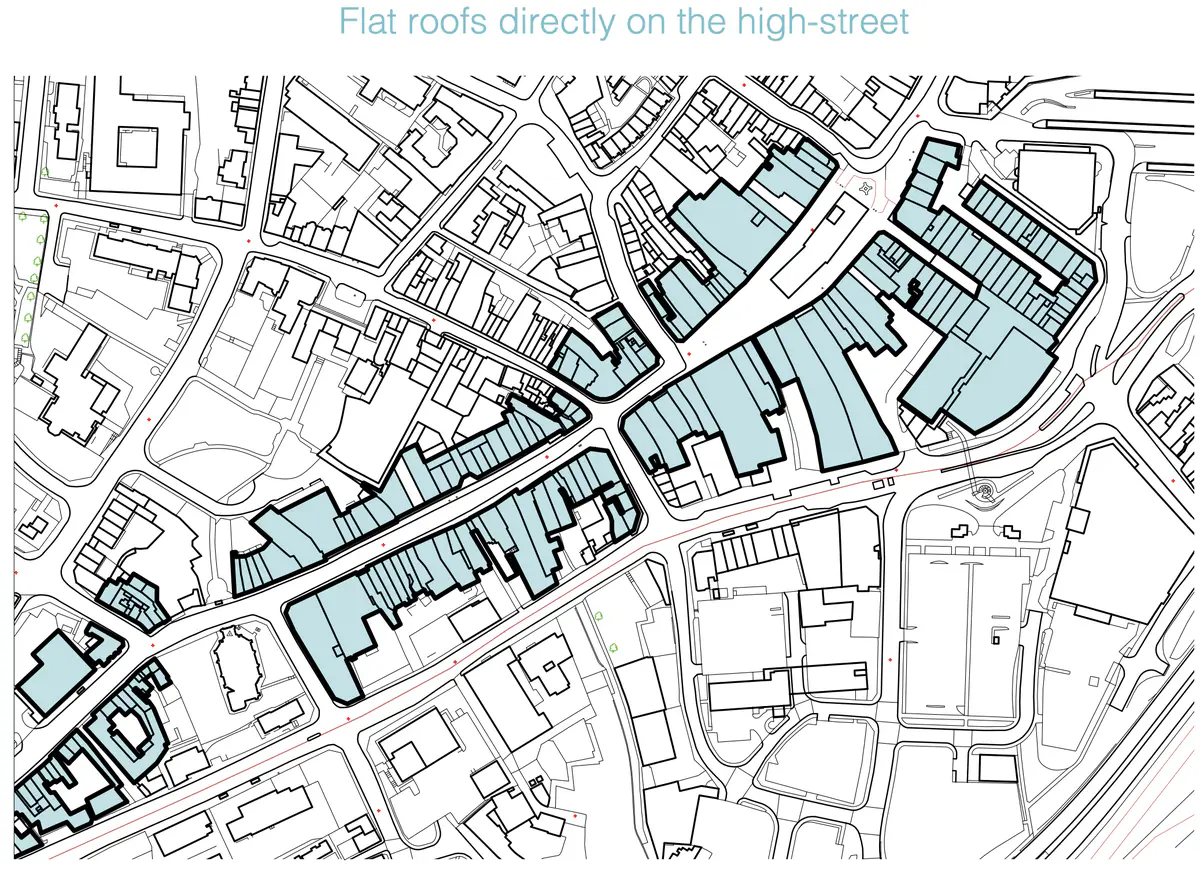
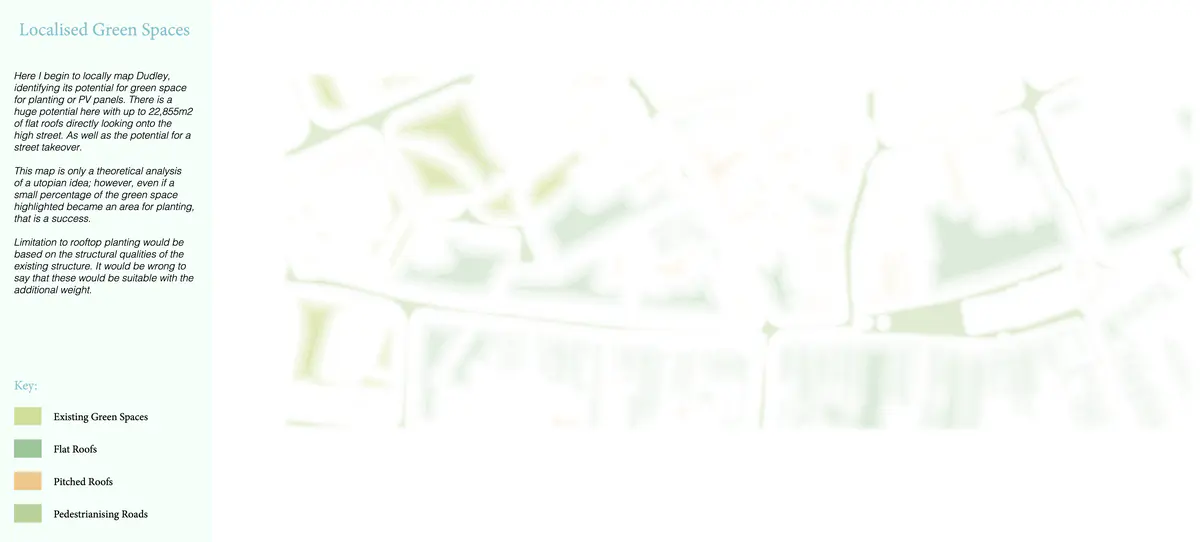
Here I begin to locally map Dudley, identifying its potential for green space for planting or PV panels. There is a huge potential here with up to 22,855m2 of flat roofs directly looking onto the high street. As well as the potential for a street takeover.

This map is only a theoretical analysis of a utopian idea; however, even if a small percentage of the green space highlighted became an area for planting, that is a success.

Limitation to rooftop planting would be based on the structural qualities of the existing structure. It would be wrong to say that these would be suitable with the additional weight. - Ryan Cooksey Green roofs.png
Localised Green Spaces Here I begin to locally map Dudley, identifying its potential for green space for planting or PV panels. There is a huge potential here with up to 22,855m2 of flat roofs directly looking onto the high street. As well as the potential for a street takeover. This map is only a theoretical analysis of a utopian idea; however, even if a small percentage of the green space highlighted became an area for planting, that is a success. Limitation to rooftop planting would be based on the structural qualities of the existing structure. It would be wrong to say that these would be suitable with the additional weight.
Map Diagram High Nature Growing Plantlife Sustainable Regenerative Potential Opportunity
Building Deterioration
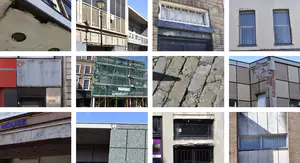
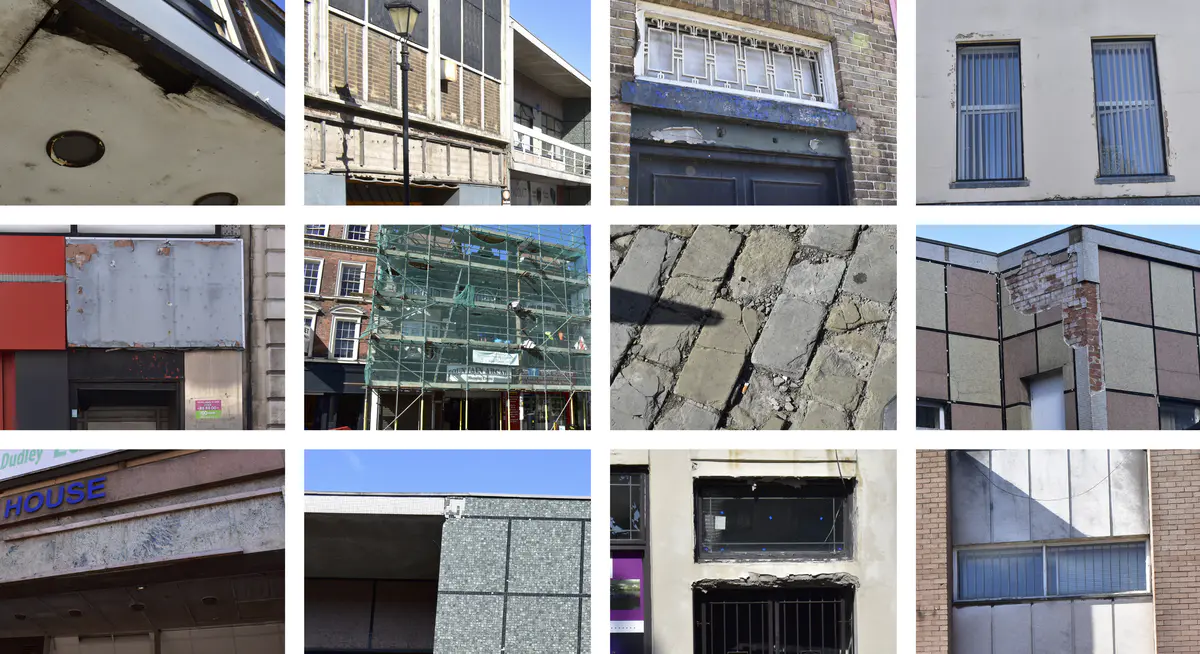
There was a familiar aesthetic regarding the buildings during the initial site visit to Dudley High Street. However, a large proportion of the façades that look onto the street have noticeable damage, graffiti or structural issues.
With that said, these images (right) are an insight into some of the damage. If the local authorities saw the high street as a priority, then damages and aesthetics would have been resolved and fixed. However, as there are multiple damages, this assumes that this high street is not one authority wish to preserve.

That said, this opens an opportunity. Instead of being a conservationist and repairing these buildings to their former glory, why not make them a statement piece within the high street. Possibly by placing a blanket ban on all of the current materials seen on the street. Instead, any repairs must be in Zero carbon / Carbon negative materials. This could then become an educational street with great architectural character. Both combined may increase the high streets footfall.

The first step would be to highlight any listed buildings or monuments within the high street. - Ryan Cooksey Building Deterioration.png
Building Deterioration There was a familiar aesthetic regarding the buildings during the initial site visit to Dudley High Street. However, a large proportion of the façades that look onto the street have noticeable damage, graffiti or structural issues. With that said, these images (right) are an insight into some of the damage. If the local authorities saw the high street as a priority, then damages and aesthetics would have been resolved and fixed. However, as there are multiple damages, this assumes that this high street is not one authority wish to preserve. That said, this opens an opportunity. Instead of being a conservationist and repairing these buildings to their former glory, why not make them a statement piece within the high street. Possibly by placing a blanket ban on all of the current materials seen on the street. Instead, any repairs must be in Zero carbon / Carbon negative materials. This could then become an educational street with great architectural character. Both combined may increase the high streets footfall. The first step would be to highlight any listed buildings or monuments within the high street.
Photo Material Aesthetic Architecture Decay Broken Opportunity Potential Past Sustainable Climate Learning
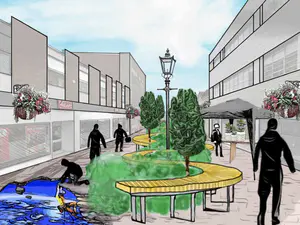
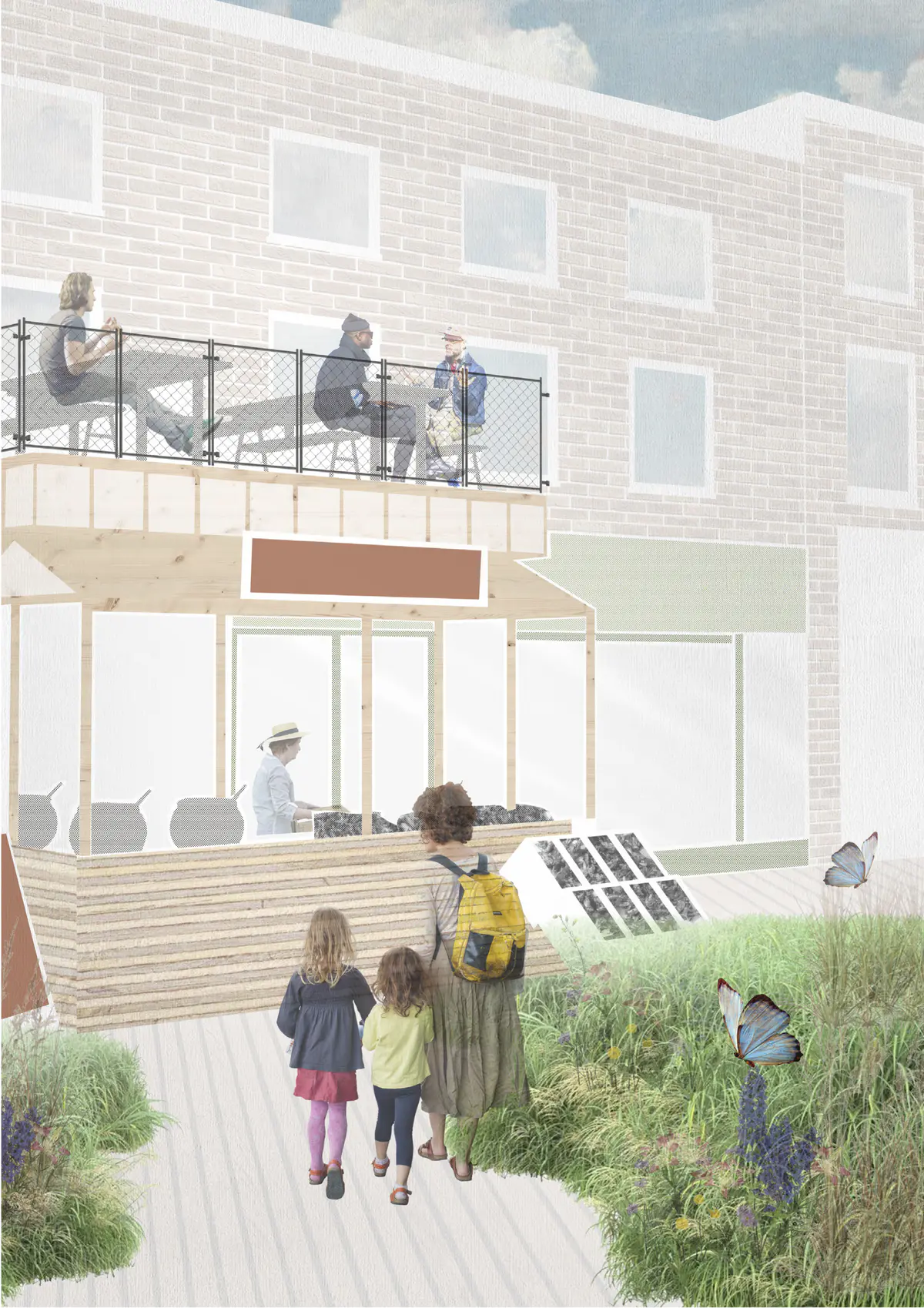
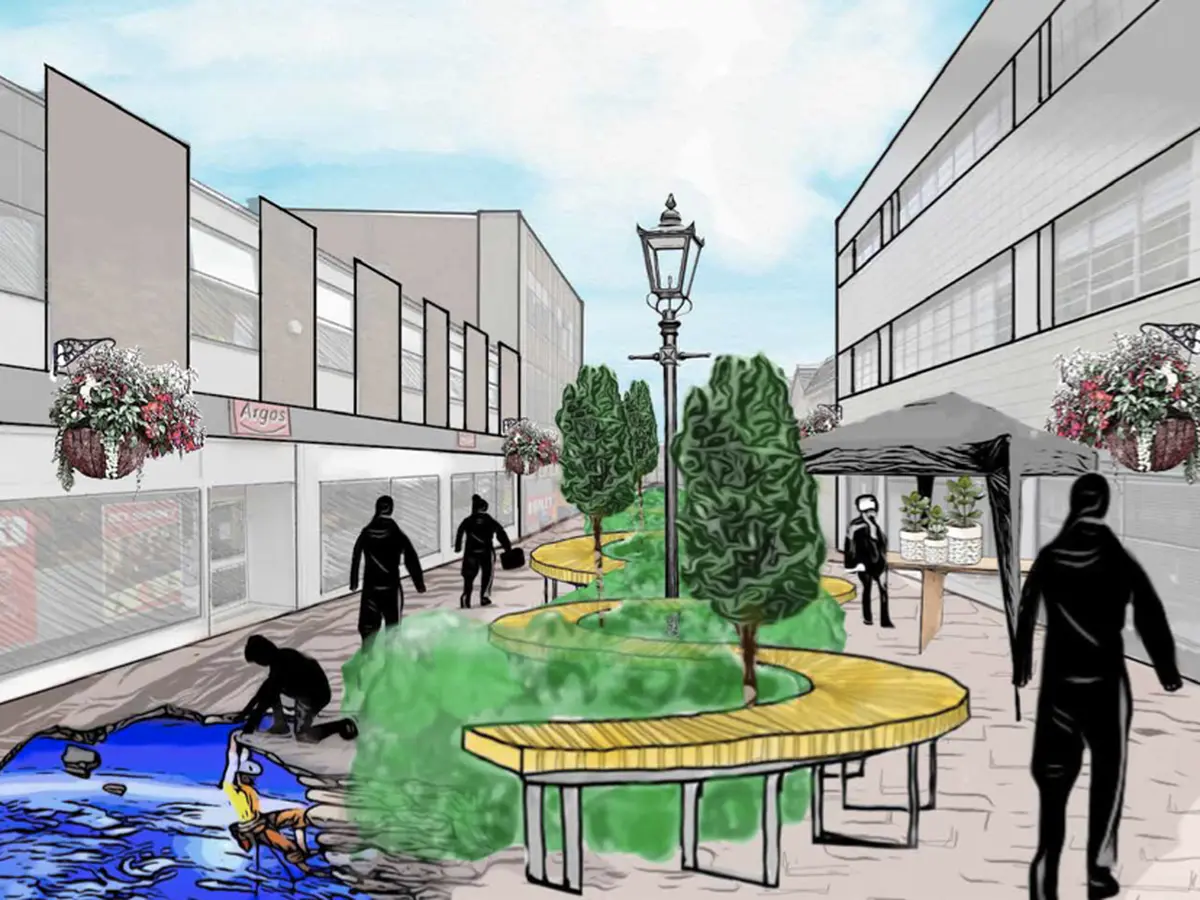
A sketch showing workshops utilising the empty spaces, street furniture, canopies on the side, and street art to brighten and liven the current High Street. - 1_lZXcIupYLTB5bBnb5G-adg.png
A sketch showing workshops utilising the empty spaces, street furniture, canopies on the side, and street art to brighten and liven the current High Street.
Collage Imagining Drawing Actions Future Growing Imagination Nature Opportunity People Plantlife Potential Colour Conversation Interacting Sustainable Lingering Unused Creativity Life
Proposed system for edible insects - Sita Patel Edible Systems 1.png
Proposed system for edible insects
Diagram Model Food System Growing Regenerative Sustainable Creatures Nature Plantlife Learning Community Health Waste
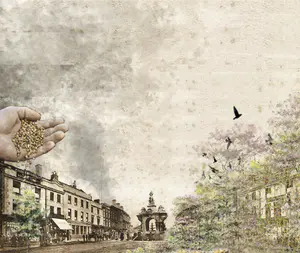
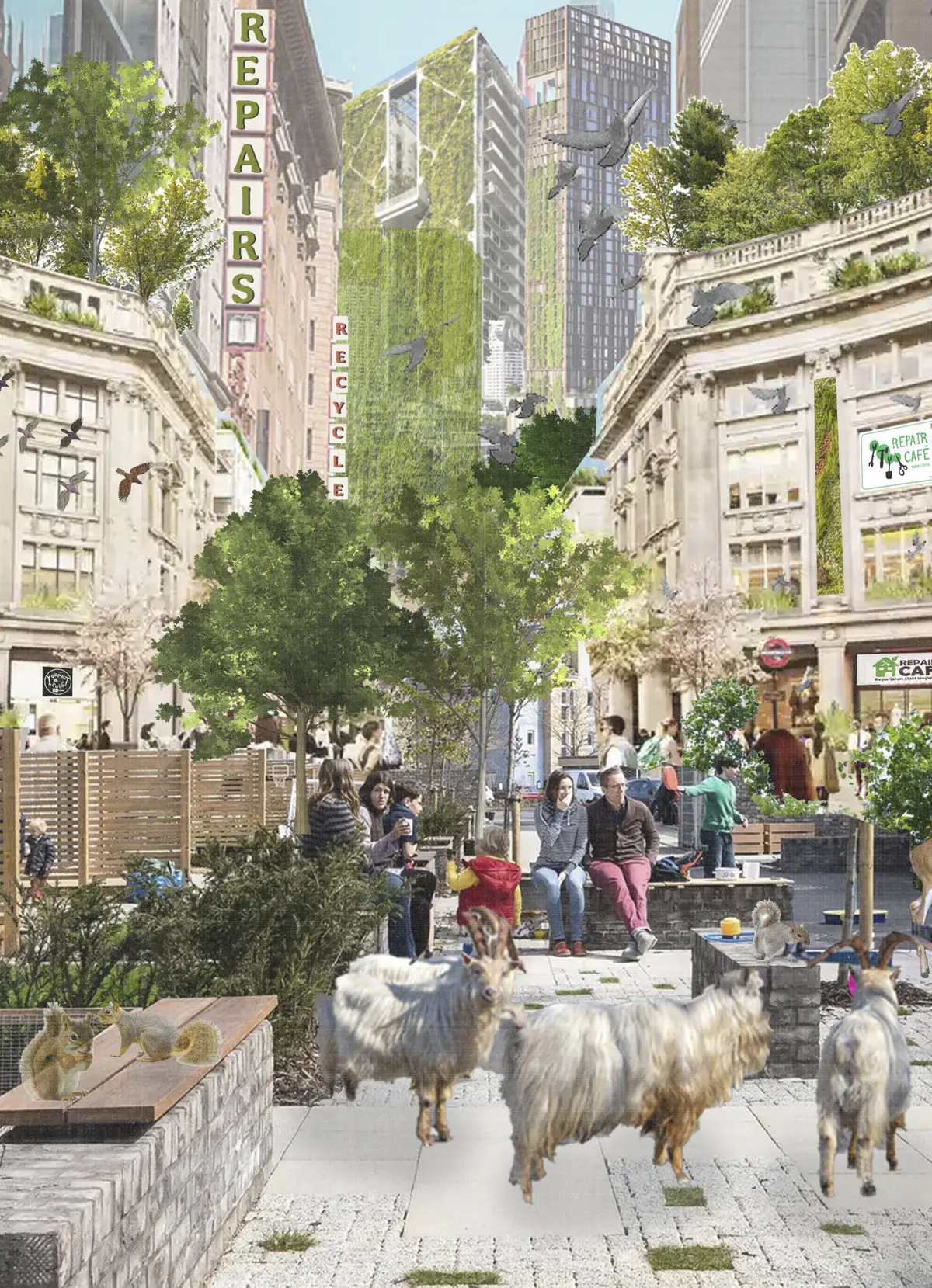
A vision for the High Street - Michelle Gartside Vision for the High Street.png
A vision for the High Street
Collage Creatures Stillness Lingering People Nature Imagination Plantlife Life Growing Opportunity Future Architecture Waste Regenerative Sustainable
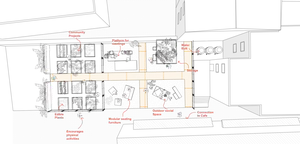
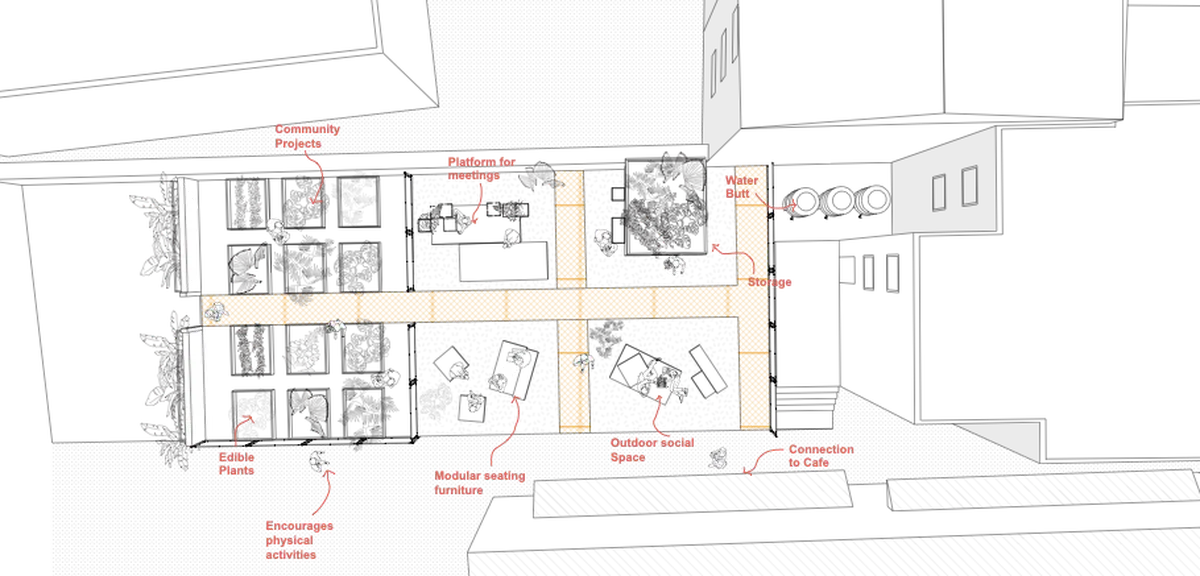
By using the courtyard space as allotments, it will create a social hub for the local people and connect it to local businesses and stores. - 1_Vpf99A9HuEdBxMXJ0etfRw.png
By using the courtyard space as allotments, it will create a social hub for the local people and connect it to local businesses and stores.
Drawing Imagining Water Abundance Actions Care Change Community Connection Future Growing Imagination Interacting Invitations Life Lingering Nature Opportunity People Plantlife Potential Regenerative Relaxing Stillness Sustainable